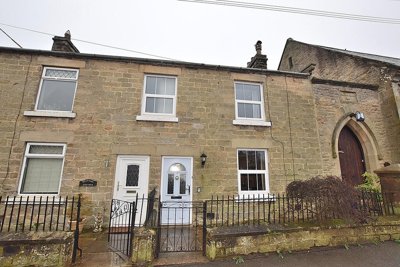
Browse 1 rental home to rent in Aldbrough from local letting agents.
The 2 bed house market features detached, semi-detached, and terraced properties with two separate bedrooms plus living spaces. Properties in Aldbrough range from Victorian and Edwardian period homes to modern new builds, with pricing varying across different neighbourhoods.
The Aldbrough property market reflects the character of a small East Yorkshire coastal village, where demand is driven by those seeking a rural lifestyle without sacrificing connectivity to urban employment centres. Sales data shows the overall average property price in Aldbrough sits at approximately £273,000, with detached homes averaging around £352,000 and semi-detached properties at roughly £210,000. Terraced properties in the village typically sell for around £175,000, providing a more accessible entry point to the local housing market. Recent market activity shows a modest decline of 1.8% in average prices over the past twelve months, with only 14 property sales recorded during this period, indicating a stable but relatively quiet market that suits those who prefer a less frenetic environment.
Housing stock in Aldbrough is predominantly detached, comprising roughly 49.3% of all properties in the village. Semi-detached homes account for 28.5% of the housing stock, while terraced properties represent 16.3% and flats make up approximately 5.9%. This mix provides rental options across different household sizes and budgets, from individuals seeking a compact cottage to families requiring additional bedrooms and outdoor space. The age distribution of properties reveals that approximately 25.4% of homes were built before 1919, 14.5% between 1919 and 1945, 38.2% between 1945 and 1980, and 21.9% post-1980, meaning the majority of rental stock consists of traditional properties that may require more thorough inspection before committing to a tenancy.
The rental market in Aldbrough draws upon this established sales baseline, with properties ranging from compact terraced homes to generous detached family houses. Tenants searching for character properties will find that the older housing stock includes traditional red brick construction with timber suspended floors, features that add charm but may require attention to insulation and energy efficiency. Those seeking newer rentals will find fewer options, as post-1980 construction accounts for only around one in five properties in the village. Understanding the local property mix helps prospective tenants narrow their search based on property type preferences and tolerance for the maintenance considerations that come with older traditional homes.

Aldbrough is a village that embodies the charm of East Yorkshire's coastal countryside, offering residents a peaceful environment rooted in agricultural heritage and maritime proximity. The village name derives from its Old English origins, reflecting a settlement history that stretches back centuries. The local economy has traditionally been driven by agriculture, with farming operations across the surrounding fertile plains, supplemented by tourism that brings visitors to enjoy the East Yorkshire coastline and countryside walks. The presence of St Bartholomew's Church and several listed farmhouses and cottages provides architectural interest and a tangible connection to the village's historical past.
The demographic profile of Aldbrough reflects a balanced mix of age groups typical of rural English villages, with families, couples, and older residents all contributing to community life. Local amenities include a village shop for everyday essentials, while the surrounding area offers access to larger supermarkets and services in nearby towns. The coastal location provides recreational opportunities including beach walks and birdwatching along the dramatic East Yorkshire coastline, which forms part of a heritage coastline noted for its geological significance and natural beauty. The village serves as a gateway to the wider East Riding, with easy access to the market town of Beverley to the north and the city of Hull to the west.
Community life in Aldbrough is supported by local events, village organisations, and the welcoming atmosphere that characterises small East Yorkshire settlements. The village hall hosts various activities throughout the year, while nearby towns provide additional leisure facilities, restaurants, and cultural attractions for residents to enjoy. For those considering a rental property in the area, the sense of community and the quality of life offered by coastal village living are significant factors that draw people to make Aldbrough their home, despite the limited local amenities compared to larger towns.

Families considering a move to Aldbrough will find educational provision available at the primary level within the village and surrounding area, with primary schools typically serving the early years of education for resident children. The village falls within the East Riding of Yorkshire local authority area, which maintains a network of primary schools across rural communities. Parents should research specific school Catchment areas and admission policies when planning a rental move, as these can significantly influence school placement. Key considerations include school capacity, distance from the rental property, and any sibling connections that may affect admission priority.
Secondary education options in Aldbrough include schools in nearby market towns, with secondary schools in towns such as Beverley and Hornsea serving the wider catchment area. Beverley Grammar School and Beverley High School serve the northern catchment, while Hornsea School and Language College serves the coastal communities to the east. Grammar schools are available in the region for academically eligible students, and these selective schools often feature prominently in parental preferences for secondary education. Sixth form provision is typically available at larger secondary schools or nearby colleges, providing progression routes for students completing their GCSEs. The East Riding of Yorkshire local authority publishes school performance data and Ofsted inspection reports, which can help parents assess the quality of local educational provision before committing to a rental property in the Aldbrough area.
For families renting in Aldbrough, school transport arrangements are an important practical consideration, as secondary schools in nearby towns may require bus journeys of 15-30 minutes depending on the specific school and local bus service availability. Parents should check whether free school transport is available for their chosen school and the distance criteria that apply. Given the limited public transport options in the village, planning school commutes during the property search phase helps ensure that rental decisions align with family needs and practical transport arrangements.

Transport connectivity from Aldbrough reflects its status as a rural East Yorkshire village, with residents typically relying on private vehicles as the primary means of transport for daily commuting and accessing services. The village sits approximately 15 miles east of Hull, making it feasible for residents to commute to the city for work, shopping, and entertainment. The A165 road provides a direct route connecting Aldbrough to Hull and the surrounding coastal towns, while the A164 offers links toward Beverley. For those working in Hull city centre, the journey by car typically takes around 30-40 minutes depending on traffic conditions, though rush hour congestion can extend travel times.
Public transport options serving Aldbrough include bus routes that connect the village to nearby towns and the wider East Riding area, though service frequency is limited compared to urban areas. Bus services typically run several times daily, with connections to Hull, Beverley, and the coastal towns of Hornsea and Withernsea. Residents without private vehicles may find the bus timetables restrictive for regular commuting purposes, making car ownership or arrangements with car-sharing schemes practical considerations for rental tenants. The nearest railway stations are located in Hull and Beverley, providing access to the national rail network for longer-distance travel. For commuters working in Hull specifically, the proximity to the city's employment opportunities helps offset the limited public transport within Aldbrough itself.
Cycling is a viable option for shorter journeys in the flatter sections of the surrounding area, though the rural roads leading to Aldbrough can be narrow with limited verges, making cycling less appealing for longer commutes. Parking provision at rental properties is worth checking during viewings, as properties without dedicated parking may require street parking, which can be limited in the village centre. For those working remotely or with flexible arrangements, the quiet rural setting of Aldbrough provides an attractive base that balances peaceful living with reasonable access to urban employment centres when needed.

Before searching for rental properties in Aldbrough, establish a clear budget that accounts for monthly rent, deposit requirements, and associated moving costs. Getting a rental budget agreement in principle can strengthen your position when applying for properties and demonstrate your financial readiness to landlords. Most rentals require five weeks' deposit plus one month's rent in advance, so factoring these upfront costs alongside moving expenses helps you approach your search realistically.
Browse current property listings in Aldbrough through Homemove to identify available homes that match your requirements in terms of size, price, and features. Note that the village's housing stock includes traditional brick-built properties ranging from compact terraced cottages to larger detached family homes. Many properties in Aldbrough date from the mid-twentieth century or earlier, so be prepared to encounter traditional construction features such as solid walls, timber suspended floors, and older window configurations.
Contact estate agents and landlords to arrange viewings of properties that interest you. When viewing rental properties in Aldbrough, pay attention to the property condition, garden access, parking availability, and proximity to local amenities and transport links. Take note of the property's construction type and age, as older traditional homes may require more attention to maintenance and energy efficiency compared to newer properties.
Research area-specific considerations that may affect your tenancy, including the local geology and any flood risk considerations, the age and condition of the property, and whether the property is listed or located within a conservation area. The Boulder Clay geology underlying much of the area can cause ground movement in properties with significant nearby trees, and properties near the coastline face long-term erosion considerations that may affect maintenance responsibilities.
Once you have identified a suitable property, submit a rental application through the appropriate channels. Be prepared to provide references, proof of income, and identification. The referencing process typically takes a few days to complete, and you may be asked to provide a holding deposit equivalent to one week's rent to secure the property while checks are carried out.
After your application is approved and references are confirmed, arrange to sign your tenancy agreement and pay the deposit and first month's rent. Schedule your move and transfer utilities into your name before taking occupation of your new Aldbrough rental home. Remember to take meter readings at the start of your tenancy and document the property condition using photographs to protect your deposit at the end of your tenancy.
Renting a property in Aldbrough requires attention to several area-specific factors that may not be immediately apparent during viewings. The local geology presents important considerations for certain properties, as the Boulder Clay underlying much of the Aldbrough area is a glacial deposit containing clay, sand, gravel, and boulders that can exhibit shrink-swell behaviour when moisture levels change. Properties with significant trees nearby or those built on ground with high clay content may be more susceptible to ground movement, and potential tenants should ask about any history of subsidence or structural movement when considering older properties. This is particularly relevant given that approximately 78.1% of properties in Aldbrough were built before 1980, meaning the majority of rental stock will fall into the category where such considerations are most applicable.
The construction methods used in Aldbrough properties vary by age, with older properties predating the 1920s typically featuring solid wall construction and timber suspended floors, while properties built from the 1920s onwards generally cavity wall construction. Timber suspended floors in older properties can be susceptible to rot and woodworm, particularly if ventilation is restricted or if there has been a history of damp penetration. When viewing traditional brick-built properties, look for signs of damp on ground floor walls and check whether original damp-proof courses are still effective. Properties with solid walls may feel colder and cost more to heat, so energy efficiency should be a consideration when evaluating ongoing rental costs.
Coastal erosion represents another significant factor for properties in Aldbrough, particularly those situated closer to the coastline. The East Yorkshire coast is subject to active erosion processes, and properties in coastal locations face long-term risks that may affect their structural integrity and future value. Tenants should investigate the precise location of any property relative to the coastline and seek information about any coastal management or protection measures in place. Additionally, the village contains several listed buildings, and renting a listed property means accepting restrictions on modifications and alterations that may affect how you can use and adapt the home during your tenancy. Older properties may also contain asbestos-containing materials, particularly those built before 2000, so any significant maintenance issues should be addressed by the landlord with appropriate safety precautions.
Electrical and plumbing systems in older Aldbrough properties often reflect their era of construction and may not meet current standards. Properties built before 1980 are likely to have older electrical wiring and consumer units that may require upgrading, and prospective tenants should check when systems were last inspected or updated. Central heating systems in traditional properties may be original or older installations, so efficiency and reliability are worth assessing during viewings or before committing to a tenancy. Being aware of these potential maintenance considerations helps tenants make informed decisions and understand their responsibilities as set out in the tenancy agreement.

Specific rental price data for Aldbrough is not published in the public domain, as rental prices fluctuate regularly based on property type, condition, and market demand. The sales market provides some context, with the overall average property price around £273,000, detached homes averaging £352,000, and terraced properties at approximately £175,000. Properties in Aldbrough range from compact terraced cottages to larger detached family homes, with rents typically reflecting the size, condition, and location of the property. Prospective tenants should search current listings on Homemove to see real-time rental prices for properties available in Aldbrough and the surrounding East Yorkshire area.
Properties in Aldbrough fall under the East Riding of Yorkshire Council authority for council tax purposes. Council tax bands in the area range from Band A for lower-value properties through to Band H for the most expensive homes. The village's mix of property types and ages means that council tax bands vary across the housing stock, with traditional terraced cottages typically falling into lower bands and larger detached family homes often occupying higher bands. Prospective tenants should check the specific band for any property they are considering, as this forms part of the regular monthly cost of renting a home.
Aldbrough is served by primary schools within the village and surrounding area, with secondary education available at schools in nearby towns such as Beverley and Hornsea. Beverley Grammar School is a well-regarded selective school serving the northern catchment, while Hornsea School and Language College serves the coastal communities. The East Riding of Yorkshire local authority provides information on school catchment areas and admission arrangements, including transport eligibility criteria for students living beyond walking distance from their allocated school. Parents should consult the latest Ofsted inspection reports and performance data published by the Department for Education when evaluating educational options, as school quality can influence admission success and travel requirements for children.
Public transport connectivity in Aldbrough is limited, reflecting its status as a small rural village. Bus services connect the village to nearby towns including Hull, Beverley, and Hornsea, though service frequency is lower than in urban areas, with several services daily rather than hourly. The nearest railway stations are located in Hull and Beverley, providing access to the national rail network for longer-distance travel to cities including Leeds, York, and London. Most residents of Aldbrough rely on private vehicles for daily commuting and accessing services, so car ownership is a practical consideration for those planning to rent in the village.
Aldbrough offers a peaceful coastal village lifestyle with strong community spirit and access to the East Yorkshire countryside. The village is well-suited to those who value rural living and do not require daily access to extensive urban amenities, with beach walks and countryside scenery on the doorstep. Connectivity to Hull and Beverley makes it viable for commuters working in these larger centres, though the limited public transport means car ownership is advantageous. The local housing stock includes traditional properties with character, including red brick cottages and mid-century detached homes, though potential tenants should be aware of area-specific considerations including the local Boulder Clay geology and coastal erosion risk for certain properties.
When renting a property, you will typically be required to pay a security deposit equivalent to five weeks' rent, which is capped under the Tenant Fees Act 2019 for properties with annual rent below £50,000. This deposit must be protected in a government-approved scheme within 30 days of receipt and should be returned at the end of your tenancy, subject to any legitimate deductions for damage or unpaid rent. You may also need to pay a holding deposit equivalent to one week's rent while references are being checked, which is usually deducted from your first month's rent. Additional costs include the first month's rent in advance, so your initial outlay typically amounts to approximately six weeks' rent plus any applicable referencing fees. First-time renters should budget for these upfront costs alongside moving expenses and any furniture or equipment they may need to purchase for their new home.
From 4.5%
Understand your borrowing capacity before renting
From £50
Comprehensive referencing checks for renters
From £400
Professional survey for traditional properties
From £80
Energy performance certificate
Understanding the financial requirements for renting in Aldbrough helps you budget effectively for your move and avoid surprises during the application process. The most significant upfront cost is the security deposit, which is capped at five weeks' rent under the Tenant Fees Act 2019 for properties with annual rental values below £50,000. This deposit is protected in a government-approved scheme within 30 days of receipt and should be returned at the end of your tenancy, subject to any legitimate deductions for damage or unpaid rent. Before committing to a rental property, calculate five weeks' rent to determine the deposit amount you will need to provide.
Additional costs to budget for include a holding deposit equivalent to one week's rent, which is typically paid to secure the property while references and background checks are completed. This holding deposit is usually deducted from the final amount you pay before moving in. You will also need to pay the first month's rent in advance, meaning your initial outlay can amount to approximately six weeks' rent plus any applicable fees. First-time renters may benefit from checking whether they qualify for any government support schemes, though rental properties in a small village like Aldbrough may have limited eligibility for certain schemes designed primarily for first-time buyers purchasing property rather than renting.
When renting traditional properties in Aldbrough, it is prudent to document the condition of the property thoroughly at the start of your tenancy. Photographing walls, floors, fixtures, and fittings provides evidence of the property's condition when you moved in, which protects you against unfair deductions from your deposit at the end of your tenancy. Understanding what constitutes reasonable wear and tear versus damage is important, and the Tenancy Deposit Protection scheme provides guidance on this distinction. For older properties with traditional construction features, some deterioration may be apparent during viewings, and noting this in an inventory at the start of your tenancy helps establish the baseline condition of the property.
Properties to Rent In London

Properties to Rent In Plymouth

Properties to Rent In Liverpool

Properties to Rent In Glasgow

Properties to Rent In Sheffield

Properties to Rent In Edinburgh

Properties to Rent In Coventry

Properties to Rent In Bradford

Properties to Rent In Manchester

Properties to Rent In Birmingham

Properties to Rent In Bristol

Properties to Rent In Oxford

Properties to Rent In Leicester

Properties to Rent In Newcastle

Properties to Rent In Leeds

Properties to Rent In Southampton

Properties to Rent In Cardiff

Properties to Rent In Nottingham

Properties to Rent In Norwich

Properties to Rent In Brighton

Properties to Rent In Derby

Properties to Rent In Portsmouth

Properties to Rent In Northampton

Properties to Rent In Milton Keynes

Properties to Rent In Bournemouth

Properties to Rent In Bolton

Properties to Rent In Swansea

Properties to Rent In Swindon

Properties to Rent In Peterborough

Properties to Rent In Wolverhampton

Enter your details to see if this property is within your budget.
Loans, cards, car finance
Estimated property budget
Borrowing + deposit
You could borrow between
Typical borrowing
Monthly repayment
Est. at 4.5%
Loan-to-value
This is an estimate only. Your actual budget may vary depending on interest rates, credit history, and personal circumstances. For an accurate affordability assessment, speak to one of our free mortgage advisors.
This calculator provides estimates for illustrative purposes only and does not constitute financial advice. Your home may be repossessed if you do not keep up repayments on your mortgage. Estimates based on 4.5% interest rate, repayment mortgage. Actual rates depend on your circumstances.
Homemove is a trading name of HM Haus Group Ltd (Company No. 13873779, registered in England & Wales). Homemove Mortgages Ltd (Company No. 15947693) is an Appointed Representative of TMG Direct Limited, trading as TMG Mortgage Network, which is authorised and regulated by the Financial Conduct Authority (FRN 786245). Homemove Mortgages Ltd is entered on the FCA Register as an Appointed Representative (FRN 1022429). You can check registrations at NewRegister or by calling 0800 111 6768.

We use cookies to show you personalised content and improve your experience of our website. Find out more in our Privacy policy and Cookie policy.