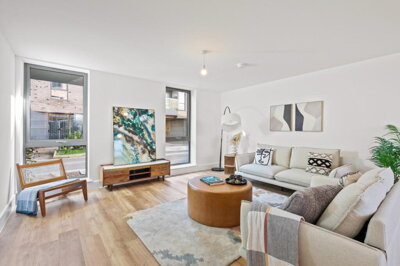
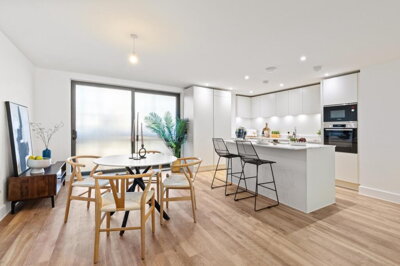
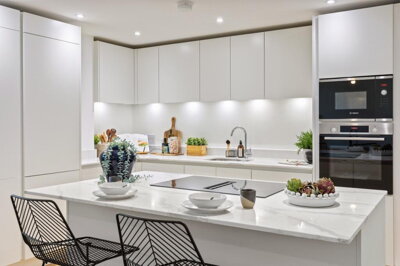
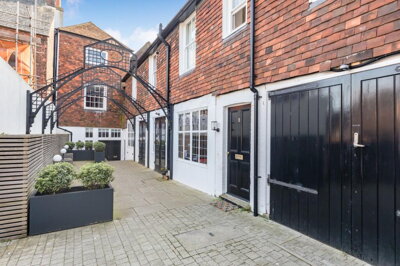
Browse 4 homes new builds in Glynde, Lewes from local developer agents.
Studio apartments feature open-plan living spaces without separate bedrooms, incorporating sleeping, living, kitchen, and bathroom facilities. The Glynde studio market includes properties in modern apartment complexes, modern purpose-built developments and new residential complexes.
£0k
0
0
0
Source: home.co.uk
Showing 0 results for Studio Flats new builds in Glynde, Lewes.
Glynde’s market looks much as you would expect from a small, sought-after village inside the South Downs National Park. In our current listings, detached homes average £837,500 and sit at the top end locally, often as sizeable period houses with large gardens and open rural views. Semi-detached properties come in at an average of £525,000, which tends to suit families wanting character without the upkeep of very large plots, while terraced homes average £450,000 and often show the flint and brick detailing that gives Glynde its distinct look.
Only 4 sales were recorded in Glynde over the past twelve months, so this is a market with deliberately low turnover. That scarcity comes down partly to the village’s modest size and partly to its Conservation Area status, which curbs new development and helps protect the historic settlement. Over the last year, prices have shown no significant movement, pointing to a steady market rather than the sort of competitive bidding seen in larger towns. Homes here do not appear often, so we usually tell buyers to be ready to move quickly when the right one comes up.
Much of Glynde’s housing stock is older, period-led, and shaped by the village’s historic importance and Conservation Area designation. Most homes predate 1919 and were built in traditional forms, including flint rubble walls with brick quoins, timber framing, and clay tile or slate roofs. That age and construction style call for care. We strongly recommend a RICS Level 2 Survey before purchase, because defects often found in historic buildings, such as damp moving through flintwork, failing lime mortar pointing, and timber decay, can become expensive if they are discovered late.

For people who value classic rural England, Glynde offers a very high standard of day-to-day life. The village keeps a recognisably Sussex feel, with farms, cottages, and period houses spread loosely across the landscape beneath the South Downs. Around 287 residents live here, which creates a close-knit atmosphere where people know one another and local events still matter. The historic Glynde Estate remains part of that picture too, supporting employment and reinforcing the village’s long agricultural and cultural role.
Outside space is one of Glynde’s strongest draws. Public footpaths run across the chalk downland, opening up wide views over the Sussex countryside, and the village lies near the River Ouse, while Glynde Brook passes through the centre and adds a quiet watercourse to the setting. Firle Place and the wider Firle Estate broaden the scope for walks and exploring. For everyday basics, many residents head to nearby Berwick for the village shop and post office, while Lewes, the historic county town, is within fifteen minutes by car for a fuller mix of shops, restaurants, and leisure facilities.
Community life is active without feeling over-programmed. Glynde Place hosts seasonal events during the year and its grounds often become a focal point for local gatherings. Then there is the Glyndebourne Opera Festival, staged at the opera house near the village from June through August, bringing international performers and audiences and giving the area a notable cultural lift, along with tourism income for the local economy. Outside festival months, life settles back around the pub, church services, and the sort of informal village meet-ups that smaller places do well.
For practical errands, most residents look beyond the village itself. Berwick covers the essentials with a village shop, post office, and a well-liked tearoom, and Firle adds a few more nearby options. Lewes, 4 miles to the west, is where people go for the broader offer, including shopping, healthcare, and admin services. In reality, a car is part of everyday life here, but the drive into Lewes is scenic and usually only takes ten to fifteen minutes.

Families moving to Glynde have several strong schooling choices within easy reach. Primary provision is found in nearby villages, and many local children attend schools in Berwick, Firle, and Ringmer, each known for good academic standards and a supportive setting for younger pupils. Small class sizes are a real part of the appeal. So is the fact that teaching staff in village schools often know each child personally, which can be harder to find in larger urban settings.
At secondary level, families usually look towards Lewes, where there are well-regarded schools and grammar school access for pupils who pass the Kent Test. Catchment can be competitive across this part of East Sussex, so homes closer to favoured schools often attract strong interest. For older students, sixth form options are available in Lewes and Brighton, and Brighton also brings a broad mix of further education colleges and specialist sixth form centres. During the summer, the Glyndebourne Festival Academy adds another, very particular, educational opening for musically gifted young people.
School travel needs planning in advance. Public transport from Glynde to local education settings is limited, so most families depend on private cars or school bus services. That matters even more for secondary pupils travelling to Lewes grammar schools or further afield, where journeys can stretch out. Runs to nearby village schools are usually straightforward, but for schools in Lewes we would expect a daily return drive of roughly thirty to forty minutes.
Private education is also a realistic option from Glynde. Independent schools in Brighton and Eastbourne are within workable driving distance and cover ages from nursery to sixth form. Some provide their own bus services from the Lewes area, which can make the routine much easier for families. Brighton in particular gives access to some of the region’s most established independent schools, pairing academic ambition with the rural way of life that draws many people to Glynde in the first place.

Although Glynde feels properly rural, it is not cut off. The village is a short drive from the A26, giving direct access west to Lewes and north towards the wider road network. Brighton is about thirty minutes away by car, so commuting into the city is quite possible for many residents. For rail travel, Lewes station serves London Victoria in around eighty minutes, while Brighton station offers extra route choices, including direct trains to Gatwick Airport.
Bus links between Glynde and Lewes provide a useful connection, especially for residents without a car, and they open up access to Lewes for shopping, healthcare, and leisure. Cyclists are well placed too. The South Downs Way and the surrounding country lanes suit recreational riding, and the flatter ground through the river valley makes cycling manageable for a wide range of abilities. Parking, by contrast with town life, is usually uncomplicated here because traffic volumes stay low.
From Lewes station, rail journeys to London Bridge via Brighton take about seventy minutes, while direct services to London Victoria are around eighty minutes. Gatwick Airport can be reached in fifty minutes by car, or by rail with a change at Brighton, which keeps overseas travel practical for regular business or leisure trips. Road connections are helped by the A27 trunk road through Lewes, linking Eastbourne to the east with Worthing and Chichester to the west.
Commuting to Brighton from Glynde is entirely doable, though the trip can slow in peak periods and during the summer tourist season when coastal traffic builds. A rural address brings a few realities with it, including reliance on a dependable vehicle, fuel costs, and the effect winter weather can have on smaller roads. Even so, many residents make that balance work and combine village living with jobs in Brighton, London, and further afield.

We would start with the live market, looking closely at current Glynde listings and the price levels attached to each property type. Sales volumes are low, usually fewer than ten in a year, so a local estate agent with a feel for the village can be very helpful, especially where homes may be coming forward quietly before formal marketing. It is sensible to register with agents in Lewes and the nearby villages, because when a good house in Glynde appears, it often does not sit around for long.
Before any viewings begin, we advise getting a mortgage agreement in principle from a lender. Sellers and agents will usually treat buyers more seriously once funding is clear, and that matters in a small market where a desirable house can draw several enquiries at once. With average values in Glynde around £625,000, it also helps to check that your borrowing position matches the upper end of the search range before time is spent on unsuitable options.
Seeing shortlisted homes in person is essential in Glynde, particularly with so many older buildings in the mix. We pay close attention to build quality, the condition of period details, and warning signs of damp or structural movement. A RICS Level 2 Survey is strongly advised for any property more than fifty years old and, because most Glynde homes predate 1919, that covers almost everything in the village. It also helps to revisit at different times of day and, where possible, in wet weather, when drainage and water ingress are easier to judge.
Once a property is under serious consideration, we recommend commissioning a RICS Level 2 Survey so the condition is properly understood. In Glynde, older flint and brick houses can show recurring issues, including damp penetration through rubble flint walls, worn lime mortar pointing, roof defects, and signs of subsidence linked to local ground conditions. Listed buildings may need a more specialist inspection, and our surveyors should be told clearly if the property has Listed Building status.
After an offer is accepted, the next step is to instruct a conveyancing solicitor to deal with the legal work. That usually includes searches with Lewes District Council, covering local authority records, drainage and water matters, and environmental checks into ground conditions and past land uses. In Glynde, we would also expect close attention to Conservation Area controls and to any planning history or Listed Building Consent issues, so buyers know exactly what restrictions may apply to future works.
Final preparations usually cover building insurance, confirming the mortgage offer, and settling the moving date. On completion day, the solicitor sends the balance and the keys to the new Glynde home are released. Building insurance needs to be active from exchange of contracts, and with some properties close to Glynde Brook, it is sensible to check that flood damage is covered and to understand any excess that comes with the policy.
Buying in Glynde means paying attention to the things that make the village special. Conservation Area status can affect extensions, external changes, and even substantial landscaping, so works that might be routine elsewhere may need consent from Lewes District Council here. Those added planning controls are there to protect the village’s historic appearance, which helps support values, but they can also shape what owners are able to do when updating a property.
Construction type deserves careful scrutiny in this area. Many houses are built in traditional Sussex flint with brick quoins and dressings, a handsome method but one that needs informed assessment. We look closely for failing mortar, because once that starts to go, water can work its way into the flintwork, and we also check any render, which can sometimes hide deeper structural problems. The local chalk geology usually gives stable support, although homes on superficial clay deposits near watercourses can be more prone to shrink-swell movement, especially where mature trees are close by.
Flood risk is a key check for any home near Glynde Brook. Surveys should cover drainage performance and any known flooding history, and buildings insurance costs may rise where water proximity is a factor. There is also the question of listed status, given how many historic buildings the village contains. We would want the solicitor to confirm whether the property is listed and to spell out what that means for maintenance and alteration, because works requiring Listed Building Consent can add both cost and delay compared with an ordinary residential purchase.
Several defects come up repeatedly in viewings and surveys of period homes here. Rising damp is common where damp-proof courses are missing or no longer effective, and timber problems, including wet rot and dry rot in floor joists and roof timbers, usually need specialist input. Older electrics may fall short of current standards and can lead to a full rewire before or after purchase. Roofs also deserve a hard look, particularly clay tile or slate coverings, slipped or broken tiles, and failing lead flashing around chimneys and valleys. In flint houses, roof replacement can be especially expensive because the work often calls for specialist skills.

As of February 2026, the average property price in Glynde is £625,000. Detached homes average £837,500, semi-detached properties £525,000, and terraced houses £450,000. Prices have shown 0% change over the last twelve months, which points to a stable market in this tightly held South Downs National Park village. Flats rarely come up here, so there is no recent sales data for that part of the market.
Glynde falls within the area administered by Lewes District Council. Council tax bands usually run from Band C for smaller cottages through to Band H for large period houses and manor homes, though the exact band should always be checked with Lewes District Council for any property under consideration. Because many homes in the village sit at the premium end, ongoing ownership costs can include higher council tax than buyers might see in less exclusive locations.
For primary schooling, families generally look to the neighbouring villages, especially Berwick, Firle, and Ringmer, all of which are well regarded. Secondary education is usually centred on Lewes, with grammar school entry available to children who pass the Kent Test. Lewes also has sixth form provision, while Brighton offers a much wider spread of further education options within a practical commuting distance. Catchment remains competitive across this part of East Sussex, and houses near preferred schools often carry a price premium.
Public transport in Glynde is limited, but it does the basics. Bus services connect the village with Lewes, and from there rail links run to London Victoria in around eighty minutes and to Brighton in under thirty minutes. For everyday commuting, most people still find a car the easiest option, though the train from Lewes makes occasional city journeys quite manageable. Gatwick Airport is accessible within fifty minutes via Brighton, which is useful for frequent travellers.
From an investment point of view, Glynde’s appeal rests on scarcity and setting. Property in this South Downs National Park village tends to hold its value because supply is tight and there is consistent demand from buyers wanting a rural base within reach of Brighton and London. Conservation Area protection also helps preserve the character that underpins that demand. The trade-off is that sales volumes are low, capital growth may move more slowly than in busier markets, and rental demand is likely to be modest given the small population and limited employment nearby. We would generally see Glynde as a long-term hold rather than a short-term play.
From April 2025, Stamp Duty Land Tax rates are 0% on the first £250,000, 5% from £250,001 to £925,000, 10% from £925,001 to £1,500,000, and 12% above £1,500,000. First-time buyers get 0% on the first £425,000 and 5% from £425,001 to £625,000. On a typical Glynde purchase at £625,000, that gives a standard SDLT bill of about £18,750, while a first-time buyer would pay about £10,000.
Listed buildings are a major part of Glynde’s character. The village includes the Grade I Glynde Place and Glynde Church, St Mary the Virgin, and there are many Grade II cottages, farm buildings, and houses alongside them. That architectural quality brings stricter control. Any owner considering changes, from window replacement to structural work, may need Listed Building Consent from Lewes District Council, and we usually advise a specialist survey for listed property because a standard inspection may miss some of the complications that come with historic construction.
The main buying risks in Glynde are the ones often associated with older rural housing, but they need taking seriously. Traditional construction can lead to damp penetration through flint rubble walls and failing lime mortar pointing, and flood exposure is a concern for homes beside Glynde Brook when heavy rainfall pushes drainage systems beyond capacity. Subsidence risk is usually low because of the chalk geology, yet superficial clay deposits near mature trees can still create movement. On top of that, older properties often come with dated electrics, plumbing, and insulation, all of which should be allowed for in renovation budgets.
Getting the full purchase cost clear at the outset makes budgeting far easier. On a Glynde home priced at £625,000, the standard SDLT calculation uses the 5% band on the portion from £250,001 to £925,000, producing a bill of roughly £18,750. A first-time buyer using the higher threshold would pay around £10,000 less. Some Glynde properties exceed £1,000,000, so buyers at that end of the market also need to allow for SDLT at 10% on the slice above £925,000.
There are other costs beyond Stamp Duty. Conveyancing fees often fall between £800 and £2,500 depending on complexity, a RICS Level 2 Survey is commonly £400 to £900 depending on size and value, and mortgage arrangement fees vary by lender but are often 0.5% to 1.5% of the loan amount. Search fees through Lewes District Council, environmental searches, and property registration fees add a little more, while building insurance must be in place from exchange of contracts and removal costs also need to be covered. In total, we usually suggest budgeting an extra 3% to 5% of the purchase price for these associated expenses.
In Glynde’s Conservation Area, extra costs can arise quite quickly, especially with older or listed buildings. Specialist surveys may be needed, and period homes often reveal repair items that have to be dealt with after purchase. For that reason, many buyers keep a contingency of at least 5-10% above the purchase price for essential works and improvements. Homes near Glynde Brook can also attract higher buildings insurance premiums because of flood risk, and the conveyancing solicitor should obtain proper flood disclosures from the seller before completion.

From £400
A detailed inspection to pick up defects in Glynde’s period properties
From £600
Comprehensive structural survey ideal for listed properties
From £80
Energy performance certificate for your new home
From £499
Legal services for your Glynde property purchase
Properties New Builds In London

Properties New Builds In Plymouth

Properties New Builds In Liverpool

Properties New Builds In Glasgow

Properties New Builds In Sheffield

Properties New Builds In Edinburgh

Properties New Builds In Coventry

Properties New Builds In Bradford

Properties New Builds In Manchester

Properties New Builds In Birmingham

Properties New Builds In Bristol

Properties New Builds In Oxford

Properties New Builds In Leicester

Properties New Builds In Newcastle

Properties New Builds In Leeds

Properties New Builds In Southampton

Properties New Builds In Cardiff

Properties New Builds In Nottingham

Properties New Builds In Norwich

Properties New Builds In Brighton

Properties New Builds In Derby

Properties New Builds In Portsmouth

Properties New Builds In Northampton

Properties New Builds In Milton Keynes

Properties New Builds In Bournemouth

Properties New Builds In Bolton

Properties New Builds In Swansea

Properties New Builds In Swindon

Properties New Builds In Peterborough

Properties New Builds In Wolverhampton

Enter your details to see if this property is within your budget.
Loans, cards, car finance
Estimated property budget
Borrowing + deposit
You could borrow between
Typical borrowing
Monthly repayment
Est. at 4.5%
Loan-to-value
This is an estimate only. Your actual budget may vary depending on interest rates, credit history, and personal circumstances. For an accurate affordability assessment, speak to one of our free mortgage advisors.
This calculator provides estimates for illustrative purposes only and does not constitute financial advice. Your home may be repossessed if you do not keep up repayments on your mortgage. Estimates based on 4.5% interest rate, repayment mortgage. Actual rates depend on your circumstances.
Homemove is a trading name of HM Haus Group Ltd (Company No. 13873779, registered in England & Wales). Homemove Mortgages Ltd (Company No. 15947693) is an Appointed Representative of TMG Direct Limited, trading as TMG Mortgage Network, which is authorised and regulated by the Financial Conduct Authority (FRN 786245). Homemove Mortgages Ltd is entered on the FCA Register as an Appointed Representative (FRN 1022429). You can check registrations at NewRegister or by calling 0800 111 6768.

We use cookies to show you personalised content and improve your experience of our website. Find out more in our Privacy policy and Cookie policy.