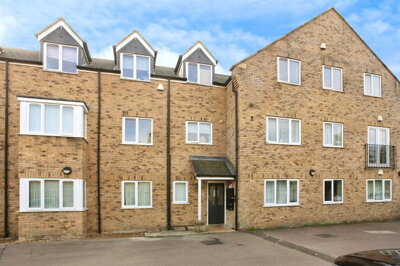
Browse 1 home for sale in Deeping St. James from local estate agents.
James from local agents. One bed apartments provide a separate bedroom alongside distinct living space, bathroom, and kitchen areas. Properties in Deeping St. James are available in various building types including mansion blocks, contemporary developments, and house conversions.
Deeping St. James's property market has kept moving in the right direction, with average prices up 2% over the past year to £329,277. That sits on top of a stronger longer-term rise, because values are 10% higher than the 2021 peak of £264,000. It is a South Kesteven village that still appeals to commuters, yet it gives buyers a more affordable starting point than many surrounding market towns. Our data suggests people buying in Deeping St. James have enjoyed steady capital growth, which is why both owner-occupiers and investors continue to look here.
House types in Deeping St. James show how varied the village is. Detached homes average £414,072 and make up about 45% of the housing stock, while semi-detached properties sit at £230,513 and account for around 30%. Terraced homes average £171,500, so they tend to suit first-time buyers and downsizers, and flats offer the lowest entry point at roughly £135,617. That spread gives buyers with very different budgets and space needs a fair chance of finding a match.
Fresh building work still has a place here, with two active developments giving buyers new options. The Willows on Broadgate Lane includes 2, 3, 4, and 5-bedroom homes from Larkfleet Homes, priced from £250,000 to over £500,000. The Brambles on Stowgate, built by Ashwood Homes, offers 2, 3, and 4-bedroom properties from approximately £220,000 to £400,000. On Church Street, a smaller scheme has planning permission for 10 dwellings, although no pricing has been set yet.
Looking at property age across Deeping St. James, the stock is clearly split between older homes and newer additions. Roughly 15-20% of houses date from before 1919, and most of those sit in the historic village core around Church Street, The Green, and Eastgate. Development after the war, from 1945 to 1980, makes up about 30-35% of the market, while the remaining 30-40% has been built since 1980. Buyers therefore come across a wide range of construction methods, and just as wide a spread in condition.

Knowing how homes in Deeping St. James were put together helps buyers judge upkeep and likely problem areas. Brick is the main construction material across the village, usually red brick on Victorian and Edwardian houses, with render appearing on some period homes and newer properties too. Roofs are mostly tiled, with clay or concrete tiles the norm, and older houses often have handmade clay tiles that need specialist repairs if they fail. The traditional build style does mean good thermal mass in many homes, although insulation standards vary a lot depending on age.
Before the mid-20th century, most properties were built with solid walls, which creates different challenges from modern cavity wall construction. These solid walls, often 225mm to 300mm thick, were laid without cavity barriers and may not have modern damp-proof courses. In the Conservation Area, Victorian and Edwardian homes often still have sash windows, exposed timber beams, and flagstone floors, all of which add character but also bring regular maintenance. Timber-framed parts of roofs and upper floors are common across all ages of housing, so signs of decay or woodworm should always be checked.
Homes from the 1950s through to the 1970s usually move to traditional cavity wall construction, with brick outer leaves and blockwork or brick inner leaves separated by a cavity. Later examples often use timber roof structures with prefabricated truss rafters. Wiring in houses from this period frequently dates from before the 1980s, so electrical systems may no longer meet current standards. Plumbing can be an issue too, because mid-century homes often still have galvanised steel pipes that corrode from the inside and restrict water pressure. From the 1980s onwards, modern developments usually include UPVC windows, mains pressure plumbing, and better consumer units, although build quality still varies from one builder to the next.
The local ground conditions in Deeping St. James sit on superficial alluvium deposits over Jurassic Oxford Clay, and that has a direct effect on foundation design. Properties built before the 1970s generally have strip foundations of differing depths, which can move when clay soil shrinks and swells with changes in moisture. More recent homes usually have deeper or reinforced foundations built to cope with the shrink-swell behaviour of the local clay. When we view older properties, we look for foundations that have been designed for, or adapted to, the ground conditions here, especially where mature trees may have added root pressure to the soil.

Deeping St. James is a lively village community, with around 7,091 residents living in 3,020 households, according to the 2021 Census. It manages a neat balance between keeping its historic identity and accepting newer development, which is one reason it appeals to families and professionals who want a community feel without being tied to a larger town. The centre is focused on Church Street, The Green, and Eastgate, where the designated Conservation Area protects the architectural heritage that gives the village its own character.
Local life is supported by small businesses, shops, hospitality venues, and everyday services, while many residents travel out to nearby towns for work. The Priory Church of St James is a key landmark, and it sits alongside numerous Listed Buildings within the Conservation Area. Shops, pubs, and recreational facilities cover most day-to-day needs, so there is less need to head elsewhere for the basics. Village events and active local groups add to the atmosphere and help neighbours stay connected.
Deeping St. James sits on the fen edge, so the surrounding landscape reflects that setting very clearly. Superficial deposits of alluvium lie over Jurassic Oxford Clay bedrock, creating the flat topography that is typical of the Fens. Productive agricultural land wraps around the built-up area. The River Welland and its tributaries shape drainage patterns, and buyers should take note of flood risk zones, especially where homes are closer to watercourses and drainage channels. Even so, there are pleasant walking routes across farmland and along waterways.
Outdoor life is easy to tap into from the village. The flat terrain is not always ideal for every commuting route, but it works well for cycling and walking, and there are miles of permissive paths running across farmland and waterways. The nearby River Welland and drainage channels give scope for fishing and waterside walks, while the wider Fens landscape attracts birdlife despite the intensive farming around it. Football pitches and recreational grounds maintained by the community add straightforward options for families without needing to travel into a bigger town.

Families in Deeping St. James have education choices at several levels, with primary provision for younger children and secondary schools within reasonable travelling distance. The village falls in South Kesteven district, where schools are managed by Lincolnshire County Council alongside academy and independent providers. Parents looking in Deeping St. James should check admissions rules and catchment areas for each school, because those details can affect both property values and availability on particular streets. Ofsted ratings and other school performance data are public, and we would treat them as part of any family home search.
Primary schools in Deeping St. James take children from Reception through to Year 6, and they have a good local reputation for both academic results and pastoral care. Families on the eastern side of the village also have easy access to additional primary schools in nearby Market Deeping. Bourne offers another group of primary options for those heading west. Catchment boundaries need checking each year, because they are reviewed annually and can change which school a child is allocated according to home address.
For secondary education, families usually look to schools in the nearby market towns, with pupils travelling to Stamford, Bourne, or Market Deeping for Key Stage 3 and GCSE provision. Stamford is especially popular with Deeping St. James families because of its strong academic reputation and the selective intake at Stamford School, although admission depends on passing the 11-plus entrance examination. Peterborough provides sixth form and further education choices, with a broader range of A-level and vocational courses for older students. Good schools within reach make the village more attractive to families, and that keeps demand steady for larger homes. If children are of school age, we would always suggest school visits and a check of admission arrangements before a purchase is agreed.

Commuters in Deeping St. James have practical transport links into nearby towns and cities. The village is close to the A16, which gives direct routes to Peterborough to the north and Stamford to the east, opening up wider employment and service areas. Bus services also run through the village, linking it with neighbouring communities and giving non-drivers access to larger towns. The road network is generally in good order, although rural roads need extra care in poor weather.
Peterborough railway station is about 10 miles from Deeping St. James and sits on the East Coast Main Line, with fast trains to London King's Cross in around 45 minutes. That makes the village appealing to people who work in the capital but want more space and better value than they would find closer in. Stamford and Bourne also provide local jobs and services, so many everyday trips do not need to be long ones. Cycling is possible on quieter roads, although the flat Fenland landscape feels more suited to leisure rides than daily commuting.
For people working locally, Market Deeping is only around 5 minutes away by car and has extra shops and services. Bourne, at around 10 miles to the west, offers the feel of a traditional market town, while Spalding to the east provides employment linked to agricultural processing. The A1(M) at Colmworth, approximately 20 miles west, widens the commuter reach further north and south. GP surgeries and dental practices are available in Market Deeping and Bourne, and Peterborough hospitals provide specialist care for more complex needs.

Speak to a mortgage broker or bank and get an agreement in principle before you start looking seriously. That puts you in a stronger position when offers are made and shows sellers that finance is already lined up. With the average Deeping St. James price at £329,277, most buyers will need mortgage funding, and having the paperwork ready can speed things up.
Take time to walk different parts of the village, check school catchments, look into flood risk areas, and read up on Conservation Area restrictions if period properties are on your list. Deeping St. James is not one single housing type, from the historic core around Church Street to newer schemes on the edges, and each area brings its own feel and practical issues.
We use Homemove to browse all available listings and arrange viewings with estate agents. Make notes on condition as you go, and ask about any renovation work or planning permissions. In period properties, we pay close attention to damp, cracking, and timber issues that may need remedial work.
Before you buy, arrange for a qualified surveyor to inspect the property. In Deeping St. James, that matters more than usual because of the local clay geology and the age of the housing stock, especially when checking for subsidence, damp, or structural issues. More than half of the village's homes are over 50 years old, so a professional survey is a sensible step.
Choose a solicitor who knows Lincolnshire property transactions well, so the legal work, searches, and contract negotiations are handled properly. Experience with South Kesteven District Council requirements, and any Article 4 Direction restrictions in the Conservation Area, is particularly useful.
Once the surveys, searches, and negotiations are complete, your solicitor will move things to exchange of contracts and set a completion date. We would also budget for stamp duty, survey fees, and moving expenses while planning the timetable.
Anyone buying in Deeping St. James should know the defects that show up most often in the local housing stock, so viewings and surveys are better informed. The Oxford Clay beneath the village creates specific challenges, because clay soils shrink and swell as moisture levels change through the seasons. In long dry spells the clay contracts and foundations can settle unevenly, while wet weather makes the soil expand and press against structural elements. Cracking linked to movement is often diagonal and wider at the top than the bottom, although hairline plaster cracks are common in many properties and do not automatically mean there is a serious structural issue.
Damp affects many properties in Deeping St. James, especially period homes built before modern damp-proof courses were introduced. Rising damp happens when moisture moves up through porous brickwork or stone, leaving skirting boards and lower wall sections to deteriorate. Penetrating damp comes from water getting in through failed pointing, damaged flashings, or missing tiles, and it often shows as tide marks on internal walls or localised patches of damage. Solid-wall properties are more exposed to both rising and penetrating damp than cavity wall homes, so a thorough survey should check whether any damp-proofing work has been installed properly.
Timber defects also need careful attention, given how much timber is used in local construction. Woodworm in roof timbers, floor joists, or window frames can do serious damage if it is left untreated, although signs of old infestation that has already been dealt with may not be a current problem. Wet rot and dry rot are more serious, because they affect the strength of the timber. Wet rot needs persistent moisture to survive, while dry rot can move through masonry and timber over considerable distances. Surveyors will probe timber to judge its condition and identify any areas needing treatment or replacement.
Older Deeping St. James properties, especially those built before the 1980s, often still have outdated electrical systems. Mid-20th century wiring may use rubber or fabric insulation that breaks down over time and creates a fire risk. Another issue is consumer units with old-style fuses rather than modern circuit breakers, along with too few sockets, which encourages overloading by way of adaptors and extension leads. Any property over 30 years old should have electrical testing by a qualified electrician, and homes with badly dated installations may need a full rewire. Asbestos-containing materials can also appear in properties built before 2000, particularly in Artex coatings, insulation boards, and pipe lagging, so licensed contractors may be needed for removal.

Because Deeping St. James sits on the fen edge, flood risk should be part of any purchase decision. The village's closeness to the River Welland and its tributary network creates the possibility of river flooding, especially after prolonged rainfall or upstream snowmelt. Surface water flooding is another risk in low-lying places when drainage capacity is overwhelmed during extreme weather. The Fens drainage system is heavily managed through pumps and channels, but the wider landscape is still shaped by water management.
Homes closer to watercourses and drainage channels sit within flood risk zones, and that can affect both mortgage lending and insurance availability. Some lenders ask for specific flood risk assessments in affected areas, and insurance premiums can be much higher than for similar homes outside flood zones. If a property is in a flood risk area, ask the vendor about previous flooding, any prevention measures already installed, and flood resilience features such as raised electrics or water-resistant materials.
There are environmental points to think about here beyond flooding. The alluvial soils under much of the village can sit with high groundwater levels, especially in winter, and that can affect basements or cellars. Trees planted too close to homes on clay soils may contribute to subsidence, because root systems pull moisture from the ground and cause shrinkage. Drainage from nearby agricultural land may also influence local water quality and the amenity value of streams and drainage channels. These factors are usually manageable with proper maintenance, and they are reflected in property values, but buyers should still weigh them when judging long-term upkeep.
The latest figures put the average house price in Deeping St. James at £329,277, based on transactions over the past year. Detached properties average £414,072, semi-detached homes are around £230,513, terraced properties come in at approximately £171,500, and flats average £135,617. Prices have risen 2% year-on-year and 10% since the 2021 peak of £264,000, which points to consistent growth in this South Kesteven village market. That sort of steady appreciation reflects ongoing demand from buyers who like the mix of affordability and connectivity.
Council tax bands in Deeping St. James are set by South Kesteven District Council and vary from property to property. They usually run from A through to H, with the valuation based on the property's assessed value as of April 1991. You can check the band for a specific property through the Valuation Office Agency website or in the listing details. Council tax helps fund local services such as education, waste collection, and community facilities, so the banding matters when planning monthly budgets.
Primary school provision is available in Deeping St. James itself, with more options in nearby Market Deeping and Bourne. Secondary schools in the surrounding towns serve the area too, and many families travel to Stamford or Peterborough for broader academic provision. Current Ofsted ratings and admission catchment areas should always be checked, because they affect both eligibility and decisions on placement. Lincolnshire County Council's school admissions portal gives detailed information on choices and application procedures, including catchment maps that show which addresses sit within each school's area.
Bus services run through Deeping St. James, linking the village with neighbouring communities and towns such as Market Deeping, Bourne, and Spalding. By road, the A16 gives reliable access to Peterborough, Stamford, and surrounding villages. For rail travel, Peterborough station on the East Coast Main Line sits approximately 10 miles away, with regular services to London and the north and journey times of around 45 minutes to the capital. Private transport is usually more convenient for daily commuting, although public transport does give non-drivers workable alternatives.
Deeping St. James has delivered steady price growth of 2% year-on-year and 10% over recent years, so the market looks stable and demand remains in place. Its commuter village status helps, drawing buyers who work in Peterborough or London but want village living that is more affordable. New build schemes like The Willows on Broadgate Lane and The Brambles on Stowgate show that developers still see confidence in the area. Buyers should still keep an eye on flood risk considerations and Conservation Area restrictions, as both can affect certain homes. As ever, local market conditions and the details of each property need proper thought before a purchase is agreed.
For standard purchases, stamp duty is charged at 0% on the first £250,000, 5% between £250,000 and £925,000, 10% between £925,000 and £1.5 million, and 12% above £1.5 million. First-time buyers get relief on the first £425,000, with 5% due between £425,000 and £625,000, and no relief above £625,000. On a typical Deeping St. James home priced at the £329,277 average, a standard buyer would pay no stamp duty, and a first-time buyer would also pay nothing because of the threshold. With the average sitting below the standard nil-rate band, most buyers in Deeping St. James are outside this tax.
The underlying Oxford Clay geology means properties in Deeping St. James can be vulnerable to subsidence and heave, particularly older homes with shallower foundations. Cracking in walls, uneven floors, and doors or windows that stick are the signs we look for. Damp is common in period properties, especially where modern damp-proof courses are missing. Older roofs may show slipped tiles or failing felt. Electrical systems in properties built before the 1980s often need updating, and timber should be checked for woodworm or rot. Homes built before 2000 may also contain asbestos in textured coatings and pipe insulation. A RICS Level 2 Survey is essential for spotting these problems before purchase and for recording any defects that need attention.
Yes, Deeping St. James does have designated flood risk zones, especially in areas nearer the River Welland and its tributaries. The village sits on the fen edge, so some locations face river flooding as well as surface water runoff during heavy rainfall. When viewing a property, ask about flood history and any measures already in place, such as property-level barriers or raised electrics. Insurance companies may ask about flood risk when quoting, and some mortgage lenders have their own requirements for homes in designated flood zones. A detailed survey should look for water damage or damp linked to flooding and judge the property's overall flood resilience.
From 3.85%
Expert mortgage advice and competitive rates for Deeping St. James buyers
From £499
Lincolnshire property solicitors with experience in local transactions
From £450
Professional property surveys for Deeping St. James housing stock
From £80
Energy performance certificate for your new home
Getting a clear handle on the full cost of buying in Deeping St. James helps with budgeting and stops surprises cropping up later in the transaction. On top of the purchase price, buyers need to allow for stamp duty, solicitor fees, survey costs, and moving expenses. At the current average price of £329,277, a standard buyer would pay no stamp duty under the current thresholds. First-time buyers get relief on the first £425,000, so most first-time purchases in Deeping St. James would also avoid stamp duty altogether, which is a useful saving compared with pricier areas.
Survey fees depend on the size and type of property, with RICS Level 2 Surveys for a typical 3-bedroom semi-detached in Deeping St. James usually ranging from £450 to £650. Bigger 4-bedroom detached homes generally need surveys priced between £600 and £850 or more, because they take longer to inspect. Specialist surveys for Listed Buildings or homes with more complex defects can cost more again. Conveyancing fees normally start from around £499 for standard purchases, although leasehold properties and listed buildings may bring extra costs for specialist searches and legal work.
When you set your total budget, remember mortgage arrangement fees, lender valuation fees, insurance requirements, and moving costs. Deeping St. James properties may also bring extra items such as flood insurance premiums for homes in designated risk zones or specialist survey requirements for listed buildings and Conservation Area properties. Energy Performance Certificates are required by law and usually cost from £80 depending on property size, although the seller often arranges that before completion. Getting quotes for every service before you make an offer gives you a proper view of the financial commitment involved.
Properties for Sale In London

Properties for Sale In Plymouth

Properties for Sale In Liverpool

Properties for Sale In Glasgow

Properties for Sale In Sheffield

Properties for Sale In Edinburgh

Properties for Sale In Coventry

Properties for Sale In Bradford

Properties for Sale In Manchester

Properties for Sale In Birmingham

Properties for Sale In Bristol

Properties for Sale In Oxford

Properties for Sale In Leicester

Properties for Sale In Newcastle

Properties for Sale In Leeds

Properties for Sale In Southampton

Properties for Sale In Cardiff

Properties for Sale In Nottingham

Properties for Sale In Norwich

Properties for Sale In Brighton

Properties for Sale In Derby

Properties for Sale In Portsmouth

Properties for Sale In Northampton

Properties for Sale In Milton Keynes

Properties for Sale In Bournemouth

Properties for Sale In Bolton

Properties for Sale In Swansea

Properties for Sale In Swindon

Properties for Sale In Peterborough

Properties for Sale In Wolverhampton

Enter your details to see if this property is within your budget.
Loans, cards, car finance
Estimated property budget
Borrowing + deposit
You could borrow between
Typical borrowing
Monthly repayment
Est. at 4.5%
Loan-to-value
This is an estimate only. Your actual budget may vary depending on interest rates, credit history, and personal circumstances. For an accurate affordability assessment, speak to one of our free mortgage advisors.
This calculator provides estimates for illustrative purposes only and does not constitute financial advice. Your home may be repossessed if you do not keep up repayments on your mortgage. Estimates based on 4.5% interest rate, repayment mortgage. Actual rates depend on your circumstances.
Homemove is a trading name of HM Haus Group Ltd (Company No. 13873779, registered in England & Wales). Homemove Mortgages Ltd (Company No. 15947693) is an Appointed Representative of TMG Direct Limited, trading as TMG Mortgage Network, which is authorised and regulated by the Financial Conduct Authority (FRN 786245). Homemove Mortgages Ltd is entered on the FCA Register as an Appointed Representative (FRN 1022429). You can check registrations at NewRegister or by calling 0800 111 6768.

We use cookies to show you personalised content and improve your experience of our website. Find out more in our Privacy policy and Cookie policy.