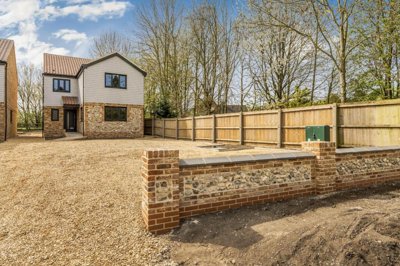
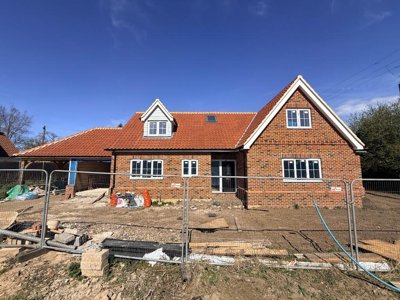
Browse 2 homes new builds in Wretham, Breckland from local developer agents.
The Wretham property market offers detached, semi-detached, and terraced houses spanning various price ranges and neighbourhoods. Each listing includes detailed property information, photographs, and direct contact with the marketing agent.
£495k
6
1
56
Source: home.co.uk
Showing 6 results for Houses new builds in Wretham, Breckland. 1 new listing added this week. The median asking price is £495,000.
Source: home.co.uk
Detached
4 listings
Avg £647,500
Semi-Detached
1 listings
Avg £220,000
Terraced
1 listings
Avg £575,000
Source: home.co.uk
Source: home.co.uk
Buyers looking at Wretham are meeting a market that has shifted quite sharply. Over the past year, the average sold price was £307,500, while homedata.co.uk puts it slightly higher at £317,500. Across the wider IP24 postcode district, covering Wretham and the market town of Thetford, the average stands at £300,000. Prices have corrected noticeably, down 29% on the previous year and 40% below the 2022 high of £516,250, which may open the door for first-time buyers and investors who were priced out at the peak.
Most recent sales here have been detached homes, with an average of £311,667, while semi-detached properties sit nearer £295,000. That fits Wretham well, as buyers are usually coming for a rural setting and family houses with decent gardens rather than higher-density stock. Because this is such a small village, transactions are limited and each listing can draw strong interest. Across Norfolk there were 11,600 property sales in the last twelve months, a fall of 14.1%, but Wretham tends to hold attention from buyers putting countryside character ahead of town-centre convenience.
New build choice is there, although in small numbers across the IP24 area. In the village itself, Walnut Farm Developments includes an exclusive two-plot site, giving buyers a chance to secure a brand new home built to modern standards without losing the feel of the setting. There is also Britannia Grange on Victory Way in East Wretham, where available house types include The Beauford and The Braxton Special.

Day-to-day life in Wretham revolves around community and the Breckland landscape. The parish is made up of East Wretham and West Wretham, two settlements with their own identity and history. In East Wretham, St Ethelbert's parish church is a Grade II* listed building, first built in the 12th century and rebuilt in 1865. Its tower still marks the village out across the surrounding farmland and remains a natural focal point for gatherings and seasonal events through the year.
West Wretham has a very different landmark. The ruins of St Lawrence church, a 14th-century Scheduled Monument and Grade II listed building, give the place a striking sense of age and continuity. People interested in the region's church history are often drawn to it, and the setting itself is quiet and reflective. Put beside the still-active parish church in East Wretham, those ruins say a lot about the layered past of this small community and its long relationship with the surrounding land.
The Breckland setting shapes everyday life here as much as the housing stock does. Sandy heathland, pine forest and open farmland define the Norfolk brecks, a landscape unique in Britain. Footpaths and bridleways link Wretham with nearby villages and wider countryside routes, so residents can get straight out into heath, woodland and farmland. Local events run across the year as well, and in a parish of under 400 people that tends to keep neighbourly ties strong.
For a village of its size, Wretham has a lively community scene. The local association arranges social events, activities in the village hall and seasonal get-togethers that keep people in touch across the year. The hall acts as the practical centre of village life, hosting quiz nights, craft sessions and meetings for local clubs and societies. Anyone moving from a larger town often notices the slower pace first, then the fact that the social side is still very much there.

Schooling is not on the doorstep, but families considering Wretham do have options within a manageable drive. The village sits within the Norfolk local education authority, covering primary and secondary schools across Breckland. Nearby villages and market towns provide the main primary provision, with the closest schools generally serving communities within a 10-mile radius of Wretham. That smaller rural-school setting is often a big part of the appeal for parents looking for closer teacher-pupil relationships and strong pastoral support.
Wretham families can look towards village primaries in places such as Croxton, Stanford and Saham Toney, all serving the wider rural catchment. These schools often benefit from smaller classes and close community links, which many parents see as a real strength compared with larger urban settings. Norfolk also has church primary and secondary schools for families who want a faith-based option and are researching what is available near Wretham.
For secondary education, most routes lead towards Thetford or Attleborough, both reachable by local bus or by car. Attleborough High School is one of the main choices for families in the southern part of Breckland, while Thetford has several secondary schools serving the IP24 postcode district. Norfolk also has a number of established secondary schools and sixth form colleges across the wider area, and some families look further afield at boarding or specialist schools where a longer journey brings a particular academic or vocational pathway.
Anyone buying with schooling in mind should check catchment areas and admissions carefully before committing to a property in Wretham. Placements can turn on individual circumstances, and the county's school performance information, alongside Ofsted reports, helps parents compare provision across the region. For families focused on academic results, it is sensible to look at more than one school and think through transport as well, especially as catchment boundaries can shift and performance grades do change over time.

Although Wretham is rural, road links are one of its practical strengths. A network of A-roads connects the village with nearby towns and villages, and the A11 trunk road runs through the wider Breckland area, giving direct routes north to Norwich and south to Cambridge. That matters for commuters, as Wretham is about 20 miles south of Norwich and around 35 miles north of Cambridge via the A11 corridor. Under normal traffic conditions, many residents can reach Norwich in roughly 45 minutes by car.
Thetford, around 5 miles away, fills many of the gaps that a small village naturally leaves. It is the main service and shopping centre for the surrounding countryside, with supermarkets, healthcare, banks and a broader retail offer all within a short drive of Wretham. The town also supports local employment, including the Breckland district council offices and a range of businesses based in the centre and on nearby industrial sites.
Public transport is limited but useful. Local bus services connect Wretham with nearby market towns, including Thetford, and that gives residents without a car access to shopping, medical appointments and onward travel. Routes across the IP24 postcode area also feed into Thetford town centre, where the wider public transport network, including rail services, becomes available.
For rail travel, the nearest stations provide links to Norwich, Cambridge and London Liverpool Street through the Fen Line and other regional services. From Norwich station, direct trains to London Liverpool Street take about two hours, while Cambridge station can get you into the capital in around 45 minutes. For flights, Norwich Airport handles domestic and European routes, and London Stansted is the broader option, reachable in about 90 minutes by car via the A11 and M11 corridor.

A good place to start is with current listings in Wretham and the villages around it. The average of £307,500 gives a useful benchmark, but buyers still need to weigh up a mix of detached houses, smaller cottages and the quirks that come with a village with real heritage. Because transaction volumes are low in a place this size, well-priced homes do not always sit around for long. Keeping an eye on new instructions can make a real difference.
Before you line up viewings, we suggest getting a mortgage agreement in principle from your lender. It sets out your borrowing position and shows sellers you are able to move quickly once the right property appears. With detached homes in Wretham averaging £311,667, having the finance side in order can take a lot of uncertainty out of the process. In smaller rural markets, sellers often respond well to buyers who can show their position clearly from the start.
Then it is time to view the properties that fit what you need, and to look properly at the village while you are there. Check condition, garden size and any likely renovation work that could change the budget. In Wretham, older and heritage homes form part of the local stock, so seeing places in different seasons can be helpful, especially for access, light and how the setting feels. A chat with existing residents can also tell you more than a sales brochure ever will.
Once you have found the right house, we usually advise booking a RICS Level 2 Survey before you go further. It is designed to pick up structural defects, maintenance issues and problems that may not show during a viewing, which matters all the more in older village homes with original materials and older construction methods. Costs are commonly between £400 and £1,000, depending on size and complexity. If the property is listed, noticeably old or heavily altered, a RICS Level 3 Survey may be the better choice.
Selecting the right conveyancing solicitor is the next key step. They will deal with the searches, go through the contract papers and liaise with the seller's side as the purchase moves along. In Norfolk, plenty of buyers prefer solicitors who know rural transactions well, especially where listed buildings, agricultural land or unusual tenure arrangements are involved. Search costs often cover local authority and drainage enquiries, plus registration fees, adding about £300 to £500 to the legal bill.
After the survey and contract terms are agreed, your solicitor can move matters on to exchange and fix a completion date that works for both sides. In Wretham, the period from exchange to completion is often between four and eight weeks, though it depends on how involved the transaction is and how quickly everyone can act. Completion day is the handover point, keys collected, move arranged, village life beginning.
Buying in a rural Norfolk village brings a few checks that go beyond the standard process. In Wretham, some homes may be listed or sit in sensitive spots close to historic landmarks such as St Ethelbert's church in East Wretham or the ruins of St Lawrence in West Wretham. It is sensible to confirm whether planning restrictions apply and what they could mean for later alterations or extensions. Where a property is designated, listed building consent from Breckland Council may be needed, and that can add both time and cost to works that might be straightforward elsewhere.
Ground conditions are another point worth covering during the survey. The Breckland area's geology is distinctive, and while specific shrink-swell risk data for Wretham was not identified in the available research, clay soils found across East Anglia can affect foundations in drought or after prolonged rain. A proper building survey should highlight movement or drainage concerns already present, and surveyors used to Norfolk housing can judge how local conditions may affect the property in front of them. Edge-of-village homes may also need checks on rights of way, easements or common land.
On the broader picture, flood risk in Wretham is considered very low in Norfolk-wide assessments. Even so, buyers should still check the GOV.UK flood risk service against the exact property address and look at any nearby watercourses within the village. Strategic Flood Risk Assessments used in Norfolk planning push development away from higher-risk areas, and the raised Breckland heaths generally give more natural protection than lower parts of the county enjoy. Localised surface water flooding can still happen, so the site-specific check matters.
Older village houses often come with practical details that town buyers do not always expect. In small rural communities, private drainage, such as septic tanks or treatment plants, is fairly common instead of mains sewage, and upkeep can cost around £100 to £300 each year depending on the system and how much it is used. Energy efficiency can vary widely too, especially in pre-war homes with solid walls and lower insulation levels than newer properties. An EPC can help you gauge running costs, identify possible upgrades and flag any urgent issues that could affect borrowing or insurance.

Recent figures place Wretham's average house price at £307,500 based on home.co.uk listings data over the past year, with homedata.co.uk showing a close £317,500. Detached homes average £311,667 and semi-detached homes around £295,000. Compared with the previous year, values are down 29%, and they remain 40% below the 2022 peak of £516,250. Across the wider IP24 postcode district, which includes Wretham, average prices are roughly £300,000, so the village is broadly in line with nearby Thetford-area values.
For council tax, Wretham properties sit within Breckland Council's area, with district offices at Elizabeth House in Dereham. The exact band depends on the individual home, but properties generally fall somewhere between A and H, with smaller or older village homes more often appearing in the lower bands. The clearest way to confirm a band is to contact Breckland Council or check the specific property through the Valuation Office Agency website, where you can also see whether any discount or exemption may apply.
There is no school within Wretham itself, so families rely on nearby villages and market towns for both primary and secondary education. The closest primaries generally serve communities within about 10 miles and often appeal because of their smaller classes and stronger local relationships. For older pupils, Thetford and Attleborough provide the main secondary options, reachable by bus or car. Norfolk County Council's admissions portal is the practical place to check catchment areas, places and policy details.
Transport links are modest but workable. Wretham is served by local bus routes to nearby towns, including Thetford, which is about 5 miles away and gives access to more services as well as rail connections. Across the IP24 postcode area, buses help residents reach supermarkets, healthcare and railway stations without relying entirely on a private vehicle. By road, the A11 makes Norwich and Cambridge straightforward to reach, with normal journey times of about 45 minutes to Norwich and around one hour to Cambridge. The nearest stations then extend those links onwards to Norwich, Cambridge and London Liverpool Street via Fen Line services.
Wretham is not an urban investment market, and that changes the calculation. Its appeal tends to be lifestyle-led, with rural surroundings, heritage housing and a quieter environment attracting buyers looking at long-term holds or holiday let potential rather than fast turnover. Since prices have come back markedly from the 2022 peak, current levels may look attractive to investors prepared for steadier growth. The trade-off is that the small population and limited local employment base may keep capital growth more modest than in stronger town markets, and owners need to budget for heritage upkeep, renovation voids and the seasonality that can affect holiday let income.
For 2024-25, stamp duty on residential purchases is charged at 0% on the first £250,000, 5% on the portion from £250,001 to £925,000, 10% from £925,001 to £1.5 million, and 12% above £1.5 million. First-time buyers get relief on the first £425,000, with 5% payable from £425,001 to £625,000. On a typical Wretham purchase at £307,500, a standard buyer would pay about £2,875, which is 5% on the £57,500 above the threshold. A first-time buyer purchasing at or below £425,000 may qualify for full relief, which can make the village more approachable for those buying their first home.
New build supply in Wretham stays limited, largely because the village has a conservation character and not many obvious development plots. Walnut Farm Developments is bringing forward a brand new detached home in Wretham within an exclusive two-plot scheme, offering something quite unusual for buyers who want a newly built house in the village rather than an older resale property. Britannia Grange on Victory Way in East Wretham is another option in the parish, with plots including The Beauford and The Braxton Special. Modern energy performance, current build standards and warranty cover are obvious advantages, although new build prices often sit above the village average.
Older homes in Wretham need a bit more checking than a straightforward modern purchase. That is especially true for properties near St Ethelbert's church in East Wretham or homes tied in some way to the village's agricultural history. Listed status under the Planning Listed Buildings and Conservation Areas Act limits what can be altered without consent, even where similar work on an unlisted house might be routine. Buyers should confirm status with the local planning authority, review any earlier listed building consent for past works and allow for the cost of heritage-appropriate repairs in the overall budget.
The purchase price is only part of the total cost of buying in Wretham, so careful budgeting matters from the outset. Stamp duty land tax is usually the biggest extra, and it is worked out using the current residential thresholds for England and Northern Ireland. On a Wretham property valued at £307,500, a standard buyer would pay £2,875 after the 0% band on the first £250,000 and the 5% charge on the remaining £57,500 above that threshold.
Legal and survey costs soon add up. Conveyancing fees commonly run from £499 to £1,500 depending on the property's value and how complicated the transaction is, and rural homes can involve extra work around rights of way, drainage or agricultural ties on the title. Disbursements, including local authority searches, drainage searches and registration fees, usually add another £300 to £500, and environmental searches are often sensible given the mix of residential and agricultural land nearby. A RICS Level 2 Survey generally costs £400 to £1,000, while an EPC for the sales listing starts from £85.
Finance and moving costs need their own line in the budget. Mortgage arrangement charges, valuation fees and broker fees may all apply if you use a financial adviser, with arrangement fees ranging from £0 to £2,000 depending on the lender and mortgage product, although fee-free deals are now common. Removal costs for a local move are often between £300 and £1,500, and that is before any storage or utility connection charges. Buildings insurance should be active from exchange, while contents cover can usually wait until completion is close and the move-in date is set.
We usually recommend leaving room for the unexpected. A contingency of ten to fifteen percent above the purchase price can cover buying costs and any issues that surface during conveyancing or in the survey. If the property needs updating, it is also wise to hold back a further ten to twenty percent of the planned renovation budget, as older homes often reveal more once work starts. That kind of preparation makes the Wretham search far easier to handle when the right house comes up.

Properties New Builds In London

Properties New Builds In Plymouth

Properties New Builds In Liverpool

Properties New Builds In Glasgow

Properties New Builds In Sheffield

Properties New Builds In Edinburgh

Properties New Builds In Coventry

Properties New Builds In Bradford

Properties New Builds In Manchester

Properties New Builds In Birmingham

Properties New Builds In Bristol

Properties New Builds In Oxford

Properties New Builds In Leicester

Properties New Builds In Newcastle

Properties New Builds In Leeds

Properties New Builds In Southampton

Properties New Builds In Cardiff

Properties New Builds In Nottingham

Properties New Builds In Norwich

Properties New Builds In Brighton

Properties New Builds In Derby

Properties New Builds In Portsmouth

Properties New Builds In Northampton

Properties New Builds In Milton Keynes

Properties New Builds In Bournemouth

Properties New Builds In Bolton

Properties New Builds In Swansea

Properties New Builds In Swindon

Properties New Builds In Peterborough

Properties New Builds In Wolverhampton

Enter your details to see if this property is within your budget.
Loans, cards, car finance
Estimated property budget
Borrowing + deposit
You could borrow between
Typical borrowing
Monthly repayment
Est. at 4.5%
Loan-to-value
This is an estimate only. Your actual budget may vary depending on interest rates, credit history, and personal circumstances. For an accurate affordability assessment, speak to one of our free mortgage advisors.
This calculator provides estimates for illustrative purposes only and does not constitute financial advice. Your home may be repossessed if you do not keep up repayments on your mortgage. Estimates based on 4.5% interest rate, repayment mortgage. Actual rates depend on your circumstances.
Homemove is a trading name of HM Haus Group Ltd (Company No. 13873779, registered in England & Wales). Homemove Mortgages Ltd (Company No. 15947693) is an Appointed Representative of TMG Direct Limited, trading as TMG Mortgage Network, which is authorised and regulated by the Financial Conduct Authority (FRN 786245). Homemove Mortgages Ltd is entered on the FCA Register as an Appointed Representative (FRN 1022429). You can check registrations at NewRegister or by calling 0800 111 6768.

We use cookies to show you personalised content and improve your experience of our website. Find out more in our Privacy policy and Cookie policy.