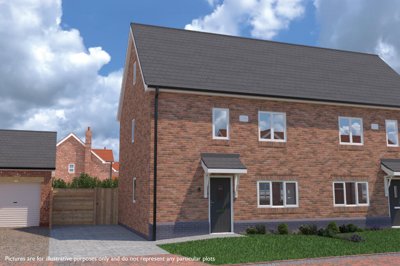
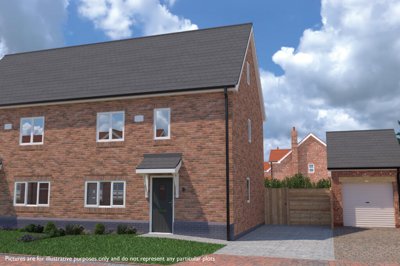
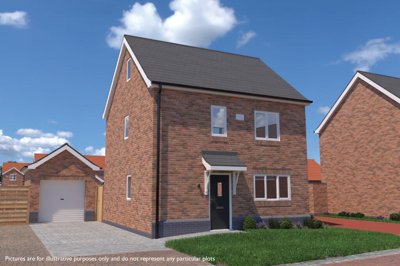
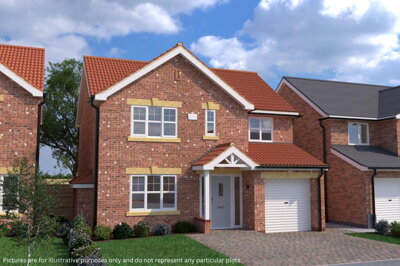
Browse 7 homes new builds in Winterton, North Lincolnshire from local developer agents.
The larger property sector typically features multiple bathrooms, substantial reception space, and private gardens or off-street parking. Four bedroom houses in Winterton span detached, semi-detached, and occasionally terraced configurations, with styles ranging from period properties to modern executive homes.
£272k
8
0
151
Source: home.co.uk
Showing 8 results for 4 Bedroom Houses new builds in Winterton, North Lincolnshire. The median asking price is £272,475.
Source: home.co.uk
Detached
7 listings
Avg £305,707
Semi-Detached
1 listings
Avg £254,950
Source: home.co.uk
Source: home.co.uk
House prices in Winterton give buyers a mix of older homes and newer stock without reaching the levels seen in many other parts of the UK. Detached houses sit at the top end at an average of £285,905, while semi-detached homes are the most common sale type, making up 44.4% of all transactions and averaging £188,594. At the lower end, terraced properties come in at around £119,983, which keeps them firmly on the radar for first-time buyers. Across 2025, the median sale price was £210,000 from 72 completed sales, a useful guide when weighing up current conditions.
Fresh supply is coming through in Winterton. Roman Meadows, built by Keigar Homes in DN15 9FL, includes 2, 3, 4, and 5 bedroom houses and bungalows, with local limestone and rustic brick used to reflect the town's established character. Behind 99 North Street, Scothern Construction has planning permission for 65 homes, covering two-storey houses and bungalows from 2 to 5 bedrooms, and current plots range from £164,950 for a 2-bedroom semi-detached to £369,950 for a 5-bedroom detached. For buyers who want warranties, lower upkeep, and modern energy efficiency standards, these schemes widen the choice considerably.
Recent activity has eased back a little, with transaction volumes down by around 35% on the previous year. Prices, though, have been fairly steady, with annual growth of about 0.86% according to homedata.co.uk. That softer pace can help buyers, especially where competition has thinned out, but Winterton's relative affordability and established community still draw interest. homedata.co.uk also puts the average sold house price at £189,845, which points to broadly consistent values across the data.

Winterton is home to roughly 5,024 residents living in 2,070 households, giving it the sort of settled feel that suits both families and retirees. Its historic identity is protected through the Conservation Area, covering the traditional market town centre and parts of the early 20th-century housing. Within the older core, local limestone, red brick, and clay pantiles or plain tiles are common, a building tradition long associated with North Lincolnshire. Roughly coursed limestone walls with brick detailing give the place its own look, and newer schemes have sensibly picked up on that so the town still reads as one whole.
Around the Church of All Saints, the Conservation Area is at its strongest. The church itself, with Saxon and Norman origins, is Grade I listed and speaks plainly to Winterton's medieval role as a market town. The Hall is Grade II*, while The Chains, Beech House, and Blankney House are all Grade II, adding plenty of architectural interest to the centre. There are also many well-composed late 19th century buildings here that fall outside statutory listing because of the tighter criteria applied to post mid-1800s buildings, but they still matter to the character of the streets. Outside that older core, large northern and western expansions have more than doubled the original settlement, so the town now offers a broader spread of neighbourhoods.
Daily life is straightforward here, with shops, pubs, and community facilities in the town itself, while Scunthorpe is close by for broader shopping, healthcare, and leisure. Beyond the built-up area, the North Lincolnshire landscape opens out quickly into farmland and walking country. The setting near the Lincoln Edge and the Trent Valley also gives residents a wider choice of scenery if they like to spend time outdoors.

For families, schooling is often one of the first things to pin down. Winterton's primary provision is based around established local schools serving the town and nearby villages, covering children from Reception to Year 6, and Ofsted ratings can help as a starting point. We always suggest checking the latest performance information and looking closely at catchment boundaries before committing to a property. In Winterton, that matters, because the divide between older streets and newer housing can mean neighbouring roads fall into different catchments.
Secondary education sits across the wider North Lincolnshire area, and pupils travel out from Winterton using local transport links. For older students, sixth form and further education are available in Scunthorpe, giving routes through to age 18 and beyond. Some buyers also look at independent schools elsewhere in North Lincolnshire, whether for specialist, faith-based, or independent education. Before moving, we recommend confirming current admissions arrangements and any planned changes to school capacity or catchment boundaries with North Lincolnshire Council's education department.
School access can shape values just as much as the house itself. Homes inside sought-after catchments often attract stronger demand, while properties in oversubscribed areas can still present good value despite that pressure. In practice, most family buyers end up balancing catchment appeal against space, condition, and price rather than treating any one factor in isolation.

Winterton works well for commuters because it stays semi-rural without feeling cut off. The M180 runs nearby and gives direct routes west to Doncaster and east to Grimsby, while the M181 links straight into Scunthorpe for work and day-to-day services. That makes the town a sensible base for people employed in manufacturing, logistics, and engineering, all of which have a strong presence in the North Lincolnshire economy. Nearby, the Phoenix Meadows development in Scunthorpe is another example of how the M181 supports residents who need quick motorway access for longer trips.
Bus links between Winterton and Scunthorpe provide the main public transport option for anyone without a car. For rail travel, people usually head to stations in Scunthorpe, Doncaster, or Hull, where there are wider national connections. Doncaster sits on the East Coast Main Line, with regular trains to London, Edinburgh, and other major cities, while Hull adds useful links across the north. Humberside Airport is the nearest option for regional flights, and East Midlands Airport broadens the choice for international and business travel.
Getting around day to day depends a lot on where you buy. Newer developments tend to show more thought for cycling and other sustainable transport, while the older parts of town rely more heavily on traditional road layouts. In the centre, parking is available for residents and visitors, although street parking is still the norm in historic neighbourhoods. Anyone commuting regularly should allow for busier stretches at peak times, especially on routes towards Scunthorpe and the motorway junctions.

It helps to compare Winterton's different pockets before narrowing your search. We would look at neighbourhood character, school catchments, and the kinds of homes found in each part of town, then weigh that against your budget and plans. Conservation Area rules also matter if you are drawn to older buildings. A house around Church Lane or North Street will bring different responsibilities, restrictions, and renovation possibilities from a place in one of the northern expansion areas.
Getting an Agreement in Principle in place before you start viewing can make a real difference. Sellers tend to take offers more seriously when the funding side is already lined up, and it puts you in a stronger position if there is competition. With Winterton's average property price at about £217,300, many buyers will find a reasonable spread of mortgage products available. We would still speak to a broker who knows the North Lincolnshire market well, because that can help you sort through the rates and lending criteria that best fit your circumstances.
Seeing a spread of homes at different price points is the quickest way to get a feel for what Winterton currently offers. Through our platform, we put buyers in touch with local estate agents who can set up viewings and talk through each listing in more detail. That can include practical background such as earlier sale prices, time on market, and the seller's position, all of which can shape how firmly or cautiously you negotiate.
Once an offer has been accepted, we would arrange a professional survey before you go any further. Winterton has everything from older limestone buildings to modern homes, and the condition issues are not the same across that range. Properties built before modern damp-proof courses can show rising damp, and clay tile roofs may need ongoing maintenance. A qualified surveyor can pick up those local construction points before you are fully committed.
Next comes the legal work, so we would appoint a conveyancing solicitor to deal with searches, contracts, and title registration. Someone used to North Lincolnshire property can also flag local points that matter, including Conservation Area restrictions, flood risk linked to Winterton Beck, and any mining or geological issues affecting a particular address.
The final stage is exchanging contracts through your solicitor, dealing with stamp duty, and collecting the keys. At Winterton's average price of £217,300, many buyers will have minimal or zero stamp duty to pay, although the exact figure depends on personal circumstances and whether first-time buyer relief applies. It is a simple point, but one worth confirming early rather than late.
Winterton's housing stock spans a wide age range, so condition and construction type deserve close attention on every purchase. Within the Conservation Area, many older homes are built in traditional limestone and brick with clay tile roofs, and they often need more upkeep than a new build, even if the character is hard to match. After 1850, Welsh slate became more common on higher-status properties, and any house with original detailing should be checked for the wear that comes with age. Older buildings without modern damp-proof courses may show rising damp, especially where solid limestone walls are involved, and any timber-framed sections should be inspected for rot or woodworm.
Ground conditions are another practical issue here. Much of North Lincolnshire has clay-rich soils, and those can be prone to shrink-swell movement in very dry weather or after heavy rain. One Phase 1 Desk Study for a Winterton property found minimal risk from coal mining and radon gas, but we would still ask for the right searches on the specific address you are buying. Towards the north end of the Lincoln Edge, the geology includes extensive sand and gravel deposits as well as several clays, so conditions can change from one part of town to another. If a property shows cracking or signs of movement, a structural engineer should assess it before matters progress.
Flood risk is not uniform across Winterton, so location matters. Winterton Beck is the main fluvial source, carrying drainage flows from the north-eastern part of Scunthorpe, and some places south of King Street have seen serious flooding in the past, with residents describing knee-deep water in homes and higher insurance costs. There is also a broader tidal flood risk to the east, affecting Whitton and Winteringham. Homes close to the beck or on lower ground may therefore come with steeper premiums, which is worth building into the numbers early. In the DN15 9UA area, one study recorded a 1-3% radon gas risk, while finding no risk from coal mining or landfill gas.
Anyone looking at a listed building or a home inside the Conservation Area should go in with clear eyes. Alterations, extensions, and external changes are controlled so the town's historic character is not gradually lost, and that can make renovation slower and more expensive, even if it also helps protect long-term values. The Hall is Grade II*, while The Chains, Beech House, and Blankney House are all Grade II, and those statuses come with specific obligations around maintenance and change. We would also confirm any service charges and leasehold terms on flats or leasehold homes, because those ongoing costs vary a lot. By contrast, schemes such as Roman Meadows offer freehold houses with no ground rent concerns, which appeals to buyers who want simpler ownership.
Buying costs in Winterton go beyond the agreed price, so we would total up stamp duty Land Tax, legal fees, survey fees, and removals from the outset. For standard purchases in 2024-25, SDLT is charged at 0% on the first £250,000, 5% on the slice from £250,001 to £925,000, 10% up to £1.5 million, and 12% above £1.5 million. With the average Winterton property at about £217,300, a buyer paying around that level would usually face no stamp duty on the first £250,000, which keeps SDLT to minimal or zero for many standard transactions.
First-time buyers get a more generous threshold. Relief applies at 0% on the first £425,000 and 5% on the portion from £425,001 to £625,000, so someone buying an average-priced home in Winterton would pay no stamp duty at all. Once the price goes above £625,000, that relief falls away. Anyone buying at the larger detached-house average of £285,905 should still check the calculation carefully against their own eligibility.
There are a few other costs that need to sit in the budget. Conveyancing fees often fall between £500 and £2,000 depending on complexity, and a RICS Level 2 Survey for a property in the Winterton price bracket is usually around £400 to £600. Removal charges then depend on distance and the amount being moved. Title registration fees and search fees add smaller extras as well. Survey pricing also moves with value and condition, with homes under £200,000 averaging about £384 and those above £500,000 averaging roughly £586 according to national data.
According to home.co.uk listing data, the average house price in Winterton, North Lincolnshire is about £217,300. The spread by property type is wide enough to matter, with detached homes averaging £285,905, semi-detached homes £188,594, and terraced properties around £119,983. Annual sales volumes have recently sat at about 59 to 72, and pricing has been comparatively steady, with only slight growth of approximately 0.
Council tax in Winterton is charged under North Lincolnshire Council, with properties placed into bands A to H according to the valuation set by the Valuation Office Agency. Given local price levels, many homes here are likely to sit in bands A to D rather than the upper bands. Even so, the exact band depends on the individual property, so we would check it for any address you are considering, either through the Valuation Office Agency records or during conveyancing, to keep the running costs accurate.
Schooling remains one of the main drivers for buyers moving into the town. Winterton has local primary schools serving both the town and surrounding villages, and Ofsted reports are a useful first check when comparing options. Secondary pupils usually attend schools elsewhere in North Lincolnshire, where catchment areas play a big part in admissions. We would review current inspection results and map the catchment position against your preferred streets, because places can be competitive in popular communities. For sixth form and further education, Scunthorpe provides the main route through to age 18 and beyond.
For transport, Winterton relies on a mix of bus links and strong road access. Buses connect the town with Scunthorpe, where rail services open up wider regional and national routes to places including Doncaster and Hull. Drivers benefit from the nearby M180 and M181, which link into Doncaster, Grimsby, Hull, and the broader motorway network. Local roads also tie Winterton into nearby villages and towns, although private transport is still a clear advantage for people working in Scunthorpe or commuting further afield. Humberside Airport covers regional flights, and Doncaster Sheffield Airport adds further domestic and international options.
Winterton can attract investors for fairly straightforward reasons, starting with average prices that remain modest against many national comparisons. It also has a settled local market with ongoing demand from working households and families. In 2024, North Lincolnshire was described as "jobs rich", with 76 full-time equivalent jobs per 100 working-age residents, a sign of the economic base supporting housing demand. Advanced manufacturing, renewable energy, and logistics all feed into that picture. At the same time, the North Street site is adding 65 homes, while transaction volumes have fallen by about 35% from earlier levels, so we would weigh rental demand, voids, and maintenance costs carefully against the purchase price before judging likely returns.
For a standard purchase in Winterton, SDLT is charged at 0% on the first £250,000, so a property at the average price of £201,843 would not trigger any SDLT. Between £250,001 and £925,000, the rate becomes 5% on the portion above £250,000, and higher-value homes attract higher bands beyond that. Eligible first-time buyers get 0% on the first £425,000 and 5% from £425,001 to £625,000, which would leave the average Winterton purchase fully exempt. We would also budget for conveyancing fees of roughly £500 to £2,000, a survey at around £400 to £600, and the cost of removals so the full moving figure is realistic.
There are no current flood warnings for Winterton, but long-term risk still needs proper attention. Winterton Beck is the chief fluvial source, carrying drainage from the north-eastern part of Scunthorpe, and areas south of King Street have suffered notable flood events before. Homes near the beck or on lower ground may therefore cost more to insure, which can alter affordability more than buyers expect. In the DN15 9UA area, a Phase 1 Desk Study found no risk from coal mining or landfill gas, although radon gas was recorded at 1-3%. As part of the legal process, we would want the usual drainage and environmental searches in place.
Buyers wanting a new build have a couple of clear options in Winterton. Roman Meadows, by Keigar Homes in DN15 9FL, has 2, 3, 4, and 5 bedroom homes as well as 2 bedroom bungalows, and the design uses local limestone and rustic brick to sit more comfortably with the town's older character. Behind 99 North Street, planning permission granted in December 2024 covers 65 homes, including two-storey houses and bungalows from 2 to 5 bedrooms, with current plots advertised from £164,950 for a 2-bedroom semi-detached to £369,950 for a 5-bedroom detached. For anyone who wants modern build standards, energy efficiency, and manufacturer warranties, these developments offer that without the upkeep often linked to older property.
From 3.84%
Finding the right mortgage for your Winterton purchase
From £499
Expert solicitors to handle your property purchase
From £400
Professional survey for your new home
From £80
Energy performance certificate
Properties New Builds In London

Properties New Builds In Plymouth

Properties New Builds In Liverpool

Properties New Builds In Glasgow

Properties New Builds In Sheffield

Properties New Builds In Edinburgh

Properties New Builds In Coventry

Properties New Builds In Bradford

Properties New Builds In Manchester

Properties New Builds In Birmingham

Properties New Builds In Bristol

Properties New Builds In Oxford

Properties New Builds In Leicester

Properties New Builds In Newcastle

Properties New Builds In Leeds

Properties New Builds In Southampton

Properties New Builds In Cardiff

Properties New Builds In Nottingham

Properties New Builds In Norwich

Properties New Builds In Brighton

Properties New Builds In Derby

Properties New Builds In Portsmouth

Properties New Builds In Northampton

Properties New Builds In Milton Keynes

Properties New Builds In Bournemouth

Properties New Builds In Bolton

Properties New Builds In Swansea

Properties New Builds In Swindon

Properties New Builds In Peterborough

Properties New Builds In Wolverhampton

Enter your details to see if this property is within your budget.
Loans, cards, car finance
Estimated property budget
Borrowing + deposit
You could borrow between
Typical borrowing
Monthly repayment
Est. at 4.5%
Loan-to-value
This is an estimate only. Your actual budget may vary depending on interest rates, credit history, and personal circumstances. For an accurate affordability assessment, speak to one of our free mortgage advisors.
This calculator provides estimates for illustrative purposes only and does not constitute financial advice. Your home may be repossessed if you do not keep up repayments on your mortgage. Estimates based on 4.5% interest rate, repayment mortgage. Actual rates depend on your circumstances.
Homemove is a trading name of HM Haus Group Ltd (Company No. 13873779, registered in England & Wales). Homemove Mortgages Ltd (Company No. 15947693) is an Appointed Representative of TMG Direct Limited, trading as TMG Mortgage Network, which is authorised and regulated by the Financial Conduct Authority (FRN 786245). Homemove Mortgages Ltd is entered on the FCA Register as an Appointed Representative (FRN 1022429). You can check registrations at NewRegister or by calling 0800 111 6768.

We use cookies to show you personalised content and improve your experience of our website. Find out more in our Privacy policy and Cookie policy.