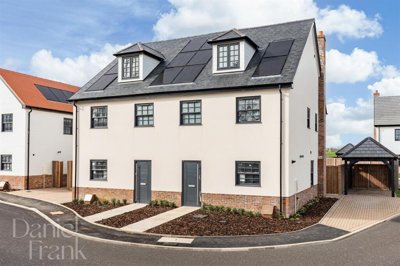
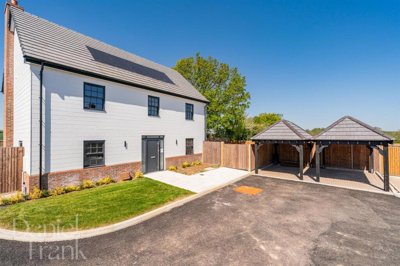
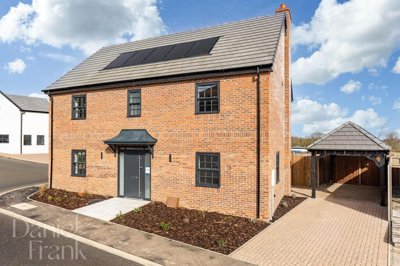
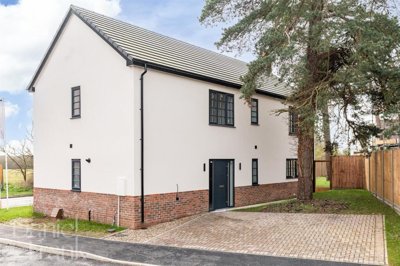
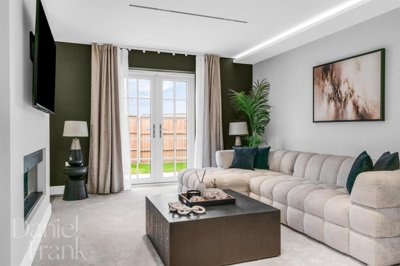
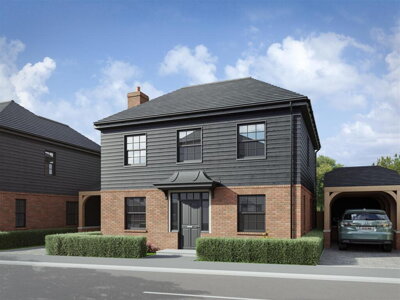
Browse 6 homes new builds in Willingale, Epping Forest from local developer agents.
The Willingale property market offers detached, semi-detached, and terraced houses spanning various price ranges and neighbourhoods. Each listing includes detailed property information, photographs, and direct contact with the marketing agent.
£1.63M
6
0
55
Source: home.co.uk
Showing 6 results for Houses new builds in Willingale, Epping Forest. The median asking price is £1,625,000.
Source: home.co.uk
Detached
5 listings
Avg £1.61M
Terraced
1 listings
Avg £350,000
Source: home.co.uk
Source: home.co.uk
Willingale in Epping Forest shows how sought-after rural Essex can be, and the numbers have moved sharply in recent years. Detached homes sit at the top of the market here, with a median sale price of £1,535,707 based on recent transactions. Semi-detached houses usually change hands for about £900,000, while terraced properties, rarer in this mainly rural village, have reached close to £350,000. Flats are scarce, so maisonettes and apartments are few and far between, and houses remain the main story.
Demand in Willingale has stayed strong among buyers after space, land and period detail, and homedata.co.uk has recorded house prices in the locality rising by 29.5% over the past twelve months. home.co.uk listings data shows overall sold prices were 63% up on the previous year, even though they are still about 23% below the 2020 peak of £1,717,500. That points to a market that has settled after a very sharp run, with some buyers now finding better entry points than they would have done at the height.
Detached homes dominate the village stock, which fits the rural setting and the larger plots typical of Essex village development. homedata.co.uk reports 143 sales across the broader Willingale area in recent periods, although the village itself turns over far fewer homes because the stock is so limited. That shortage keeps competition keen, and well-kept period properties can draw several enquiries in short order. For anyone searching for homes for sale in Willingale, moving quickly when the right place appears is usually sensible.
Willingale is a classic English village, with the quiet of rural Epping Forest and the sort of countryside setting people picture when they think of Essex. The parish also includes Willingale Doe and Willingale Spain, alongside the main village itself. Woodland and farmland lie close by, so walking, cycling and horse riding all fit naturally into daily life. It is a close community too, where neighbours know each other and village events keep people in touch through the year.
Heritage buildings give Willingale much of its character, from thatched cottages to period farmhouses tucked along the lanes. Many homes sit within the conservation area or carry listed status, which helps safeguard the look and feel of the village. The historic parish church and village hall anchor local life, while nearby Chipping Ongar provides the day-to-day shopping, eating out and services. Working farms and equestrian holdings around the parish keep the agricultural feel very much alive.
Set within the Epping Forest district, the village benefits from the conservation protections and public access that come with that designation. Hundreds of acres of woodland and common land are close at hand, linked by bridleways and footpaths into the wider countryside. Farming, equestrian activity and commuting into London and other employment centres all shape the local economy. The village hall hosts regular gatherings, and the parish church remains a natural meeting point for social life.

Willingale’s architectural story runs across several centuries, which is part of what makes the village so distinctive. Older houses include a strong showing of timber-framed buildings with rendered or brick infill panels, and many still have internal wattle and daub divisions. Thatch is another familiar sight. Reed and water reed roofs need specialist care, and that work is best left to craftspeople who know the traditional methods properly.
Red brick became more common through the Victorian and Edwardian years, and period farmhouses and estate cottages often used local materials where they could. Original sash windows with glazing bars, decorative fireplaces and exposed beam ceilings still turn up regularly, though each needs careful upkeep from specialist trades. Where these features are protected by listed status, any alteration has to be agreed with Epping Forest District Council first.
Grade II listed properties in Willingale come with the benefit of protection, but they also bring responsibilities around upkeep and repair. Our surveyors often come across historic alterations, choices made by previous owners and the effects of natural aging in traditional materials. Someone with experience of listed buildings can advise on suitable repair methods and materials that meet conservation requirements while still dealing properly with defects.
Families looking at Willingale will find schooling within a reasonable drive across Epping Forest district, even though the village itself has no school facilities. Several well-regarded primary schools in nearby towns such as Chipping Ongar sit within reach, so younger children do not need especially long journeys. St. Clare Primary School and coil Primary Academy in Ongar both offer options within a few miles, and neighbouring villages add more state primary places for those happy to travel a little further.
For secondary education, families look to schools in Epping, Loughton and Brentwood, with some also choosing independent schools in the region. Essex’s grammar school system gives academically selective options too, and King Edward VI Grammar School in Chelmsford draws pupils from a wide area. Shenfield High School and Brentwood County High School are among the better-known non-selective choices, each serving its local community with broad subject ranges.
Nurseries, preschool provision and childminders can be found in the village and in neighbouring communities, which helps families with younger children. The rural setting means transport planning matters, especially once school age arrives, and many parents build journey times into their property search. Brentwood and Chelmsford remain popular for secondary education, while colleges in Chelmsford, Southend and other nearby towns provide sixth form and further education options with A-level and vocational courses.
Road links are the backbone of travel from Willingale, tying the village into the wider Essex network and onward to London. The A414 runs through nearby towns and reaches the M25 at junction 27, which opens up greater London and the national motorway system. Commuters can also reach Epping, where the London Underground Central line gives a direct run into central London in around 40 minutes. The village’s Lea Valley corridor position also puts Chelmsford and Colchester within reach for those working in Essex’s main towns.
Rail travel comes via nearby Shenfield and Brentwood, both offering mainline services to London Liverpool Street, usually in about 35-45 minutes depending on the train. Crossrail has widened the commuting options from stations on the Shenfield line, with quicker journeys across London and on towards Reading and Heathrow. Shenfield is the key interchange, combining Crossrail services with the traditional mainline trains that still run alongside the Elizabeth line.
Bus links from Willingale reach surrounding villages and market towns, though the timetable is sparse, as you would expect in a rural area. Route 44 and similar services run to Chipping Ongar and Epping, but it is wise to check evening and weekend times carefully. Many households here are dual-car, since cars are the easiest way to commute and to get to the wider range of shops and services. Cycling is possible too, although the rural roads mean it suits experienced riders best, even if the ground between village and town is fairly flat.
For everyday shopping and errands, most Willingale residents head to Chipping Ongar, about three miles from the village centre. There are independent shops, cafes, a pharmacy, a medical centre and dental practices there, so most routine needs can be met without a long trip. If more choice is needed, Epping has larger supermarkets and high street names as well as independent stores.
Healthcare in the area is served by Ongar Surgery and Queensway Medical Centre nearby, while hospitals in Chelmsford and Basildon handle more specialist care. Veterinary practices are well used too, given the number of horse owners and pet keepers locally, and several equine specialists work from yards around the area. Riding schools and livery facilities in and around Willingale add to its appeal for buyers who want stabling and paddock space.
Golf clubs, fitness centres and sports facilities in nearby towns give residents plenty of options for leisure, while Epping Forest itself provides huge amounts of outdoor recreation right on the doorstep. The village hall runs clubs and societies ranging from art groups to yoga classes, which helps keep the community lively. Pubs in Willingale and surrounding villages also act as social hubs, and several serve food and stage events through the year.
Start with the current listings in Willingale so you can see what is actually available at your budget. Because the village is popular and stock is limited, it pays to watch new homes closely and set alerts for properties that fit your brief. A local estate agent who knows village sales well can also point you towards homes before they reach the main portals.
Before you book viewings, get a mortgage agreement in principle from a lender. It shows sellers that you are serious and financially ready, which matters in a market that can move quickly. Detached homes in Willingale often go beyond £1 million, so make sure the borrowing you have in place matches the sort of property you are chasing.
See any suitable property in person, and take time to judge the condition, the position within the village and how near it sits to local amenities. It helps to walk the area at different times of day too, so you get a feel for noise and traffic. We would also look closely at the road surfaces, the distance to the nearest schools, and the strength of mobile signal and broadband.
Because so many Willingale homes are old, including listed buildings and thatched properties, a full survey is a must. A Level 2 survey will pick up structural movement, damp, timber defects and the issues that often crop up in period homes. Our surveyors know the village’s heritage stock well and can talk through the particular challenges that traditional construction brings.
Once your offer is accepted, instruct a solicitor to deal with the legal side of the purchase. They will carry out searches, review the contract and oversee the transfer of ownership through to completion. Those searches should cover local authority records, environmental information and drainage checks tied to the village location.
Your solicitor will work with the seller’s representatives to exchange contracts and agree a completion date. On completion day, the balance is sent across and you receive the keys to your new Willingale home. We would also suggest arranging buildings insurance before completion and booking a detailed inspection soon after you move in.
Buying in Willingale means paying close attention to the points that are specific to rural Essex village living and to the age of the local housing stock. A lot of the homes here are centuries old, built in traditional ways that may include timber-framing, thatch roofing and solid walls without modern damp-proof courses. A thorough building survey should look at the structure, the roof and any extensions or alterations made over time. Where Grade II listed status applies, any future changes will need Listed Building Consent from Epping Forest District Council.
The geology around Willingale is worth checking carefully, because Essex sits on London Clay, and that has shrink-swell potential that can lead to subsidence in vulnerable properties. Homes close to mature trees deserve special attention, and a surveyor will want to know whether foundation depths and tree protection measures are suitable. Drainage can also be an issue in rural settings, so we check septic tank or cess pit maintenance, private water supplies and surface water management, all of which can differ from modern standards.
Flood risk should not be brushed aside either, because surface water drainage in the countryside can struggle during heavy rain. Willingale lies near minor watercourses that feed into the River Roding system, and lower-lying plots or homes near drainage ditches can see water gather from time to time. It is sensible to ask about any previous flooding in the property and the surrounding area before you proceed. Tenure also needs checking, as some homes may have unusual leasehold arrangements or share-of-freehold structures that need specialist guidance.
Older Willingale properties often have electrical and plumbing systems that predate modern safety standards and building regulations. Homes that have not been updated since the 1970s or earlier may need rewiring, while plumbing from that period can include lead or galvanised steel pipes that should be replaced. Our survey reports set these matters out clearly, so you can budget for the work or adjust your offer accordingly.
Average house prices in Willingale vary depending on the source. home.co.uk puts the overall average at about £1,325,000 over the last year, while homedata.co.uk shows £1,070,000. homedata.co.uk also reports a median price of £395,000, though that may reflect different village boundary definitions. Detached homes usually achieve £1,535,707 and semi-detached homes sell for around £900,000. Over the past twelve months, homedata.co.uk data shows growth of approximately 29.5%. For most buyers looking for homes for sale in Willingale, detached period properties in the £1 million to £1.5 million range make up the core of the market.
Willingale falls under Epping Forest District Council, and council tax bands run from A through to H depending on value. Most period homes here, including traditional cottages and farmhouses, are likely to sit in bands D through F because of their character and the features buyers want. Exact bands depend on the individual valuation, and buyers can check them through the Epping Forest District Council website or the Valuation Office Agency. A band D property in this district currently attracts annual council tax of about £1,800 to £2,000.
There are no schools within Willingale itself, but the village does sit within primary catchment areas for nearby Chipping Ongar and the surrounding villages. St. Clare Catholic Primary School and Ongar Primary Academy are popular choices within a short drive, both with good Ofsted ratings. Secondary options include schools in Epping, Loughton and Brentwood, while Essex grammar schools in Chelmsford remain available for academically selective pupils. Current catchment areas and admission rules are worth checking, since they can affect placements and, in some parts of the village, property values too.
Public transport in Willingale is limited, which is exactly what you would expect from a rural village. Buses link the village with nearby towns such as Chipping Ongar and Epping, although frequencies are lower than in urban areas and some services run only on certain days of the week. Epping is the nearest London Underground station on the Central line, with central London roughly 40 minutes away. Shenfield and Brentwood offer mainline rail services to London Liverpool Street in 35-45 minutes, and most residents still depend on private cars for commuting and errands.
Willingale has shown steady price growth, with homedata.co.uk putting the rise at approximately 29.5% over the past year. The village’s rural setting, heritage homes and proximity to London keep attracting buyers who want the village lifestyle without giving up connectivity. Tight supply and healthy demand suggest decent capital growth potential over the medium to long term. Still, the rural market is less liquid than an urban one, so anyone who may need to sell should plan for longer marketing periods. Rental demand is thin as well, mainly because there are so few smaller homes for tenants.
Stamp duty land tax from April 2024 starts at 0% on the first £250,000 of value, then moves to 5% up to £925,000, 10% up to £1.5 million and 12% above that. First-time buyers receive relief on the first £425,000, with 5% applying between £425,000 and £625,000. On a typical detached Willingale home priced at £1,535,707, a non-first-time buyer would pay about £38,125 in stamp duty on the portion above £925,000. A first-time buyer buying the same home would pay about £22,875, because relief applies to the first £425,000.
Willingale has a clear concentration of Grade II listed buildings, among them several thatched cottages and period farmhouses that define the village look. Listed homes are found throughout the settlement, with especially noticeable clusters along the main village lane and close to the historic parish church. The status protects the architectural and historical details, but it also limits what homeowners can do with alterations, repairs and changes. Before buying a listed property, it is wise to get specialist advice so the implications for future maintenance and any changes are fully understood.
Mobile coverage and broadband in Willingale can be patchy because of the rural location, so it is worth checking before you buy. Some parts of the village get good 4G from several networks, while others have weaker signal. Superfast broadband is available in parts of the village but not in every property, and speeds can fall short of what people are used to in towns and cities. Some homes still depend on satellite broadband or mobile hotspot solutions. We recommend checking with providers and testing the signal during viewings.
Working out the full cost of buying in Willingale matters, and stamp duty land tax is a sizeable part of the bill. The thresholds introduced in April 2024 apply to all buyers, although first-time buyers still get the enhanced relief that can cut the tax bill sharply. For a property at the village median of around £1,350,000, a standard buyer would pay about £30,875 in stamp duty after the nil-rate threshold of £250,000. A first-time buyer purchasing the same home would benefit from relief on the first £425,000, which brings the stamp duty down to about £22,875.
There is more to budget for than stamp duty. Solicitor fees usually sit somewhere between £500 and £2,000, depending on the property type and how complex the transaction is. Searches and local authority enquiries add several hundred pounds, and a detailed RICS Level 2 survey often costs £400 to £800, depending on size and value. Period homes in Willingale may also need specialist listed building surveys or checks on traditional construction. Land registry fees, mortgage arrangement fees and removal costs make up the rest of the usual buying bill.
Mortgage lenders often insist on buildings insurance from completion, and buyers should also keep council tax, utility bills and maintenance reserves in mind when judging affordability. Willingale homes can be more expensive to maintain than newer places because of their age and traditional build, with thatched roofs needing re-thatching every 20-40 years and timber-framed structures needing ongoing care to prevent timber decay. Setting aside 1-2% of the property value each year for maintenance is sensible for owners of period homes in the village.
Properties New Builds In London

Properties New Builds In Plymouth

Properties New Builds In Liverpool

Properties New Builds In Glasgow

Properties New Builds In Sheffield

Properties New Builds In Edinburgh

Properties New Builds In Coventry

Properties New Builds In Bradford

Properties New Builds In Manchester

Properties New Builds In Birmingham

Properties New Builds In Bristol

Properties New Builds In Oxford

Properties New Builds In Leicester

Properties New Builds In Newcastle

Properties New Builds In Leeds

Properties New Builds In Southampton

Properties New Builds In Cardiff

Properties New Builds In Nottingham

Properties New Builds In Norwich

Properties New Builds In Brighton

Properties New Builds In Derby

Properties New Builds In Portsmouth

Properties New Builds In Northampton

Properties New Builds In Milton Keynes

Properties New Builds In Bournemouth

Properties New Builds In Bolton

Properties New Builds In Swansea

Properties New Builds In Swindon

Properties New Builds In Peterborough

Properties New Builds In Wolverhampton

Enter your details to see if this property is within your budget.
Loans, cards, car finance
Estimated property budget
Borrowing + deposit
You could borrow between
Typical borrowing
Monthly repayment
Est. at 4.5%
Loan-to-value
This is an estimate only. Your actual budget may vary depending on interest rates, credit history, and personal circumstances. For an accurate affordability assessment, speak to one of our free mortgage advisors.
This calculator provides estimates for illustrative purposes only and does not constitute financial advice. Your home may be repossessed if you do not keep up repayments on your mortgage. Estimates based on 4.5% interest rate, repayment mortgage. Actual rates depend on your circumstances.
Homemove is a trading name of HM Haus Group Ltd (Company No. 13873779, registered in England & Wales). Homemove Mortgages Ltd (Company No. 15947693) is an Appointed Representative of TMG Direct Limited, trading as TMG Mortgage Network, which is authorised and regulated by the Financial Conduct Authority (FRN 786245). Homemove Mortgages Ltd is entered on the FCA Register as an Appointed Representative (FRN 1022429). You can check registrations at NewRegister or by calling 0800 111 6768.

We use cookies to show you personalised content and improve your experience of our website. Find out more in our Privacy policy and Cookie policy.