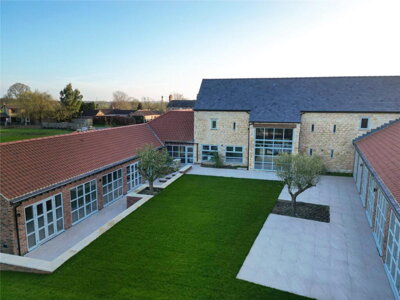
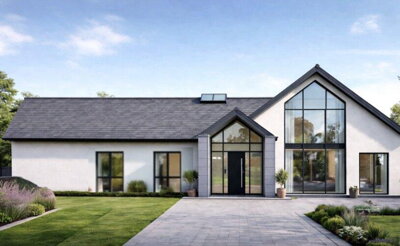
Browse 2 homes new builds in Wighill, North Yorkshire from local developer agents.
The Wighill property market offers detached, semi-detached, and terraced houses spanning various price ranges and neighbourhoods. Each listing includes detailed property information, photographs, and direct contact with the marketing agent.
£950k
3
0
234
Source: home.co.uk
Showing 3 results for Houses new builds in Wighill, North Yorkshire. The median asking price is £950,000.
Source: home.co.uk
Detached
3 listings
Avg £1.58M
Source: home.co.uk
Source: home.co.uk
Recent sales data shows that Wighill is firmly a house market, with detached homes leading the way. homedata.co.uk records show a 2025 median of £735,000 for detached properties, based on one sale, with Paddock Chase, Church Lane selling for £735,000 in February 2025. Earlier detached sales include The Orchard at £575,000 in October 2023, Brook Hall Farm at £1,250,000 in July 2023 and College Farm at £1,150,000 in May 2023. That spread tells you the village can cater for both premium rural homes and more modest character properties.
Smaller houses are present too, although the sample is limited. homedata.co.uk records show a semi-detached median of £250,000 in 2024, based on one sale at Lyntray House on Church Lane, while a terraced home at Halfway Tree sold for £265,000 in August 2024. No flats sales data is available, which is another sign that Wighill is more of a village house market than a flat market. There are also no active new-build developments in the LS24 8 area that could be verified from the research, so buyers searching for brand-new stock may need to widen their search.

Wighill feels like a small North Yorkshire parish village where homes are shaped by countryside living rather than dense estate development. The sales evidence points to a place with a strong preference for larger homes, especially detached properties, alongside a smaller supply of semis and terraces. Traditional brick construction appears common in the available listings, although the research does not identify one single dominant building type. That combination usually appeals to buyers who want individuality, garden space and a quieter street scene.
Specific census percentages, population totals and household counts were not returned in the research, so it is best to think of Wighill as a compact rural community rather than a built-up settlement. The same goes for geology, flood hotspots and conservation designations, where no verified local data was found. That does not mean those factors should be ignored, only that buyers should check drainage, surface water, planning history and any boundary issues themselves. For many movers, the appeal lies in being close to open countryside while keeping practical access to nearby Tadcaster and the wider North Yorkshire road network.
The research did not verify named schools inside Wighill itself, which is common for a village of this size. Families usually widen the search to the surrounding Tadcaster and North Yorkshire area, then confirm catchments before making an offer. Because school places and admission rules can change, the safest approach is to check current Ofsted reports and speak to North Yorkshire Council about the latest arrangements. If you need to move for a school run, a mortgage agreement in principle helps you stay ready when the right home appears.
For parents, the key question is often how the school routine fits around work, childcare and travel time. A rural village can be appealing for outdoor space and calmer streets, but it can also mean a slightly longer drive to primary or secondary school. No verified sixth form or further education data came back in the search results either, so older pupils may need options beyond the parish boundary. Buyers who want a family base in Wighill should weigh those practical details alongside the house itself.

Wighill is best treated as a driving village, with the local road network doing most of the heavy lifting for everyday travel. The research did not confirm a rail station within the parish, so rail commuters will usually travel from nearby towns rather than from the village itself. That suits many buyers who want country living but still need access to York, Leeds or the A1(M) corridor. Parking is usually easier than in town, although narrow lanes around older homes can feel tight at peak times.
Bus information was not verified in the research, so current timetables should be checked before you rely on public transport for a daily commute. Buyers who work flexibly often find that Wighill offers a useful balance between quieter surroundings and practical road reach. If you are commuting every day, ask the agent about morning traffic patterns, the best route out of the village and how long it really takes to reach your usual destination. Local knowledge often gives a truer picture than a map alone.
Cycling can work well for leisure and short trips, but the road layout may not suit everyone for a year-round commute. A test drive at school-run time or rush hour is one of the best ways to judge whether the setting fits your routine. It is also the right moment to check visitor parking, turning space and whether a home has enough off-road parking for your household. Those practical details can matter as much as the plot size in a village market.
Start with a mortgage agreement in principle so you know your budget before you book viewings. In a low-volume market like Wighill, sellers tend to take financially ready buyers more seriously.
Compare the different parts of the village, then look closely at plot size, outlook, parking and access. Because sales are limited, small differences in location and presentation can move value quickly.
Visit detached homes, semis and terraces side by side so you can see what your money buys in the village. Recent sales show a wide price range, from £250,000 for a semi-detached home to £1,250,000 for a larger detached property.
A RICS Level 2 survey is a sensible choice for many conventional village homes, especially where the property is older or built in traditional materials. It can highlight roof, damp, drainage or maintenance issues before you are committed.
Ask a conveyancer to handle searches, checks and contract paperwork as soon as your offer is accepted. Village homes can involve shared access, boundaries or service arrangements that are worth clarifying early.
Once the legal work, mortgage offer and survey are in place, you can move through exchange and completion with fewer delays. Keep your deposit, insurance and removal dates lined up so the final stage feels straightforward.
Village properties often reward careful checking, especially where homes are older, detached and set on larger plots. The research does not identify a named flood zone, conservation area or geology issue for Wighill, so the sensible move is to order standard searches and ask direct questions about drainage, surface water and any private rights of way. A RICS Level 2 survey is a good fit for most conventional homes here, particularly if the property is traditional brick or has an older roof line. For anything unusual, such as a converted building or heavily altered cottage, a more detailed inspection may be worth the extra cost.
Leasehold flats are not prominent in the available sales data, but buyers should still check service charges, ground rent and lease length if a flat appears on the market. Freehold houses are usually simpler to own, yet village homes can still come with shared access drives, septic arrangements or boundary matters that need sorting before exchange. Ask whether any extension, loft conversion or replacement windows have the right paperwork, because rural properties often pick up a mix of historic alterations. Planning history matters here just as much as the finish on the walls.
Because no verified active new-build scheme was found in the LS24 8 area, many purchasers will be comparing established homes with more character. That makes condition and maintenance history especially important, from pointing and roof tiles to heating systems and insulation levels. If the seller has recent certificates, guarantees or renovation records, ask for them early and keep copies with your legal pack. Small details like those often separate a smooth purchase from a slow one.
homedata.co.uk records show an average price of £735,000 over the last year. That is 80% higher than the previous year, although it is still 1% below the 2022 peak of £745,400. Because the sample is small, the figure should be read as a guide to a low-volume village market rather than a broad long-term average.
Wighill sits within North Yorkshire Council, and council tax bands are set on a property-by-property basis. Larger detached homes will usually fall into higher bands than smaller cottages or terraces, but the exact band depends on the individual dwelling. Ask the agent for the current band before you make an offer so you can budget properly.
The research did not verify named schools inside the village, so most families look to the wider Tadcaster and North Yorkshire area. The best match depends on age, catchment and travel route, so it is worth checking current Ofsted reports and North Yorkshire Council guidance. If school access is a priority, build that into your shortlist before you fall in love with a house.
Wighill is more suited to road travel than to train commuting, and the research did not confirm a station within the parish. Most buyers will use nearby towns for rail connections and then travel by car for the first or last part of the journey. If you plan to commute daily, test the route yourself at the time you would normally travel.
It can be a sensible place to invest if you want a village home with limited supply and strong lifestyle appeal. The 80% annual rise in the average price shows that demand can move quickly, but the small number of sales means values can jump around from one transaction to the next. Investors should think carefully about resale times, buying costs and the type of buyer likely to want the property later.
For 2024-25, stamp duty is 0% up to £250,000, 5% from £250,000 to £925,000, 10% from £925,000 to £1.5 million and 12% above that. On a £735,000 purchase, a standard buyer would pay £24,250 in SDLT before other buying costs. First-time buyer relief only applies up to £625,000, so it would not reduce the bill on a £735,000 home.
No active new-build developments in the LS24 8 area could be verified from the research. That means most buyers will be looking at existing village houses rather than brand-new stock. If you want a modern specification, you may need to widen your search beyond Wighill itself.
Buying costs in Wighill start with stamp duty, and the 2024-25 thresholds are 0% up to £250,000, 5% from £250,000 to £925,000, 10% from £925,000 to £1.5 million and 12% above that. On a £735,000 purchase, a standard buyer would pay £24,250 in SDLT before legal, survey and moving costs. First-time buyer relief only applies up to £425,000, with 5% on the slice from £425,000 to £625,000, so there is no first-time buyer relief on a £735,000 home. If you already own another property, the surcharge can increase the bill again, so it is worth asking your solicitor to calculate the total early.
Alongside SDLT, budget for conveyancing, searches, a survey and any mortgage arrangement fees. A traditional village home can also need extras such as roof repairs, chimney work or drainage checks, which is why a survey is worth ordering before you commit fully. Buyers who already have a mortgage agreement in principle, a solicitor ready and their deposit accessible tend to move more smoothly when the right home appears. In a market with only a handful of recorded sales, speed often matters just as much as confidence.
Properties New Builds In London

Properties New Builds In Plymouth

Properties New Builds In Liverpool

Properties New Builds In Glasgow

Properties New Builds In Sheffield

Properties New Builds In Edinburgh

Properties New Builds In Coventry

Properties New Builds In Bradford

Properties New Builds In Manchester

Properties New Builds In Birmingham

Properties New Builds In Bristol

Properties New Builds In Oxford

Properties New Builds In Leicester

Properties New Builds In Newcastle

Properties New Builds In Leeds

Properties New Builds In Southampton

Properties New Builds In Cardiff

Properties New Builds In Nottingham

Properties New Builds In Norwich

Properties New Builds In Brighton

Properties New Builds In Derby

Properties New Builds In Portsmouth

Properties New Builds In Northampton

Properties New Builds In Milton Keynes

Properties New Builds In Bournemouth

Properties New Builds In Bolton

Properties New Builds In Swansea

Properties New Builds In Swindon

Properties New Builds In Peterborough

Properties New Builds In Wolverhampton

Enter your details to see if this property is within your budget.
Loans, cards, car finance
Estimated property budget
Borrowing + deposit
You could borrow between
Typical borrowing
Monthly repayment
Est. at 4.5%
Loan-to-value
This is an estimate only. Your actual budget may vary depending on interest rates, credit history, and personal circumstances. For an accurate affordability assessment, speak to one of our free mortgage advisors.
This calculator provides estimates for illustrative purposes only and does not constitute financial advice. Your home may be repossessed if you do not keep up repayments on your mortgage. Estimates based on 4.5% interest rate, repayment mortgage. Actual rates depend on your circumstances.
Homemove is a trading name of HM Haus Group Ltd (Company No. 13873779, registered in England & Wales). Homemove Mortgages Ltd (Company No. 15947693) is an Appointed Representative of TMG Direct Limited, trading as TMG Mortgage Network, which is authorised and regulated by the Financial Conduct Authority (FRN 786245). Homemove Mortgages Ltd is entered on the FCA Register as an Appointed Representative (FRN 1022429). You can check registrations at NewRegister or by calling 0800 111 6768.

We use cookies to show you personalised content and improve your experience of our website. Find out more in our Privacy policy and Cookie policy.