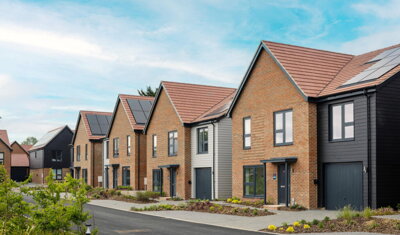
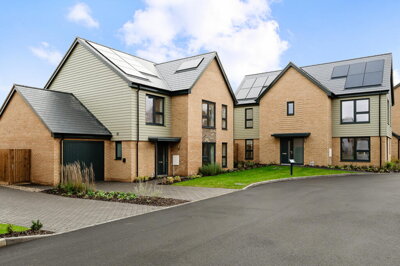
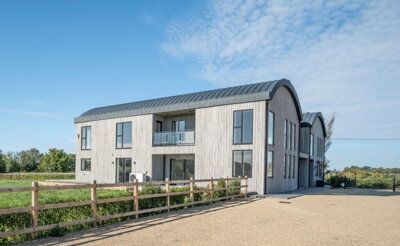
Browse 3 homes new builds in Widdington, Uttlesford from local developer agents.
£1.03M
4
0
67
Source: home.co.uk
Source: home.co.uk
Detached
3 listings
Avg £1.07M
Semi-Detached
1 listings
Avg £500,000
Source: home.co.uk
Source: home.co.uk
homedata.co.uk records put Widdington at the higher end of the village market, led by family houses rather than small starter stock. Over the last year, detached homes averaged £1.2m and semis £660,000, while terraced homes averaged £537,500. Even that terrace figure sits in village-house territory, not ordinary suburban pricing. The reason is visible on the ground, Widdington is not a big estate village of repeated house types, but a place of individual plots, older buildings and character homes, where buyers weigh up condition, setting and architectural detail alongside square footage.
The clearest new-build option currently shown by home.co.uk is The Maltings by Bocking Homes, a 10-unit scheme of 2, 3 and 4-bedroom homes in Widdington, Saffron Walden, CB11 3SP. One 3-bedroom terrace bungalow is listed at £550,000, giving buyers a more defined entry point than many of the village’s larger period houses. In a small parish, that matters. Supply is often thin, good presentation gets noticed, and recent sold data points to a market that has softened since the 2021 high, so buyers with finance in place may have more room to talk on price than they did at the peak.

Widdington feels properly rural, in the Uttlesford sense, with a compact village form rather than a spread-out suburban edge. Its conservation area was established in 1976 and centres on the village green and church, which gives the core a settled, historic feel. The parish has 45 Listed Buildings or groups of Listed Buildings, with 26 of them inside the conservation area. Priors Hall, Priors Hall barn and the Church of St Mary are among the names that explain why the village reads as old, layered and carefully preserved.
You see the age of the place in the materials. Wood, lath and plaster, old brick, render, pargetting and painted finishes all appear in the local housing stock, with thatched, tiled and slated roofs above them. Some houses go back centuries, so the appeal is not just floor area, it is workmanship and survival. Widdington also sits on a ridge, with the land dropping eastwards towards the River Cam, giving parts of the parish a slightly open, raised character. Because Essex geology includes London Clay and Chalk, our surveyors would look closely for signs of movement, particularly where shrink-swell soils may have affected foundations or later extensions.
School planning in Widdington usually means looking beyond the parish itself. It is a small village, so families tend to study the wider Uttlesford school network, including catchments, transport and admissions rules, rather than assuming there is one obvious option on the doorstep. Saffron Walden and nearby villages are often the first comparison points, as they give the broadest range of primary and secondary choices within practical reach. Before offering, we would check the latest Ofsted report, the admissions boundary and the transport timetable, especially if the move needs to work for more than one school stage.
A school that looks ideal on paper can feel very different once the morning route is tested. That is especially true in rural Essex, where bus frequency and driving time can carry as much weight as published results. For buyers moving with children, we would ask the agent early about local school transport, waiting lists and catchment pressure for each age group. Widdington can work very well for family life, but the school plan is best pinned down before the house you like attracts three other family buyers.

Think of Widdington as a road-led village with rail close enough for regular use, not as a station village. Links towards London Liverpool Street and Cambridge are normally reached through the wider Uttlesford area, with Audley End and Newport among the stations buyers tend to consider. Journey times vary by service and connection, but the corridor is practical for many hybrid workers who are not travelling every weekday. Quiet lanes, then a manageable drive to the train, is part of the appeal for many residents.
Day-to-day life here depends on the car more than it would in a town centre. The M11 is the main road route people look to for London, Cambridge and Stansted, while smaller local roads tie Widdington into surrounding Uttlesford villages and market towns. Bus provision is usually thinner than in urban areas, so we would pay attention to parking, turning space and driveway access during a viewing. Cycling can be a pleasure in the surrounding countryside, although the narrow lanes are better suited to confident riders than to a city-style daily commute.
Parking deserves an early look, particularly around the older cottages and the village core. Some very pretty period homes have given up driveway space in exchange for setting and character, which is manageable if you know that before you buy. Newer homes, including those at The Maltings, may be easier for ordinary routines because the layouts and parking arrangements are more modern. If commuting is part of the decision, we would time the drive to your chosen station at peak hours, not just measure it on a map.
Before we book viewings, we would walk through the conservation area, look at the village green, try the surrounding lanes and check the route to nearby stations.
Sort the mortgage agreement in principle first, then decide whether the budget is aimed at a period house, a new-build bungalow or a larger family home.
At each viewing, we would ask about listed status, roof materials, parking, access, broadband, past movement and any extension work.
For many Widdington homes, a RICS Level 2 survey is a sensible starting point, but thatched, timber-framed or heavily altered buildings may need a more detailed inspection.
Before exchange, the solicitor should review conservation area controls, title points, searches and any historic restrictions attached to the property.
Keep the deposit accessible, check buildings insurance dates and get removals lined up, because the right village house can move quickly once a serious buyer is in place.
Living in a conservation area brings the charm people come to Widdington for, but it can also mean tighter rules on outside changes, windows, roofs and visible alterations. A listed property needs even more care, both for repairs and for any future plans, so the paperwork should be checked by your solicitor before emotion takes over. Traditional materials such as thatch, timber framing and old brick are a large part of the village’s appeal, although they often call for specialist maintenance and informed survey advice. Buyers who go in with their eyes open tend to feel more confident, because the reward is a scarce home with genuine village character.
Ground conditions are another point we would not skip. Essex geology includes London Clay, and in some older homes that can be linked with movement. Widdington’s ridge position means coastal flood risk is not the issue, but surface water, drainage and garden levels still need checking plot by plot. Around the village core, access can be narrow, parking limited and turning awkward, so it is worth testing the practicalities rather than assuming a rural address always means a generous plot. Flats are rare here, but if a leasehold does come up, we would review ground rent, service charge and reserve fund details just as carefully as we would in a larger town.
New-builds ask a different set of questions. They usually offer modern insulation, easier upkeep and more predictable running costs, which can be attractive beside centuries-old stock. The checks do not disappear, though, warranties, snagging, estate charges and the final specification all need reading before exchange. In a parish this small, even a modest scheme can change the available supply, which is why The Maltings is noticeable in the current market. The right choice often comes down to an honest balance between character and maintenance.
homedata.co.uk records show an average sold price in Widdington of £741,875 over the last year. Detached homes averaged £1,200,000, semis £660,000 and terraced homes £537,500, placing the village firmly in the upper part of the Uttlesford market. Prices were 5% down on the previous year and 22% below the 2021 peak of £945,625. For a buyer with finance ready and a clean chain, that change can open up conversations that would have been harder a few years ago.
There is no single council tax band that neatly describes Widdington. Bands vary by property, and the charge is set through the local authority system, so an older cottage, a larger detached house and a newer home may all sit differently. We would check the listing, ask the agent, then confirm the band with the council before fixing the monthly budget. It is a sensible step in a village where size, age and style vary so much from one address to the next.
For schools, Widdington buyers usually compare the wider Uttlesford area rather than relying on provision within the parish. Saffron Walden and nearby villages often come into the search first, particularly where primary and secondary catchments are important. We would check the latest Ofsted report, the admissions map and any school transport information before an offer goes in. Rural addresses can alter eligibility and journey practicalities more than buyers expect.
Widdington suits buyers who are comfortable with a car-first routine, using nearby stations when rail is needed. Trains towards London Liverpool Street and Cambridge are available in the wider area, while the M11 gives useful road access for commuting and airport trips. Bus services are generally more limited than in a town or city, so timings and frequency need checking rather than assumed. For hybrid workers, the mix can work well if the station run feels manageable on a normal weekday.
As a long-term hold, Widdington can make sense for the right buyer because supply is limited and character homes do not arrive in large numbers. The conservation area, listed buildings and traditional stock give the parish a distinct identity, while the easing from the 2021 price peak may leave some room for negotiation. The caution is maintenance. Older houses can cost more to keep properly, and specialist repairs may affect yield if the plan is to let. For investors, this is more of a scarcity market than a high-turnover one.
For most buyers in 2024-25, stamp duty is 0% up to £250,000, 5% from £250,000 to £925,000, 10% from £925,000 to £1.5 million and 12% above £1.5 million. Using Widdington’s average sold price of £741,875, a standard buyer would pay about £24,593.75 in stamp duty before legal fees and moving costs. First-time buyers pay 0% up to £425,000 and 5% from £425,000 to £625,000, with no relief above £625,000. Because the village average sits where it does, many purchases here fall back into the standard calculation.
Widdington’s housing mix is one of its strengths, with historic houses, traditional cottages and larger detached homes, plus some newer builds for buyers wanting a more modern route in. The materials tell the story, timber framing, lath and plaster, old brick, rendered finishes, pargetting and painted exteriors, with thatched, tiled or slated roofs. One street can feel subtly different from the next in age and character. It also means surveys matter, because two houses only a short walk apart may have very different maintenance histories.
Stamp duty needs a proper line in the budget, especially with the average sold price sitting well above the main tax-free threshold. On a £741,875 purchase, the standard SDLT bill is about £24,593.75, based on 0% up to £250,000 and 5% on the slice from £250,000 to £741,875. First-time buyers have relief up to £425,000, then pay 5% between £425,000 and £625,000, but there is no first-time buyer relief above £625,000. If the search is focused on one of Widdington’s higher-value detached homes, standard buyer rates are likely to be the relevant figures.
Beyond stamp duty, we would budget for the deposit, solicitor fees, survey costs, mortgage fees, removals and any specialist work a character home may need after completion. A thatched cottage, a listed building or a property inside the conservation area can justify extra advice, often before anyone starts thinking about paint colours. New-build buyers have their own checks, including warranty cover, snagging costs and any estate charges linked to the development. With preparation, the purchase can be straightforward, but Widdington tends to reward buyers who get the details in order early.
Properties New Builds In London

Properties New Builds In Plymouth

Properties New Builds In Liverpool

Properties New Builds In Glasgow

Properties New Builds In Sheffield

Properties New Builds In Edinburgh

Properties New Builds In Coventry

Properties New Builds In Bradford

Properties New Builds In Manchester

Properties New Builds In Birmingham

Properties New Builds In Bristol

Properties New Builds In Oxford

Properties New Builds In Leicester

Properties New Builds In Newcastle

Properties New Builds In Leeds

Properties New Builds In Southampton

Properties New Builds In Cardiff

Properties New Builds In Nottingham

Properties New Builds In Norwich

Properties New Builds In Brighton

Properties New Builds In Derby

Properties New Builds In Portsmouth

Properties New Builds In Northampton

Properties New Builds In Milton Keynes

Properties New Builds In Bournemouth

Properties New Builds In Bolton

Properties New Builds In Swansea

Properties New Builds In Swindon

Properties New Builds In Peterborough

Properties New Builds In Wolverhampton

Enter your details to see if this property is within your budget.
Loans, cards, car finance
Estimated property budget
Borrowing + deposit
You could borrow between
Typical borrowing
Monthly repayment
Est. at 4.5%
Loan-to-value
This is an estimate only. Your actual budget may vary depending on interest rates, credit history, and personal circumstances. For an accurate affordability assessment, speak to one of our free mortgage advisors.
This calculator provides estimates for illustrative purposes only and does not constitute financial advice. Your home may be repossessed if you do not keep up repayments on your mortgage. Estimates based on 4.5% interest rate, repayment mortgage. Actual rates depend on your circumstances.
Homemove is a trading name of HM Haus Group Ltd (Company No. 13873779, registered in England & Wales). Homemove Mortgages Ltd (Company No. 15947693) is an Appointed Representative of TMG Direct Limited, trading as TMG Mortgage Network, which is authorised and regulated by the Financial Conduct Authority (FRN 786245). Homemove Mortgages Ltd is entered on the FCA Register as an Appointed Representative (FRN 1022429). You can check registrations at NewRegister or by calling 0800 111 6768.

We use cookies to show you personalised content and improve your experience of our website. Find out more in our Privacy policy and Cookie policy.