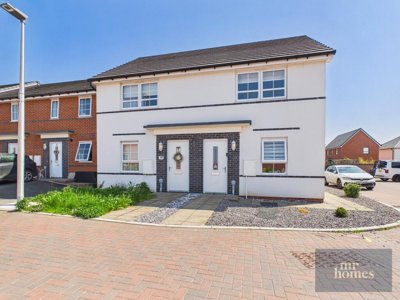
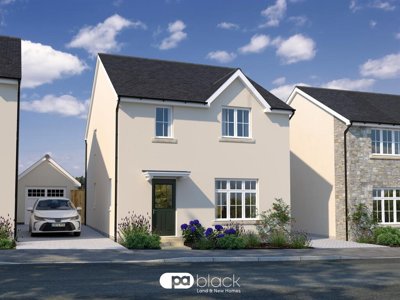
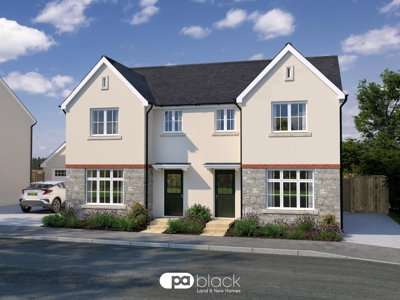
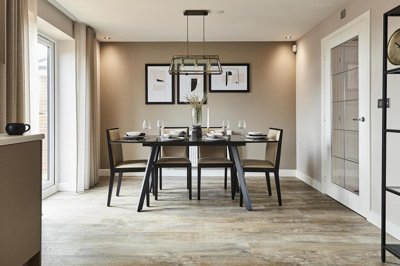
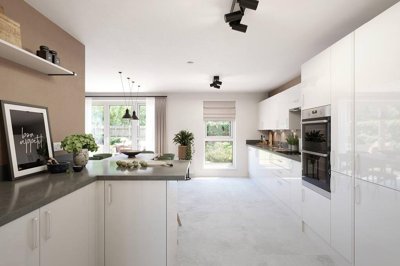
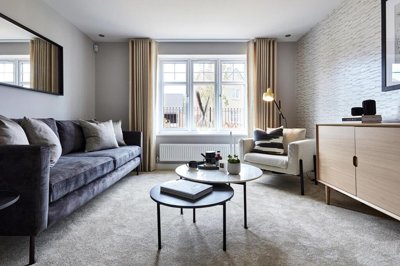
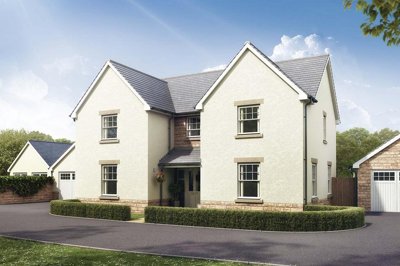
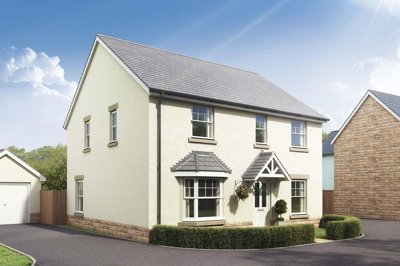
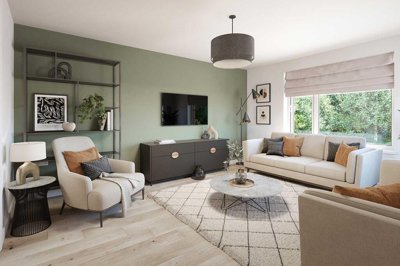
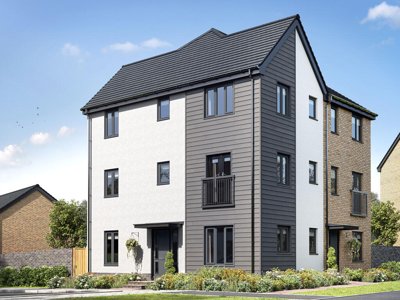
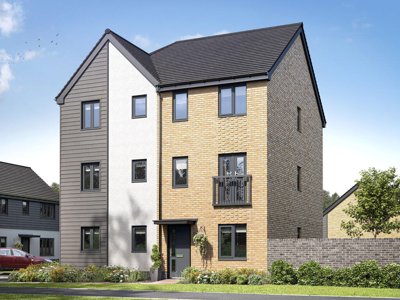
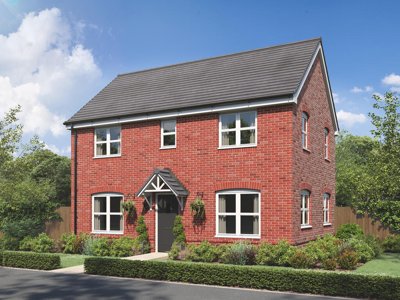
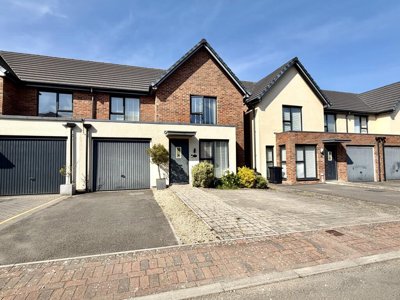
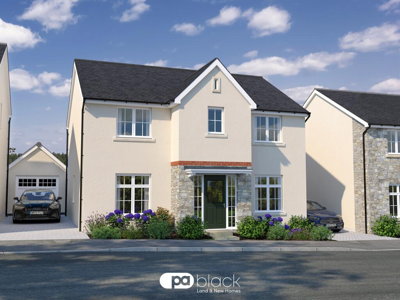
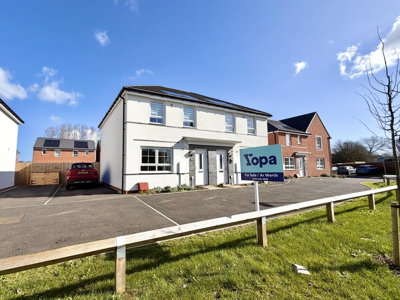
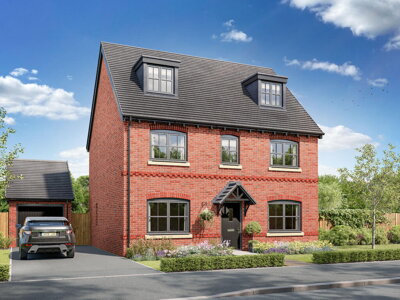
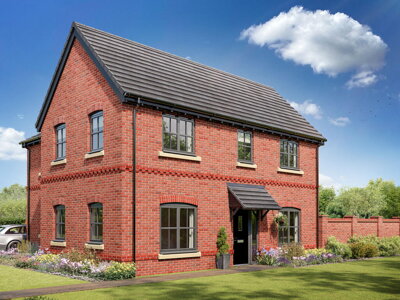
Browse 65 homes new builds in Vale of Glamorgan from local developer agents.
The Vale Of Glamorgan property market offers detached, semi-detached, and terraced houses spanning various price ranges and neighbourhoods. Each listing includes detailed property information, photographs, and direct contact with the marketing agent.
The Vale of Glamorgan market has stayed resilient and kept moving upwards. Average house prices are now £412,624, up 5.2% over the past year, according to homedata.co.uk. Detached homes sit at the top end of the market with an average of £647,778, largely because the extra space and gardens appeal to growing families and buyers after a more premium lifestyle. Semi-detached houses average £381,633 and often strike a good balance between room and affordability. Terraced homes, which make up 33% of all sales locally, come in at around £277,532, giving first-time buyers and younger families a more accessible route into this sought-after part of Wales.
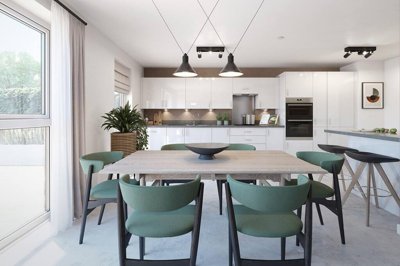
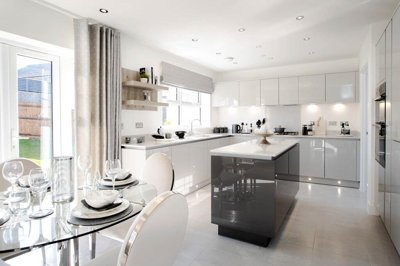
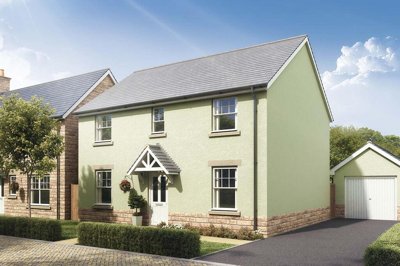
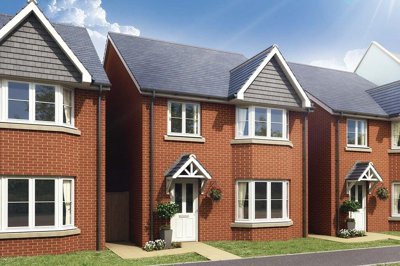
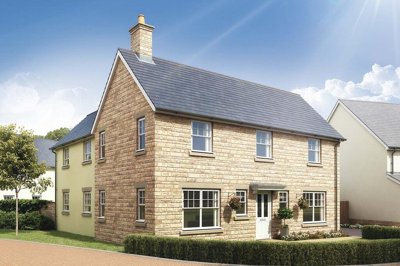
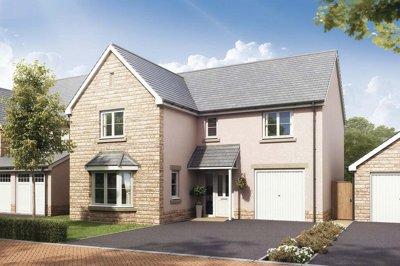
New build schemes are adding more choice across the Vale of Glamorgan. Clare Garden Village in Cowbridge includes Taylor Wimpey homes with 3, 4, and 5 bedrooms, aimed at buyers who want modern construction in a traditional market town. Over in Barry, the Hayeswood Road development forms part of a wider council plan for 2,500 new homes across 25 sites in the Vale between 2025 and 2035. Working together, the Vale of Glamorgan Council and Lovell Partnerships will deliver 70 homes in the first phase, including one and two-bedroom apartments as well as family houses. Buyers looking for higher-specification homes may also look at Hensol Grove in Pontyclun, where properties range from 1,299 to 1,530 square feet and guide prices run from £665,000 to £780,000 in a semi-rural setting.

Coast, countryside, and city access all meet here, which is a big part of why buyers keep returning to the Vale of Glamorgan. Its geology matters more than people sometimes expect. The underlying limestone has shaped the landscape, influenced the materials used in older buildings, and helped create the rolling agricultural interior that gives the area so much of its identity. The yellow-grey Liassic limestone seen across the county borough, including the uncommon Sutton Stone that combines lias limestone with carboniferous limestone, has been used for centuries and still gives many villages their recognisable look. Traditionally, builders used Blue Lias limestone nearer the coast and carboniferous limestone in the north, and that legacy remains one of the clearest threads in the area’s architectural character.
From Penarth through to Barry, the coastline brings sea views, promenades, and beaches that draw people in all year. Barry, the largest town in the Vale, mixes a working dockside with independent shops, cafés, and cultural venues. Penarth has a different feel, with its Victorian esplanade and a more polished dining scene. Head inland and places such as Llantwit Major, Cowbridge, and Wick show the farming side of the Vale through working farms, traditional pubs, and community events that keep local identity strong. Cardiff is only a short journey away too, so residents can reach major employers, international airports, and a wide cultural offer, then come home to a slower pace in the evening.
The Vale of Glamorgan was built on more than one industry. Agriculture mattered, quarrying mattered, and so did maritime trade. Limestone supported quarrying for building materials, fertiliser, and cement production, while the docks at Penarth and Barry became major routes for coal exports from the South Wales Valleys to overseas markets. That wealth helped pay for much of the elegant architecture still seen in both towns. Barry docks is still operational, which keeps that industrial thread alive. What this leaves today is a mix of communities with strong working-class roots and more affluent residential pockets, giving the area a social breadth that adds real character.

For families, schooling is often a major part of the property search, and the Vale of Glamorgan offers a solid spread of options from primary level onwards. Across the area there is a mix of primary schools, secondary schools, and further education settings serving different ages and abilities. A number of primary schools are especially well regarded by local families, and many benefit from the smaller classes and community focus often associated with Welsh education in semi-rural areas. We regularly find that buyers prioritise homes near these popular schools, particularly where catchment lines can shape admission chances. The Council sets out its admission arrangements clearly, and it is sensible to check them early, especially in villages where places can be competitive.
Secondary education across the Vale of Glamorgan is based around comprehensive schools serving the main towns, and many have benefited from continued investment in local education facilities. There is no selective grammar school system here, so state secondaries take pupils across the full academic range within their catchment areas. Some families also consider independent schools in Cardiff, which are within reasonable commuting distance from parts of the Vale, especially Penarth and Barry where links into the capital are strongest. For older students, colleges in Barry and Cardiff provide both vocational and academic routes after secondary school.
School research pays off. Before buying, we suggest checking performance data, Ofsted inspection results, and catchment boundaries carefully, because all 3 can affect both educational outcomes and resale strength. Homes inside the most sought-after catchments often command a premium and tend to stay in demand among buyers with children. The Vale gives families a broad choice, from smaller rural primaries to larger town secondaries, so the right location often depends on the sort of school environment that suits your household best.

Getting into Cardiff from the Vale of Glamorgan is generally straightforward, which is one reason the area works so well for commuters. Regular rail services connect the main towns with the capital in under thirty minutes. Barry railway station has direct services to Cardiff Central through the day and into the evening, which suits both standard office hours and shift work. Penarth station is quicker still for some journeys to Cardiff Bay and Central, and that helps explain its popularity with professionals who work in the city but want a more residential base. The extension of the Cardiff Bay line has also widened access to jobs and leisure destinations for Vale residents.
Road and bus links fill in the rest of the picture. Cardiff Bus and other local operators run services between towns and villages across the Vale of Glamorgan, which matters for households without a car. By road, the A4226 and A4055 connect Barry and nearby areas with Cardiff through the Cardiff Bay Link Road, while junction 33 at Cardiff West gives access to the M4 for journeys towards Newport, Bristol, or London. Plenty of residents still drive to work, particularly from places such as Cowbridge or Llantwit Major where the distances are manageable. Cardiff Wales Airport in Rhoose, on the western edge of the Vale, adds international connections and has benefited from significant investment in recent years.
For buyers splitting time between home and office, the Vale of Glamorgan is often a practical choice. Most areas have good broadband, and the quieter setting can make day-to-day remote working much more pleasant. Fast trains, decent roads, and reliable digital connections mean many residents can combine home working with trips into the office without too much trouble. There are some enjoyable cycling routes as well, mainly for leisure, though the hilly sections in parts of the Vale can make regular cycling less straightforward than in flatter districts. It is that balance, access on one side and semi-rural character on the other, that often wins people over.

We always suggest getting a mortgage agreement in principle before booking viewings. It gives you a clear budget, keeps your search focused on homes you can realistically afford, and shows sellers that finance is already in place. In the Vale of Glamorgan, where average prices are around £412,624, that early step matters even more in a market that can be competitive.
It helps to spend time comparing the different towns and villages before narrowing things down. We would look at commute times, school catchments, nearby amenities, and the kinds of properties available in each spot. Barry often offers strong value and good transport links. Penarth has a more refined feel. Cowbridge tends to appeal to buyers who want a traditional market town setting.
Our estate agent partners in the Vale of Glamorgan can often flag new listings before they reach the wider market. Registering your requirements gives you a better chance of moving quickly, which matters in an area where 1,520 sales were recorded in the past twelve months.
Once we have identified homes that fit your brief, the next step is to arrange viewings and go in with a clear checklist. We recommend paying close attention to condition, any obvious maintenance concerns, and how well the property will suit your needs now as well as later on.
After an offer is accepted, we usually recommend arranging a RICS Level 2 Home Survey before you go further. It can highlight structural issues, damp, and other defects that may affect value or need work after completion. In the Vale of Glamorgan this is especially worthwhile because so many properties feature traditional limestone construction, where problems with stonework, limewashed renders, or older building methods are not always obvious at first glance.
We recommend instructing a solicitor with experience of Welsh property transactions to deal with the legal side of the purchase. They will carry out searches, manage the contract process, and handle registration so ownership is properly recorded. Wales also uses slightly different stamp duty thresholds from England, which makes local knowledge particularly useful.
Traditional materials are part of what gives the Vale of Glamorgan its appeal, but they do need careful assessment during a purchase. Homes built in local limestone can show weathering or erosion over time, and limewashed renders used to protect poorer quality stone may need ongoing upkeep. When we inspect a property, we pay close attention to the external stonework for cracking, bulging, or failing mortar that could point to movement. The local limestone geology also means many older houses have thick walls, which can be excellent for insulation and temperature control, but sometimes make updates such as rewiring or central heating installation more specialist jobs.
Across the Vale of Glamorgan, conservation areas protect the traditional appearance of many villages, and that can limit what owners are allowed to change outside. Extensions, alterations, and even some repair works may need tighter scrutiny than they would elsewhere. If we are dealing with a home in one of these areas, we advise checking the specific rules early because permitted development rights can be more restricted. Listed buildings need even more care, as protection covers internal and external features as well as the setting of the building. The Council is generally supportive of proposals that retain and reuse traditional buildings, so well-planned and sympathetic renovation schemes can still be achievable.
Rural parts of the Vale include plenty of barn conversions, many created from stone and brick-built barns dating from before 1914. These properties often keep their original roof structures and thick walls, which add character but can also bring practical complications for modern living. For homes over 50 years old, listed buildings, or anything of unusual construction, our surveyors would usually point buyers towards a RICS Level 3 Building Survey rather than a standard Level 2 Home Survey. The construction methods and likely defects can be very different from those in newer housing. Near the coast, flood risk also deserves attention, particularly around seafront positions and low-lying ground.

Buying costs in the Vale of Glamorgan go well beyond the agreed price, so we always encourage buyers to budget for the full picture. Legal fees, survey costs, moving expenses, and stamp duty all need to be accounted for. In Wales, Stamp Duty Land Tax is set on a different scale from England, and the current zero-rate threshold for residential property is £225,000. That means a first-time buyer purchasing up to £225,000 would pay no stamp duty, which is a meaningful saving against the previous threshold. On a typical Vale of Glamorgan purchase at the average price of £412,624, a standard buyer would pay about £2,725 in Welsh stamp duty, while a first-time buyer using first-time buyer relief would pay around £1,495.
Other purchase costs can add up quickly. Solicitor conveyancing fees usually fall between £499 and £1,500, depending on the value of the property and how complex the transaction is. Searches ordered by your solicitor, including local authority, drainage, and environmental checks relevant to the Vale of Glamorgan, tend to cost between £200 and £400. A RICS Level 2 Home Survey, which we strongly recommend here because much of the housing stock is older and traditionally built, is commonly between £400 and £600 depending on size. If a mortgage is involved, arrangement fees can range from £0 to £2,000, while valuation fees are often between £200 and £500.
Then there are the moving-day costs themselves. Removal firms, packing help, and setting up utilities can easily add £1,000 to £3,000, depending on distance and the level of service required. Buildings insurance needs to start from the day of completion, and contents insurance is sensible from that date too. Some homes, especially listed buildings or properties in conservation areas, may also need specialist surveys or extra historical research, which pushes costs higher again. We always prefer buyers to map this out before the search begins, because having a complete budget makes the whole process far less stressful.

Recent market figures put the average house price in the Vale of Glamorgan at about £412,624, following annual growth of 5.2%. Detached homes average roughly £647,778. Semi-detached properties sit near £381,633. Terraced houses come in around £277,532, and flats are about £211,162. Activity has stayed healthy too, with more than 1,941 property sales recorded in the past twelve months. Among the main property types, semi-detached homes have posted the strongest annual growth at 6.2%, which keeps them firmly on the radar for both owner-occupiers and investors.
Council tax in the Vale of Glamorgan uses the standard Welsh banding system, with homes placed in bands A to I according to their value in April 2003. Smaller terraced houses and more modest semi-detached properties are often in bands A to C, while larger detached homes and those in stronger locations may fall into bands F to I. In broad terms, households in the Vale of Glamorgan can expect annual bills of around £1,800 to £2,200, depending on the band applied to the property. Before committing to a purchase, we would check the exact band through the Vale of Glamorgan Council website or the Valuation Office Agency.
Families have a reasonable spread of school options across the Vale of Glamorgan, from primary through to secondary level. Several primary schools in Cowbridge, Penarth, and Dinas Powys have received positive ratings from Ofsted inspectors, and the comprehensive schools serving Barry, Penarth, and the Cowbridge area each bring their own mix of academic, creative, and sporting strengths. We still advise looking at each school individually rather than relying on reputation alone. Catchment boundaries and performance data can both affect educational choices and local property values.
Public transport is one of the Vale of Glamorgan’s stronger points. Trains from Barry and Penarth to Cardiff Central run regularly through the day, with journey times of under 30 minutes. Buses operated by Cardiff Bus and other local providers link towns and villages across the county borough, although having a car is still helpful in the more rural parts. Cardiff Wales Airport at Rhoose gives easy access to international flights, and the M4 is within reach for longer journeys towards Bristol or London.
From an investment angle, the Vale of Glamorgan has a lot going for it. Annual growth of around 5.2% points to a market that has been moving steadily rather than standing still. Cardiff’s pull keeps commuter demand in place, especially among buyers looking for better value outside the capital, while the coastal and rural lifestyle continues to attract families and retirees. The Vale of Glamorgan Council’s plan for 2,500 new homes across 25 developments between 2025 and 2035 also suggests ongoing population growth and continued demand across both sales and rental markets.
Welsh Stamp Duty Land Tax bands differ from those in England, so the numbers are worth checking carefully. Current rates are 0% on residential purchases up to £225,000, 5% on the portion from £225,001 to £400,000, and 10% on amounts up to £750,000. Above £750,000, the rate rises to 12% on the remaining value. First-time buyers in Wales may qualify for relief on purchases up to £300,000, paying 0% on the first £180,000 and reduced rates on the portion from £180,001 to £300,000. On a typical Vale of Glamorgan purchase at £412,624, that works out at about £1,495 for a first-time buyer and roughly £2,725 for a standard buyer.
Older construction is a recurring theme in the Vale of Glamorgan, and it needs careful checking. Many properties use traditional limestone, so we look closely for cracking, movement in the walls, failing mortar, and signs of water getting in. Limewashed render matters too, because it protects poorer quality stone and can become a maintenance issue if neglected. For homes built before 1914, and for the barn conversions found across rural parts of the Vale, a RICS Level 3 Building Survey is often the better fit than a standard Level 2 Home Survey. These buildings were usually built with thick walls for durability, and the later conversion work can involve structural alterations that deserve a detailed professional assessment.
From £400
Our surveyors can carry out a professional inspection to identify defects in properties built between 1950-2020.
From £600
For older homes, listed buildings, or non-standard construction, we usually recommend a more detailed survey.
From £80
An energy performance certificate is required on all property sales.
From £499
Our solicitors deal with the legal aspects of your property purchase from start to finish.
From 4.5%
Competitive mortgage deals from trusted lenders
Properties New Builds In London

Properties New Builds In Plymouth

Properties New Builds In Liverpool

Properties New Builds In Glasgow

Properties New Builds In Sheffield

Properties New Builds In Edinburgh

Properties New Builds In Coventry

Properties New Builds In Bradford

Properties New Builds In Manchester

Properties New Builds In Birmingham

Properties New Builds In Bristol

Properties New Builds In Oxford

Properties New Builds In Leicester

Properties New Builds In Newcastle

Properties New Builds In Leeds

Properties New Builds In Southampton

Properties New Builds In Cardiff

Properties New Builds In Nottingham

Properties New Builds In Norwich

Properties New Builds In Brighton

Properties New Builds In Derby

Properties New Builds In Portsmouth

Properties New Builds In Northampton

Properties New Builds In Milton Keynes

Properties New Builds In Bournemouth

Properties New Builds In Bolton

Properties New Builds In Swansea

Properties New Builds In Swindon

Properties New Builds In Peterborough

Properties New Builds In Wolverhampton

Enter your details to see if this property is within your budget.
Loans, cards, car finance
Estimated property budget
Borrowing + deposit
You could borrow between
Typical borrowing
Monthly repayment
Est. at 4.5%
Loan-to-value
This is an estimate only. Your actual budget may vary depending on interest rates, credit history, and personal circumstances. For an accurate affordability assessment, speak to one of our free mortgage advisors.
This calculator provides estimates for illustrative purposes only and does not constitute financial advice. Your home may be repossessed if you do not keep up repayments on your mortgage. Estimates based on 4.5% interest rate, repayment mortgage. Actual rates depend on your circumstances.
Homemove is a trading name of HM Haus Group Ltd (Company No. 13873779, registered in England & Wales). Homemove Mortgages Ltd (Company No. 15947693) is an Appointed Representative of TMG Direct Limited, trading as TMG Mortgage Network, which is authorised and regulated by the Financial Conduct Authority (FRN 786245). Homemove Mortgages Ltd is entered on the FCA Register as an Appointed Representative (FRN 1022429). You can check registrations at NewRegister or by calling 0800 111 6768.

We use cookies to show you personalised content and improve your experience of our website. Find out more in our Privacy policy and Cookie policy.