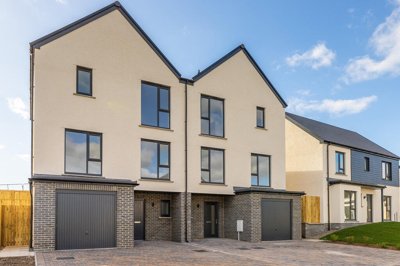
Browse 1 home new builds in Underbarrow and Bradleyfield from local developer agents.
The larger property sector typically features multiple bathrooms, substantial reception space, and private gardens or off-street parking. Four bedroom houses in Underbarrow And Bradleyfield span detached, semi-detached, and occasionally terraced configurations, with styles ranging from period properties to modern executive homes.
In Underbarrow and Bradleyfield, the housing market mirrors the realities of life inside the Lake District National Park, where demand usually runs ahead of supply. Over the past year, average house prices in the parish reached £268,000, but the small number of annual transactions means the figures can swing sharply. Sold prices show a notable correction, coming in 63% below the previous year and 56% below the 2022 peak of £615,000, after a run of higher-value sales.
For context, the wider Westmorland and Furness district shows detached homes averaging £386,000, semi-detached properties at £247,000, terraced homes at £185,000, and flats at £133,000. In Underbarrow and Bradleyfield, the stock is still dominated by traditional stone-built homes, many from the 16th to 19th centuries, and the parish has 32 Grade II listed buildings. Farmhouses, barns and the Church of All Saints all form part of that residential picture.
New supply has come through Oakmere Homes (NW) Ltd on land south of Underbarrow Road, Kendal, where planning permission was granted for 84 dwellings under reference SL/2019/0398. With house types such as Ullswater and Grasmere, it is the most significant recent addition to housing within the parish boundary. Elsewhere, Dale View Farm at Underbarrow has also stayed active, with mid-2025 variations to conditions on occupancy and roof slate materials being considered for three units.
Compared with urban markets, Underbarrow and Bradleyfield behave very differently because only a handful of homes come up at any one time. Well-presented traditional properties, especially those with gardens or land, tend to draw strong interest. National Park controls limit new building, which helps support values, but it also means suitable homes seldom linger on the market.

Day-to-day life here is properly Cumbrian, with the Lake District fells close by and the parish set in the Lyth Valley. The area’s limestone geology shaped local history, including quarrying and lime-burning in the 19th century. Farming still leads the local economy, with sheep and smallholdings at its core, while tourism brings visitors to the footpaths, scenery and heritage of the National Park.
The parish history is not only agricultural. Grigghall’s bobbin mill and the tannery at Tullythwaite Hall show the smaller rural industries that once topped up farm incomes in the Lyth Valley. Those businesses are long gone, but they still sit in the landscape’s memory. The Church of All Saints, a Grade II listed building, remains both a place of worship and a direct link to centuries of local gathering.
Rural parish life here is close-knit, and people still turn out for village events, church services and local agricultural customs. Kendal is about three miles away, so residents can reach supermarkets, healthcare, schools and professional services without much trouble. In the village itself, the Church of All Saints is both a working church and a meeting point for the community.
Anyone moving here should think carefully about what National Park status means in practice. The Lake District has a high share of second homes and holiday lets, and that continues to shape discussions about affordability and the long-term health of village communities. Even so, for people looking for a main home in an area of outstanding natural beauty, Underbarrow and Bradleyfield offers a lifestyle that is hard to beat.

Families looking at a move will find most schooling centred on Kendal, about three miles away. Primary places are available through several well-regarded schools in Kendal and nearby villages, including community schools and schools with a religious character. Catchment boundaries should be checked with Westmorland and Furness Council before a purchase, because they can affect school allocations.
Several Kendal primaries have Ofsted ratings of Good or Outstanding, which makes them appealing to families arriving from places with tighter school places. Schools serving the north Kendal area, for example, teach children aged 5 to 11 and offer dedicated facilities and extracurricular activities that sit well with village life in Underbarrow. Most families drive to school, as public transport is limited.
Secondary provision is also based in Kendal, with schools covering Key Stage 3 and Key Stage 4, and sixth form options available at nearby institutions. Families hoping for grammar school education should look carefully at the position in Cumbria, because access and admissions work differently here than in some other parts of the country. Further education is available through colleges in Kendal and across the wider Cumbria region, opening routes into vocational study and higher education.
For families who want good schooling without giving up rural village living, the proximity of Kendal schools makes Underbarrow and Bradleyfield a practical choice. Car journeys to school are manageable, and school transport is also available, while the surrounding countryside gives children space for outdoor learning, exercise and environmental study alongside classroom work. Current Ofsted ratings and admissions policies should be checked before decisions are made.

Transport links are shaped by Kendal’s position on the A591 and A6, with the M6 also within reach. The motorway runs through Cumbria and connects the county to Manchester, Liverpool and the Scottish border, so most residents rely on cars for regional travel. Kendal is about 15 minutes from Junction 36 of the M6, which gives straightforward access for commuters heading to the North West or travelling further afield.
Rail is available through Oxenholme Lake District station, around five miles from Underbarrow, with direct trains to London Euston taking about three hours. That makes it a key link for commuters and regular business travellers. Manchester Airport is roughly two hours away by car, opening up domestic and international flights. Local buses run between Underbarrow and Kendal, giving an important option for people without a car, although rural frequencies are limited.
For walkers and cyclists, the Lake District offers an extensive network of public footpaths, bridleways and signed cycling routes, so car use is not always necessary for leisure. The lanes and scenic byways around Underbarrow and Bradleyfield attract cyclists, while the surrounding fells suit serious hiking and mountain biking. The National Park’s support for sustainable transport has helped walking and cycling infrastructure develop, though the hilly terrain remains exactly what you would expect here.

Before starting a search in Underbarrow and Bradleyfield, we would always suggest securing a mortgage agreement in principle from a lender. It shows estate agents and sellers that your finances are in order and gives a borrowing figure based on reality rather than guesswork. In a National Park area, it also makes sense to allow for extra costs, since many homes are older and may need specialist valuations and surveys.
It helps to study the available listings closely, especially the contrast between traditional stone homes and any new build options. The Lyth Valley flood history and the presence of listed buildings may both affect a buying decision. Local estate agents who know the Lake District market are useful here, particularly because supply changes with the seasons in rural National Park areas.
Once a shortlist is in place, visit the homes and look beyond the accommodation itself, checking the surroundings, access roads and the route into Kendal for amenities. If a property is listed, think about whether the preservation duties fit your way of living and your plans for renovation. We would also note the condition of stone walls, slate roofs and any damp, which is common in older Cumbrian properties.
Because so many homes here are old, a thorough RICS Level 2 Survey is essential. It should pick up issues common to stone and slate construction, including damp penetration, timber defects and roof deterioration. Costs usually sit between £400 and £639 depending on value and size, and older homes often need a closer look.
A solicitor with experience of rural and National Park property transactions is the right person to handle the legal side. They will carry out local authority searches, check Lake District National Park planning conditions, and look into flooding or environmental risks linked to the Lyth Valley setting.
After the searches come back clean and the mortgage offer is in place, the solicitor can arrange exchange and agree a completion date. On completion day, the balance is transferred and the keys to the new home in Underbarrow and Bradleyfield are handed over.
Homes in Underbarrow and Bradleyfield need a careful look because so much of the stock is old and built in traditional ways. Stone properties from the 16th to 19th centuries are common, and they need different maintenance from modern brick-built houses. Slate roofs deserve particular attention, as they can deteriorate over decades and be costly to replace. Some roughcast stone and rendered finishes can hide damp beneath the surface, so these should be checked before purchase.
Buyers should go into the transaction understanding the specific issues that come with traditional construction. Rising damp and penetrating damp are common concerns in older stone homes, where the original materials and methods differ sharply from modern standards. Timber defects, including woodworm and other wood-boring insects, can damage structural timbers in properties of this age. Homes built before the 1970s often also have dated electrical systems, and rewiring may be needed to bring them up to current safety standards, which adds a significant extra cost.
Flood risk matters in the Lyth Valley, and the December 2015 flood event showed just how exposed the area can be to intense rainfall and water saturation. Homes near watercourses, including those affected by the Brigsteer Beck and Underbarrow Pool, may face higher risk, so buyers should check the Environment Agency's flood maps for specific plots. During the 2015 floods, a breach in the earth embankment on the Brigsteer Beck caused extensive damage, and similar events remain possible in heavy rain. Insurance can also be more expensive in flood-risk areas, so that needs to sit in the wider ownership costs.
With 32 Grade II listed buildings in the parish, many properties fall under Listed Building Consent rules for alterations, repairs or extensions. That protects the area’s historic character, but it also means owners must keep homes in a way that respects their architectural importance. Anyone buying a listed property should understand the implications for future work and be ready for the cost of specialist conservation work. If there are shared facilities, the service charges and maintenance contributions should be set out clearly.

Average house prices in Underbarrow were £268,000 over the last year, although the small number of transactions makes the market volatile. In the wider Westmorland and Furness district, detached homes average £386,000, semi-detached properties £247,000, terraced homes £185,000 and flats £133,000. Prices are sitting 63% below the previous year and 56% below the 2022 peak of £615,000. Within the parish itself, value depends heavily on type, condition and exact Lyth Valley location, with stone farmhouses on generous plots usually commanding more than standard cottages.
Westmorland and Furness Council is the local authority for Underbarrow and Bradleyfield, and council tax bands run from A through to H according to valuations made by the Valuation Office Agency. The band for any individual home should be checked through the VOA website or the council’s online portal. Larger land holdings, farm buildings or extended gardens can alter how rural homes are banded, so it is sensible to confirm the position before exchange because it affects the annual bill.
Families in Underbarrow and Bradleyfield usually look to Kendal, about three miles away, for primary and secondary education. Several Kendal primaries have Ofsted ratings of Good or Outstanding and take pupils from the Underbarrow catchment area. Parents should check current Ofsted ratings and confirm catchment areas with Westmorland and Furness Council, since allocations can change and some Lyth Valley addresses may sit in different catchments depending on the exact location. Secondary options in Kendal cover Key Stage 3 and 4, with sixth form places available locally or at colleges across the wider Cumbria region.
Public transport reflects the parish’s rural setting. Bus routes connect Underbarrow and Bradleyfield with Kendal and onward transport links, and the X6 bus service gives a useful connection to surrounding villages, though it is not frequent by urban standards. Oxenholme Lake District railway station, about five miles away, offers direct trains to London Euston and links into the national rail network throughout the day. By road, the M6 can be reached via Kendal at Junction 36, roughly 15 minutes away, giving access to Manchester, Liverpool and the North, so most residents still depend on the car for daily commuting.
Anyone thinking about investment here needs to view Underbarrow and Bradleyfield through the lens of the Lake District National Park. Demand stays strong because of the quality of life and the landscape, and buyers are often willing to pay a premium for stone homes and fell-side settings that define the parish. Planning restrictions are strict, though, and the number of second homes and holiday lets affects both rental availability and the year-round character of the community. Capital growth may be possible, but buyers also need to allow for the realities of maintaining an older property in a remote rural location, where repair costs can be substantial.
Stamp Duty Land Tax in England is charged at 0% on the first £250,000, 5% on £250,001 to £925,000, 10% on £925,001 to £1.5 million, and 12% above £1.5 million. First-time buyers get relief on the first £425,000, then pay 5% between £425,001 and £625,000. With an average price of £268,000, most properties in Underbarrow and Bradleyfield would leave first-time buyers with no stamp duty, while other buyers would pay £900 on the portion above £250,000 at current rates. Homes above £500,000, including some traditional farmhouses with land, would face a higher charge that needs to be budgeted for.
Underbarrow and Bradleyfield in the Lyth Valley come with a few risks that deserve proper investigation. The December 2015 flood event showed how vulnerable the area can be to fluvial and surface water flooding, especially near the Brigsteer Beck and Underbarrow Pool, where a breach in an earth embankment caused heavy damage. Much of the housing stock is old, so damp penetration, timber defects and roof condition all need close inspection, and stone and slate construction brings maintenance issues very different from those in modern homes. Grade II listed buildings also need consent from the National Park planning authority for alterations. Buyers should commission the right surveys and searches, including an Environmental Search covering flood risk, and should allow for specialist surveys on listed homes before going ahead.
From 4.5% APRC
We compare mortgage deals to help find the right finance for an Underbarrow property purchase
From £499
Conveyancing solicitors with real experience of rural and National Park property transactions
From £400
The survey we recommend for older stone homes in Underbarrow and Bradleyfield
From £85
An energy performance certificate for properties in Underbarrow and Bradleyfield
Budgeting for a purchase in Underbarrow and Bradleyfield means looking beyond the asking price. For 2024-25 in England, Stamp Duty Land Tax has a zero-rate band up to £250,000 on standard purchases, so the average home here at £268,000 would attract stamp duty on £18,000 at 5%, which comes to £900. First-time buyers have the higher £425,000 threshold, with 5% applying between £425,001 and £625,000, so most properties in Underbarrow and Bradleyfield would carry no stamp duty for eligible first-time purchasers.
Survey costs also need to be allowed for, with RICS Level 2 Surveys usually priced between £400 and £639 depending on value and size. For the older stone properties in Underbarrow and Bradleyfield, a detailed survey matters even more because traditional construction can hide the sort of defects common in historic buildings. Fees rise with property value, so homes above £500,000 may come in at £586 or more. Conveyancing legal fees usually start from £499 for standard transactions, although rural and listed homes may need extra work that increases the bill.
Other costs to factor in are Land Registry fees for registering title, local authority and environmental search fees, and possible mortgage arrangement charges. Buildings insurance should be in place from exchange, and buyers in flood-risk areas like the Lyth Valley should check that suitable cover is available. Moving costs, stamp duty and a reserve for unexpected repairs on older homes should all sit in the budget when buying in this beautiful but rural corner of the Lake District.

Properties New Builds In London

Properties New Builds In Plymouth

Properties New Builds In Liverpool

Properties New Builds In Glasgow

Properties New Builds In Sheffield

Properties New Builds In Edinburgh

Properties New Builds In Coventry

Properties New Builds In Bradford

Properties New Builds In Manchester

Properties New Builds In Birmingham

Properties New Builds In Bristol

Properties New Builds In Oxford

Properties New Builds In Leicester

Properties New Builds In Newcastle

Properties New Builds In Leeds

Properties New Builds In Southampton

Properties New Builds In Cardiff

Properties New Builds In Nottingham

Properties New Builds In Norwich

Properties New Builds In Brighton

Properties New Builds In Derby

Properties New Builds In Portsmouth

Properties New Builds In Northampton

Properties New Builds In Milton Keynes

Properties New Builds In Bournemouth

Properties New Builds In Bolton

Properties New Builds In Swansea

Properties New Builds In Swindon

Properties New Builds In Peterborough

Properties New Builds In Wolverhampton

Enter your details to see if this property is within your budget.
Loans, cards, car finance
Estimated property budget
Borrowing + deposit
You could borrow between
Typical borrowing
Monthly repayment
Est. at 4.5%
Loan-to-value
This is an estimate only. Your actual budget may vary depending on interest rates, credit history, and personal circumstances. For an accurate affordability assessment, speak to one of our free mortgage advisors.
This calculator provides estimates for illustrative purposes only and does not constitute financial advice. Your home may be repossessed if you do not keep up repayments on your mortgage. Estimates based on 4.5% interest rate, repayment mortgage. Actual rates depend on your circumstances.
Homemove is a trading name of HM Haus Group Ltd (Company No. 13873779, registered in England & Wales). Homemove Mortgages Ltd (Company No. 15947693) is an Appointed Representative of TMG Direct Limited, trading as TMG Mortgage Network, which is authorised and regulated by the Financial Conduct Authority (FRN 786245). Homemove Mortgages Ltd is entered on the FCA Register as an Appointed Representative (FRN 1022429). You can check registrations at NewRegister or by calling 0800 111 6768.

We use cookies to show you personalised content and improve your experience of our website. Find out more in our Privacy policy and Cookie policy.