Browse 1 home new builds in Stainmore, Westmorland and Furness from local developer agents.
£492k
4
0
174
Source: home.co.uk
Source: home.co.uk
Semi-Detached
2 listings
Avg £299,500
Castle
1 listings
Avg £2.00M
Detached house
1 listings
Avg £485,000
Source: home.co.uk
Source: home.co.uk
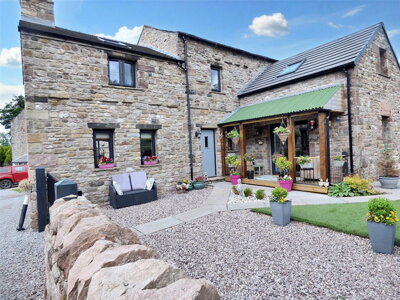
Stainmore’s property market works differently from urban areas, because stock is limited and homes tend to keep their value thanks to steady demand from buyers after a rural lifestyle. Our listings cover traditional stone-built cottages, many from the 18th and 19th centuries, as well as later Victorian and Edwardian houses that reflect the area’s prosperity during the agricultural boom of the mid-1800s. You will also find farmhouses, terraced workers’ cottages, and detached homes on generous plots with access to open moorland. Detached properties with land usually command premium prices, while smaller cottages give a more accessible entry point to this desirable postcode.
Recent transaction data for North Stainmore gives a clear read on the market. One substantial period property sold in January 2025 for £470,000, after earlier sales at £405,000 in July 2023 and £325,000 in June 2019, which points to steady value growth over time. Another home in the same locality reached £453,000 in September 2025. Mid-range sales have been active too, with a cottage on Pennistone Green selling for £151,000 in September 2024 and Windmore End Farm achieving £460,000 in September 2021. Taken together, those figures show how resilient the Stainmore property market can be for buyers who want lifestyle and investment value.
Geology has a direct hand in the buildings you see here. The Stainmore Formation, with its Carboniferous limestones, sandstones, and shales, has shaped local building styles, and the vernacular architecture makes use of stone from small quarries. Walls are usually built from limestone and sandstone and bonded with lime mortar, a traditional method that lets the structure breathe, cuts down moisture retention, and helps the building last longer. Anyone considering a purchase in Stainmore should bear those local building practices in mind.

Life in Stainmore is tied to an extraordinary landscape on the Pennine uplands, with the village sitting at approximately 500 feet above sea level. Around it lies the Stainmore Formation, made up of Carboniferous limestones, sandstones, and shales that form the rolling moorland terrain. Much of the ground is covered by glacial drifts of boulder clay and sands, left behind by the last Ice Age and still shaping the agricultural potential of the area. Even the village name has history in it, coming from the Old Norse "stein-moor" and pointing to centuries of Scandinavian influence across this border country between the historic counties of Westmorland and Yorkshire.
The Stainmore Civil Parish has a close community of around 291 residents, based on 2021 census data, up from 253 in 2001. That small figure hides a place of real historical weight. Within the parish are several listed buildings and scheduled monuments, among them Augill Castle, built in 1841, the Punchbowl Inn, and Rampson Farmhouse. Older remains include the Augill lead smelting mill, Maiden Castle, a Roman fortlet, and Roman signal stations that once watched over the strategic Stainmore Gap. The Punchbowl Inn has welcomed travellers crossing the moor for generations, and its past as a coaching inn still sits comfortably within village life.
For much of its history, the local economy depended on pastoral farming, quarrying for flagstones and limestone, lime-burning, and mining for lead, barytes, and coal. Grouse shooting on the moors has also played a part in the area’s economic fabric. The parish population reached its peak in 1831, then fell steadily until 1971, which helps explain why so many historic buildings predate the Victorian era. Today, agriculture and tourism still shape daily life, helped by the area’s dramatic scenery and heritage assets. That context goes a long way towards explaining why Stainmore’s housing stock leans so heavily towards older, characterful buildings made by traditional methods rather than modern construction.

For families thinking about a move, education in Stainmore fits the rural setting, with primary schooling available in nearby villages and small schools serving the dispersed communities of the Pennine uplands. The historical church of St Stephen, rebuilt in 1842-3, supported the parish spiritually and socially for generations, and the same sense of community runs through local schools. Other places of worship include St Mary's church, built in 1861, plus Primitive Methodist chapels dating from 1831 and 1868, all of which underline how important education and community have been in this part of Cumbria for well over a century.
Secondary education is usually found in the surrounding market towns, with pupils travelling to schools in Kirby Stephen, Appleby-in-Westmorland, or further afield in Penrith or Carlisle for comprehensive provision. Across Westmorland and Furness, the education offer ranges from small rural primaries to larger secondary schools in the market towns. Parents should check catchment areas and admission arrangements carefully, since these can differ quite a bit in rural locations where school transport is a major factor.
Small schools in the area often have strong community ties and can give pupils individual attention, while the secondary schools in nearby towns bring wider curriculum choices and extracurricular activities. Sixth form and further education are available in Carlisle and in Penrith, both accessible through the good transport links that connect Stainmore to these larger centres. Families looking at homes for sale in Stainmore should build school transport arrangements and journey times into their plans, because those practical details shape daily life in a rural place like this.

Despite the remote moorland setting, Stainmore has surprisingly good links to the wider region, which makes commuting and trips for services more workable than many expect. The A66 trans-Pennine trunk road crosses the southern edge of the parish, giving direct access to the M6 motorway at Penrith to the west and the A1(M) corridor to the east. Historically, this has made Stainmore a strategic spot, as the Roman signal stations and medieval coaching routes show. Journey times to Penrith are approximately 40 minutes, and Carlisle is reachable in around an hour.
Rail travel is available at Kirkby Stephen, approximately six miles to the north, where the Settle-Carlisle line connects to Leeds, Carlisle, and intermediate stations. This scenic railway, which passes through the dramatic Eden Valley, has benefited from significant investment in recent years and offers both practical commuting options and a journey that feels like part of the day rather than a chore. With restored stations and improved services, the Settle-Carlisle line has become increasingly useful for residents who need to reach larger employment centres while still living rurally.
For flights, Newcastle International Airport and Manchester Airport are both reachable in approximately two hours by car, giving useful international links for business or leisure. Day-to-day needs are handled in part by the Punchbowl Inn and local community facilities within Stainmore, which cuts down the number of longer trips for basics. Bus services are limited and mainly geared towards school transport and essential journeys to market towns, so private transport remains important for most daily routines. Even so, the road network and occasional rail options make Stainmore rather more accessible than its remote look suggests.

Start by checking current listings in Stainmore and the surrounding villages. Once you understand what is on the market and how those homes compare with recent sale prices, it becomes easier to set sensible expectations. Because stock is limited in this rural area, registering with local estate agents and setting up property alerts is a sensible move if you want to catch new listings quickly. Our platform gives access to available properties, so you can follow the market and act promptly when suitable homes for sale in Stainmore appear.
After you have shortlisted properties, arrange viewings through the listing agents or Homemove. During viewings in Stainmore, pay close attention to the condition of older stone buildings, their exposure to Pennine weather, and the state of traditional features such as stone roofs, lime mortar pointing, and period windows. It is worth seeing a property at different times of day and in different weather, so you can judge both the house and its access roads properly. Because the local geology includes glacial boulder clay deposits, some homes may be vulnerable to ground movement, so foundations and any history of structural movement need careful inspection.
Before making an offer, get a mortgage agreement in principle from a lender. That shows sellers and their agents that you are financially ready, which matters in a small community where several interested parties may be chasing the same property. Our mortgage comparison tool can help you find competitive rates for rural homes, including properties with land or non-standard construction that may need specialist lending arrangements.
Because so much of Stainmore’s housing stock is older, we strongly recommend a RICS Level 2 Survey before you complete the purchase. This detailed check of condition can pick up problems with traditional construction, stonework, roofs, and any signs of movement or damp that a standard survey might miss. The national average for a Level 2 Survey is around £455, although the price changes with property value and size. Our surveyors understand local building traditions and can assess homes built with lime mortar, natural stone, and the traditional techniques common in the Pennine region.
Choose a conveyancing solicitor who knows rural property transactions. They will deal with searches, title checks, and the legal transfer of ownership. Our conveyancing service links you with solicitors familiar with properties in Cumbria and the Westmorland and Furness area, including homes with listed building considerations and planning constraints that often come with historic parishes like Stainmore.
When the searches come back satisfactory and the finance is in place, your solicitor will exchange contracts and agree a completion date. On completion day, you get the keys to your new Stainmore home and can start enjoying life in this historic Pennine village. With so few property transactions in the area, it helps to build good relationships with local agents and professionals throughout the process.
Most homes in Stainmore are built from local stone, using traditional techniques that are very different from modern construction. Buildings here in Cumbria generally have limestone and sandstone walls, often with lime mortar pointing that allows the structure to breathe. In period properties, look out for penetrating damp, cracking in stonework, and the condition of traditional details such as flagstone floors, inglenook fireplaces, and exposed beam ceilings. Because boulder clay appears in the local glacial drifts, some properties may be affected by ground movement, so a thorough survey matters before you commit to buy.
Conservation issues matter in Stainmore, where the parish includes numerous listed buildings and scheduled monuments. If you buy a listed property, you will need listed building consent for certain alterations and must meet strict maintenance standards. Planning restrictions in conservation areas, along with the presence of scheduled monuments nearby, may affect what you can do with the property and its grounds. We always advise checking these points with the local planning authority and building any constraints into your renovation plans and budget. It is also important to understand the difference between Grade II listed buildings and higher designations, because maintenance duties and permitted development rights vary accordingly.
Beneath the area lies the Stainmore Formation, a cyclical succession of mudstones, laminated siltstones, sandstones, thin limestones, and thin coals. That geological mix has influenced which building materials were available locally, so properties may use different stone types depending on which quarries were within reach. When assessing a home, it helps to know the exact stone type and its known characteristics, since that can shape durability and long-term maintenance. Older UK properties commonly used lime mortar and clay bricks, which are permeable and let buildings breathe, so modern impervious coatings can trap moisture and lead to deterioration if they are applied badly.

When buying property in Stainmore, you need to budget for Stamp Duty Land Tax (SDLT) as well as your mortgage, deposit, and moving costs. For standard residential purchases in 2024-25, SDLT is charged at 0% on the first £250,000 of the purchase price, 5% on the portion between £250,001 and £925,000, 10% on the next slice up to £1.5 million, and 12% on anything above that. If you are a first-time buyer purchasing a property worth up to £625,000, you qualify for first-time buyer relief, which lifts your zero-rate threshold to £425,000 before the 5% rate starts.
With recent Stainmore sales often landing between £150,000 and £470,000, many buyers will find their SDLT sits in the lower bands. A property priced at £300,000 would attract SDLT of £2,500, while a first-time buyer buying the same home would pay no SDLT at all. On a higher-value property close to £500,000, a standard buyer would face SDLT of around £12,500. Our conveyancing partners can run the numbers for your circumstances and help you make sense of every cost involved in completing a Stainmore purchase.
It is sensible to budget beyond SDLT too, for solicitor fees, survey costs, and removal expenses. A RICS Level 2 Survey usually costs around £455 for properties in this price range, though larger or more complex homes may come in higher. Our conveyancing service starts from £499, giving clear pricing for the legal work needed to transfer ownership of a Stainmore property. If you are buying an older home, also allow for renovation costs, since traditional stone buildings often need ongoing maintenance that is different from modern construction requirements.

There is no standalone aggregated average price data for Stainmore, simply because the village is small and transaction volume is limited. Recent sales do, however, give useful guideposts. Smaller cottages in the area have sold for around £150,000, while substantial period properties have fetched £450,000 or more. One notable home on North Stainmore sold for £470,000 in January 2025, after a previous sale price of £325,000 in 2019. In this rural Pennine setting, properties tend to hold value well, helped by steady demand for rural lifestyles and the limited supply of quality homes.
Stainmore properties fall under Westmorland and Furness Council. As throughout England, council tax bands are set according to the valuation band assigned to the property when it was created. Lower-value rural homes often sit in bands A through C, while larger period homes and farmhouses may be placed in higher bands. You can check the band for any listed property on the Westmorland and Furness Council website or through the Valuation Office Agency. Because the village contains both small cottages and substantial period properties, council tax bands vary quite a lot across Stainmore.
Stainmore itself is served by small rural primary schools in the surrounding area, and pupils usually move on to secondary schools in nearby market towns such as Kirkby Stephen or Appleby-in-Westmorland. The area’s smaller schools benefit from strong community relationships and close attention for pupils, while the secondary schools in neighbouring towns offer comprehensive curricula and good examination results. Parents should check admissions carefully and think about transport when choosing a property, because rural catchment areas can stretch over significant distances. The A66 trunk road gives relatively straightforward access to schools in nearby towns, though journey times still affect everyday routines.
Private transport is the main way to get around Stainmore, although links to the wider region are available. The nearest railway station is at Kirkby Stephen on the Settle-Carlisle line, approximately six miles away, with access to Carlisle and Leeds. The A66 trunk road runs through the parish and connects to the M6 motorway at Penrith for wider national travel. Bus services are limited and mainly aimed at school transport and essential journeys to market towns. For commuting or regular travel, a car is essential, though the scenic rail connections make the odd train journey practical and enjoyable.
Several features make Stainmore attractive for property investment. Supply is limited, and sustained demand for rural homes tends to support values over the medium to long term. Recent transactions suggest steady appreciation, with one North Stainmore property moving from £325,000 in 2019 to £470,000 in January 2025. The area’s historic character, with listed buildings and scheduled monuments, brings a measure of planning protection that can help prevent overdevelopment. Even so, the rural location means homes may take longer to sell, and the market can shift with wider economic conditions that affect confidence in rural lifestyles.
Stamp duty on a Stainmore property follows the standard England rates. For a property priced at £300,000, a standard buyer pays £2,500 in SDLT, while a first-time buyer pays nothing because of relief on the first £425,000. On a £450,000 property, a standard buyer would pay £12,500, while a first-time buyer would pay £1,250. Those figures depend on buyer status and whether you already own other properties, so it is wise to speak to a conveyancing solicitor or use an SDLT calculator for your own position.
Stainmore is inland on the Pennine uplands, so coastal flood risk does not apply. Local records did not provide specific surface water and river flood risk data for the village, but the topography and boulder clay geology may affect drainage patterns. The Pennines can receive heavy rainfall, and homes on lower ground or near watercourses deserve careful checking for drainage and any history of flooding. Our survey process can pick up potential moisture issues and drainage concerns that may not be obvious during a viewing.
The Stainmore Civil Parish includes several listed buildings and scheduled monuments, among them Augill Castle, the Punchbowl Inn, and Rampson Farmhouse, all Grade II listed. Ancient monuments include Maiden Castle, a Roman fortlet, and Roman signal stations. Properties within or near conservation areas, or those with listed building status, face planning restrictions on alterations and extensions. Any exterior changes to listed buildings usually need consent from Westmorland and Furness Council. Buyers should check planning constraints before committing to purchase, especially where renovation or modification is planned.
Properties New Builds In London

Properties New Builds In Plymouth

Properties New Builds In Liverpool

Properties New Builds In Glasgow

Properties New Builds In Sheffield

Properties New Builds In Edinburgh

Properties New Builds In Coventry

Properties New Builds In Bradford

Properties New Builds In Manchester

Properties New Builds In Birmingham

Properties New Builds In Bristol

Properties New Builds In Oxford

Properties New Builds In Leicester

Properties New Builds In Newcastle

Properties New Builds In Leeds

Properties New Builds In Southampton

Properties New Builds In Cardiff

Properties New Builds In Nottingham

Properties New Builds In Norwich

Properties New Builds In Brighton

Properties New Builds In Derby

Properties New Builds In Portsmouth

Properties New Builds In Northampton

Properties New Builds In Milton Keynes

Properties New Builds In Bournemouth

Properties New Builds In Bolton

Properties New Builds In Swansea

Properties New Builds In Swindon

Properties New Builds In Peterborough

Properties New Builds In Wolverhampton

Enter your details to see if this property is within your budget.
Loans, cards, car finance
Estimated property budget
Borrowing + deposit
You could borrow between
Typical borrowing
Monthly repayment
Est. at 4.5%
Loan-to-value
This is an estimate only. Your actual budget may vary depending on interest rates, credit history, and personal circumstances. For an accurate affordability assessment, speak to one of our free mortgage advisors.
This calculator provides estimates for illustrative purposes only and does not constitute financial advice. Your home may be repossessed if you do not keep up repayments on your mortgage. Estimates based on 4.5% interest rate, repayment mortgage. Actual rates depend on your circumstances.
Homemove is a trading name of HM Haus Group Ltd (Company No. 13873779, registered in England & Wales). Homemove Mortgages Ltd (Company No. 15947693) is an Appointed Representative of TMG Direct Limited, trading as TMG Mortgage Network, which is authorised and regulated by the Financial Conduct Authority (FRN 786245). Homemove Mortgages Ltd is entered on the FCA Register as an Appointed Representative (FRN 1022429). You can check registrations at NewRegister or by calling 0800 111 6768.

We use cookies to show you personalised content and improve your experience of our website. Find out more in our Privacy policy and Cookie policy.