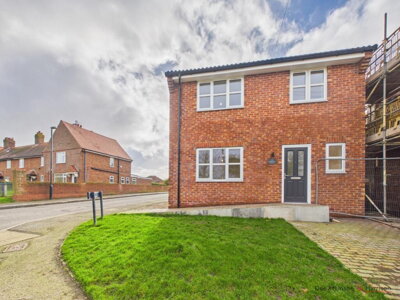
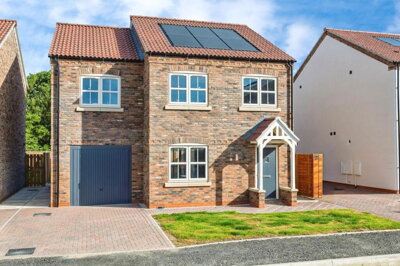
Browse 2 homes new builds in Skipsea, East Riding of Yorkshire from local developer agents.
£200k
21
0
162
Source: home.co.uk
Source: home.co.uk
Detached
5 listings
Avg £368,490
House
3 listings
Avg £175,000
Bungalow
2 listings
Avg £239,998
End of Terrace
2 listings
Avg £182,500
Semi-Detached
2 listings
Avg £205,000
Semi-Detached Bungalow
2 listings
Avg £175,000
Barn Conversion
1 listings
Avg £555,000
Cottage
1 listings
Avg £168,000
Detached Bungalow
1 listings
Avg £450,000
Terraced
1 listings
Avg £160,000
Source: home.co.uk
Source: home.co.uk
Skipsea’s market tells the story of a village living with a fast-eroding coast. Overall sold prices are down 14% on the previous year and remain 13% below the 2022 high of £207,832, according to recent transaction data. For buyers, that can open up more affordable rural options, but it also reflects the financial effect coastal erosion is having on local values. Semi-detached homes, which make up most sales here, average about £155,000, while larger detached properties are closer to £260,000, a clear gap between the main property types in this coastal setting.
There are no active new-build schemes in the Skipsea postcode area, largely because ongoing coastal erosion makes major construction unattractive to developers. As a result, buyers are choosing from existing homes, most of them built across several decades rather than recently completed stock. Some bungalows on Green Lane date back to the 1980s, while the holiday chalets on the cliffs at Southwick Farm go further back, to development in the 1930s. That lack of new supply helps preserve the village’s character, but it does mean fewer choices for anyone focused on modern insulation, wiring and energy efficiency standards.
Along the seafront, values have seen the sharpest falls because coastal erosion is a direct threat to those homes. Anyone looking here needs to check exactly how far a property sits from the cliff edge before buying, especially as local erosion rates are among the highest in Europe. We list homes across the village, from properties in safer inland spots to coastal addresses with striking sea views and the risks that come with them. Getting a grip on that balance matters.

Daily life in Skipsea moves to a mix of seaside routine and rural Yorkshire calm. The village has around 700 residents, including long-term owners, retired couples and families attracted by lower prices and quieter surroundings. Tourism still plays a big role locally, with Mill Farm Country Park and Skipsea Sands Caravan Park bringing in visitors through the warmer months. Even so, those holiday sites are under pressure too, with Skipsea Sands caravan park losing an average of 10 pitches each year to erosion, steadily altering the tourism picture.
The land around the village is mostly farmland, stretching inland from the crumbling coast. Nearby sits Skipsea Withow Mere, a geological Site of Special Scientific Interest known for its unusual glacial landscape. Under the whole area lies soft boulder clay, left by glaciers around 18,000 years ago, which gives Holderness its gently rolling shape. It is an important part of the area’s geology, but it also brings shrink-swell risk for houses across the village because clay expands in wet conditions and contracts in dry ones.
Skipsea itself has only a small range of amenities, so most residents look to Hornsea for the basics. Supermarkets, healthcare and independent shops are all there, and the drive is roughly 15 minutes. Beach access is still possible where erosion closures have not intervened, although it is sensible to check conditions before heading out because this coastline changes quickly. For people happy to trade urban convenience for space, coastal character and a quieter setting near larger places, that mix can work well.

For families, primary education can be found through local village schools, with children often moving on to larger primary schools in nearby Hornsea for Key Stage 2. Hornsea Community Primary School serves families from across the wider area and gives Skipsea households a community-based option within a manageable travel distance. Secondary choices are in Hornsea and other surrounding towns, and school transport can be available for rural families. We always suggest checking catchment areas and admissions direct with East Riding of Yorkshire Council, because demand and capacity can shift from one year to the next.
The nearest secondary options include Outwood Academy in nearby towns, where students can follow GCSE and A-Level courses after primary school. Sixth form provision has become more concentrated in recent years, so many students travel to Hornsea or Driffield for post-16 study. Some families also look further afield to grammar schools in Hull or Beverley, though that means passing entrance exams and dealing with a longer daily journey. In a rural area with limited nearby choice, early registration is sensible.
For younger children, early years and preschool settings in the surrounding villages help make rural family life more workable. Skipsea’s close-knit community also means parents often swap local recommendations and informal childcare knowledge. Where families need something more specific, we recommend speaking to the education department at East Riding of Yorkshire Council for up-to-date guidance on placements, transport support and special educational needs provision in the area.

Getting around from Skipsea usually means relying on a car. The village is about 6 miles north of Hornsea, and the run to town takes around 15 minutes along the B1242. Hull, the nearest major city, sits roughly 25 miles to the southwest, so commuting there is possible for those prepared to drive. Nearby villages connect to the A165, which links the Holderness coast with Hull and also heads north towards Bridlington and the Yorkshire coast.
Public transport is there, but it is limited. Buses link Skipsea with Hornsea and neighbouring villages, often only hourly or even less often, so anyone without a car should look closely at how practical that will be for work and day-to-day travel. For rail, residents need to reach Hull, Bridlington or Driffield, and from Hull Paragon Station there are direct trains to Leeds, York and London. That arrangement can still suit professionals based in bigger cities, particularly if they work from home for several days each week.
Cyclists in this area are mostly using rural lanes rather than dedicated paths, and surfaces can vary quite a bit. The road along the coast towards Hornsea is scenic, though not flat, which will appeal more to confident riders than casual users. Parking, by contrast, is rarely difficult in Skipsea because of the low population density, and many homes have off-street spaces or their own driveways. On quieter days the village roads are pleasant enough to ride, but we would still watch for farm traffic and livestock on the narrower lanes.

Anyone buying in Skipsea should pin down exactly where a property sits in relation to the eroding coast. Homes on Green Lane and those close to the cliff edge carry greater erosion exposure than places set further inland. It is also wise to review flood risk assessments, any history of subsidence and the insurance position before committing to a coastal property here.
Before arranging viewings, get a mortgage agreement in principle in place so sellers and agents can see what you are able to spend. A number of lenders will consider mortgages on coastal homes, although survey findings, insurance requirements and the property’s condition can influence the final decision. We can also put buyers in touch with our mortgage partners for competitive rates in this price bracket.
Try to see a range of homes in Skipsea and the neighbouring villages before deciding. Comparing locations, price points and overall condition side by side is particularly useful here. During viewings, focus on damp, any signs of subsidence, the state of the structure and how sound the foundations appear. We connect buyers with local estate agents who can set up appointments and share useful neighbourhood detail.
Because of the coastal position and the boulder clay beneath the village, we would treat a RICS Level 2 Survey as essential in Skipsea. It can highlight coastal erosion concerns, shrink-swell clay subsidence, damp penetration and roof condition before you commit. In this part of East Yorkshire, the risks are often greater than a standard mortgage valuation will pick up properly.
It helps to use a solicitor who knows rural and coastal transactions. They can deal with the legal side, carry out local authority searches, review any planning restrictions linked to coastal erosion management and make sure the paperwork is in order. We also work with conveyancing partners who offer competitive rates for purchases in Skipsea.
After the surveys come back satisfactorily and the legal work is complete, the next step is to exchange contracts and agree a completion date. Leave room in your timetable for any repairs or improvements flagged during the survey process. We would also make sure buildings insurance is ready and that it covers the particular coastal risks that come with living in East Yorkshire.
A quick viewing rarely tells the full story in Skipsea, because some of the biggest issues are environmental or structural. The soft boulder clay under the village creates shrink-swell conditions, so the ground can contract in dry spells and expand in wet weather, sometimes leading to movement in foundations and wider structural damage. Warning signs include cracking to walls, uneven floors and doors or windows that stick or do not shut properly. A RICS Level 2 Survey is the best way to assess this properly, but buyers can still spot clues for themselves while walking around.
For many properties in Skipsea, coastal erosion is the main environmental concern, especially near the cliff edge on the Holderness coast. Land is being lost to the sea here faster than in almost any other part of Europe, with yearly erosion of 1.5 to 2 metres putting exposed homes at risk. We would always check the exact position of any property, its current distance from the cliff and the historic erosion pattern for that stretch of coast. Inland homes may miss out on the sea view, but they usually offer stronger long-term security.
Flooding is another issue to examine closely, particularly in low-lying coastal spots where sea spray, wave overtopping and coastal flooding can all come into play during storms and high tides. In severe weather, the North Sea coast between Skipsea and Mappleton can be placed under flood alert, and some properties face a real risk of inundation from waves and spray. Buyers should look at the flood risk assessment, check what insurance is available and at what premium, and think about how climate change could affect the frequency and seriousness of future events. Holiday properties and caravan pitches have already been lost in this way.
Construction type and build quality matter here, not least because much of the housing stock is older and exposed to a hard coastal climate. Some older homes still have dated electrics, original single glazing and insulation levels below modern expectations. Holiday chalets, built from the 1930s onwards, need particularly careful scrutiny for structural soundness and their ability to cope with coastal weather. Bungalows from the 1980s are newer by comparison, but many still need work to meet current energy efficiency standards. Renovation costs should be part of the calculation from the start.

Over the last 12 months, the average sold price in Skipsea has been about £164,200, based on transaction data. home.co.uk puts the overall average from recent sales a little higher, at £181,250. Semi-detached properties are averaging around £155,000, while detached homes are nearer £260,000. Values have fallen 14% year on year and remain 13% under the 2022 peak of £207,832, largely because coastal erosion is weighing on prices in this location.
For council tax, Skipsea properties come under East Riding of Yorkshire Council, with bands still based on values as at April 1991. Given the village’s generally modest prices, many homes are likely to sit in bands A to C. The final band always depends on the individual property and its valuation, so it is worth checking the exact position with East Riding of Yorkshire Council before proceeding. Their website also has a searchable database for confirming the band on any address you are considering.
Schooling in Skipsea itself is fairly limited. Primary-age children often begin in local village schools and then move on to larger primary settings in Hornsea, while secondary provision for Key Stages 3 and 4 is found in the surrounding area, with sixth form choices in nearby towns. Outwood Academy in surrounding towns is among the nearest secondary options and can be reached by school transport. For the latest on admissions and catchments, we would go straight to East Riding of Yorkshire Council.
Bus links from Skipsea are infrequent, with services to places such as Hornsea and other nearby towns running only on a limited timetable. For rail travel, residents usually have to drive to Hull, Bridlington or Driffield before joining the train network. Most people in the village depend on a private vehicle for commuting and everyday journeys. Anyone planning to live here without a car should check current bus times very carefully before buying.
As an investment location, Skipsea needs a cautious approach because the coastal risks are unusually pronounced. Prices are lower than in many other parts of Yorkshire, but the Holderness coastline continues to erode, and homes in exposed spots, especially near the cliff edge, face annual losses of 1.5 to 2 metres in some recorded areas. Seafront values have already dropped 14% year on year, and insurance can be either expensive or hard to secure in higher-risk cases. Properties further inland tend to offer a steadier outlook, although growth may be modest compared with places that have stronger development pipelines and expanding populations.
Stamp duty in Skipsea follows the standard England rules for 2024-25. On purchases up to £250,000, the rate is zero under the nil-rate threshold. The slice from £250,001 to £925,000 is charged at 5%, from £925,001 to £1,500,000 at 10%, and anything above £1,500,000 at 12%. First-time buyers get relief up to £425,000, then pay 5% on the portion between £425,001 and £625,000, with no relief beyond that point. Since the usual Skipsea price is around £164,200, most buyers here would pay zero stamp duty.
In Skipsea, the main risks tend to come from the coast and the ground beneath the property. Coastal erosion can threaten homes near the cliff edge, shrink-swell clay can affect foundations, and flooding from storms or high tides is another concern in exposed locations. Insurance may cost more than average, and older homes can also come with outdated electrics, insulation or plumbing depending on age and upkeep. We would not buy here without a thorough RICS Level 2 Survey.
Getting the full buying budget right matters just as much as agreeing the purchase price. Alongside the cost of the property itself, buyers need to allow for stamp duty land tax, solicitor fees, survey charges and moving costs. At the current average Skipsea price of about £164,200, a first-time buyer would pay zero stamp duty under the present thresholds, and an existing homeowner would also pay nothing on the first £250,000. That nil-rate band can make a noticeable difference compared with higher-value areas, where stamp duty often adds thousands of pounds.
Survey costs deserve close attention in Skipsea because the local risks are very specific. A RICS Level 2 Survey usually starts at £350 and gives buyers an important assessment of coastal erosion exposure, shrink-swell subsidence risk and general condition. With older houses, or homes in more exposed coastal positions, a RICS Level 3 Building Survey can be the better choice even at a higher price because it goes further into possible structural concerns. We can arrange bookings through our platform with survey partners offering competitive rates for Skipsea properties.
Legal costs for a Skipsea purchase often begin at around £499 for straightforward conveyancing, although coastal homes can need extra searches and checks that push the fee higher. Your solicitor should carry out local authority searches with East Riding of Yorkshire Council, review any coastal erosion management plans affecting the address and confirm that the title paperwork is all correct. On top of that, title registration fees, teleport fees and bank transfer charges usually add another £200-300. Mortgage arrangement fees depend on the lender, with some products charging nothing and others costing 0.5-1% of the loan amount.

Properties New Builds In London

Properties New Builds In Plymouth

Properties New Builds In Liverpool

Properties New Builds In Glasgow

Properties New Builds In Sheffield

Properties New Builds In Edinburgh

Properties New Builds In Coventry

Properties New Builds In Bradford

Properties New Builds In Manchester

Properties New Builds In Birmingham

Properties New Builds In Bristol

Properties New Builds In Oxford

Properties New Builds In Leicester

Properties New Builds In Newcastle

Properties New Builds In Leeds

Properties New Builds In Southampton

Properties New Builds In Cardiff

Properties New Builds In Nottingham

Properties New Builds In Norwich

Properties New Builds In Brighton

Properties New Builds In Derby

Properties New Builds In Portsmouth

Properties New Builds In Northampton

Properties New Builds In Milton Keynes

Properties New Builds In Bournemouth

Properties New Builds In Bolton

Properties New Builds In Swansea

Properties New Builds In Swindon

Properties New Builds In Peterborough

Properties New Builds In Wolverhampton

Enter your details to see if this property is within your budget.
Loans, cards, car finance
Estimated property budget
Borrowing + deposit
You could borrow between
Typical borrowing
Monthly repayment
Est. at 4.5%
Loan-to-value
This is an estimate only. Your actual budget may vary depending on interest rates, credit history, and personal circumstances. For an accurate affordability assessment, speak to one of our free mortgage advisors.
This calculator provides estimates for illustrative purposes only and does not constitute financial advice. Your home may be repossessed if you do not keep up repayments on your mortgage. Estimates based on 4.5% interest rate, repayment mortgage. Actual rates depend on your circumstances.
Homemove is a trading name of HM Haus Group Ltd (Company No. 13873779, registered in England & Wales). Homemove Mortgages Ltd (Company No. 15947693) is an Appointed Representative of TMG Direct Limited, trading as TMG Mortgage Network, which is authorised and regulated by the Financial Conduct Authority (FRN 786245). Homemove Mortgages Ltd is entered on the FCA Register as an Appointed Representative (FRN 1022429). You can check registrations at NewRegister or by calling 0800 111 6768.

We use cookies to show you personalised content and improve your experience of our website. Find out more in our Privacy policy and Cookie policy.