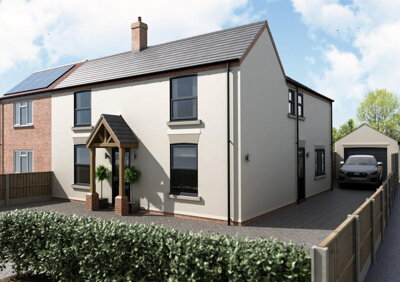
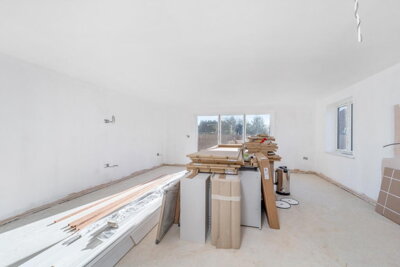
Browse 2 homes new builds in Sibsey, East Lindsey from local developer agents.
£265k
21
1
145
Source: home.co.uk
Source: home.co.uk
Detached
10 listings
Avg £370,995
Detached Bungalow
5 listings
Avg £246,990
Bungalow
2 listings
Avg £244,975
Semi-Detached
2 listings
Avg £272,500
Farm House
1 listings
Avg £495,000
Semi-Detached Bungalow
1 listings
Avg £110,000
Source: home.co.uk
Source: home.co.uk
Sibsey’s housing market is shaped by the village’s semi-rural Lincolnshire setting, and the stock reflects that. Detached homes make up 54.4% of all properties, which says a lot about demand for larger family houses here. The average detached price is £298,800, and that often buys plenty of internal space as well as the bigger gardens people expect in a village location.
After detached homes, semi-detached properties are the next most common, accounting for 26% of the housing stock, with average prices of around £195,000. That part of the market tends to suit first-time buyers and families who want a bit more room without stretching too far. Terraced homes, at an average of £165,000, can offer a more accessible way into Sibsey, while flats and apartments account for roughly 8.4% of homes. Over the past twelve months, prices have edged down by 1.0%, which points to a steady market and some scope for buyers to negotiate well.
Sales in Sibsey are not especially fast-moving, and that suits some buyers. Around 20 transactions completed over the past year, so stock does not turn over at the pace you might see in a town or city. Good homes can still hold attention, but competition is often lighter, and the stable pricing makes Sibsey a sensible place to buy for lifestyle reasons rather than chasing short-term capital growth.

Village life in Sibsey has that recognisable English feel, quiet, practical, and closely tied to local history. St Margaret's, a listed church, sits at the centre of the village and anchors the conservation area around it. Day to day, residents rely on a primary school, village hall, pubs, and a handful of local businesses that keep the place working for both locals and visitors. With a population of nearly 2,000, Sibsey feels close-knit without being too small to support the basics.
The economy around Sibsey is still influenced by the wider Boston Borough, where agriculture and food processing remain important. That background is written into the landscape, with fertile farmland stretching across the flat Lincolnshire ground around the village. Underneath, the geology includes Ampthill Clay and Kimmeridge Clay, and that helps explain why so many local homes are built in brick. Those clay layers, together with tidal flat deposits, also play a part in creating the broad, level landscape seen across this coastal part of England.
One of Sibsey’s advantages is that Boston is close enough for the things a village cannot always provide. Residents can head there for wider shopping choices, healthcare, and leisure without living in the middle of town. Pilgrim Hospital on Peterbrook Road serves the area for NHS care, and for a broader cultural day out, Lincoln is within a reasonable drive, with theatres, galleries, shops, the cathedral, and the castle all adding to its draw.

For younger children, education in Sibsey is centred on the village primary school. That gives families a straightforward local option and can make day-to-day routines much easier. Secondary pupils usually travel into nearby Boston, where there is a choice of secondary schools and sixth form colleges. Before buying, we would always suggest checking catchment areas and admissions policies carefully, because they can have a real effect on demand, values, and availability in certain streets.
The age of Sibsey’s housing is mixed, which gives buyers a fair spread of styles and budgets. Around 18% of properties were built before 1919, 10.2% date from between 1919 and 1945, 34.6% come from the post-war years up to 1980, and 37.2% have been built since 1980. That means there is a choice between older homes with character, especially near the conservation area, and later family houses from more recent decades. Around St Margaret's Church in particular, older properties may come with extra upkeep and possible renovation considerations.
Anyone looking near the school in Sibsey should keep one practical point in mind, school admissions usually open in the autumn for the following September intake. Homes on Hall Lane, Sibsey Lane, and the roads around the village school tend to draw family interest for exactly that reason. At drop-off and pick-up times, narrower village lanes can become congested, and that is the sort of local detail experienced agents often know well.

Most journeys in and out of Sibsey are road-based. The A16 and A52 link the village with Boston, Grantham, and onward routes to larger places such as Peterborough and Nottingham. For rail travel, Boston station connects to services between Boston and Nottingham, with wider national links available through larger interchange stations. In practice, many commuters still rely on a car, though Sibsey’s location gives fairly workable driving times to nearby employment centres.
Bus links do exist, and for some households they matter a great deal. Sibsey is served by the number 11 and other local routes into Boston and neighbouring villages, though frequencies vary, so we always recommend checking the latest timetables before committing if public transport is a priority. The landscape helps in another way too, the flat Lincolnshire Fens are well suited to cycling, and plenty of residents make the most of that.
For longer journeys, residents usually look to Humberside Airport or East Midlands Airport for European flights. Grimsby and Immingham add port access for ferry travel. Sibsey sits in a useful position between the coast and inland Lincolnshire, which helps if regular travel is part of work or leisure. Grantham station, reached via the A52, is also valuable because it offers quicker trains to London King's Cross, bringing the capital within about 90 minutes.

Brick is the dominant building material across Sibsey, and that comes down to both local supply and the demands of building on clay soils. In our experience, newer homes here are usually of traditional cavity wall construction, while pre-1919 and interwar properties often have solid brick walls with no cavity insulation. That difference matters. It can affect heat retention, damp behaviour, and the way we assess the building fabric when buyers are weighing up a purchase.
Because 62.8% of Sibsey homes were built before 1980, we regularly come across defects associated with older construction. Rising damp is one of them, especially in solid-walled properties where damp-proof courses have failed or were never installed. We would want buyers to check what damp-proofing has been done, if any, and ask for paperwork covering past treatments. Penetrating damp is another issue we see, often linked to worn pointing or deteriorated roof verges, and the exposed Fenland setting can make those problems worse.
The ground conditions in Sibsey need proper attention. Ampthill Clay and Kimmeridge Clay both fall within the clay soils found here, and our surveyors regularly assess the risks that come with them. These shrinkable clays contract in dry periods and expand when wet, which can place foundations under stress over time. The risk can be higher where large trees are close to the building, because roots draw moisture from the soil and may cause uneven movement. In spots such as the conservation area near St Margaret's Church, we would keep an eye out for brick cracks, sticking windows, and doors that no longer shut cleanly.
Before buying in Sibsey, there are a few very local issues that deserve careful thought, and flood risk is near the top of that list. Parts of the village fall within areas at high risk from rivers, the sea, and surface water. The River Witham and its tributaries contribute to fluvial flood risk, while the low-lying landscape means heavy rain can also lead to surface water flooding. We would strongly advise getting flood history information and checking the exact risk classification for the property before going ahead.
Tidal flat deposits in the local superficial geology help make the nearby farmland productive, but they can also add to drainage difficulties for some homes. As part of conveyancing, we would usually recommend a standard drainage and water search to confirm whether a property is on mains sewerage and whether any flooding or drainage problems have been recorded. Lower sites, especially those closer to drainage channels and ditches, are worth looking at very closely.
Clay soils are a recurring theme in Sibsey, and with them comes the risk of shrink-swell movement affecting foundations. Homes built before 1980 may already show movement or may need closer assessment of the substructure. A RICS Level 2 Survey can pick up common warning signs such as cracks in walls, sticking doors, and windows that have started to bind because of ground movement. Buyers should also check whether the property sits inside the conservation area, as that can restrict changes and renovation work.
Because brick-built homes dominate locally, buyers should also look carefully at roof condition and at any history of damp, particularly in older solid-walled houses rather than cavity-built ones. Large trees nearby deserve extra attention too, since root activity in clay soil can increase subsidence risk. One final point is tenure, flats and some houses may be leasehold, bringing service charges and ground rent into the picture.

A good first step is to look through our Sibsey listings and set up alerts for anything new coming on. Local pricing helps frame the search, and the current average of £258,950 gives a useful benchmark alongside the different property types on offer. It is also worth getting a feel for the different parts of the village, from period homes around the conservation area to newer development on the edges.
Before arranging too many viewings, we would get a mortgage agreement in principle in place with a lender. It gives buyers more credibility when they make an offer and shows the seller that funding is lined up. Most Sibsey homes sit within normal residential lending criteria, although some lenders may add conditions where there is flood risk or non-standard construction.
Once you start viewing, give yourself time to look beyond the kitchen and the garden fence. The surrounding area, access to amenities, and the building’s condition all matter, especially in a place where clay soils and flood risk can shape long-term ownership. We usually suggest visiting at more than one time of day and, if possible, in wet weather as well, because that can reveal drainage issues and signs of damp more clearly.
After an offer is accepted, we would usually suggest booking a RICS Level 2 Survey so the condition is checked properly. With 62.8% of properties in Sibsey built before 1980, that stage can be particularly useful for picking up age-related problems before contracts are exchanged. In the Sibsey area, our RICS Level 2 Survey generally costs between £450 and £700, depending on size and property type.
The legal side then moves across to the solicitor, who deals with searches, contracts, and registration. They also work with the mortgage lender and keep the transaction moving through to completion. A conveyancer who knows East Lindsey property well can be especially helpful where conservation area controls or flood zone issues may affect the purchase.
Once the survey is satisfactory and the mortgage offer is in place, the next step is exchange of contracts and payment of the deposit. Completion comes after that, and that is the point at which the keys are handed over and ownership of the Sibsey property passes across.
Recent market figures put the average house price in Sibsey at £258,950. Broken down by type, detached homes average £298,800, semi-detached properties about £195,000, and terraced houses roughly £165,000. Over the last twelve months, prices have dipped by 1.0%, and around 20 sales completed in that period. That level of activity tends to mean a calmer market, where buyers have a bit more breathing space than they would in busier locations.
Council tax in Sibsey comes under East Lindsey District Council. Bands run from A to H, based on property value, and many village homes are likely to sit within bands A to D. At present levels, a typical three-bedroom semi-detached house in Sibsey would often fall into band B or C, while a larger detached property may be in band D or higher. We would still advise checking the exact band with East Lindsey District Council, because it feeds directly into annual running costs.
Families in Sibsey have the local primary school for younger children, while secondary options are mainly in nearby Boston, including Boston Grammar School and Boston High School. Sibsey Free School also serves the area for secondary education. As places and priorities can change, it is sensible to verify current Ofsted grades and catchment rules before relying on a particular school. Transport matters too, because school bus coverage may not extend to every part of the village.
Getting around Sibsey usually means combining local bus routes with car travel. Buses connect the village to Boston and nearby settlements, and Boston station sits on the Poacher Line to Nottingham. By road, the A16 and A52 give access to larger centres such as Grantham, where quicker trains to London are available. Even so, many residents find a private vehicle is close to essential for commuting and for reaching services that are not available in the village. Larger shopping trips into Boston are typically done by car.
Sibsey can appeal to buyers who want a semi-rural village base without paying the sort of prices often seen in larger towns. The recent pattern is steady rather than dramatic, with modest movement in values rather than rapid growth. In the rental market, demand tends to come from workers tied to agriculture and food processing across the wider Boston Borough, although seasonality can affect that. Longer term, the village benefits from being within reach of Boston and connected to the wider Lincolnshire economy.
At the current average purchase price of £258,950, standard SDLT rates mean nothing is payable on the first £250,000, and 5% applies to the portion from £250,000 to £258,950. That produces a bill of about £447 on a property at the average price. First-time buyers purchasing up to £425,000 pay no SDLT on the first £425,000. For second homes and buy-to-let purchases, the additional rate is 3% on top of the standard charge.
Flooding is not a minor point in Sibsey. Parts of the village face high risk from rivers, the sea, and surface water. The River Witham and its tributaries create fluvial flood risk, and the low-lying terrain also leaves some areas vulnerable during heavy rainfall. Tidal flat deposits beneath parts of the village can affect how well water drains away in extreme conditions. We would always advise buyers to obtain flood reports and confirm the exact classification for any property, not least because insurance pricing and mortgage availability can be affected. Homes in flood zone 2 or 3 may need extra scrutiny from lenders and insurers.
Historic property is part of Sibsey’s character, and several listed buildings are found in the village. The Church of St Margaret is the best known, and the conservation area around it protects the setting and character of nearby buildings. That matters to buyers, because listed status or a conservation area location can limit what can be altered or extended. Costs can also be higher. For older buildings of this sort, we often find that a RICS Level 3 Building Survey is the more suitable option, particularly where historic materials and construction methods need closer assessment.
From 4.5% APR
Compare mortgage deals from local lenders
From £499
Expert solicitors for your Sibsey property purchase
From £450
Thorough property survey for homes in Sibsey
From £85
Energy performance certificate for your new home
The purchase price is only one part of the overall cost of buying in Sibsey. SDLT starts to apply once the relevant thresholds are crossed, so it is worth calculating the figure early. On a property at the current average of £258,950, the standard rules mean tax is charged only on the amount above £250,000. That works out at around £447, which keeps the upfront SDLT cost fairly modest at this price level.
There is extra help for first-time buyers. On purchases up to £425,000, SDLT is charged at 0% on the first £425,000. If the purchase price goes above £425,000, only the portion over £425,000 is charged at 5%. For first-time buyers in Sibsey, that can make a noticeable difference to the overall budget. The relief does not apply, however, if the property costs more than £625,000.
Other buying costs need to be budgeted for as well. Solicitor fees are often in the region of £500 to £1,500 depending on complexity, mortgage arrangement fees can range from £0 to £1,500 depending on the deal, and survey charges sit on top. For a typical three-bedroom property in the Lincolnshire area, a RICS Level 2 Survey is usually around £450 to £700. We would also factor in mortgage valuation fees, land registry fees, moving costs, and search fees, with local authority, drainage, and environmental searches often adding about £250 to £400 to the legal bill.

Properties New Builds In London

Properties New Builds In Plymouth

Properties New Builds In Liverpool

Properties New Builds In Glasgow

Properties New Builds In Sheffield

Properties New Builds In Edinburgh

Properties New Builds In Coventry

Properties New Builds In Bradford

Properties New Builds In Manchester

Properties New Builds In Birmingham

Properties New Builds In Bristol

Properties New Builds In Oxford

Properties New Builds In Leicester

Properties New Builds In Newcastle

Properties New Builds In Leeds

Properties New Builds In Southampton

Properties New Builds In Cardiff

Properties New Builds In Nottingham

Properties New Builds In Norwich

Properties New Builds In Brighton

Properties New Builds In Derby

Properties New Builds In Portsmouth

Properties New Builds In Northampton

Properties New Builds In Milton Keynes

Properties New Builds In Bournemouth

Properties New Builds In Bolton

Properties New Builds In Swansea

Properties New Builds In Swindon

Properties New Builds In Peterborough

Properties New Builds In Wolverhampton

Enter your details to see if this property is within your budget.
Loans, cards, car finance
Estimated property budget
Borrowing + deposit
You could borrow between
Typical borrowing
Monthly repayment
Est. at 4.5%
Loan-to-value
This is an estimate only. Your actual budget may vary depending on interest rates, credit history, and personal circumstances. For an accurate affordability assessment, speak to one of our free mortgage advisors.
This calculator provides estimates for illustrative purposes only and does not constitute financial advice. Your home may be repossessed if you do not keep up repayments on your mortgage. Estimates based on 4.5% interest rate, repayment mortgage. Actual rates depend on your circumstances.
Homemove is a trading name of HM Haus Group Ltd (Company No. 13873779, registered in England & Wales). Homemove Mortgages Ltd (Company No. 15947693) is an Appointed Representative of TMG Direct Limited, trading as TMG Mortgage Network, which is authorised and regulated by the Financial Conduct Authority (FRN 786245). Homemove Mortgages Ltd is entered on the FCA Register as an Appointed Representative (FRN 1022429). You can check registrations at NewRegister or by calling 0800 111 6768.

We use cookies to show you personalised content and improve your experience of our website. Find out more in our Privacy policy and Cookie policy.