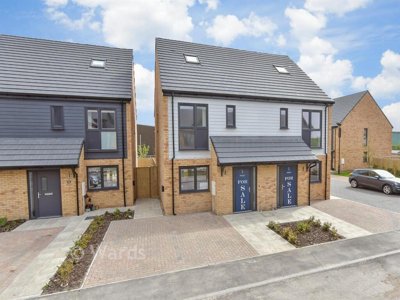
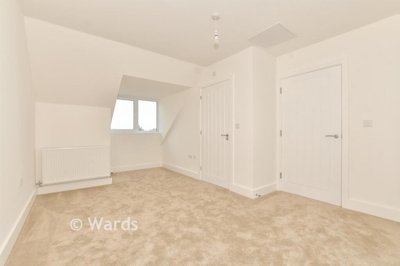
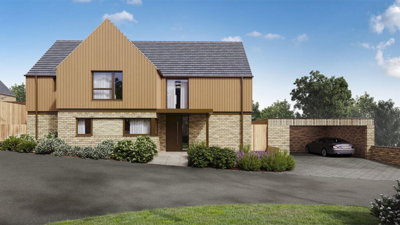
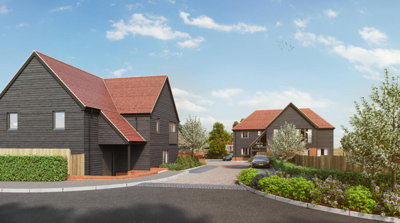
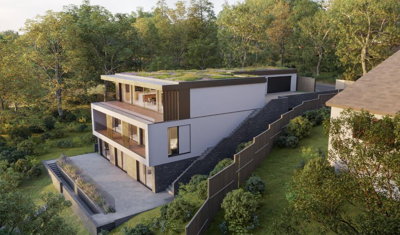
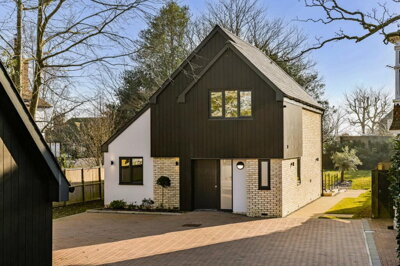
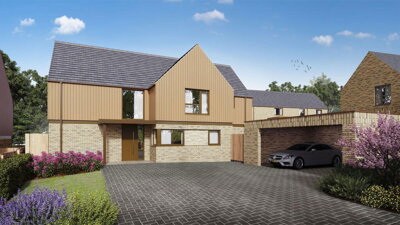
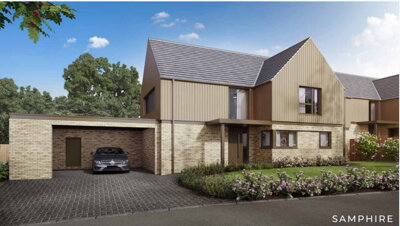
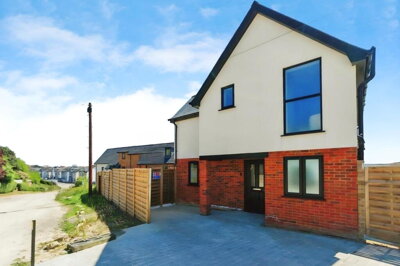
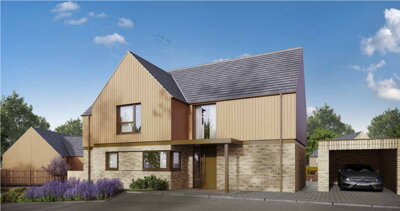
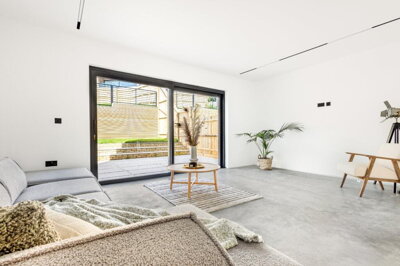
Browse 11 homes new builds in Saltwood, Folkestone and Hythe from local developer agents.
The Saltwood property market offers detached, semi-detached, and terraced houses spanning various price ranges and neighbourhoods. Each listing includes detailed property information, photographs, and direct contact with the marketing agent.
£599k
11
1
118
Source: home.co.uk
Showing 11 results for Houses new builds in Saltwood, Folkestone and Hythe. 1 new listing added this week. The median asking price is £599,000.
Source: home.co.uk
Detached
6 listings
Avg £1.75M
Semi-Detached
4 listings
Avg £459,738
Terraced
1 listings
Avg £280,000
Source: home.co.uk
Source: home.co.uk
Saltwood’s property market caters to a broad spread of budgets and ways of living. Detached homes fetch the highest average price at £834,222, which reflects the pull of roomy family houses and generous gardens in this popular village setting. Semi-detached properties average £461,867, giving buyers good value if they want the village feel without paying the top end attached to larger detached plots. Over the past twelve months there have been 35 completed sales, a steady level of activity for a village of this size.
Prices have eased a little over the last twelve months, with the overall market down by 1.14%. That cooling has opened the door for buyers, especially in the terraced sector, where values have risen by 0.68% to an average of £367,500. Detached homes have seen the sharpest fall at 1.93%, while semi-detached properties slipped by 0.70% and flats by 1.96%. In practical terms, that points to a market where negotiation still has room to work, so serious buyers may find this a useful moment to secure a Saltwood home.
New build development in the Saltwood postcode area (CT21) is still thin on the ground, with no active schemes currently verified in early 2026. Developers usually look instead to nearby towns such as Hythe and Folkestone, where larger housing schemes are easier to deliver. Anyone hoping for a brand new home may want to widen the search to those places, while keeping Saltwood in focus for characterful period homes and established residential streets. That limited local supply of new homes also helps underpin values for the existing stock, much of which was built before 1980.

According to the 2021 Census, Saltwood has around 2,746 residents living in 1,173 households. That gives the village the feel of a close community, even though it sits within reach of larger urban centres. Detached and semi-detached homes make up much of the housing stock, and the local look is shaped by Kentish ragstone, red brick, and the tile-hung facades that Saltwood is known for. Many properties date from the Victorian and Edwardian eras, while older cottages still form the historic core around the village green and church.
Residential life, rather than heavy industry, drives the local economy. Many people travel out for work to Hythe, Folkestone, Ashford, and Canterbury, and Ashford International station gives quick high-speed links to London St Pancras, which suits daily commuters. Road access is helped by the M20 motorway, useful for journeys to work or for heading towards the continent via the Channel Tunnel. Around the village itself, employment is centred on small businesses, the primary school, and the service industries that support the community.
Day-to-day amenities are straightforward, with a primary school, village pub, and convenience facilities on hand, while Hythe and Folkestone provide the fuller shopping and leisure offer. Saltwood Castle, a Grade I listed building, dominates the local landscape, and St Peter and St Paul’s Church sits within the designated Conservation Area. Walkers and cyclists have plenty to work with in the surrounding Kent countryside, and the Kent Downs Area of Outstanding Natural Beauty is only a short drive away. Nearby Hythe also gives access to the Royal Military Canal, a historic waterway with scenic walks and good wildlife spotting.

Saltwood Church of England Primary School sits at the centre of local education for families with children of primary age. It gives younger children the chance to attend school close to home, which cuts down on travel and helps community ties grow early on. The school continues the strong Church of England tradition found across Kent, combining classroom learning with moral and spiritual development. Buyers thinking about a move here should check the latest catchment boundaries, as these can affect school place eligibility.
For secondary education, there are several well-regarded schools within a reasonable commute of Saltwood. Catchment areas and admission arrangements need checking carefully, because they can vary and change over time. Kent’s selective grammar system is available to families whose children pass the Kent Test, and schools in nearby towns can provide those places. The Folkestone School for Girls and the Marsh Academy are among the options serving the area, alongside faith schools and comprehensives in Ashford. Parents who put education first should also look at school performance data and Ofsted reports as part of the search.
Sixth form and further education choices are plentiful in the wider region, with colleges and sixth form centres in Folkestone, Hythe, and Ashford offering A-level and vocational courses across a wide range. For older students, the Kent Institute of Art and Design and the University of Kent in Canterbury are within a manageable travelling distance. Families moving to Saltwood should confirm current school allocations and think through the impact on their children’s education before they buy. With so many options within a short drive, the village suits families at several stages of schooling.

Saltwood has strong transport links, which is a big draw for commuters and for anyone who needs to travel regularly. The village lies close to the M20 motorway, giving direct access to Ashford and the wider motorway network beyond. That road connection works well for people heading to Ashford, Maidstone, or the Channel Tunnel terminal at Folkestone for cross-Channel travel to France. By car, the journey to Folkestone’s Cheriton terminal takes approximately 15 minutes, which makes continental trips very straightforward for Saltwood residents.
Rail is another major advantage here. Ashford International station offers high-speed services to London St Pancras in approximately 37 minutes, which keeps Saltwood firmly in daily-commuter territory for people working in the capital but wanting village life after hours. Folkestone also gives rail connections via the East Coastway line, opening up routes to Brighton, Hastings, and other coastal spots. Those dual rail options give Saltwood residents flexibility for both work and leisure travel.
Bus services link Saltwood with Hythe and Folkestone, so there are public transport choices for people without a car or for those who would rather leave it at home. The Kent transport network is still improving, with bus services and interchange facilities seeing ongoing changes across the region. Cyclists can make the most of the countryside, although some of the hilly terrain calls for a decent level of fitness. The North Downs Way National Trail runs nearby, giving longer-distance walking routes through the Kent Downs. Parking can be hit and miss depending on the street, with some roads offering on-street spaces and others proving awkward for households with more than one car.

Before starting a search in Saltwood, obtain a mortgage agreement in principle. It gives you a clear budget and shows sellers that you are serious when you make an offer. We also advise taking account of the full cost picture, including deposit, Stamp Duty, legal fees, and survey costs. Our platform provides current market data and average prices so you can see what your budget can realistically buy in this village.
Through Homemove, we can browse all available homes for sale in Saltwood and filter by property type, price range, and number of bedrooms. Register with local estate agents so you get alerts for new listings, because attractive homes in this village can move fast. Setting up property alerts helps you stay on top of fresh listings, especially detached family homes, which are always in steady demand locally.
We recommend viewing several properties so you can compare the Saltwood market properly. Look closely at condition, likely renovation costs, and how close each home sits to local amenities and transport links. Notes and photographs help later, once the day’s viewings start to blur together. Period homes deserve extra attention, because older properties often need more upkeep than newly built alternatives.
Once you have found the right home, put in a formal offer through the estate agent. There is room to negotiate on price, particularly with the recent modest falls in the local market. A mortgage agreement in principle gives your offer more weight. The terraced market in Saltwood has shown price resilience, so sellers of those homes may be less open to discounts.
We would instruct a RICS Level 2 Survey to check the property condition, especially in Saltwood where older homes and the local clay geology often go hand in hand. At the same time, a solicitor should be instructed to deal with the legal side of the purchase. A proper survey can flag structural movement, damp, or timber defects that are common in homes of this age.
When all searches and surveys come back satisfactorily, contracts are exchanged and the deposit is paid. Completion usually follows within weeks, and that is when the keys are handed over and the new Saltwood home becomes yours. Your solicitor will work with the seller’s legal team to keep the transfer of ownership moving smoothly.
Saltwood’s geology brings a few specific issues for buyers to think about. The underlying Gault Formation clay has shrink-swell potential, which can affect foundations and lead to subsidence or heave. That matters most for older properties, or homes with large trees nearby, where root systems can make ground movement worse. There are also areas of Sandstone and Siltstone from the Folkestone Formation, which can affect drainage and foundations in different ways. A thorough RICS Level 2 Survey by a qualified surveyor will pick up signs of structural movement, cracking, or foundation problems that may need remedial work.
A designated Conservation Area centred on Saltwood Castle and St Peter and St Paul’s Church adds extra planning rules for anyone buying homes for sale in Saltwood. Inside the area, alterations, extensions, and even external paint colours are subject to tighter controls. Listed buildings need Listed Building Consent for most works, and buyers thinking about listed property should allow for higher renovation costs because specialist materials and craftspeople are often needed. Any planned changes should be checked against local planning requirements before a purchase goes ahead.
Building materials in Saltwood are firmly rooted in the Kentish tradition. Many homes are made from local ragstone or red brick, often finished with render or tile-hanging, and those traditional materials need the right care and repair knowledge. Roofs are usually clad in clay tiles or slate, so wear to roof coverings, defective flashings, or faulty rainwater goods often crop up in period properties. Older homes can also have outdated electrics, plumbing, and heating that need updating to current standards. Properties built before 2000 may contain asbestos-containing materials, especially in roof spaces, boiler cupboards, or old pipe insulation.
Our surveyors often come across rising damp in solid-walled buildings that do not have proper damp-proof courses, along with timber decay such as wet rot and dry rot in roof structures and floor joists, plus woodworm in structural timbers. Age-related wear and the local clay geology together mean that cracking from settlement or ground movement is not unusual. A thorough survey before purchase gives buyers a chance to build remediation costs into their offer, or renegotiate once the findings are known.

The average property price in Saltwood is £634,954 as of February 2026. Detached properties average £834,222, semi-detached homes cost around £461,867, terraced properties average £367,500, and flats average £250,000. Over the past twelve months, prices have fallen by 1.14%, which may create openings for buyers in a market that is usually strong. The terraced sector has gone against the wider pattern, with modest growth of 0.68%.
Saltwood falls within the Folkestone and Hythe District Council area. Council tax bands are set by each property’s valuation, from Band A for lower-value homes through to Band H for the most expensive. With an average price of £634,954, many Saltwood homes sit in the middle bands, although the exact band depends on the individual valuation. Buyers should check the band for any property they are considering, as council tax is part of the ongoing cost of owning a home.
Saltwood Church of England Primary School serves the village and teaches children up to Year 6, with a Good Ofsted rating in recent inspections. For secondary school age children, there are several well-regarded options nearby, and Kent’s selective grammar school system is available to academically able pupils who pass the Kent Test, held annually in September. Parents should check current catchment areas and Ofsted ratings as they plan a purchase, because school performance can shape property values in this part of Kent.
Saltwood still has good transport links despite its village character. Ashford International station provides high-speed rail services to London St Pancras in approximately 37 minutes, so daily commuting to the capital is realistic. Local bus services run to Hythe and Folkestone, while the M20 motorway gives road access to the wider Kent network and the Channel crossing points at Folkestone. The Channel Tunnel terminal at Folkestone is approximately 8 miles from Saltwood, opening up Eurostar services and cross-Channel ferry options.
Saltwood has strong appeal as an investment location, thanks to its village character, transport links, and closeness to the Channel Tunnel. Families looking for good schools, commuters who need London access, and buyers drawn to Kent’s coastal amenities all tend to be interested here. Recent modest price falls may present buying opportunities, while the limited new build supply helps support values for existing properties. Rental demand is backed by commuters and local workers, although there are relatively few rental homes available in the village.
For properties up to £250,000, no Stamp Duty Land Tax is payable. Between £250,001 and £925,000, the rate is 5%. From £925,001 to £1,500,000, it rises to 10%, and anything above £1,500,000 is charged at 12%. First-time buyers pay no SDLT on properties up to £425,000, then 5% on the portion between £425,001 and £625,000. With the average Saltwood property price at £634,954, most buyers paying average prices would expect to pay around £19,248 in SDLT, while first-time buyers would get relief on the first £425,000.
Flood risk in Saltwood is generally low from rivers and the sea, because the village sits inland from the coast and away from major river systems. Even so, localised surface water flooding can happen in heavy rain because of the local topography and drainage capacity. The underlying Gault Formation clay also affects runoff patterns. Buyers should check Environment Agency flood maps for individual properties and confirm that suitable buildings insurance is available before they complete.
Getting to grips with the full cost of buying in Saltwood is important if you want to budget properly. SDLT applies to all freehold purchases above £250,000 at 5% on the portion between £250,001 and £925,000, 10% between £925,001 and £1,500,000, and 12% on anything above £1,500,000. With Saltwood’s average property price sitting at £634,954, most buyers purchasing around the average would expect to pay roughly £19,248 in SDLT once the nil-rate threshold has been taken into account.
First-time buyers have higher thresholds, so they pay no SDLT on properties up to £425,000 and 5% on amounts between £425,001 and £625,000. Anything above £625,000 does not qualify for first-time buyer relief. Those rules apply only to buyers who have never owned property anywhere in the world, so anyone with existing property assets should check eligibility before moving ahead. The average detached property price of £834,222 would generate SDLT of approximately £24,711 for non-first-time buyers.
Alongside Stamp Duty, buyers should allow for solicitor fees, usually between £500 and £2,000 depending on complexity, plus disbursements for searches and Land Registry fees. A RICS Level 2 Survey in the Saltwood area costs between £450 and £800, with larger or more complex homes tending towards the higher end. An Energy Performance Certificate is a legal requirement and starts from £80. Building insurance should be in place from completion, and removals costs will vary according to distance and volume. Mortgage arrangement fees, valuation fees, and broker costs also need to sit inside the overall purchase budget, because they can add up quickly.

From £450
A thorough inspection of the property condition matters, especially for period homes in Saltwood.
From £600
We recommend a building survey for older, larger or listed properties.
From £80
An Energy Performance Certificate is required for all property sales.
From £499
Solicitors to handle the legal aspects of your purchase
From 3.5% APR
Finance arranged to purchase your Saltwood property
Properties New Builds In London

Properties New Builds In Plymouth

Properties New Builds In Liverpool

Properties New Builds In Glasgow

Properties New Builds In Sheffield

Properties New Builds In Edinburgh

Properties New Builds In Coventry

Properties New Builds In Bradford

Properties New Builds In Manchester

Properties New Builds In Birmingham

Properties New Builds In Bristol

Properties New Builds In Oxford

Properties New Builds In Leicester

Properties New Builds In Newcastle

Properties New Builds In Leeds

Properties New Builds In Southampton

Properties New Builds In Cardiff

Properties New Builds In Nottingham

Properties New Builds In Norwich

Properties New Builds In Brighton

Properties New Builds In Derby

Properties New Builds In Portsmouth

Properties New Builds In Northampton

Properties New Builds In Milton Keynes

Properties New Builds In Bournemouth

Properties New Builds In Bolton

Properties New Builds In Swansea

Properties New Builds In Swindon

Properties New Builds In Peterborough

Properties New Builds In Wolverhampton

Enter your details to see if this property is within your budget.
Loans, cards, car finance
Estimated property budget
Borrowing + deposit
You could borrow between
Typical borrowing
Monthly repayment
Est. at 4.5%
Loan-to-value
This is an estimate only. Your actual budget may vary depending on interest rates, credit history, and personal circumstances. For an accurate affordability assessment, speak to one of our free mortgage advisors.
This calculator provides estimates for illustrative purposes only and does not constitute financial advice. Your home may be repossessed if you do not keep up repayments on your mortgage. Estimates based on 4.5% interest rate, repayment mortgage. Actual rates depend on your circumstances.
Homemove is a trading name of HM Haus Group Ltd (Company No. 13873779, registered in England & Wales). Homemove Mortgages Ltd (Company No. 15947693) is an Appointed Representative of TMG Direct Limited, trading as TMG Mortgage Network, which is authorised and regulated by the Financial Conduct Authority (FRN 786245). Homemove Mortgages Ltd is entered on the FCA Register as an Appointed Representative (FRN 1022429). You can check registrations at NewRegister or by calling 0800 111 6768.

We use cookies to show you personalised content and improve your experience of our website. Find out more in our Privacy policy and Cookie policy.