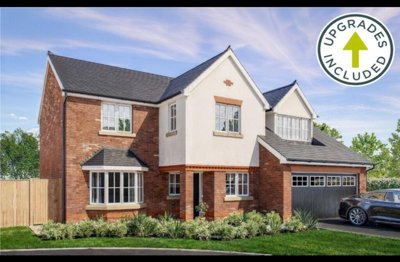
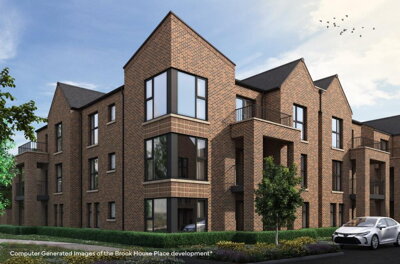
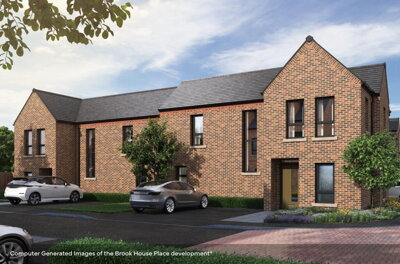
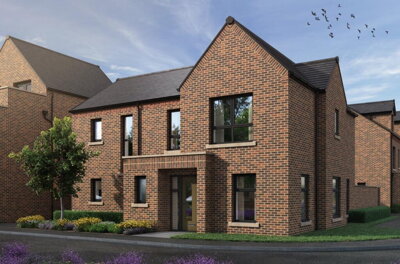
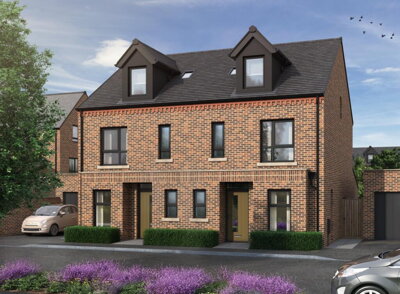
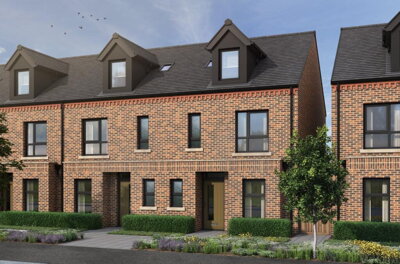
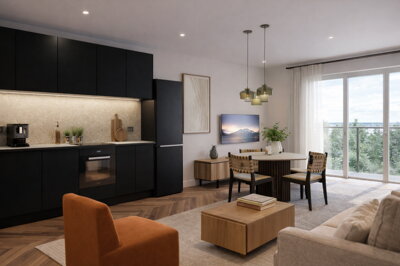
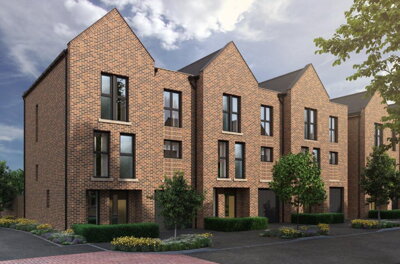
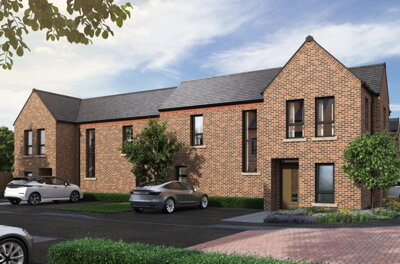
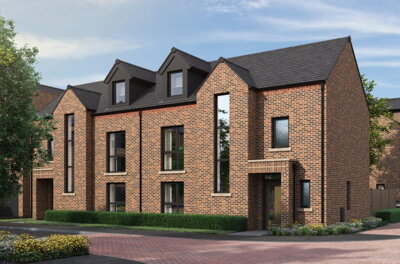
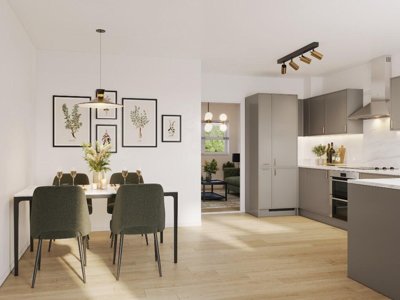
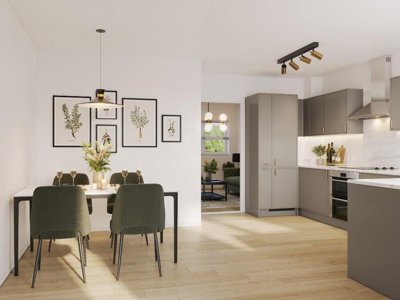
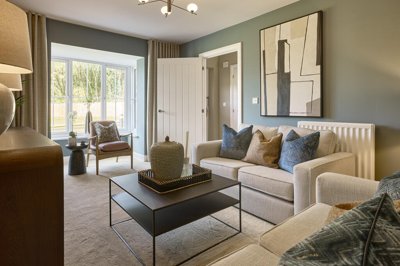
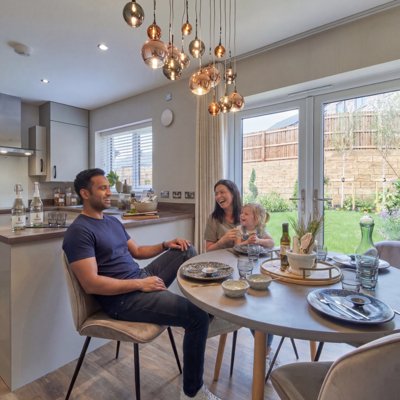
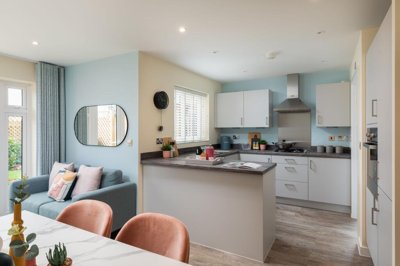
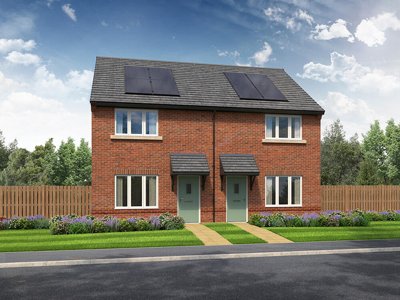
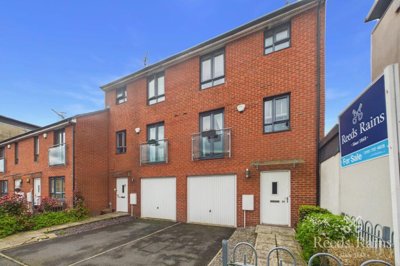
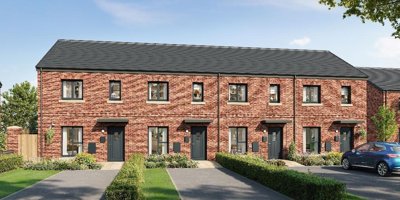
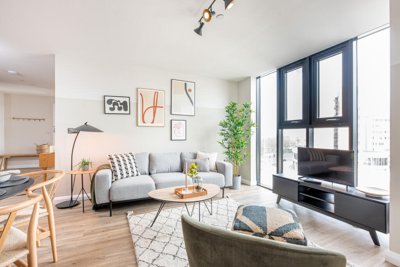
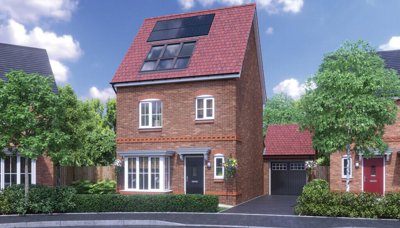
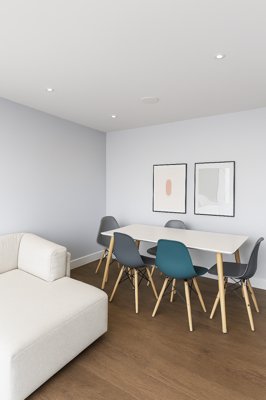
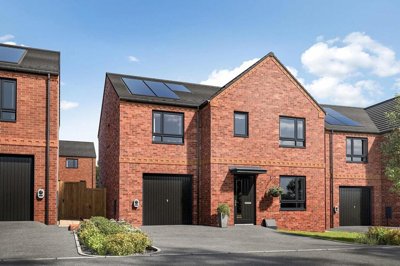
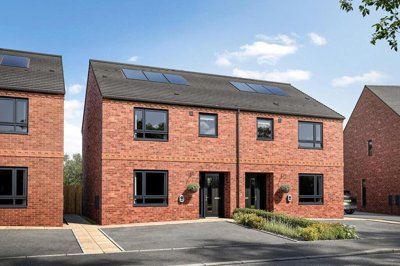
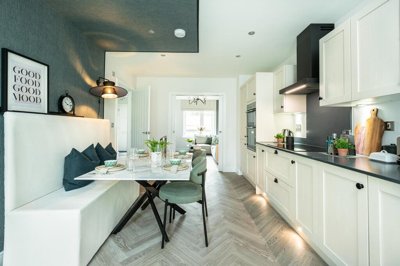
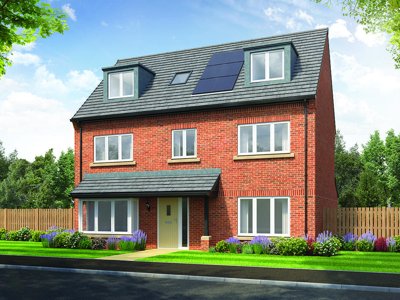
Browse 97 homes new builds in Salford, Greater Manchester from local developer agents.
The Salford property market offers detached, semi-detached, and terraced houses spanning various price ranges and neighbourhoods. Each listing includes detailed property information, photographs, and direct contact with the marketing agent.
£290k
738
62
88
Source: home.co.uk
Showing 738 results for Houses new builds in Salford, Greater Manchester. 62 new listings added this week. The median asking price is £290,000.
Source: home.co.uk
Semi-Detached
360 listings
Avg £318,181
Terraced
215 listings
Avg £231,938
Detached
163 listings
Avg £592,631
Source: home.co.uk
Source: home.co.uk
Salford keeps proving resilient, and the numbers back that up. Between January and December 2025, 1,600 property sales were recorded, a 6.1% rise on the previous year. The average house price in Salford currently stands at £247,000, while the last three months show an average price paid of £224,234. Across the wider Salford district, prices have settled to just 2% below the 2022 peak of £265,693, and the city itself is performing more strongly, at 7% up on the previous year.
Another reading of the same market tells a slightly different story. Salford recorded 1,600 property sales between January and December 2025, again a 6.1% increase on the previous year. The average house price in Salford currently stands at £284,374, and the average price paid in the last three months is also £284,374. Across the wider Salford district, prices sit 2% below the 2022 peak of £265,693, while the city itself remains 7% up on the previous year.
Prices vary sharply by property type in Salford. Detached homes lead the market at an average of £558,727, which reflects how few there are in an urban setting. Semi-detached houses average £308,002 and remain popular with families who need more room. Terraced homes, which dominate the city centre market, average £231,393, and flats sit at £166,548. The M50 3 postcode area has also posted 7.2% annual growth, so it is one we keep a close eye on for both buyers and investors.
Across the wider Salford area, new schemes are adding much-needed homes. Hazelhurst Farm in Worsley is growing the supply, with Story Homes and Taylor Wimpey bringing forward over 155 new properties, including a notable amount of affordable housing. At Worrall Street in Salford M5, one and two-bedroom apartments are available through shared ownership and rent-to-buy, and over 90% of rent-to-buy units are already reserved. Demand for lower-cost routes into homeownership is clearly there.

Salford has a character of its own, shaped by industry, reinvention and a great deal of change. It forms part of the wider City of Salford, which had a population of 245,600 according to the 2021 census, putting it among the most densely populated urban areas in the North West. One street might hold Victorian terraces, the next sleek apartment blocks, and then something in between. That variety is a big part of the appeal, drawing in people from all walks of life who want both history and modern city living.
The housing mix reflects that long history. Terraced homes make up a large share of the stock in the city centre, while flats are the most common property type overall, accounting for 30.7% of all sales over the past two years. Older Victorian and Edwardian terraces, often built from traditional red brick, give many neighbourhoods their look and feel. Fireplaces, cornicing and high ceilings are still common, and buyers who value period detail tend to be drawn to them.
Life in Salford is heavily influenced by major employers, which is part of why the area continues to appeal. MediaCityUK on the Salford Quays waterfront is home to the BBC, ITV and a wide range of creative and digital businesses, bringing in young professionals and families. The University of Salford has over 20,000 students and employs thousands of staff, so there is always activity around the campus. Salford Royal Hospital is another important employer, and Port Salford continues to support distribution and logistics. Regeneration across the city keeps adding jobs too.
Older stock brings both charm and practical questions for buyers. In places such as Ordsall, Weaste and Seedley, Victorian and Edwardian terraces built before 1919 are common, often with solid brick walls, traditional lime mortars and timber floor joists. Between 1945 and 1980, mid-century homes introduced cavity wall construction to the area. After 1980, particularly around Salford Quays and the city centre, new apartment blocks arrived with steel and concrete frames. We always recommend noting the construction type, since it can point to likely maintenance needs and renovation scope.

Families looking at Salford will find plenty of education choices at every stage. Numerous primary schools serve the city, and many are rated Good or Outstanding by Ofsted, giving younger children a solid start. Ordsall, Weaste and Seedley each have schools rooted in their communities, while Swinton and Worsley add further options for families wanting larger homes and access to good schools. It is worth checking individual performance data and catchment areas, because both can have a real effect on property values and the homes available.
Secondary schooling is well established here, with several schools that prepare pupils for further study and work. Salford’s grammar schools, including QEII School in Latitude and schools serving the wider Salford area, give academic routes to those who pass the entrance exams. For buyers, the admissions process and catchment boundaries matter a great deal. Many families aim for neighbourhoods linked to stronger-performing secondary schools, and that can make those pockets more competitive and push prices higher.
Higher and further education add another layer to the local market. The University of Salford, close to the city centre and MediaCityUK, offers a broad range of undergraduate and postgraduate courses and is a major employer. Its presence supports the local economy and keeps demand strong for both rental and purchase homes. Students and staff often search nearby, so the rental market stays busy. The university’s expansion plans and its partnerships with MediaCityUK mean its influence on Salford property remains firmly in place.

Getting around Salford is straightforward, which is a big reason many commuters settle here. Salford Crescent, Salford Central and Manchester Victoria all provide regular rail services across the North West. From Salford Crescent, there are links to Manchester Piccadilly, Liverpool Lime Street and other major destinations, while the Metrolink tram network gives another useful option. Journey times into Manchester city centre are typically under 15 minutes by train, so the area suits people who work in the city but would rather live somewhere more affordable.
Road links are just as strong. The M602 gives direct access into Manchester city centre and ties into the wider motorway network, including the M60 orbital road around Greater Manchester. The A580 East Lancashire Road also passes through Salford, acting as a key route for car travel. For longer journeys, the M6, M61 and M62 are all easy to reach. Bus services from Stagecoach Manchester and other operators cover the city well and link to surrounding areas, and Manchester Airport is close enough for international travel without fuss.
Cycling has become much more practical in Salford over recent years. Dedicated cycle paths and routes now make it a real commuting option as well as a leisure one. The River Irwell corridor gives riders a scenic route, and the links into Manchester’s wider cycling network mean cyclists can reach the city centre and beyond. For some commuters, especially at peak times, cycling can be quicker door to door than public transport. It also brings health and environmental benefits. Many newer schemes at Salford Quays and MediaCityUK have been planned with cyclists in mind, with secure bike storage and strong links to the wider network.

New build activity is moving quickly across Salford, with major regeneration schemes bringing in hundreds of homes. The Crescent Salford masterplan, delivered with English Cities Fund and Homes England, is reshaping the former Adelphi University site with 263 new apartments and duplexes. Adelphi Village is expanding too, with plans for 42 affordable Passivhaus homes and 185 apartments at the Farmer Norton car park site. Furness Quay in Salford Quays is another name to know, where shared ownership starts from £88,375 for a 35% share, giving first-time buyers a more reachable route in.
A good way to judge Salford is to compare the neighbourhoods side by side. Work out how close each area is to work, schools, transport and day-to-day amenities. The M50 3 postcode area has seen 7.2% annual growth, while Salford Quays offers waterside living and modern apartments. Worsley and Swinton may suit families better, with good schools and semi-detached housing, while young professionals often look towards the city centre or the MediaCityUK vicinity.
Local estate agents are useful when we want to line up viewings that fit the brief. It pays to make notes on condition, possible problems and warning signs, including damp, roof damage or flood risk near the River Irwell. We also ask about service charges, ground rent and any regeneration planned nearby. On older homes, checking the damp-proof course installation dates and looking closely at original windows and chimneys is always sensible.
Before buying any property in Salford, especially an older Victorian or Edwardian terrace, we recommend a RICS Level 2 Survey. It helps identify structural issues, damp problems or repairs that may be needed. With Salford’s clay soils and older housing stock, that step matters. Our team surveys properties across Salford regularly, so we know the local issues well, from slate roof deterioration on Victorian terraces to subsidence concerns in streets with mature trees.
The legal side should be handled by a solicitor who knows the area. They will carry out searches for flood risk, mining records, important given Salford’s coal mining history, and planning restrictions. We also advise asking for a mining report as part of conveyancing, because Salford sits above Carboniferous coal measures where earlier mining activity may have left underground voids or triggered ground movement.
Once the searches come back clean and the mortgage is approved, contracts are exchanged and the deposit is paid. Completion usually follows within 2-4 weeks, and then the keys to the new Salford home are released. A final walkthrough before completion is sensible, so the property’s condition can be checked against what was agreed.
Buying in Salford means looking closely at a few area-specific risks that can affect the long term picture. Flooding is a real issue in some parts of the city because of the River Irwell and the chance of surface water flooding in built-up areas. Before committing, we suggest checking the Environment Agency’s flood maps and asking the seller about any previous flooding incidents. Homes near the river or in low-lying locations can face higher insurance premiums, or even be difficult to insure, so those costs need to sit in the budget. A detailed survey can also pick up earlier water damage or damp that may point to future flooding problems.
The ground beneath Salford deserves attention too. The area sits on glacial till (boulder clay) over Permo-Triassic sandstones and Carboniferous coal measures, and that clay soil can shrink and swell, particularly where mature trees are nearby. Movement in the ground can lead to subsidence or heave, both of which can be costly to fix. During surveys, we regularly look for cracks in walls, sticking doors or windows, and uneven floors. Homes in places with a lot of tree cover should be checked carefully, since root moisture fluctuations can change clay soil behaviour.
Salford’s industrial past as a coal mining area still matters for today’s buyers. Active mining has long since stopped, but old issues can remain, including underground voids, ground instability and surface subsidence. The Coal Authority mining report is the key check here, and your solicitor should obtain one to look for historical mining features that might affect the property. In some older neighbourhoods, we have seen minor structural movement linked to past mining subsidence.
Older parts of Salford include conservation areas and listed buildings, especially around Chapel Street, Bexley Square and the former docks. If a property sits in a conservation area or is listed, planning controls may limit what can be changed. Listed buildings need Listed Building Consent for alterations or extensions, and specific materials or methods may be required for renovation. For homes like these, we usually suggest a RICS Level 3 Building Survey rather than a standard Level 2, because the historic materials and more complex construction need a closer look.

Before we start viewings, it is wise to speak to a mortgage broker or bank and secure an agreement in principle. Sellers and estate agents take buyers more seriously when the finances are already lined up, especially in Salford’s active market where homes can move quickly. With average property prices around £284,374, many buyers will find the mortgage side manageable, particularly where terraced properties and flats make up much of the local stock.
Based on the last three months of data, the average property price in Salford is £284,374, and the median price sits at £239,870. Over the past twelve months, prices have risen by 13% (£46,000), and the city itself has seen 7% growth. Detached homes average £558,727, semi-detached houses £308,002, terraced properties £231,393 and flats around £166,548. That spread reflects Salford’s urban shape, where detached homes are far less common than terraces and flats.
Salford gives families plenty of education choices, with numerous primary schools rated Good or Outstanding by Ofsted. Secondary options include Buile Hill Visual Arts College, Harrop Fold School and the city’s grammar schools. The University of Salford adds higher education to the mix. Parents should look closely at performance, catchment areas and admissions criteria, because all of these shape where families choose to live. Areas with strong school access, such as Swinton and Worsley, often attract steady demand and can support property values over time.
Transport links are one of Salford’s biggest strengths. Salford Crescent, Salford Central and Manchester Victoria all run regular trains into Manchester city centre in under 15 minutes. The Metrolink tram network covers the area, and Stagecoach Manchester buses provide broad service across the city. The M602 gives direct road access to Manchester, while Manchester Airport is easy to reach for international trips. For anyone working in the city centre, Salford can mean significant savings on property costs without giving up quick connections.
Salford has clear investment appeal thanks to its closeness to Manchester city centre, ongoing regeneration and major employers such as MediaCityUK and the University of Salford. Price growth has been consistent, with the M50 3 postcode showing 7.2% annual growth. Developments like Furness Quay offer a lower-cost entry point through shared ownership, and the rental market stays strong because of students and young professionals, which keeps buy-to-let interest high. Even so, we always suggest checking each neighbourhood carefully and allowing for costs such as flood risk and service charges. Homes near regeneration areas like the Crescent Salford masterplan may also benefit as new facilities and amenities arrive.
Salford properties sit within council tax bands A through H, and most terraced houses and smaller flats usually fall into bands A to C. A band A property in Salford is currently around £1,200-£1,400 per year, with higher-band homes attracting higher charges in line with their banding. The exact band for any home can be checked through Salford City Council’s website or the Valuation Office Agency. Larger detached homes and properties in more prestigious parts of Worsley are often in higher bands, so that should be built into the annual budget.
Across England, Stamp Duty Land Tax is charged at 0% on the first £250,000, 5% on £250,001 to £925,000, 10% on £925,001 to £1.5 million, and 12% above £1.5 million. First-time buyers pay 0% on the first £425,000, then 5% on £425,001 to £625,000, with no relief above that. At a typical Salford price of £284,374, most buyers would pay no stamp duty, and first-time buyers would pay nothing at all. That, together with shared ownership at places like Furness Quay and Worrall Street, keeps Salford open to people starting out on the ladder.
Keeping the full cost of purchase in mind is essential when buying in Salford. Stamp Duty Land Tax (SDLT) can be a major expense in some markets, but the average property price here, £284,374, falls safely within the zero-rate threshold for standard buyers. In practice, most people buying a typical Salford home will pay no stamp duty at all. First-time buyers have an even wider allowance, with the zero-rate threshold reaching £425,000 and relief available up to £625,000, so the vast majority of first-time buyers in Salford will not pay any stamp duty.
For more expensive homes, the bill changes quickly. Semi-detached properties averaging £308,002, or detached homes at £558,727, will attract stamp duty on the amount above the relevant threshold. A buyer paying £308,002 for a semi-detached house would pay 5% on the sum above £250,000, which comes to approximately £2,900 in stamp duty. Premium purchases need a fuller budget, with the top rate of 12% applying to properties above £1.5 million. Your solicitor will work out the exact figure and put it into the completion statement.

Properties New Builds In London

Properties New Builds In Plymouth

Properties New Builds In Liverpool

Properties New Builds In Glasgow

Properties New Builds In Sheffield

Properties New Builds In Edinburgh

Properties New Builds In Coventry

Properties New Builds In Bradford

Properties New Builds In Manchester

Properties New Builds In Birmingham

Properties New Builds In Bristol

Properties New Builds In Oxford

Properties New Builds In Leicester

Properties New Builds In Newcastle

Properties New Builds In Leeds

Properties New Builds In Southampton

Properties New Builds In Cardiff

Properties New Builds In Nottingham

Properties New Builds In Norwich

Properties New Builds In Brighton

Properties New Builds In Derby

Properties New Builds In Portsmouth

Properties New Builds In Northampton

Properties New Builds In Milton Keynes

Properties New Builds In Bournemouth

Properties New Builds In Bolton

Properties New Builds In Swansea

Properties New Builds In Swindon

Properties New Builds In Peterborough

Properties New Builds In Wolverhampton

Enter your details to see if this property is within your budget.
Loans, cards, car finance
Estimated property budget
Borrowing + deposit
You could borrow between
Typical borrowing
Monthly repayment
Est. at 4.5%
Loan-to-value
This is an estimate only. Your actual budget may vary depending on interest rates, credit history, and personal circumstances. For an accurate affordability assessment, speak to one of our free mortgage advisors.
This calculator provides estimates for illustrative purposes only and does not constitute financial advice. Your home may be repossessed if you do not keep up repayments on your mortgage. Estimates based on 4.5% interest rate, repayment mortgage. Actual rates depend on your circumstances.
Homemove is a trading name of HM Haus Group Ltd (Company No. 13873779, registered in England & Wales). Homemove Mortgages Ltd (Company No. 15947693) is an Appointed Representative of TMG Direct Limited, trading as TMG Mortgage Network, which is authorised and regulated by the Financial Conduct Authority (FRN 786245). Homemove Mortgages Ltd is entered on the FCA Register as an Appointed Representative (FRN 1022429). You can check registrations at NewRegister or by calling 0800 111 6768.

We use cookies to show you personalised content and improve your experience of our website. Find out more in our Privacy policy and Cookie policy.