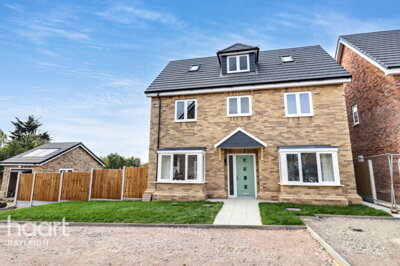
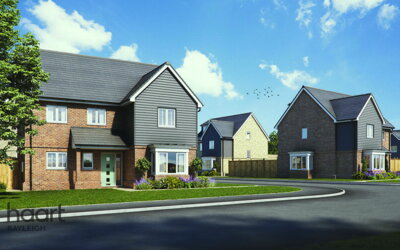
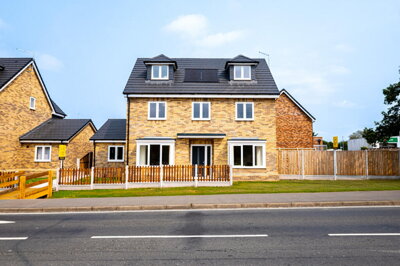
Browse 3 homes new builds in Rawreth, Rochford from local developer agents.
Studio apartments feature open-plan living spaces without separate bedrooms, incorporating sleeping, living, kitchen, and bathroom facilities. The Rawreth studio market includes properties in modern apartment complexes, modern purpose-built developments and new residential complexes.
£0k
0
0
0
Source: home.co.uk
Showing 0 results for Studio Flats new builds in Rawreth, Rochford.
10
Properties for Sale
£504,000
Average Price
19.0%
5-Year Price Growth
£623,000
Detached Average
£431,000
Semi-Detached Average
£357,000
Terraced Average
£206,000
Flat Average
Rawreth’s property market mirrors the wider draw of Essex village living, and values have edged up steadily in recent years. We see prices rising by 1.0% over the last 12 months, while the five-year picture is stronger still at 19.0%. That sort of movement points to continued demand for homes in this semi-rural spot, helped by its commuter links and the quality of day-to-day life. The current overall average is £645,435, which places Rawreth comfortably in the mid-range for the area.
Rawreth offers a good spread of property types, so the market speaks to a range of budgets and priorities. Detached homes sit at the top of the scale, averaging £713,676, and they often come with bigger gardens and more room for families to grow. Semi-detached houses average £406,250, a practical middle ground. Terraced properties average £350,000, while flats begin at around £362,500, giving buyers an accessible way in. It is a mixed picture, and that means first-time buyers, families and those after more space all have options within the village.
New build supply in Rawreth itself remains thin, with no active developments currently verified within the SS6 postcode area specific to the village. For newer homes, buyers usually look towards Rayleigh and Wickford, where modern builds and energy-efficient specifications are more readily available. Rawreth’s established housing stock leans towards period properties and character homes, which suits those who prefer traditional architecture and mature surroundings. Our listings are refreshed regularly, so the latest homes to reach the market are easy to keep track of.

Rawreth is a civil parish that captures the appeal of Essex village life, with a quiet rural setting and the practical benefit of nearby urban amenities. The 2021 Census recorded a population of 1,757 people across 648 households, which gives the parish a close community feel where neighbours often know each other well. Because the village is mostly residential, local life tends to centre on family routines, village events and the green spaces that shape this part of Rochford district.
Housing across Rawreth and the wider Rochford district largely reflects the post-war growth that has shaped much of suburban Essex. Detached houses make up around 42.1% of local stock, with semi-detached homes accounting for 33.5% of the mix. Terraced properties represent roughly 13.0%, while flats, maisonettes and apartments fill the remaining 10.9%. The result is a varied streetscape, from compact village cottages to substantial family houses on generous plots.
Rawreth sits on the London Clay Formation, a high plasticity clay that can shrink and swell. In practical terms, that means a moderate to high risk of subsidence and ground movement, especially after long dry spells or where large trees stand close to a property. Some parts may also have superficial sand and gravel deposits. Construction here is often traditional, with red or yellow stock brick and tiled roofs finished in clay or concrete tiles. Older homes may have render or timber cladding, while newer ones usually rely on standard cavity wall construction.
Several listed buildings are found in Rawreth parish, among them St Nicholas Church and a number of local farmhouses and cottages. Once a property is listed, alterations and renovations are restricted, and specialist surveys are usually needed before work begins. The setting adds to the appeal too, with rolling Essex countryside, farmland and green space shaping the village’s calm atmosphere. The River Crouch lies to the north of Rawreth and adds another scenic layer, while local work is centred on agriculture, small businesses and services. Most residents travel to Rayleigh, Wickford, Basildon and Southend-on-Sea for work.

Families looking at Rawreth will find several education options within a reasonable travelling distance. The village falls within the Rochford district education catchment area, and nearby villages and towns provide primary schools for local children. It is worth checking catchment boundaries and admission rules carefully, since places are allocated using proximity and other criteria. Rayleigh, Wickford and Hockley all have primary school options for children from Rawreth, and The FitzWimarc School in Rayleigh provides secondary education. Education is often a key part of the decision, and the surrounding area offers both state and independent schools to suit different needs.
For secondary education, families in Rawreth usually look to schools in Rayleigh, Hockley and Wickford. These schools cater for pupils from Year 7 through to Year 13, and larger institutions may also have sixth form places for those staying on. Before buying in Rawreth, parents should check current school performance data, Ofsted inspection results and admission arrangements directly with the relevant education authority, as these details can shift and may affect the appeal of particular homes.
Nursery and early years provision is available locally, with several private and voluntary settings offering flexible childcare choices for younger children. Because Rawreth is small, many families pair local early years care with school places in the surrounding towns. It is a sensible way to plan a move, and browsing our listings with school locations in mind can help narrow down the most practical parts of Rawreth for a family’s needs.

Rawreth has strong road links, which is a big draw for commuters and anyone who needs to travel by car on a regular basis. The village is well placed for the A127, a key route through South Essex that links straight to the M25 at junction 29. The A130 also gives useful access to Chelmsford, Basildon and the wider Essex network. Those connections mean major employment centres are within reach, with journeys to places such as Basildon and Southend-on-Sea usually taking between 15 and 30 minutes by car.
Bus services connect Rawreth with the surrounding towns and railway stations. Rayleigh is the nearest station, and trains to London Liverpool Street usually take around one hour, which makes it workable for daily commuters. Wickford station adds further rail links to London and East Anglia. Rawreth itself has limited direct rail provision because of its rural setting, but the nearby stations still give residents access to the national network without too much extra travel time.
That mix of road and rail links gives people working in London or other major cities a fair amount of flexibility. Rawreth sits away from the worst congestion, so driving is often less stressful than it is in bigger urban areas. There is cycling infrastructure in the wider area, although the rural nature of many local roads makes cycling more realistic for short leisure journeys than for everyday commuting. Parking at local stations varies too, so it makes sense to check the current arrangements before settling into a regular routine.

Before starting a property search in Rawreth, we recommend getting clear on the local market and setting a realistic budget. The average price across all property types is £645,435, while detached homes average £713,676, and there are extra costs to allow for as well, including stamp duty, solicitor fees and survey costs. Having a mortgage agreement in principle in place before viewings can strengthen a buyer’s position when an offer goes in.
Browse our listings of homes for sale in Rawreth and set up alerts for properties that match the right criteria. Once something stands out, arrange viewings so the condition, character and suitability of each home can be assessed properly. During visits, it helps to pay close attention to the surrounding area, neighbouring properties and the distance to schools and transport links.
We strongly recommend commissioning a RICS Level 2 Survey before moving ahead with a purchase. Our surveyors regularly come across damp, roof defects and structural movement in Rawreth properties, much of it linked to the local geology and the age of the housing stock. Because of the London Clay here, surveys are especially useful for spotting possible subsidence or heave, along with other defects that can crop up locally. Survey costs usually run from £400 to £800, depending on property size and complexity.
Once the right home has been found, the offer should go through the estate agent with evidence of the mortgage agreement in principle and any chain status. There is often room to negotiate on price, especially if the survey throws up repair work. It is sensible to let the solicitor know about the offer straight away so the legal work can get under way.
We recommend appointing a conveyancing solicitor to deal with the legal side of the purchase, including searches, contracts and land registry checks. The solicitor will work with the seller’s representatives, arrange surveys if they have not already been done, and guide the transaction through exchange of contracts. For a straightforward purchase, this process usually takes between 8 and 12 weeks.
When all enquiries have been dealt with and both sides are ready, contracts are exchanged and the deposit is paid, typically 10% of the purchase price. On completion day, the remaining money is transferred and the keys to the new Rawreth home are handed over. Ownership should then be registered with the land registry, and utility providers need to be informed of the change of address.
Buying in Rawreth means weighing up several local factors that can have a real effect on both the investment and everyday living. The biggest environmental issue is the London Clay geology beneath the village, which brings a moderate to high risk of subsidence and ground movement. Homes with large trees nearby, weak foundations or visible cracking deserve extra care. A thorough RICS Level 2 Survey is essential for spotting structural issues or potential problems that may need attention before or after completion.
Flood risk also matters in Rawreth. Some areas are vulnerable to surface water flooding, especially in low-lying spots and near watercourses. The River Crouch to the north of the village means that properties close to the river can face fluvial flooding risk during heavy rain or high tides. Before making an offer, ask about any past flooding and check the Environment Agency flood risk maps for the exact location under consideration.
Construction in Rawreth commonly uses traditional brick, usually red or yellow stock brick, together with tiled roofs finished in clay or concrete tiles. Older houses may also feature render or timber cladding, while more modern homes often use standard cavity wall construction. If a listed home is being considered, including properties around St Nicholas Church or the local farmhouses, it is important to remember that listed building status limits alterations and renovations, and specialist surveys may be needed.
Our inspectors often pick up the same issues again and again in Rawreth properties. Dampness, whether rising damp, penetrating damp or condensation, is common in homes of all ages, particularly older buildings without modern damp-proof courses. Roof problems, including slipped tiles, damaged flashing and deteriorated felt, also come up frequently in the village’s older stock. In properties built before the 1980s, outdated electrical wiring and plumbing systems may be present and could need upgrading to meet current safety standards. Knowing these local patterns helps buyers make a more informed call.

Recent market data puts the average house price in Rawreth at £504,000. Detached properties average £623,000, semi-detached homes average £431,000, terraced properties average £357,000, and flats average £206,000. Prices have moved up by 1.0% over the past 12 months and by 19.0% over the last five years, which points to continued demand for homes in this sought-after Essex village.
For council tax, properties in Rawreth fall under Rochford District Council. Bands run from A through to H, depending on the valuation of the home, although most residential properties in the area sit within bands C to E. The exact band for any particular property can be checked through the Valuation Office Agency website or in the listing details for the home itself.
Rawreth is a small village, so families usually look to nearby villages and towns in the Rochford district for primary schooling. Rayleigh, Wickford and Hockley all have primary and secondary options, with admissions generally based on catchment area proximity. The FitzWimarc School in nearby Rayleigh provides secondary education. We suggest checking current Ofsted ratings and admission policies directly with the schools and Essex County Council to work out which choices are best for children.
Local bus routes serve Rawreth and link it with Rayleigh, Wickford and the surrounding area. Rayleigh station offers rail services to London Liverpool Street in approximately one hour, while Wickford station adds further connections to London and East Anglia. Road access via the A127 and A130 is strong, which makes car travel very straightforward for people working in Basildon, Southend-on-Sea or London. For those who depend heavily on public transport, it is wise to check bus timetables and rail frequencies carefully, as Rawreth does not have its own railway station.
Several things make Rawreth appealing for property investment. Price growth has remained steady, with a 19.0% rise over five years, which suggests a market with some resilience. The commuter belt location, the transport links via the A127 and A130, and the semi-rural setting all appeal to a wide pool of buyers, from families to professionals working in London or nearby business centres. There is also rental demand from commuters, and the village character supports long-term interest. Even so, any investor should look at personal circumstances, local rental yields and costs such as stamp duty and void periods before buying.
For standard purchases, Stamp Duty Land Tax starts at 0% on the first £250,000 of property value, then moves to 5% on amounts between £250,001 and £925,000, 10% on the slice between £925,001 and £1.5 million, and 12% above £1.5 million. First-time buyers get relief on the first £425,000, with 5% charged from £425,001 to £625,000. With Rawreth’s average price at £504,000, a first-time buyer would usually pay no stamp duty, while an additional purchaser would pay roughly £12,700.
It is important to understand the full cost of buying in Rawreth so that the budget stays realistic and the transaction does not bring any surprises. The main extra cost is Stamp Duty Land Tax, which applies to property purchases above £250,000. At the current rates, a home priced at the local average of £504,000 would attract stamp duty of £12,700 for a standard buyer purchasing an additional property, or potentially nothing for a first-time buyer who meets the relevant criteria. These thresholds and rates are set by HM Revenue and Customs and may change after future Budget announcements.
Conveyancing fees typically start from around £499 for straightforward purchases, although more involved transactions with mortgages, chains or leasehold titles may cost more. The solicitor will arrange the key searches, including local authority checks, environmental searches for contamination risks, and water and drainage enquiries. In Rawreth, where geology and flood risk both matter, we particularly recommend thorough environmental and flooding searches. They can save buyers from unpleasant surprises after completion, especially where repairs or remedial work might prove expensive.
A RICS Level 2 Survey is strongly recommended for every purchase, and it is especially useful in Rawreth because of the London Clay geology and the age of many local homes. Survey costs range from £400 to £800 depending on property size and complexity, with larger detached homes usually sitting at the higher end. Some buyers skip the expense, but the report can uncover issues that justify renegotiation or flag problems needing immediate attention. It is also wise to allow for removal costs, mortgage valuation fees and any renovation or repair work that the survey brings to light.

Properties New Builds In London

Properties New Builds In Plymouth

Properties New Builds In Liverpool

Properties New Builds In Glasgow

Properties New Builds In Sheffield

Properties New Builds In Edinburgh

Properties New Builds In Coventry

Properties New Builds In Bradford

Properties New Builds In Manchester

Properties New Builds In Birmingham

Properties New Builds In Bristol

Properties New Builds In Oxford

Properties New Builds In Leicester

Properties New Builds In Newcastle

Properties New Builds In Leeds

Properties New Builds In Southampton

Properties New Builds In Cardiff

Properties New Builds In Nottingham

Properties New Builds In Norwich

Properties New Builds In Brighton

Properties New Builds In Derby

Properties New Builds In Portsmouth

Properties New Builds In Northampton

Properties New Builds In Milton Keynes

Properties New Builds In Bournemouth

Properties New Builds In Bolton

Properties New Builds In Swansea

Properties New Builds In Swindon

Properties New Builds In Peterborough

Properties New Builds In Wolverhampton

Enter your details to see if this property is within your budget.
Loans, cards, car finance
Estimated property budget
Borrowing + deposit
You could borrow between
Typical borrowing
Monthly repayment
Est. at 4.5%
Loan-to-value
This is an estimate only. Your actual budget may vary depending on interest rates, credit history, and personal circumstances. For an accurate affordability assessment, speak to one of our free mortgage advisors.
This calculator provides estimates for illustrative purposes only and does not constitute financial advice. Your home may be repossessed if you do not keep up repayments on your mortgage. Estimates based on 4.5% interest rate, repayment mortgage. Actual rates depend on your circumstances.
Homemove is a trading name of HM Haus Group Ltd (Company No. 13873779, registered in England & Wales). Homemove Mortgages Ltd (Company No. 15947693) is an Appointed Representative of TMG Direct Limited, trading as TMG Mortgage Network, which is authorised and regulated by the Financial Conduct Authority (FRN 786245). Homemove Mortgages Ltd is entered on the FCA Register as an Appointed Representative (FRN 1022429). You can check registrations at NewRegister or by calling 0800 111 6768.

We use cookies to show you personalised content and improve your experience of our website. Find out more in our Privacy policy and Cookie policy.