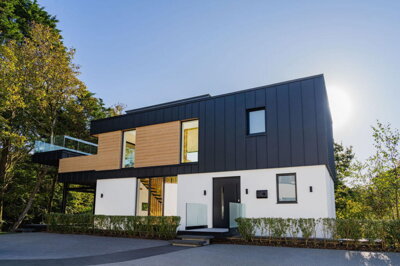
Browse 1 home new builds in Probus, Cornwall from local developer agents.
The larger property sector typically features multiple bathrooms, substantial reception space, and private gardens or off-street parking. Four bedroom houses in Probus span detached, semi-detached, and occasionally terraced configurations, with styles ranging from period properties to modern executive homes.
£525k
5
0
98
Source: home.co.uk
Showing 5 results for 4 Bedroom Houses new builds in Probus, Cornwall. The median asking price is £525,000.
Source: home.co.uk
Detached
5 listings
Avg £688,000
Source: home.co.uk
Source: home.co.uk
In Probus, detached houses sit at the top end of values, with an average of £388,750, a clear sign of what buyers will pay for extra space, parking and a decent plot. Lower down the ladder, terraced homes averaged £263,950 and semi-detached homes £260,500, which gives buyers a more accessible route in if they want to stay below detached prices. homedata.co.uk records sharpen the picture further within the village itself, with Church View Road down 3% on the previous year and Cullen View up 14%. In a place like this, street-by-street differences really do count, which is why we always compare homes closely rather than relying on village averages alone.
The wider market looks cooler than it did a year earlier, though not soft, and values still sit above plenty of other rural Cornwall locations. Current listings tend to span character properties and practical family houses, which keeps demand spread across different budgets. We have not found a clearly named new-build pipeline in the research set for Probus, so activity still appears to be driven mainly by existing stock and one-off resale opportunities. In a small village, the best-positioned homes can go quickly, so we would keep a close eye on fresh listings.

There is a settled feel to Probus, rural, Cornish and rooted in an established community rather than a big estate-led expansion. The research points to older cottages alongside newer family houses, which suggests growth over time without losing the village centre of gravity. Beyond that, the parish opens into classic mid-Cornwall countryside, with hedged lanes, farmland and open views instead of coastal exposure. For plenty of buyers, that balance makes everyday life feel quieter and more grounded than it would in a larger town.
One of Probus's stronger points is how workable village life feels day to day, and local market descriptions repeatedly call the area convenient and popular. That matters if we are weighing up a move where walking to basic amenities, keeping the school run practical and cutting down on long drives all matter. The spread of homes also hints at a community that suits different stages of life, from long-term owners to families needing more room and movers after a quieter base. Square footage matters, of course, but so does how a place actually works.
For many families, the first thing that stands out in Probus is the local primary provision, because an easy school run can change the rhythm of the whole week. Probus School serves the village at primary level, giving younger children a nearby base without a long daily commute. Once older children are in the picture, buyers often widen the search towards Truro and the surrounding east Cornwall area, where the range of options is broader. That combination, village primary schooling with secondary choices nearby, is a big part of why Probus suits households wanting quieter home life without giving up access to education.
Beyond the village itself, common education choices include secondary schools in Truro, The Roseland Academy in Tregony, and Truro and Penwith College for sixth-form and further education. Catchments in Cornwall do change, so we would always check admissions policies and the latest Ofsted reports before committing to a purchase. The journey matters as well, because a house can look ideal on paper and still become wearing if the school run is awkward. Having a mortgage agreement in principle ready before viewings can make it easier to move fast when the right catchment property appears.

Road access is one of Probus's practical advantages. The A390 gives direct routes towards Truro and St Austell, and from Truro drivers can join the A30 for longer trips across Cornwall and beyond. That helps make the village a sensible base for people who want countryside surroundings but still spend part of the week working in a larger centre. For many households, life is simply easier when the main routes are straightforward and familiar.
Public transport is thinner than it would be in a town, but Probus is served by local bus links that connect it with nearby places. Anyone relying on rail will usually work through Truro, so a bus connection or a drive to the station tends to be part of the plan. In the village centre, parking can tighten up around older streets and at busier times of day, which is why off-road parking can add real value when we compare homes. The lanes around the parish are quieter for cyclists, although country roads here can still be narrow and uneven, so care is needed.
We would begin with the kind of home that actually fits, then weigh up cottages, family houses, bungalows and any flats within budget. Street position, parking, nearby amenities and school choices all deserve attention from the start, not as details left until later.
Before booking viewings, we would get the agreement in principle in place. Sellers and agents usually take pre-approved buyers more seriously, and it helps set a realistic budget against Probus values, especially for anyone targeting a detached home.
Access to the A390, parking, garden size, overall condition and the feel of the walk into the village centre should all go on the checklist. In a small place such as Probus, where a home sits can matter just as much as how many bedrooms it has.
Older cottages and period houses often conceal defects that do not show up during a first viewing, so we would treat a RICS Level 2 survey as a sensible minimum in many cases. If the building is very old, much altered or obviously more complex, a fuller inspection is usually the better call.
After an offer is accepted, we would want the conveyancer to go through the title, searches, boundaries and any local restrictions with care. That becomes particularly important with shared access, converted buildings and homes that come with historic features.
Good preparation helps. We would keep the mortgage, deposit and moving dates aligned so completion has the best chance of running smoothly. In a village market where the more desirable homes can draw strong interest, that sort of organisation can make the difference between getting the property and losing it.
Compared with some coastal or mining locations, Probus does not come with the same obvious environmental red flags, and the research set does not point to a single flood hotspot or shrink-swell risk. Still, we would ask the usual local questions, particularly where a property is older or built in traditional materials. Stone cottages, period terraces and older village houses can be very appealing while still needing work to roofs, damp proofing, insulation or heating efficiency. That is exactly where a careful survey earns its keep.
With a flat or a conversion, we would check service charges, lease length and ground rent just as closely as the asking price. Houses in Probus are often freehold, but even then boundaries, shared driveways and access rights can become awkward if nobody has checked them properly. The research did not confirm conservation status or listed building detail, so where a property looks historic, we would ask the solicitor to verify any planning limits or repair restrictions. Picking through those points early usually means fewer surprises once the offer has gone in.
Over the last year, homedata.co.uk records show an average sold price in Probus of £313,893. Broken down by type, detached homes averaged £388,750, terraced homes £263,950 and semi-detached homes £260,500. The market was also 19% down on the previous year and 16% below the 2023 peak of £372,977. For buyers, that does at least create a better entry point than the peak period.
Cornwall Council sets council tax for Probus, and the band is tied to the individual property rather than the village in general. Because the housing stock includes cottages, terraces, semis, detached homes and a smaller number of flats, there is likely to be a spread across the bands. We would always check the specific listing or ask the agent before budgeting, since the band will feed straight into monthly running costs.
For younger children, Probus School is the clearest local primary option and a big reason some families focus on the village. For secondary and post-16 study, buyers often look towards Truro, The Roseland Academy in Tregony and Truro and Penwith College. Catchment, the daily commute and the latest Ofsted report can all affect which choice makes sense, so we would pin those details down before making an offer.
Probus works better by road than by rail. The A390 links the village with Truro and St Austell, local bus services provide useful connections, and the main rail access is generally through Truro. That setup is workable for many commuters, though it is not as convenient as living in a town if trains are part of the everyday routine.
As an investment location, Probus can make sense, but only with the right property type at the right buying price. The village has consistent local appeal, decent road access, useful facilities and a market that still shows demand for family homes and character properties. Even so, returns will hinge on condition, exact location and rental demand, so we would run the numbers carefully rather than assume village popularity will do the job on its own.
For a main residence, SDLT is charged at 0% up to £250,000, then 5% from £250,000 to £925,000, 10% from £925,000 to £1.5 million and 12% above that. Based on the Probus average price of £313,893, a standard buyer would pay about £3,194.65 in stamp duty. First-time buyers pay 0% up to £425,000, which means the average priced home in Probus would usually sit within the relief band.
The research does not point to a major named new-build scheme in Probus right now. Most buyers are therefore likely to concentrate on existing stock, including cottages, family houses, bungalows and some flats or apartments. If a new home is a priority, we would keep checking current listings and expand the search into nearby villages and Truro.
Yes, particularly with a period cottage or a house altered over time. Older properties can conceal damp, roof, drainage or insulation defects that are easy to miss during a brief viewing. In Probus, a RICS Level 2 survey is a sensible place to start for many homes, and for very old or heavily modified buildings we would think seriously about a more detailed survey.
After the deposit, stamp duty is often one of the biggest upfront costs, so it needs to be budgeted for early. The current rates are 0% up to £250,000, 5% from £250,000 to £925,000, 10% from £925,000 to £1.5 million and 12% above £1.5 million. On Probus's average sold price of £313,893, the standard SDLT bill comes to roughly £3,194.65, while a first-time buyer purchasing at the same level would usually pay nothing under the current relief rules. For the local detached average of £388,750, standard SDLT would be about £6,937.50. We would treat those figures as part of the bigger picture alongside mortgage fees, legal costs, survey fees and moving expenses.
First-time buyers pay 0% SDLT up to £425,000, then 5% on the slice from £425,000 to £625,000, and there is no relief above £625,000. That puts Probus in an interesting position for newer buyers because the average home remains comfortably below the first-time buyer threshold. The rest of the budget still needs careful handling, though, especially where decoration, energy upgrades or work to a roof, kitchen or bathroom may be waiting. We would keep a realistic buffer from the outset so the move from offer to completion feels manageable.
Properties New Builds In London

Properties New Builds In Plymouth

Properties New Builds In Liverpool

Properties New Builds In Glasgow

Properties New Builds In Sheffield

Properties New Builds In Edinburgh

Properties New Builds In Coventry

Properties New Builds In Bradford

Properties New Builds In Manchester

Properties New Builds In Birmingham

Properties New Builds In Bristol

Properties New Builds In Oxford

Properties New Builds In Leicester

Properties New Builds In Newcastle

Properties New Builds In Leeds

Properties New Builds In Southampton

Properties New Builds In Cardiff

Properties New Builds In Nottingham

Properties New Builds In Norwich

Properties New Builds In Brighton

Properties New Builds In Derby

Properties New Builds In Portsmouth

Properties New Builds In Northampton

Properties New Builds In Milton Keynes

Properties New Builds In Bournemouth

Properties New Builds In Bolton

Properties New Builds In Swansea

Properties New Builds In Swindon

Properties New Builds In Peterborough

Properties New Builds In Wolverhampton

Enter your details to see if this property is within your budget.
Loans, cards, car finance
Estimated property budget
Borrowing + deposit
You could borrow between
Typical borrowing
Monthly repayment
Est. at 4.5%
Loan-to-value
This is an estimate only. Your actual budget may vary depending on interest rates, credit history, and personal circumstances. For an accurate affordability assessment, speak to one of our free mortgage advisors.
This calculator provides estimates for illustrative purposes only and does not constitute financial advice. Your home may be repossessed if you do not keep up repayments on your mortgage. Estimates based on 4.5% interest rate, repayment mortgage. Actual rates depend on your circumstances.
Homemove is a trading name of HM Haus Group Ltd (Company No. 13873779, registered in England & Wales). Homemove Mortgages Ltd (Company No. 15947693) is an Appointed Representative of TMG Direct Limited, trading as TMG Mortgage Network, which is authorised and regulated by the Financial Conduct Authority (FRN 786245). Homemove Mortgages Ltd is entered on the FCA Register as an Appointed Representative (FRN 1022429). You can check registrations at NewRegister or by calling 0800 111 6768.

We use cookies to show you personalised content and improve your experience of our website. Find out more in our Privacy policy and Cookie policy.