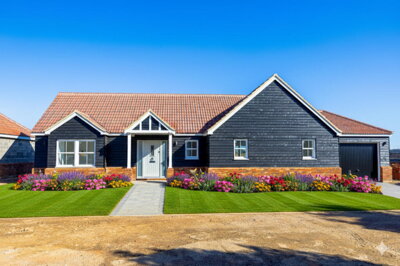
Browse 1 home new builds in Paglesham, Rochford from local developer agents.
£400k
1
0
38
Source: home.co.uk
Source: home.co.uk
End of Terrace
1 listings
Avg £400,000
Source: home.co.uk
Source: home.co.uk
homedata.co.uk records show that Paglesham Eastend is a market defined by older homes rather than large estates. Semi-detached properties averaged £352,000 over the last year, while detached homes reached £435,000, so the price gap reflects both size and setting. Much of the local stock is well over 50 years old, with 17th-century buildings, 19th-century rows and later infill spread across the parish. That age profile makes condition, layout and construction detail just as important as bedroom count.
New-build choice inside the specific Paglesham postcode area is extremely limited, and there are no confirmed developments within Paglesham itself. The nearest notable scheme in the research is Kings Hill Park Rochford, around 0.8 miles from parts of Paglesham, with 2, 3 and 4-bedroom homes priced from £350,000 to £660,000. For buyers who want a brand-new home, Rochford is likely to offer more choice than the parish boundary. For everyone else, Paglesham remains a traditional village market where established homes carry the most appeal.

Life in Paglesham is shaped by the estuary, the village history and the small scale of the parish. The settlement sits in a low-lying part of Essex on the southern side of the River Crouch estuary, which has influenced everything from drainage to where homes were built. Its past as an oyster-fishing village and a smuggling centre still gives the area a strong sense of identity. For many buyers, that blend of coastal-edge landscape and rural calm is the biggest draw.
The local building mix is especially interesting for anyone who appreciates older architecture. White featheredged weatherboard, black or tarred weatherboard, soft red brick and yellow stock brick all appear in Paglesham, while roofs often use plain clay peg tiles or natural slate depending on age and pitch. The Church of St Peter includes stone, flint, septaria and Roman bricks, which underlines how long the parish has been settled. With around 100 households in the village, daily life feels close-knit, although most residents still look to Rochford and nearby towns for wider services and shopping.
Families moving to Paglesham usually need to plan school travel beyond the parish itself. The village is very small, so local provision is limited compared with larger Essex settlements, and catchments matter more here than in suburban areas. That makes admissions research an important part of the buying process, especially if you need both primary and secondary places that fit into a daily routine. Essex County Council admissions information and the latest school reports are worth checking before you tie a move to a specific address.
Buyers often look towards Rochford and the wider surrounding area for education options, then decide whether the journey works with work and family life. Because Paglesham has a historic housing mix rather than a large family estate, demand often comes from households willing to travel a little further for the right setting and school run. If you are thinking about sixth form or further education, the wider Rochford and Southend corridor is usually part of the conversation too. That is another reason to secure your mortgage agreement in principle early, so your shortlist reflects both the home and the daily logistics.

Paglesham is not a rail-led village, so most commuters rely on roads and nearby stations rather than a stop within the parish. That suits drivers and households who are comfortable planning around the wider Rochford area, but it is less convenient for anyone who wants a station at the end of the road. Southend expands the options for buses, shops and employment, while Rochford remains the nearest practical base for many everyday journeys. Before you make an offer, test your normal route at the time of day you would actually travel.
Parking is often easier here than in denser parts of Essex, which is a genuine advantage for homes with more than one car or for regular visitors. Cycling can work for local trips, although the rural road network means lighting, weather and route choice all deserve thought. Buyers who commute every weekday may prefer to treat Paglesham as a peaceful home base with road connections to the district rather than as a station-first location. That trade-off is fine for many people, provided they are clear about it before they buy.
Flexible commuting can be a strength if you are moving for lifestyle as much as convenience. A home in Paglesham may give you more space and character than a town-centre property, but the savings in setting can be offset by longer journeys. Our property search helps you compare those priorities quickly, so you can decide whether the village or nearby Rochford is the better fit for your routine.
Focus on whether the property sits in Paglesham East End or Church End, because conservation rules, flood risk and local character can vary from one part of the parish to another.
Arrange a mortgage agreement in principle before you book viewings, so you know your budget and can move quickly when the right cottage or house appears.
Look carefully at weatherboarding, roof coverings, drainage, parking and access, because older Paglesham homes often need more detailed inspection than newer estates.
A RICS Level 2 Survey suits many standard homes, but a Level 3 survey is often wiser for listed buildings, older cottages or houses with unusual alterations.
Ask your conveyancer to check title, flood history, conservation area constraints and any leasehold details as soon as your offer is accepted.
Once searches, mortgage checks and survey queries are clear, arrange buildings insurance, removals and your completion funds so the final stage runs smoothly.
Flooding is one of the first issues to check in this part of Essex. Paglesham East End sits in a low-lying estuary landscape, and parts of the western section of the East Hall Farm Buildings site fall within Flood Zones 2 and 3, while the eastern section is in Flood Zone 1. That means a purchase may still be perfectly sensible, but insurers, drainage and long-term risk deserve real attention. Surface water flooding can also follow intense rainfall, so look closely at gullies, access tracks and garden levels during viewings.
Shrink-swell clay is the other major local factor. The district geology includes London Clay and Claygate Beds, and Paglesham has a notable shrink-swell hazard score, which can contribute to movement in older houses with shallow foundations. Cracks, sticking doors and uneven finishes are not always serious, but they should be checked properly, especially in homes with extensions or mature trees nearby. A survey is valuable here because it can separate cosmetic ageing from a problem that needs repair.
Heritage rules matter as well, especially in the two conservation areas. Paglesham East End and Paglesham Church End contain listed buildings and tightly characterful streets, so changes to windows, roofing details and extensions may need more care than in a newer estate. Traditional materials such as weatherboard, clay tiles and lime-based finishes need proper maintenance, and unsuitable modern repairs can create damp. If you are considering a conversion or a rare flat in the village, check lease length, service charges and ground rent very carefully.
homedata.co.uk records show that the average house price in Paglesham Eastend over the last year was £365,833. Semi-detached homes averaged £352,000 and detached homes averaged £435,000, which gives a useful guide to the range buyers are seeing locally. Prices were 2% up on the previous year, but still 33% down on the 2017 peak of £543,000. For buyers, that means Paglesham has history in its price movements rather than a straight one-way trend.
Bands vary because Paglesham has everything from smaller cottages to larger detached houses and listed homes. The parish sits within Rochford District Council for council tax administration, so the exact band depends on the individual property rather than the village name alone. A compact cottage and a substantial family house can sit in very different bands, even on the same lane. Always check the band shown in the listing and factor it into your monthly budget.
Paglesham itself is too small to have a wide school choice inside the parish boundary, so families usually judge the surrounding Rochford area as well. The best option depends on catchment, Ofsted reports, travel time and whether you need primary, secondary or sixth-form provision. Because school admissions can change, it is sensible to check the latest Essex County Council guidance before you rely on a property shortlist. That matters even more here because the village has only 236 residents and limited local services.
Paglesham is better suited to drivers than to buyers who want a station on the doorstep. There is no rail station in the parish itself, so most people look to Rochford and the wider Southend area for train and bus connections. That setup can still work well for commuters who are happy to drive to a station or plan around less frequent services. Test your daily route before you buy, especially if you travel every weekday.
It can be, but the case is different from a fast-moving town-centre market. Limited supply, historic housing and a strong village identity can support long-term demand, while the new-build pipeline within Paglesham itself is thin. The trade-off is that flood risk, shrink-swell clay and conservation constraints can narrow the buyer pool, so presentation and survey quality matter. For investors, the strongest opportunity is often a well-kept traditional home with broad appeal rather than a highly specialised one.
That depends on the purchase price and whether you are a first-time buyer or moving home. At the Paglesham average of £365,833, a home mover would pay about £5,792 in stamp duty, based on the 2024-25 rates. A first-time buyer would pay nothing at that price because the purchase sits below the £425,000 relief limit. Detached homes at the local average of £435,000 would create a small first-time buyer charge of around £500, while a home mover would pay about £9,250.
The research shows no confirmed new-build developments within the specific Paglesham postcode area. The nearest notable scheme is Kings Hill Park Rochford, about 0.8 miles from parts of Paglesham, with 2, 3 and 4-bedroom homes from £350,000 to £660,000. If you want brand-new stock, Rochford is likely to give you more choice than the village boundary. Buyers who want heritage character will usually find Paglesham more appealing than a modern estate.
Stamp duty is a key part of the budget in Paglesham because the average sold price of £365,833 sits above the £250,000 standard threshold. On that figure, a home mover would pay about £5,792, using 5% on the slice between £250,000 and the purchase price. First-time buyers get 0% up to £425,000, so they would pay no stamp duty on the average Paglesham home. If you are looking at the detached average of £435,000, the home-mover bill rises to about £9,250, while a first-time buyer would pay around £500.
Stamp duty is only one cost, so build in survey fees, legal fees, removals and mortgage costs as well. In a village with older homes, a RICS Level 2 survey at around £455 on average can be a very sensible spend, and a Level 3 survey may be better for listed or heavily altered properties. Insurance can also be affected by flood history and the shrink-swell clay risk, so a careful review before exchange is well worth the time. A clear budget helps you move with confidence, even when a Paglesham home stands out straight away.
Properties New Builds In London

Properties New Builds In Plymouth

Properties New Builds In Liverpool

Properties New Builds In Glasgow

Properties New Builds In Sheffield

Properties New Builds In Edinburgh

Properties New Builds In Coventry

Properties New Builds In Bradford

Properties New Builds In Manchester

Properties New Builds In Birmingham

Properties New Builds In Bristol

Properties New Builds In Oxford

Properties New Builds In Leicester

Properties New Builds In Newcastle

Properties New Builds In Leeds

Properties New Builds In Southampton

Properties New Builds In Cardiff

Properties New Builds In Nottingham

Properties New Builds In Norwich

Properties New Builds In Brighton

Properties New Builds In Derby

Properties New Builds In Portsmouth

Properties New Builds In Northampton

Properties New Builds In Milton Keynes

Properties New Builds In Bournemouth

Properties New Builds In Bolton

Properties New Builds In Swansea

Properties New Builds In Swindon

Properties New Builds In Peterborough

Properties New Builds In Wolverhampton

Enter your details to see if this property is within your budget.
Loans, cards, car finance
Estimated property budget
Borrowing + deposit
You could borrow between
Typical borrowing
Monthly repayment
Est. at 4.5%
Loan-to-value
This is an estimate only. Your actual budget may vary depending on interest rates, credit history, and personal circumstances. For an accurate affordability assessment, speak to one of our free mortgage advisors.
This calculator provides estimates for illustrative purposes only and does not constitute financial advice. Your home may be repossessed if you do not keep up repayments on your mortgage. Estimates based on 4.5% interest rate, repayment mortgage. Actual rates depend on your circumstances.
Homemove is a trading name of HM Haus Group Ltd (Company No. 13873779, registered in England & Wales). Homemove Mortgages Ltd (Company No. 15947693) is an Appointed Representative of TMG Direct Limited, trading as TMG Mortgage Network, which is authorised and regulated by the Financial Conduct Authority (FRN 786245). Homemove Mortgages Ltd is entered on the FCA Register as an Appointed Representative (FRN 1022429). You can check registrations at NewRegister or by calling 0800 111 6768.

We use cookies to show you personalised content and improve your experience of our website. Find out more in our Privacy policy and Cookie policy.