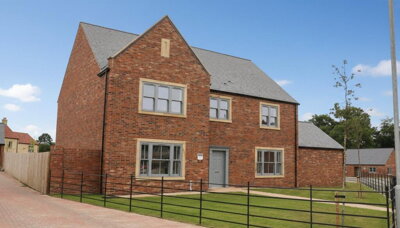
Browse 1 home new builds in Moulton from local developer agents.
The larger property sector typically features multiple bathrooms, substantial reception space, and private gardens or off-street parking. Four bedroom houses in Moulton span detached, semi-detached, and occasionally terraced configurations, with styles ranging from period properties to modern executive homes.
£391,333
Average Price
£492,500
Detached Average
£275,000
Semi-Detached Average
6
Properties Listed
-1.5%
12-Month Change
DL10 6
Postcode
Moulton's housing market reflects its appeal as a sought-after rural village in North Yorkshire. Our current data puts detached homes at an average of £492,500, with semi-detached properties averaging around £275,000. Over the past 12 months, values have been fairly steady, with an overall decline of just 1.5%. That points to a market that has largely sidestepped the sharper swings seen in more urban areas, while still offering options across different budgets. Sales volumes are limited because the village itself is small, not because demand is weak, and buyers from across the region continue to look closely at homes in this protected conservation village.
Traditional stone buildings shape much of Moulton's housing stock, and the village's conservation area status keeps new development both limited and in keeping with what is already here. In the DL10 6 postcode area, there are no verified active new-build developments, so buyers are more likely to encounter older homes with real character, many from the 17th to 19th centuries. A good number of these properties, including several listed buildings, retain features that modern construction rarely reproduces, such as original stonework, timber beams, fireplaces, and traditional joinery. Within the village you will also find Moulton Hall, which is Grade I listed, and St Mary's Church, which is Grade II* listed, along with many Grade II listed cottages and farmhouses that give the street scene its distinct look.
Moulton does not move at the same pace as nearby places such as Richmond, where greater turnover usually means more choice but often less individuality. Here, homes come up for sale only occasionally, and that combination of heritage, village setting, and restricted supply tends to draw strong interest from buyers who know exactly why this location stands out. Anyone looking for a home for sale in Moulton should be ready to move quickly when the right property appears, because well-presented houses here do not usually sit on the market for long.
Daily life in Moulton revolves around its conservation area, with the historic centre near Moulton Hall and St Mary's Church acting as a natural focus for village events and community life. With 277 residents living across 119 households, Moulton keeps the close-knit feel that many larger villages gradually lose. People tend to know their neighbours here, and there is a genuine habit of looking out for one another. The number of listed buildings, from the Grade I listed Moulton Hall to the Grade II* listed St Mary's Church, also says a great deal about the village's historic importance and the long-term care given to preserving it.
Step outside the village and the wider North Yorkshire setting opens up quickly. The River Swale brings attractive walks by the water, while the surrounding countryside offers plenty of footpaths and bridleways for walking and cycling. Agriculture and local services remain important to the local economy, and nearby Richmond and Darlington broaden access to jobs in retail, education, healthcare, and other sectors. Many people living here combine rural village life with commuting to nearby towns, or remote working from home, helped by improving connectivity and broadband services that now reach most properties in the village.
The village hall is an important part of local life, used for parish council meetings, celebrations, and the sort of gatherings that bring residents together through the year. Existing residents often point to that community spirit as one of Moulton's strongest qualities, and new arrivals usually find their place in it quite quickly. For families, the appeal is clear, a peaceful setting, a safer environment for children, and easy access to open countryside for play and time outdoors.

Families thinking about Moulton have access to schooling within the surrounding area, including primary provision for the village and nearby countryside. The closest primary schools include those in New Street and Hipswell, both teaching children up to Year 6 and both known locally for solid pastoral care and academic standards. Because the village sits within the Richmondshire district, there are also further options in nearby towns for parents who want a particular curriculum, religious setting, or educational approach that smaller village schools may not provide.
Secondary pupils generally travel into Richmond, the nearest market town, which is approximately 5 miles from Moulton. That opens up a broader choice of GCSE and A-Level subjects, specialist teaching spaces, and extracurricular activities. Richmond School and Sixth Form College is the main secondary school used by Moulton families, and it offers comprehensive education with examination results that compare well against regional averages. Local bus services run in term time, so the trip to and from the village is manageable for students.
Before buying, parents should look closely at current school performance data and check catchment areas, as both can have a major effect on where children are offered places. In rural North Yorkshire, primary catchments can cover quite large distances, so it is important to confirm that a prospective property sits within the catchment you want before you commit. Families wanting something outside the state system also have private schooling options across the wider Richmondshire area.

Moulton gives residents a useful balance, countryside calm with decent links to larger centres. The village is within easy reach of the A1(M) at junction 52, making road travel north towards Newcastle upon Tyne and south towards Leeds and the wider motorway network relatively straightforward. Under normal traffic conditions, the drive to Leeds is approximately 90 minutes by car. For people whose work takes them into regional hubs on a regular basis, that positioning keeps commuting realistic.
Public transport is more limited, but it is there. The nearest railway station is in Darlington, approximately 12 miles from Moulton, and from there the East Coast Main Line provides connections to Newcastle, Leeds, York, and London Kings Cross. Bus routes link Moulton with surrounding villages and towns, including Richmond, where residents can pick up a wider range of services. Within the DL10 6 postcode area, local buses generally run several times daily on weekdays, although weekend services are less frequent.
In practice, most residents rely on the car for work, shopping, and day-to-day journeys, particularly with the A1(M) within reasonable reach for travel further afield. Cyclists do get the benefit of quiet country lanes connecting Moulton to neighbouring villages, although the rolling North Yorkshire landscape can make longer rides demanding. For commuters, that is usually the trade-off, a place where a car is the main mode of transport for most needs, but with enough access to make occasional commuting and day trips perfectly workable.

A sensible first step is to look through our current listings in Moulton and get a feel for what comes up in the DL10 6 postcode area. Because the village sits within a conservation area and much of the stock is older, buyers should allow for the possibility of Listed Building Consent and the need for more specialist surveys on traditional stone homes. It also helps to remember that properties here appear on the market only from time to time, so regular monitoring and a readiness to act quickly can make a real difference.
Before you start viewing in earnest, sort out a mortgage agreement in principle so you have a clear handle on your budget. With detached homes averaging around £492,500, having finance lined up early can strengthen your position when you find a village property worth pursuing. It also shows sellers that you are serious, which matters in a smaller market where more than one buyer may be interested in the same home.
Try to see a range of properties rather than stopping at the first one that appeals. Comparing condition, character, and position within the conservation area makes it easier to judge value properly. In Moulton, we would pay close attention to the upkeep of stone buildings and to any evidence of damp or structural movement, both of which are common issues in older homes. It is also worth walking around the village itself and, where possible, talking to residents, because that often tells you more about day-to-day life than the viewing alone.
For most Moulton homes, many of which are likely to be over 50 years old and may also be listed, a RICS Level 2 Survey is essential. This type of survey can highlight defects often associated with traditional construction, including damp, timber problems, and roof condition. We would budget around £400-800 for it. That outlay gives you a clearer picture of the property's condition and the repairs or maintenance that may be needed over the coming years.
It helps to appoint a conveyancing solicitor who already understands rural property, listed buildings, and conservation areas. They will deal with local searches, review planning restrictions, and make sure the legal side of your Moulton purchase is properly covered. In a village with so many listed buildings, they should also check historic consents and past works affecting the property, and confirm that any earlier alterations had the right permissions in place.
Once the surveys and searches are back and everything is satisfactory, your solicitor can move to exchange contracts and agree a completion date. On completion day, the keys are handed over and the move becomes real. You will then be joining a village of 277 residents in this part of North Yorkshire, and becoming part of a community with long-established roots.
Buying in Moulton calls for a few checks that matter less in more urban markets. Because the village is a conservation area, future changes to a property, including external alterations, extensions, and in some cases internal works, may need planning permission or Listed Building Consent. That can limit what owners are able to do later on. Before proceeding, it is also wise to look into any planned or possible works by local authorities that could affect the house or its surroundings, including flood defences on the River Swale or road improvements. Your solicitor should carry out detailed local authority searches to pick up outstanding planning permissions, enforcement notices, or other proposals that could influence the purchase.
Ground conditions are another point buyers should take seriously in Moulton. Around Moulton, North Yorkshire, the geology includes bedrock such as sandstones and limestones, while the superficial deposits often include glacial till, also called boulder clay, and alluvium along river valleys. Boulder clay brings a moderate to high shrink-swell risk, which can affect foundations and contribute to subsidence or heave, especially in older houses where foundations may be relatively shallow. Homes close to the River Swale have an added layer of risk too, because land immediately beside the river and its tributaries may be vulnerable to fluvial flooding during periods of high water.
Moulton properties commonly use traditional materials, including local sandstone, solid brick walls, lime mortar, and roofs finished in slate or clay tile. They need a different approach to upkeep from modern cavity-wall housing, so buyers should plan for regular maintenance to stonework, roofing, and timber details. Homes built before 1919 often have solid walls without cavity insulation, which can leave them cooler and more prone to condensation where ventilation is poor. Surveys should also look carefully at services, because older wiring and plumbing are still found in some properties, with particular attention needed on consumer units, the age of wiring, and the type and condition of plumbing materials.
Our property search data indicates an average house price of £391,333 in Moulton. Within that, detached homes average £492,500 and semi-detached properties sit around £275,000. Over the last 12 months, values have stayed relatively steady, with a slight overall decline of 1.5%, which suggests a market that has avoided the bigger shifts seen in larger towns and cities. The DL10 6 postcode area only sees a small number of homes come up for sale each year, and our current search shows 6 listed for sale.
Schooling for Moulton families starts locally, with primary schools serving the village and the surrounding countryside, including provision in nearby places such as New Street for younger children. For secondary education, most students head to Richmond School and Sixth Form College in Richmond, approximately 5 miles away, where there is a wider selection of GCSE and A-Level subjects. Parents should still check up-to-date performance information and catchment boundaries before buying, as catchments for primary schools in rural North Yorkshire can stretch across considerable distances and may affect placement.
As a rural village, Moulton does have public transport, but not with the frequency most people would expect in a town. Bus services connect the village with nearby villages and towns, including Richmond, while the nearest railway stations are in Darlington, approximately 12 miles away, giving access to the East Coast Main Line. Day to day, though, most residents depend on the car for commuting and errands. The village is within easy reach of the A1(M) at junction 52, which makes access to the regional motorway network straightforward.
Part of what supports values in Moulton is the fact that its conservation area status and limited new build development help preserve the village's distinct character. With a population of 277 residents and a strong collection of heritage homes, including listed buildings such as the Grade I listed Moulton Hall, it appeals to buyers looking for a rural lifestyle property rather than standard housing stock. The local market has also been relatively stable, with only a 1.5% decline over 12 months, and that compares favourably with more changeable urban markets.
Flood risk is one of the practical checks we would never skip here. Moulton lies near the River Swale, and any property immediately beside the river or its tributaries may face a risk of fluvial (river) flooding during times of high water. Surface water flooding is also possible where drainage is poor, especially in low-lying parts of the village close to watercourses during heavy rainfall. A proper survey should look into the flood history of the specific property, and buyers should review the Environment Agency flood risk maps for the DL10 6 postcode area before completion.
For 2024-25, stamp duty rates are 0% on properties up to £250,000, 5% on the portion from £250,001 to £925,000, 10% between £925,001 and £1.5 million, and 12% above £1.5 million. First-time buyers get relief on properties up to £425,000, with 5% charged on the portion from £425,001 to £625,000. Based on the average property price of £391,333, many buyers in Moulton will pay stamp duty only on the amount above £250,000. On a purchase at the average price, that would come to £7,067, although qualifying first-time buyers may pay less.
Stamp duty is only one part of the total buying cost in Moulton, but it is a significant one. With the average property price at £391,333, a buyer paying around that level would be charged stamp duty on the amount above £250,000, which at current rates works out at £7,067 on a property bought at the average price. First-time buyers purchasing residential homes up to £425,000 may be eligible for relief, which could reduce their bill sharply or remove it altogether. On qualifying purchases, that could mean a saving of up to £7,067.
Other costs need room in the budget as well. Solicitor conveyancing fees usually start from around £499 for a standard purchase, though they may rise where conservation area issues or listed building matters add complexity. A RICS Level 2 Survey, which is especially important for the older homes common in Moulton, generally costs between £400 and £800 depending on the size and complexity of the property. Buyers should also account for mortgage arrangement fees, which can range from £0 to £2,000 depending on the lender, plus valuation fees, local search costs such as drainage and environmental searches, and moving expenses.
The real cost of buying in Moulton does not stop on completion day. Ongoing outgoings can include council tax, with properties in this North Yorkshire village often sitting in band D to F where period stone homes are concerned, along with buildings insurance that may cost more for older stone properties because specialist repairs are often more expensive. There is also the continuing upkeep of traditional features, from stonework and roofing to timber elements. In conservation areas, future works may call for specialist tradespeople too, which can push maintenance budgets higher. Planning ahead for those costs helps keep the purchase affordable now and in the years to come.
Properties New Builds In London

Properties New Builds In Plymouth

Properties New Builds In Liverpool

Properties New Builds In Glasgow

Properties New Builds In Sheffield

Properties New Builds In Edinburgh

Properties New Builds In Coventry

Properties New Builds In Bradford

Properties New Builds In Manchester

Properties New Builds In Birmingham

Properties New Builds In Bristol

Properties New Builds In Oxford

Properties New Builds In Leicester

Properties New Builds In Newcastle

Properties New Builds In Leeds

Properties New Builds In Southampton

Properties New Builds In Cardiff

Properties New Builds In Nottingham

Properties New Builds In Norwich

Properties New Builds In Brighton

Properties New Builds In Derby

Properties New Builds In Portsmouth

Properties New Builds In Northampton

Properties New Builds In Milton Keynes

Properties New Builds In Bournemouth

Properties New Builds In Bolton

Properties New Builds In Swansea

Properties New Builds In Swindon

Properties New Builds In Peterborough

Properties New Builds In Wolverhampton

Enter your details to see if this property is within your budget.
Loans, cards, car finance
Estimated property budget
Borrowing + deposit
You could borrow between
Typical borrowing
Monthly repayment
Est. at 4.5%
Loan-to-value
This is an estimate only. Your actual budget may vary depending on interest rates, credit history, and personal circumstances. For an accurate affordability assessment, speak to one of our free mortgage advisors.
This calculator provides estimates for illustrative purposes only and does not constitute financial advice. Your home may be repossessed if you do not keep up repayments on your mortgage. Estimates based on 4.5% interest rate, repayment mortgage. Actual rates depend on your circumstances.
Homemove is a trading name of HM Haus Group Ltd (Company No. 13873779, registered in England & Wales). Homemove Mortgages Ltd (Company No. 15947693) is an Appointed Representative of TMG Direct Limited, trading as TMG Mortgage Network, which is authorised and regulated by the Financial Conduct Authority (FRN 786245). Homemove Mortgages Ltd is entered on the FCA Register as an Appointed Representative (FRN 1022429). You can check registrations at NewRegister or by calling 0800 111 6768.

We use cookies to show you personalised content and improve your experience of our website. Find out more in our Privacy policy and Cookie policy.