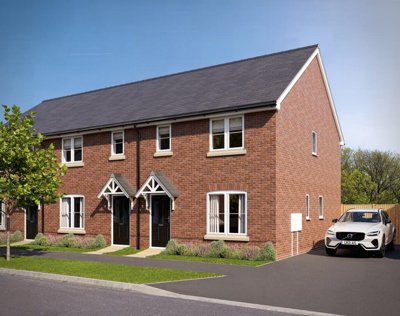
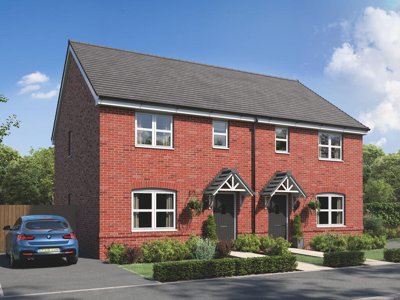
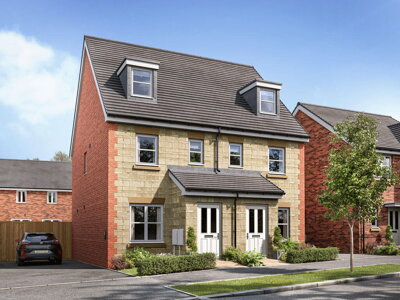
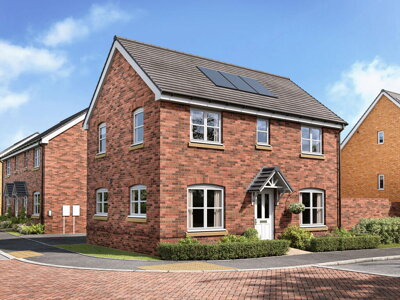
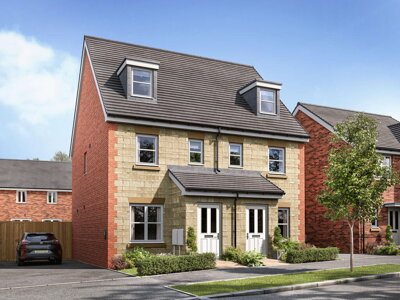
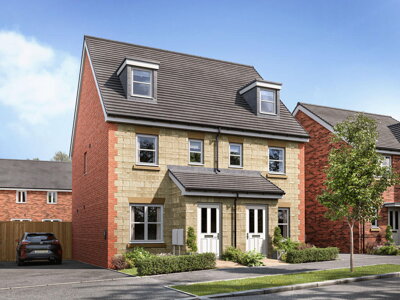
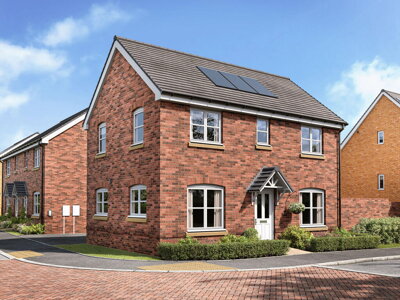
Browse 8 homes new builds in Melbury Abbas from local developer agents.
Three bedroom properties represent a significant portion of the Melbury Abbas housing market, offering space for families with multiple reception rooms and gardens in many cases. Browse detached, semi-detached, and terraced options ranging across new residential developments.
Melbury Abbas has seen lively market activity over recent years, homedata.co.uk puts the overall average at £950,000 as of May 2025, while the average price paid is approximately £735,000 from transaction data. Detached homes dominate here, and the average for that type is £783,333 from 12 sales recorded since 2018, which says plenty about demand for bigger village houses. The stock is varied, from substantial period farmhouses to smaller cottages, yet flats and terraced homes are still rare and together make up less than 4% of the housing stock according to Census data. Our local agents find that homes usually go within weeks of being listed, such is the pull of rural charm and heritage character.
Recent market analysis points to a 26.1% fall in sold prices over the last 12 months as of January 2026, but that sits alongside a period of sharp growth, with prices 98% up on the previous year as of May 2025. In a village with so few transactions, that kind of swing is more about sample size than any real softness in demand. Buyers looking in Melbury Abbas should note that there are no active new-build developments within the village itself, so most homes are established properties with a good deal of age and personality. For more choice, Sturminster Newton, Gillingham, and Blandford Forum are all within a short drive, and recent new-build activity has included St Marys Barns and Corallian Heights near Sturminster Newton, plus Royal Oaks at Gillingham Meadows in the nearby town.
Because the village is protected by the Melbury Abbas and Cann Neighbourhood Development Plan, new building has to sit comfortably with local vernacular and historic character, and that helps support values in this attractive rural setting. The plan also highlights traditional materials such as Melbury Sandstone and Shaftesbury Sandstone, which keep the village looking cohesive. Our team has plenty of experience with purchases in conservation areas, and we can put you in touch with specialist surveyors who understand listed building status and heritage restrictions.

Daily life in Melbury Abbas still follows the rhythm of the countryside, with 301 residents recorded in the 2021 Census enjoying a quiet rural pace. The village has grown only gently over the last two decades, moving from 125 households in 2001 to 134 households by 2011, while the current population estimate for 2024 stands at approximately 271. That slow pace of change reflects the protected status of the village and the shortage of land for development, so homes do not come up often. We find many buyers first discover Melbury Abbas while walking or cycling nearby, then decide they would like to make it home.
Agriculture still shapes the local economy, with around 30% of residents working in agriculture-related occupations, and HMP Guys Marsh prison also provides local employment. The setting on the edge of Cranborne Chase, an Area of Outstanding Natural Beauty, gives residents immediate access to striking walking routes and countryside pursuits. There are longstanding landmarks too, including the ancient Melbury Abbas Mill and several working farms that have been part of the landscape for generations. The pub acts as a traditional meeting place, while the village hall hosts everything from harvest suppers to amateur dramatics across the year.
Local buildings tell the geological story of the area, being built mainly from Melbury Sandstone and Shaftesbury Sandstone, with corallian limestone details around windows and doorways. That golden sandstone gives the village its own look, especially in the evening light. Roofs are usually clay tiles or thatch, and some of the oldest cottages still wear thatched roofs. The Neighbourhood Development Plan places real weight on keeping that character intact, with planning guidance pointing back to traditional materials so the village remains visually coherent. Our local contacts say the social side is strong too, with newcomers welcomed through the church, the pub, and village events.

Families thinking about a move to Melbury Abbas will need to look beyond the village for schooling, as there are no schools here. The nearest primary schools are in nearby villages and market towns, with options in Gillingham and Shaftesbury within a sensible commuting distance for younger children. Primary schools in the wider area include St Nicholas Primary School in Shaftesbury and Wyke Primary School in Weymouth, each serving its own catchment. We can help you work out which schools apply to particular homes, because catchment boundaries can make a real difference to your choice.
Secondary education for the area is found across North Dorset, and Gillingham School is a popular option for local families. This school offers a broad curriculum and has built a strong reputation for academic performance and extracurricular activities. Parents should check catchment areas and admission policies carefully, as they can vary quite a lot depending on exactly where a property sits within the parish. Dorset school admissions can be competitive for sought-after rural schools, so we suggest visiting open days and reading the oversubscription criteria before you commit to a purchase.
For independent schooling, Dorset has a number of private schools within a reasonable drive of Melbury Abbas. The county is well known for preparatory and senior schools, and many have strong academic records alongside good facilities. Hanford School near Chalbury and Sandroyd School in Pimperne are both within approximately 30 minutes' drive, giving younger pupils independent options not far from the village. Sixth form and further education are mainly based in larger centres such as Shaftesbury, Salisbury, and Yeovil, all reachable via the local road network. Because the area is rural, families should think about school transport early, as bus services can be limited and journeys longer than in towns.

Melbury Abbas sits at a useful crossroads in North Dorset, so it gives access to main road routes without losing its rural feel. The village lies on roads linking to the A350, which runs north-south through the region and connects to the M4 motorway corridor via Chippenham and Swindon. The A303, one of the south's main trunk roads, is reached to the north near Shaftesbury and offers a direct route to London and the southeast via the M3. Bristol is around 90 minutes by car, while Southampton and Portsmouth are about 90 minutes to the east, which keeps the village workable for people who need city access but prefer country living.
Public transport is limited from Melbury Abbas, which is hardly surprising for a small rural village. Bus services do run, but far less often than urban routes, so most residents rely on a car. The First Dorset bus services link some villages with nearby towns, although the timetables are shaped more around school runs and market days than commuter journeys. The nearest railway stations are Gillingham and Tisbury, both with services towards London Waterloo and the southwest. Gillingham station offers regular links to the capital, with journey times of approximately two and a half hours, so occasional commuting is possible for those who work from home most days.
Cycling facilities in the village are limited, although the surrounding lanes are popular with leisure cyclists and the rolling terrain is still manageable for experienced riders. Several established cycling routes pass through the area, including links to the National Cycle Network where it runs through the region. For commuters, the real advantage is access to the road network, with the A303 providing a direct route to the motorway network and the south coast ports for anyone needing international travel links. Our agents can talk through which homes give the easiest reach to those transport connections.

It helps to spend time in Melbury Abbas at different times of day and across the week, so you can get a feel for the community and the local amenities. We would also suggest visiting Shaftesbury and Gillingham to judge the shopping, healthcare, and leisure offer for yourself. The Melbury Abbas and Cann Neighbourhood Development Plan is worth reading too, as it sets out planning restrictions and conservation points that could shape your purchase. Drive the local roads at busy and quiet times to test the commute, and speak to residents about day-to-day village life.
Before you start viewing, get a mortgage agreement in principle from a lender so you know your budget and can show sellers you are serious. Given the higher property values in Melbury Abbas, with average prices exceeding £700,000, keep your finances in good order. Our recommended mortgage brokers can compare rates and point you towards the most suitable product for your circumstances. Some lenders may ask for specialist valuation approaches because many homes here are old and full of character, so it is sensible to raise that early.
We suggest viewing several homes across different price ranges, so you can compare condition, character, and future potential properly. Pay close attention to the materials and age of each property, because many houses are built from local sandstone and may need specific maintenance. It is also important to note which homes are listed buildings, since those come with extra responsibilities for owners. Seeing properties at different times of day can help you judge light, noise, and the feel of the neighbourhood, and it is worth asking agents why the vendor is moving.
Once your offer has been accepted, we would instruct a RICS Level 2 Survey (HomeBuyer Report) so the property condition is properly checked. Many Melbury Abbas homes date from the Georgian and Victorian periods, so a good survey is important for spotting structural concerns, repair needs, or issues with traditional construction materials. Our surveyors are used to assessing traditional sandstone buildings and can identify defects common to period homes in this area, including problems linked to the clay-rich soils that affect foundations in parts of Dorset.
We would then appoint a solicitor who is experienced in rural property transactions to deal with the legal side of the purchase. They will carry out local searches, check the title deeds, and liaise with the mortgage lender. Because Melbury Abbas has conservation area status and a number of listed buildings, your solicitor should look closely at any planning conditions or listed building consent requirements affecting the home. Dorset Council local searches usually take 2-4 weeks, and those should be chased if delays start to threaten the completion date.
When all the searches are clear and the mortgage offer is in place, your solicitor will arrange exchange of contracts and agree a completion date. On completion day, the remaining balance is transferred and you pick up the keys to your new Melbury Abbas home. It is sensible to leave time for registering ownership on the title records and for updating utility providers with your new address. We recommend booking removals well ahead, since the rural setting can make access awkward for large vehicles, and neighbours usually appreciate advance notice of delivery vans.
Properties in Melbury Abbas need close inspection because of their age and the traditional ways they were built. The local sandstone used across the village is generally durable, but traditional mortars and pointing may have worn down over time, especially on older homes exposed to prevailing weather from the west and south-west. Keep an eye out for cracking or movement in stone walls, as that can point to foundation problems or the effects of the clay-rich soil found in Dorset, which can shrink and swell during dry spells. Our inspectors have come across these issues in several local properties and can talk you through the likely repairs and costs.
The village contains a notable number of listed buildings, including the Grade II* Church of St Thomas and a string of Grade II listed buildings such as Manor Farmhouse and its farm buildings, the spread eagles public house, Spring Cottage, Grove Farmhouse, and the historic row of cottages at 4-7 Melbury Abbas Village. Buying a listed property brings extra duties, since external alterations usually need Listed Building Consent from Dorset Council. Before you buy, check what work has already been done and whether all the necessary consents were in place. Service charges and upkeep arrangements for shared areas should also be made clear, especially if you are buying a converted barn or a period home in multiple ownership.
Some of the older homes have thatched roofs, and those need specialist maintenance, with re-thatching often needed every 30-40 years, so that cost has to sit in the budget from the outset. Homes with original timber windows may need careful restoration or replacement, and many buyers opt for sympathetic double-glazing that keeps the traditional look while improving thermal performance. The village's Neighbourhood Development Plan also sets out guidance on acceptable development, and knowing those policies can help you judge the scope for extensions or future improvements. Our local agents can point out which homes have already had renovation work and which still offer scope, and we can arrange surveys that focus on the condition of traditional building elements.

homedata.co.uk shows strong values in Melbury Abbas, with overall average prices reaching approximately £950,000 as of May 2025 and the average price paid standing at around £735,000 based on recent transaction data. Detached homes command the highest prices at £783,333 on average, which reflects the village's mostly rural and characterful housing stock. The market stays relatively exclusive because there are so few homes available and the conservation-protected status helps support values over time. Recent price data has moved around a little because annual transactions are so limited, but the longer view remains positive as buyers keep coming for the Cranborne Chase AONB and the rural lifestyle it offers.
Melbury Abbas falls under Dorset Council, and council tax bands are set according to property value as assessed by the Valuation Office Agency. Most detached family homes in the village would usually sit in bands E through H, given the higher values in this sought-after rural location. The larger period farmhouses and converted agricultural buildings that make up much of the housing stock often attract the top bands in the area. You can check the band for any specific property online through the Valuation Office Agency's council tax records, or ask your solicitor to check during conveyancing.
There are no schools within Melbury Abbas itself, so families need to look to nearby towns and villages for education provision. Primary schools in the surrounding area serve the local population, while secondary education is available at Gillingham School, a popular option for families across North Dorset. Dorset also has several well-regarded independent schools within reasonable driving distance, including Hanford School and Sandroyd School for younger pupils. Buyers with school-age children should look closely at catchment areas and admission criteria, since these can be highly competitive in rural locations and may shape which homes work best for family life.
Public transport from Melbury Abbas remains limited, which fits its role as a small rural village. Bus services do operate, but they are much less frequent than in town, so a car is essential for most daily trips. Gillingham and Tisbury are the nearest railway stations, with services towards London Waterloo and journey times of approximately two and a half hours. The village is well placed for road travel too, with the A350 and A303 both accessible for commuting to larger employment centres and for joining the motorway network on longer trips. Our agents can advise on which homes have the easiest access to these links.
For property investors, Melbury Abbas has several points in its favour, including its position within an Area of Outstanding Natural Beauty, its historic architecture, and the very limited supply of new-build homes. Properties seldom come on the market, so scarcity is built in, and the unspoiled setting within Cranborne Chase continues to appeal to buyers who want traditional English countryside living. That said, the small population and modest range of local amenities may hold rental demand below what you would see in a larger town, and yields can be lower than urban alternatives because purchase prices are high compared with rental values. Any purchase needs to take account of the conservation rules that govern changes and improvements, and buyers should weigh up the potential for capital growth in a protected rural market.
For standard residential purchases, stamp duty starts at 0% on the first £250,000 of the purchase price, rises to 5% on the slice between £250,001 and £925,000, then moves to 10% up to £1.5 million, and 12% on anything above that. First-time buyer relief has been abolished for purchases above £625,000, so most buyers in Melbury Abbas will pay the standard rates whatever their buyer status. With average prices in the village exceeding £700,000, a typical purchase would see stamp duty charged on roughly £450,000 to £500,000 at the relevant rates. Your solicitor will work out and submit the SDLT return for you, and they can advise on any extra charges for second homes or purchases by non-UK residents.
When viewing homes in Melbury Abbas, pay close attention to the local sandstone walls, because traditional lime mortar pointing can break down and let water in, especially on north and west-facing elevations exposed to prevailing winds and rain. Check any thatched roofs carefully, as re-thatching is expensive, and make sure any listed building work is backed by consent from Dorset Council. Look for movement or cracking that could point to foundation problems linked to the shrink-swell behaviour of local clay soils during dry periods. Our inspectors can provide detailed assessments of all these elements as part of a RICS Level 2 Survey.
Buying in Melbury Abbas involves a number of costs beyond the purchase price. Stamp Duty Land Tax, or SDLT, is worked out on a tiered basis, starting at 0% for the first £250,000 of any residential purchase, rising to 5% on the portion between £250,001 and £925,000, then 10% on amounts between £925,001 and £1.5 million, and 12% on anything above £1.5 million. Given that the average property price in Melbury Abbas exceeds £700,000, most buyers will pay stamp duty on roughly £450,000 to £500,000 of the price, which usually adds up to several thousand pounds.
First-time buyer relief no longer applies to purchases above £625,000, so most buyers in Melbury Abbas will face the standard SDLT rates regardless of their status. Other buying costs include solicitor fees for conveyancing, which typically range from £500 to £1,500 depending on complexity, and survey costs for a RICS Level 2 Survey, usually between £380 and £629 nationally. Mortgage arrangement fees vary by lender, but they often sit between £0 and £2,000, while local search fees with Dorset Council are commonly £150 to £300. Homes in Melbury Abbas may also attract extra costs if they are listed, as that can mean more detailed searches and more legal work to check heritage obligations.
We advise budgeting for total purchase costs of around 3-5% above the property price so you have enough money in place to complete smoothly. On a £950,000 property, that means setting aside roughly £28,500 to £47,500 for extra costs including stamp duty, legal fees, survey costs, and mortgage arrangement fees. Our recommended conveyancers and mortgage brokers can provide quotes suited to your specific transaction, and we suggest getting those figures early so you can build them into your financial planning.

Properties New Builds In London

Properties New Builds In Plymouth

Properties New Builds In Liverpool

Properties New Builds In Glasgow

Properties New Builds In Sheffield

Properties New Builds In Edinburgh

Properties New Builds In Coventry

Properties New Builds In Bradford

Properties New Builds In Manchester

Properties New Builds In Birmingham

Properties New Builds In Bristol

Properties New Builds In Oxford

Properties New Builds In Leicester

Properties New Builds In Newcastle

Properties New Builds In Leeds

Properties New Builds In Southampton

Properties New Builds In Cardiff

Properties New Builds In Nottingham

Properties New Builds In Norwich

Properties New Builds In Brighton

Properties New Builds In Derby

Properties New Builds In Portsmouth

Properties New Builds In Northampton

Properties New Builds In Milton Keynes

Properties New Builds In Bournemouth

Properties New Builds In Bolton

Properties New Builds In Swansea

Properties New Builds In Swindon

Properties New Builds In Peterborough

Properties New Builds In Wolverhampton

Enter your details to see if this property is within your budget.
Loans, cards, car finance
Estimated property budget
Borrowing + deposit
You could borrow between
Typical borrowing
Monthly repayment
Est. at 4.5%
Loan-to-value
This is an estimate only. Your actual budget may vary depending on interest rates, credit history, and personal circumstances. For an accurate affordability assessment, speak to one of our free mortgage advisors.
This calculator provides estimates for illustrative purposes only and does not constitute financial advice. Your home may be repossessed if you do not keep up repayments on your mortgage. Estimates based on 4.5% interest rate, repayment mortgage. Actual rates depend on your circumstances.
Homemove is a trading name of HM Haus Group Ltd (Company No. 13873779, registered in England & Wales). Homemove Mortgages Ltd (Company No. 15947693) is an Appointed Representative of TMG Direct Limited, trading as TMG Mortgage Network, which is authorised and regulated by the Financial Conduct Authority (FRN 786245). Homemove Mortgages Ltd is entered on the FCA Register as an Appointed Representative (FRN 1022429). You can check registrations at NewRegister or by calling 0800 111 6768.

We use cookies to show you personalised content and improve your experience of our website. Find out more in our Privacy policy and Cookie policy.