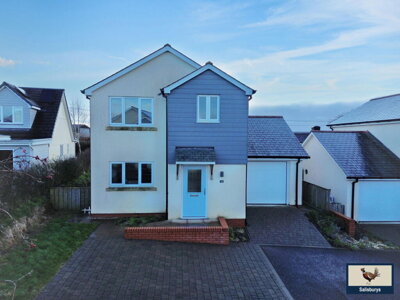
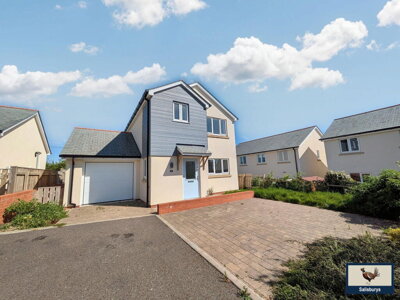
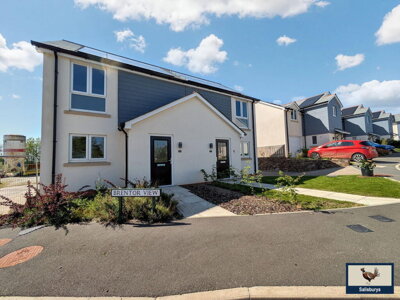
Browse 3 homes new builds in Marystow, West Devon from local developer agents.
The Marystow property market offers detached, semi-detached, and terraced houses spanning various price ranges and neighbourhoods. Each listing includes detailed property information, photographs, and direct contact with the marketing agent.
£610k
4
0
46
Source: home.co.uk
Showing 4 results for Houses new builds in Marystow, West Devon. The median asking price is £610,000.
Source: home.co.uk
Detached
3 listings
Avg £705,000
Terraced
1 listings
Avg £215,000
Source: home.co.uk
Source: home.co.uk
Marystow’s property market works on a very different scale to urban areas, so sales happen only rarely. With just approximately 122 households and a population of 319 residents, homes change hands only now and then, which makes every listing feel significant. That scarcity helps explain why any property that does come up draws real interest from people after the classic English countryside way of life that Marystow delivers so well.
Set against that local picture, the wider Devon market recorded approximately 15,500 sales in the twelve months to December 2025, a fall of 15.6 percent on the year before. homedata.co.uk shows that sold prices across Devon over the last year were 2 percent lower than the previous year and 5 percent below the 2023 peak. Across the county, detached properties sold for £481,428 on average, semi-detached homes for £303,511, terraced properties for £255,407, and flats averaged £181,559. For buyers weighing up Marystow and the surrounding West Devon area, those numbers give a useful frame of reference.
The last open market sale in Marystow parish itself was in 2018, at £572,500. homedata.co.uk records also show no sales in several recent years, including 2016, 2017, 2019, 2020, 2021, 2022, and 2023. That level of scarcity is down to both the parish’s tiny size and the fact that people tend to stay put in such a sought-after spot. Devon’s housing affordability has also become stretched, with a ratio of 9.5 compared with 7.7 nationally, helped in part by buyers moving out from London and the South East.
New-build activity inside Marystow is effectively absent, but nearby Lifton has Oakdene by Wain Homes, with 2, 3, and 4-bedroom homes on offer. One of the house types is called “The Marystow”, a 3-bedroom detached stone-built home that takes its cue from traditional Devon architecture. It is a neat reminder that period style still carries real appeal here, even on a modern development.

Marystow has all the hallmarks of rural Devon, with winding lanes, hedgerow-lined fields, and the slower rhythm of country life. Its name comes from St Mary The Virgin Church, a historic building with origins in the 12th century and later additions in the 14th, 15th, and 16th centuries. Built from local stone rubble with dressed granite, the church shows how the village has always drawn on what the landscape gives it. Sydenham House, another historic residence in the parish, was built in the early 17th century, adding another layer to the area’s architectural story.
The numbers behind Marystow suggest a parish that has managed to combine traditional rural living with modern working habits. Economic activity stands at 62.2 percent of the population, and employment remains healthy. A notable 33.3 percent of residents work mainly from home, which tells us how well the parish suits remote workers looking to leave larger urban centres behind. Only 12.1 percent travel less than 10 kilometres to work, so flexibility clearly matters here. Household deprivation is low too, with 49.3 percent of households not deprived in any dimension.
Marystow’s past is tied to agriculture and mining, and the parish once supported manganese mining operations that fed into 19th century economic life. The population was 570 in 1851, then dropped to 448 by 1861 as mining demand waned and farming became more modern. Even now, the parish remains a small but resilient community, proud of its history and still linked to wider opportunities. In the broader West Devon area, local employers include the health sector, retail, education, and tourism, which together account for over 42 percent of employment across Devon.
Marystow’s housing stock leans heavily towards larger homes. Census 2021 data shows 34.8 percent of properties with four or more bedrooms, well above the 21.1 percent average for England and Wales. Another 42.4 percent have three bedrooms, while only 1.5 percent are one-bedroom homes and 21.2 percent have two bedrooms. That profile reflects a parish shaped more by farmhouse conversions and family houses than by smaller cottages or flats.

Families moving to Marystow will find primary education options spread across the nearby West Devon villages, with schools usually covering Reception through to Year 6. Lamerton Church of England Voluntary Controlled Primary School serves several surrounding parishes, and Lifton Primary School in the neighbouring village is another nearby choice. Parents should check Ofsted reports for performance details and speak to West Devon Borough Council for the latest catchment information, because admissions can be competitive in sought-after rural areas. These village schools often give children a strong start in a close-knit, supportive setting.
For secondary education, families in Marystow generally look towards Tavistock, the nearby market town with a full range of schooling options for surrounding parishes. Tavistock’s historic centre also makes access to secondary education straightforward, with schools catering to different abilities and interests. Mount House School andamp; Media Arts College is another option within reach, with a focus on creative subjects. If sixth form or further education is needed, the wider Devon area has colleges and sixth form centres, although the journeys from Marystow can be longer.
Anyone buying in Marystow with school-age children should think carefully about travel times and transport before making a move. Being in a rural spot means that school buses and wider transport links deserve proper checking. Devon County Council operates school transport for children living beyond a certain distance from their nearest school, and those arrangements should be confirmed during the search process. It also helps to view properties around school hours, as that gives a clearer sense of everyday life in this countryside setting.

Marystow sits in the West Devon countryside, about 4 miles from Tavistock, which acts as the main service centre for the nearby rural parishes. Its position gives access to the A390, linking Tavistock to Liskeard and opening routes towards the coast and central Devon. For longer journeys, the A38 provides links to Plymouth and the wider motorway network, while Exeter is within reasonable driving distance for rail travel or international connections.
Rural West Devon has limited public transport, which is exactly what you would expect for a parish on Marystow’s scale. A bus service links the village to Tavistock, though it is likely to run fairly infrequently, so most residents need a car. The nearest railway stations are in Gunnislake, on the Tamar Valley Line, or in Plymouth, where services reach major destinations including London Paddington. A third of the working population mainly works from home, and that takes some of the pressure off daily commuting.
For walkers and cyclists, the Devon countryside opens up plenty of room to explore. The lanes around Marystow are usually quiet, although hilly and narrow stretches do call for caution. Close to Tavistock, the Granite Way cycle path and other traffic-free routes connect into the wider Devon walking and cycling network. Plymouth can be reached by bicycle if you are feeling energetic, though most people mix short local rides with car use for longer trips.
Broadband in Marystow has improved a good deal in recent years, which matters for the many residents who work from home. Full-fibre services are becoming more common across rural Devon, but any buyer should check the actual speed available at a specific address before committing. Mobile signal varies across the parish too, with some spots getting a strong 4G connection and others seeing weaker coverage.

Start by looking at what is currently available in Marystow and the wider West Devon area through home.co.uk. Because sales in the parish itself are so limited, it pays to keep an eye on the wider market and be ready to move fast when the right home appears. Listings in Marystow are scarce, so registering with estate agents in Tavistock and setting up alerts can help us stay on top of new opportunities.
Before we book viewings, it is wise to have a mortgage agreement in principle in place. That puts you in a stronger position with sellers and shows you are serious. With Devon prices averaging £321,000 and the last Marystow sale at £572,500, the budget needs to be realistic, especially once you allow for the premium that desirable rural homes can command and the extra costs that come with older or listed buildings.
Once you start viewing, look closely at how well each property would work day to day in Marystow. Journey times to schools, shops, and workplaces all matter. Older homes in the parish deserve particular attention, because many have historic construction that needs a careful eye. It is also worth seeing a property at different times of day and in different weather, since some issues only show themselves then.
Because older homes are so common in Marystow, we would strongly recommend a RICS Level 2 Survey. That should pick up structural issues, damp, and defects often seen in historic stone, cob, or traditionally built properties. Where a building is listed or has unusual construction, a more detailed Level 3 Building Survey may be the better route. Survey costs usually range from £374 for a 1-bedroom property up to £726 for a 4-bedroom home, and older or non-standard places may call for specialist assessors.
It is also sensible to appoint a solicitor who knows rural property transactions well. They will deal with searches, check planning permissions, and make sure the title is in order. Given the area’s mining past, local searches should confirm there are no unresolved issues. Conveyancing costs typically start from around £499 for straightforward cases, though more complex rural purchases can cost more. The process usually takes six to eight weeks, although rural transactions sometimes run longer because of extra searches and title complications.
After the searches come back clean and your mortgage offer is confirmed, you can move on to exchange contracts and agree a completion date. Your solicitor will coordinate the handover with everyone involved so that ownership changes smoothly. Buildings insurance needs to be in place from exchange, so it is best arranged well in advance. Removal costs and utility transfers should also be lined up before completion day arrives.
Buying in Marystow means looking beyond the first impression. The parish’s age means many homes were built using traditional methods that differ sharply from modern construction. Solid wall build, lime mortar, and natural stone all need a different maintenance approach from cavity-wall houses, and buyers should understand that before committing. Typical materials in the area include local stone rubble, dressed granite, and sometimes cob, the traditional Devon mix of earth and straw.
Flood risk deserves proper attention with any Devon purchase. Marystow is inland, but West Devon’s rural nature means surface water flooding can still happen after heavy rain, especially where drainage is limited. Flood risk maps from the Environment Agency can help identify homes in flood zones. Climate change projections point to a higher risk of shrink-swell subsidence and surface water flooding, so suitable surveys are important. Clay-rich soils in parts of Devon can move as they shrink and swell, which may affect foundations.
Listed building status is relevant in a parish like Marystow, where historic properties may carry legal protection. Any unauthorised changes to a listed building can lead to criminal legal action, so it is vital to understand the implications before buying. The Church of St Mary The Virgin is Grade 1 listed, and other properties in the parish may be protected at different levels. Factor in the extra costs and responsibilities that come with a listed home, from specialist materials and conservation-approved contractors to listed building consent for alterations.
Older rural houses often bring structural issues of their own. Timber problems such as wet or dry rot can affect floor joists, roof structures, and window frames if ventilation is poor. Chimneys can also deteriorate, with pointing, flashing, and brickwork needing regular care. In period properties, electrical systems may be outdated and fail to meet current regulations, while plumbing can include lead or galvanised steel pipes that need replacing. A full RICS Level 2 Survey should identify these issues before you go ahead.

There is no reliable average house price figure for Marystow parish itself, simply because the number of sales is so small. The last recorded open market sale was in 2018, when a property achieved £572,500. homedata.co.uk records show no registered sales in 2016, 2017, 2019, 2020, 2021, 2022, and 2023. Looking at the wider county, the average property price across Devon was approximately £321,000 as of December 2025, with homedata.co.uk showing prices down 2 percent over the last year and 5 percent from the 2023 peak. Detached homes averaged £481,428, semi-detached homes £303,511, and terraced properties £255,407. Housing affordability in Devon has become stretched, with a ratio of 9.5 compared with 7.7 nationally.
West Devon Borough Council looks after properties in Marystow, and council tax bands run from A through to H depending on the assessed value. The Valuation Office Agency website lets you check the band for a specific address. In West Devon, council tax charges for 2024-25 start at approximately £1,776 for a Band A property and rise to around £5,327 for Band H. Second homes may qualify for a reduction if they are unoccupied and unfurnished, while furnished second homes or holiday lets may face a premium.
Primary schooling for Marystow families is available in the nearby villages, with Lamerton Church of England Voluntary Controlled Primary School and Lifton Primary School both serving households across the surrounding parishes. Parents should look at Ofsted reports for each school and keep catchment boundaries in mind, as admissions can be competitive in attractive rural spots. Secondary education is available in Tavistock, including schools for ages 11-16, while sixth form and further education usually mean travelling to larger centres. School transport should be checked during the property search, since Devon County Council provides transport for children living beyond specified distances from their nearest school.
Rural West Devon is not blessed with much in the way of public transport, which is standard for a parish of Marystow’s size. Bus services do run to Tavistock, but the timetable is likely to be modest, so car ownership is essential for most people. The nearest rail stations are in Gunnislake, on the Tamar Valley Line, or in Plymouth, where direct services reach London Paddington. Most residents need their own vehicle for day-to-day life. The 33 percent of residents who work from home find that less restrictive, and better broadband helps make remote working practical from the village. As always, broadband speeds should be checked at any individual property before purchase.
Marystow gives buyers a rare chance to buy in one of Devon’s most picturesque and historic parishes, although the small number of homes coming to market means opportunities to invest are infrequent. Housing affordability in Devon has become stretched, with a ratio of 9.5 compared with 7.7 nationally, partly because of buyers moving in from more expensive areas. The peaceful rural lifestyle, alongside stronger remote working infrastructure, continues to draw buyers into West Devon. Homes that do appear tend to hold their value because supply is tight and demand stays firm. Second homes and holiday lets are a significant factor across Devon too, which can affect rental availability and prices in attractive rural parishes.
Stamp duty land tax for 2024-25 is charged at 0 percent on the first £250,000 of property value, 5 percent on £250,001 to £925,000, 10 percent on £925,001 to £1.5 million, and 12 percent on anything above £1.5 million. First-time buyers get relief on the first £425,000, with 5 percent charged between £425,001 and £625,000. For a typical Devon home at the county average of £321,000, standard buyers would pay £3,550 in stamp duty, while first-time buyers pay nothing on the first £425,000. Given the premium often seen on Marystow properties, and the last sale at £572,500, a standard buyer purchasing a similar home would face stamp duty of around £16,125.
Marystow parish itself has very little in the way of commercial amenities, which is no surprise in a community of approximately 122 households. The neighbouring village of Lifton provides the essentials, including a convenience store, pub, and pharmacy. Tavistock, about 4 miles away, offers a broader mix of supermarkets, independent shops, banks, and healthcare facilities. Plymouth, the main city in the region, adds comprehensive retail, healthcare, and cultural facilities within approximately 30 minutes’ drive. Those distances are worth keeping in mind when planning everyday life in Marystow.
Older homes in Marystow were generally built with traditional methods, including solid stone walls, lime mortar pointing, and sometimes cob construction, all of which need a different maintenance approach from modern cavity-wall properties. Typical issues in older rural houses include penetrating damp caused by failing lime mortar, timber defects such as wet or dry rot affecting floor joists and roof structures, chimney deterioration, outdated electrical systems that do not meet current regulations, and plumbing with lead or galvanised steel pipes. The parish’s 19th century manganese mining history also means local searches should check for mining-related problems. A detailed RICS Level 2 Survey is essential before purchase, and a Level 3 Building Survey is advisable for listed buildings or properties of unusual construction.
From 3.89%
We offer professional mortgage advice and competitive rates for a Marystow property purchase.
From £499
Expert legal services for your property transaction
From £350
Comprehensive survey for your Marystow property
From £60
Energy performance certificate for your property
Budgeting for a move in Marystow means looking at the full cost of buying, not just the asking price. For 2024-25, the stamp duty land tax zero-rate band sits at £250,000 for standard buyers, so a property bought at the Devon average of £321,000 would attract £3,550 in stamp duty. Homes above £925,000 move into the higher bands, so most Marystow purchases are likely to sit in the 0-5 percent range. First-time buyers have a higher threshold, with the first £425,000 exempt from stamp duty altogether.
There are other costs to plan for as well. Solicitor conveyancing fees usually start from around £499 for a straightforward transaction, though they can rise with complexity. A RICS Level 2 Survey generally costs between £374 and £726 depending on the size of the property, with 3-bedroom homes averaging around £437 and 4-bedroom homes averaging £495. Because many Marystow homes are older and full of historic features, a more detailed Level 3 Building Survey can be worth the extra outlay in some cases. Energy Performance Certificates are compulsory and usually cost from £60 depending on property size.
It is also sensible to allow for mortgage arrangement fees, which vary by lender but can reach £2,000 or more, along with valuation fees and removal costs. Buildings insurance has to be in place from exchange, and life or income protection cover may be a good idea for anyone relying on regular earnings to meet mortgage payments. With Marystow properties often carrying a premium because of their rural character and historic details, having enough headroom in the budget for these extra costs, as well as the purchase price, helps keep the transaction far less stressful.

Properties New Builds In London

Properties New Builds In Plymouth

Properties New Builds In Liverpool

Properties New Builds In Glasgow

Properties New Builds In Sheffield

Properties New Builds In Edinburgh

Properties New Builds In Coventry

Properties New Builds In Bradford

Properties New Builds In Manchester

Properties New Builds In Birmingham

Properties New Builds In Bristol

Properties New Builds In Oxford

Properties New Builds In Leicester

Properties New Builds In Newcastle

Properties New Builds In Leeds

Properties New Builds In Southampton

Properties New Builds In Cardiff

Properties New Builds In Nottingham

Properties New Builds In Norwich

Properties New Builds In Brighton

Properties New Builds In Derby

Properties New Builds In Portsmouth

Properties New Builds In Northampton

Properties New Builds In Milton Keynes

Properties New Builds In Bournemouth

Properties New Builds In Bolton

Properties New Builds In Swansea

Properties New Builds In Swindon

Properties New Builds In Peterborough

Properties New Builds In Wolverhampton

Enter your details to see if this property is within your budget.
Loans, cards, car finance
Estimated property budget
Borrowing + deposit
You could borrow between
Typical borrowing
Monthly repayment
Est. at 4.5%
Loan-to-value
This is an estimate only. Your actual budget may vary depending on interest rates, credit history, and personal circumstances. For an accurate affordability assessment, speak to one of our free mortgage advisors.
This calculator provides estimates for illustrative purposes only and does not constitute financial advice. Your home may be repossessed if you do not keep up repayments on your mortgage. Estimates based on 4.5% interest rate, repayment mortgage. Actual rates depend on your circumstances.
Homemove is a trading name of HM Haus Group Ltd (Company No. 13873779, registered in England & Wales). Homemove Mortgages Ltd (Company No. 15947693) is an Appointed Representative of TMG Direct Limited, trading as TMG Mortgage Network, which is authorised and regulated by the Financial Conduct Authority (FRN 786245). Homemove Mortgages Ltd is entered on the FCA Register as an Appointed Representative (FRN 1022429). You can check registrations at NewRegister or by calling 0800 111 6768.

We use cookies to show you personalised content and improve your experience of our website. Find out more in our Privacy policy and Cookie policy.