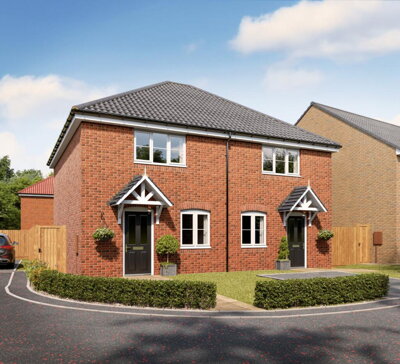
Browse 1 home new builds in Longnewton, Stockton-on-Tees from local developer agents.
£338k
10
1
116
Source: home.co.uk
Source: home.co.uk
Detached
3 listings
Avg £391,667
Bungalow
2 listings
Avg £587,500
End of Terrace
2 listings
Avg £144,063
Terraced
2 listings
Avg £170,000
Semi-Detached
1 listings
Avg £550,000
Source: home.co.uk
Source: home.co.uk
In Longnewton, the housing stock covers a wide spread of budgets and buyer types, from first-time purchasers to families needing more room. Detached homes sit at the top end, with an average of £367,000, which reflects the appetite for larger houses with gardens. Semi-detached properties come in at around £220,000, giving families a solid step up from terraced homes. Terraced properties average £165,000, and flats begin from approximately £110,000, which gives buyers a more accessible route into the local market.
There are 2 notable new build schemes active in Longnewton at present, adding fresh stock to the village market. The Orchard at Longnewton from Miller Homes includes 3, 4, and 5 bedroom houses priced from £269,995 to £429,995. Longnewton Gardens by Avant Homes offers homes in the same size range and price brackets. Both sit in the TS21 1DA postcode area, and for buyers wanting a newly built home the entry point is a minimum investment of £270,000. Annual price growth of 1.7% points to a market that has stayed steady, with demand holding up as more buyers spot the village's appeal.

Longnewton has real historic depth, and you can see it in the Conservation Area designation and the listed buildings dotted through the village. St. Mary's Church remains a key landmark, while older farmhouses and cottages speak plainly of the area's agricultural past. In the village core, a number of homes date from the pre-1919 period, often built in traditional red brick with stone detailing and tiled roofs. That mix gives the streetscape genuine character, which is a big draw for buyers looking for homes with history rather than imitation period styling.
Mostly, Longnewton functions as a residential village, with many people travelling out to bigger employment centres across the Tees Valley. The population is estimated at 1,000 to 1,500 residents, spread across roughly 400 to 600 households, so it keeps a close-knit feel without being cut off from urban services. Across the wider Tees Valley, jobs in chemicals, advanced manufacturing, and logistics continue to shape commuting patterns, and that makes Longnewton a practical base for professionals. Teesside University also has an influence here, drawing academic staff and students who want quieter accommodation within sensible commuting distance.
Because Longnewton falls within Stockton-on-Tees borough, residents get the benefit of village living alongside access to full local authority services. The links out are a big part of the appeal, with the A19 and A66 making Middlesbrough, Darlington, and the wider Teesside industrial zone straightforward to reach. Day to day, local facilities and community events help hold the social side of the village together. For families, and for buyers who want some distance from larger urban centres, that balance is often what tips the decision.

For families moving here, the education picture stretches beyond the village itself into the surrounding Stockton-on-Tees area. Nearby primary schools serve local children, and several hold good or outstanding Ofsted ratings. Through Stockton-on-Tees borough, families can access primary schools covering Reception to Year 6, giving younger pupils a settled start in a supportive setting. We always suggest checking the latest performance information and arranging visits, because that is often the clearest way to judge which school suits your children best.
Secondary choices across the wider Tees Valley include comprehensive schools and, in some areas, grammar schools, depending on catchment rules and admissions policy. Pupils from Longnewton commonly move on to schools in places such as Stockton-on-Tees or Middlesbrough, with transport arrangements helping with those daily journeys. In the parts of the Tees Valley served by grammar schools, academically able children have another route open to them, although entry depends on the 11-plus and the current catchment boundaries. Sixth form study is available through secondary schools and colleges nearby, and Teesside University provides the local higher education option. Before making plans, we recommend checking the latest catchment boundaries and admissions criteria with Stockton-on-Tees local authority.

Getting around by road is one of Longnewton's practical strengths. The A19 trunk road runs close by, giving direct access north to Middlesbrough and south towards Thirsk, York, and Leeds. The A66 crosses the area as well, linking through to Darlington and the A1(M) motorway for longer trips. For anyone commuting into the Tees Valley, or travelling beyond it for work, those routes make a noticeable difference. It is one reason the village appeals to people working in chemicals, manufacturing, and logistics, sectors that still carry plenty of weight in the regional economy.
Public transport is available too, with bus services linking Longnewton to Stockton-on-Tees and nearby villages on weekdays and Saturdays. For rail travel, most residents look to Stockton-on-Tees and Eaglescliffe stations, where services run to Newcastle, York, and London King's Cross via the East Coast Main Line. From Eaglescliffe, London is reachable in approximately two and a half hours, which keeps the village in the frame even for some capital-based commuters. Closer to home, the flat Tees Valley landscape makes cycling practical for shorter trips, and village footpaths help with local journeys. Parking is generally manageable in Longnewton, while rail users often rely on station parking at the nearby railway stations.

We suggest getting a feel for Longnewton before you begin a search in earnest, especially the Conservation Area, the spread of property values by type, and the local amenities people rely on day to day. Our platform helps you track new listings and price changes in the village. If you are drawn to an older home, the Conservation Area designation can affect the changes you are allowed to make, so it is worth understanding that early.
Before booking viewings, we recommend speaking to a mortgage broker or lender and securing an agreement in principle. It gives you a clearer budget and shows sellers you are ready to proceed. In the current market, that kind of preparation can strengthen your position as a credible buyer.
Once you know your budget, start viewing the homes that match it and look closely at construction materials, likely upkeep, and distance to the facilities you will use most. Longnewton has a broad mix, from pre-1919 cottages to brand new houses, so seeing more than one type is useful. It gives you a better read on what your money buys here.
After an offer is accepted, we would usually tell buyers to instruct a qualified RICS surveyor for a Level 2 Survey. In Longnewton, fees typically run from £400 to £700, depending on the size of the property. Where a home is older, sits in the Conservation Area, or has an unusual form of construction, that survey work becomes even more valuable because it can flag problems before completion.
Next comes the legal work. You will need a solicitor to deal with local searches, review the contract, and complete the registration of ownership after the purchase. In the Longnewton area, they should also carry out mining and environmental searches, which matters given the region's mining history.
When the survey, searches, and legal checks are all in order, contracts can be exchanged and a completion date agreed with the seller. Your solicitor then arranges the transfer of funds and the handover of keys. On completion day, the keys are released and you can start settling into your new Longnewton home.
The ground conditions in Longnewton do deserve attention from buyers. The village sits on Permian rocks, including Magnesian Limestone, with glacial till deposits that contain a notable amount of clay. That clay can expand and contract, causing shrink-swell movement, especially in extreme weather or where large trees stand close to a building. During a RICS Level 2 Survey, our surveyors look for signs such as cracking, subsidence, or other movement that may point to foundation problems linked to clay shrinkage. Homes with mature trees in the garden, or immediately nearby, need especially careful checking because roots can worsen moisture-related movement over time.
Another point to get clear early is that Longnewton village is a designated Conservation Area. That brings planning restrictions on external alterations and new development. If you are buying a period property and already thinking about an extension or changes to the outside, conservation guidance will need to be part of the conversation. Listed buildings in the village face an added layer of control, with further approvals needed from the local planning authority before work starts. Knowing that before purchase helps you plan realistically and avoids expensive surprises later.
Longnewton also sits within a region shaped by County Durham's mining past. The village itself is not on major coal seams, but the wider history means proper searches should still check for historic mining activity or shallow mine workings nearby. In some cases, old workings can affect ground stability and, in turn, property foundations, so this is not something we would skim over. A competent RICS Level 2 Survey should record any signs of mining-related movement, or advise further specialist investigation where that looks sensible.
Flooding from surface water can be a localised issue in parts of Longnewton, especially in lower-lying spots and around certain roads during heavy rain. Overall risk from rivers and the sea is low, but for homes in locations known to be affected, a property-specific flood risk assessment is a sensible step. Many pre-1919 houses here were built with traditional solid walls, and they often need a different maintenance approach from modern cavity wall homes. Older wiring and plumbing are also common and may need upgrading as part of any renovation plans. A detailed survey helps identify those issues early and gives you a firmer budget for the work.
Longnewton's housing stock comes from several building periods, and each one brings its own strengths and maintenance questions. In the village core, the oldest homes date from the pre-1919 period and usually have solid brick or stone walls, timber-framed roofs, and coverings of slate or clay tiles. They are often the most visually appealing properties in the village, but they do not behave like modern houses and need to be looked after accordingly. For buyers, understanding the construction type is one of the clearest ways to judge likely maintenance needs and what sort of renovation may be realistic.
Homes from the 1945-1980 period form another recognisable group in Longnewton. They often have early cavity wall construction, brick outer leaves, and pitched tiled roofs. Some still retain original flat roofs over extensions or outbuildings, and by now those elements may be near the end of their serviceable life. Condensation and weak insulation are also common in this age of property, as the standards of the time did not prioritise thermal efficiency in the way modern regulations do. A RICS Level 2 Survey can pick up those defects and help put repair costs into context.
Post-1980 homes are usually more straightforward, with modern cavity wall construction, brick or block internal leaves, integrated insulation, and pitched roofs finished in concrete or clay tiles. In general they need less upkeep than older buildings, although issues can still arise from poor workmanship at the time of build or defects in newer materials. The Orchard and Longnewton Gardens are the newest examples in the village, built to contemporary insulation standards and modern construction methods. Even so, we still see value in a thorough survey, particularly while developers' warranty periods are still running.
As of February 2026, the average property price in Longnewton, Stockton-on-Tees, stands at £297,556. Detached properties average £367,000, semi-detached homes are around £220,000, terraced properties come in at approximately £165,000, and flats start from £110,000. Over the last twelve months, prices have risen by 1.7%, which suggests steady demand in this part of the Tees Valley.
For council tax, properties in Longnewton come under Stockton-on-Tees Borough Council. Bands run from A to H, based on the property's assessed value. In practice, many semi-detached and terraced homes in the village sit in Band B or C, while larger detached houses may fall into Band D or higher. We advise checking the exact band with the local authority or on the listing before you commit.
Schooling for Longnewton households is drawn from the surrounding area rather than the village alone. Several primary schools nearby hold good or outstanding Ofsted ratings. For older children, secondary options in Stockton-on-Tees and nearby towns include both comprehensive and grammar schools. Admission policies and catchment boundaries can change, so we always suggest confirming the current position with Stockton-on-Tees local authority before making decisions that depend on school eligibility.
In transport terms, Longnewton is served by bus routes to Stockton-on-Tees and neighbouring villages on weekdays and Saturdays. Rail users usually head for Stockton-on-Tees or Eaglescliffe, both of which give access to national services including London, Newcastle, and York via the East Coast Main Line. For drivers, the nearby A19 and A66 add another practical layer of connectivity.
Limited new development, combined with Longnewton's standing as a Conservation Area village, helps keep buyer interest steady. The village also works well as a commuter base for Teesside employment, which supports rental demand from professionals. Annual growth of 1.7% points to a market that is stable rather than overheated, while The Orchard and Longnewton Gardens show that developers still see value in the area. Homes within the Conservation Area, or close to listed buildings, may carry particular long-term appeal, although planning restrictions remain part of the picture.
For 2024-25, standard Stamp Duty rates apply in Longnewton. That means 0% on the first £250,000, 5% on £250,001 to £925,000, 10% on £925,001 to £1.5 million, and 12% above £1.5 million. First-time buyers get relief on properties up to £625,000, paying 0% on the first £425,000 and 5% between £425,001 and £625,000. Most Longnewton purchases sit within the lower bands.
Mining risk in Longnewton is usually considered low, but we would still want it checked properly. The village is not directly above major coal seams, though the wider County Durham region has a long mining history. Because of that, professional searches should look for historic mining activity or shallow mine workings that could affect local ground stability. A competent RICS Level 2 Survey should also pick up signs of mining-related movement, or suggest specialist investigation if the ground conditions give cause for concern.
The sale price is only part of the buying cost in Longnewton. Stamp Duty Land Tax applies at standard rates to purchases above £250,000, using a tiered calculation. So, on a typical semi-detached property at £220,000, no stamp duty is due because the price sits below the threshold. A detached house at the village average of £367,000 is different, with duty charged on the amount above £250,000, producing a bill of £5,850. First-time buyers purchasing up to £625,000 can use relief that lifts the 0% threshold to £425,000, which can reduce the tax quite sharply on homes within that band.
Other buying costs need factoring in as well. Mortgage arrangement fees vary by lender but commonly fall between £500 and £2,000. In Longnewton, a RICS Level 2 Survey will usually cost between £400 and £700 depending on the size and complexity of the property, and for a standard 3-bedroom semi-detached home you can expect around £450 to £600 for a detailed report. Conveyancing fees often start from £499 on a straightforward purchase, although leasehold homes or more complex transactions can cost more. Local searches from Stockton-on-Tees Borough Council, environmental searches, and official registration fees usually add approximately £300 to £500 in total. As a rule of thumb, we suggest budgeting 3% to 5% of the property price for these additional costs so the full financial commitment does not come as a surprise.
From 4.5% APR
Compare mortgage rates from leading lenders
From £499
Expert solicitors to handle your purchase
From £400
Professional property surveys by RICS members
From £80
Energy performance certificates for your property
Properties New Builds In London

Properties New Builds In Plymouth

Properties New Builds In Liverpool

Properties New Builds In Glasgow

Properties New Builds In Sheffield

Properties New Builds In Edinburgh

Properties New Builds In Coventry

Properties New Builds In Bradford

Properties New Builds In Manchester

Properties New Builds In Birmingham

Properties New Builds In Bristol

Properties New Builds In Oxford

Properties New Builds In Leicester

Properties New Builds In Newcastle

Properties New Builds In Leeds

Properties New Builds In Southampton

Properties New Builds In Cardiff

Properties New Builds In Nottingham

Properties New Builds In Norwich

Properties New Builds In Brighton

Properties New Builds In Derby

Properties New Builds In Portsmouth

Properties New Builds In Northampton

Properties New Builds In Milton Keynes

Properties New Builds In Bournemouth

Properties New Builds In Bolton

Properties New Builds In Swansea

Properties New Builds In Swindon

Properties New Builds In Peterborough

Properties New Builds In Wolverhampton

Enter your details to see if this property is within your budget.
Loans, cards, car finance
Estimated property budget
Borrowing + deposit
You could borrow between
Typical borrowing
Monthly repayment
Est. at 4.5%
Loan-to-value
This is an estimate only. Your actual budget may vary depending on interest rates, credit history, and personal circumstances. For an accurate affordability assessment, speak to one of our free mortgage advisors.
This calculator provides estimates for illustrative purposes only and does not constitute financial advice. Your home may be repossessed if you do not keep up repayments on your mortgage. Estimates based on 4.5% interest rate, repayment mortgage. Actual rates depend on your circumstances.
Homemove is a trading name of HM Haus Group Ltd (Company No. 13873779, registered in England & Wales). Homemove Mortgages Ltd (Company No. 15947693) is an Appointed Representative of TMG Direct Limited, trading as TMG Mortgage Network, which is authorised and regulated by the Financial Conduct Authority (FRN 786245). Homemove Mortgages Ltd is entered on the FCA Register as an Appointed Representative (FRN 1022429). You can check registrations at NewRegister or by calling 0800 111 6768.

We use cookies to show you personalised content and improve your experience of our website. Find out more in our Privacy policy and Cookie policy.