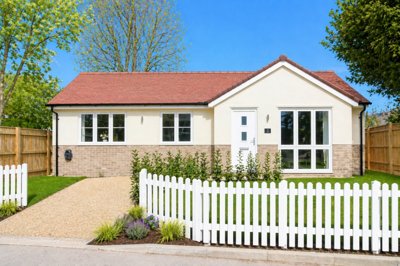
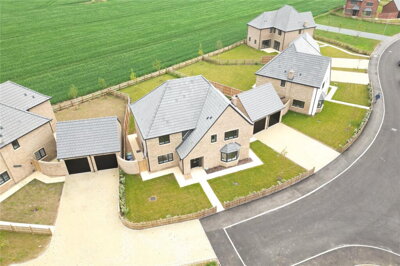
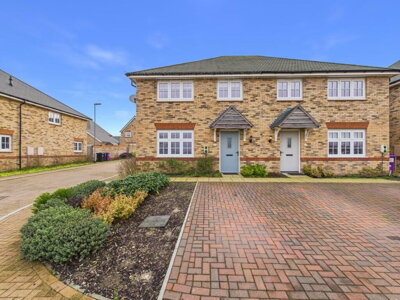
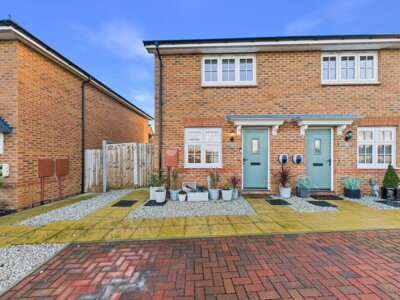
Browse 5 homes new builds in Litlington, South Cambridgeshire from local developer agents.
£544k
6
1
182
Source: home.co.uk
Source: home.co.uk
Detached
3 listings
Avg £716,167
Semi-Detached
2 listings
Avg £397,500
Cottage
1 listings
Avg £400,000
Source: home.co.uk
Source: home.co.uk
homedata.co.uk points to a Litlington market that has moved up steadily rather than run away with itself. The average sold price now sits at £576,966, with detached houses out in front at £657,500. That says a fair bit about the pull of bigger plots, gardens and extra rooms in the village. Semi-detached homes averaged £415,898, so there is still a lower price point for buyers who want Litlington without stretching to the top of the detached bracket.
No active new-build scheme in the village itself was verified in the supplied research, so established homes appear to be doing most of the work in the market. Detached stock also seems to account for a large slice of sales, which is not unusual in smaller South Cambridgeshire villages where bigger houses do not come up in large numbers. A 9% year-on-year rise suggests steady demand rather than a frothy rush. Buyers with finance ready and a clean position are usually the ones who can act when a well-kept home lands.

Litlington has the feel of a proper Cambridgeshire village, with a rural outlook and a very different tempo from nearby Cambridge. The supplied research does not give a census breakdown for population or household mix, but the sales picture is weighted towards detached homes. In practice, that often means lower-density streets, more owner-occupier interest and properties with parking or garden space. For someone leaving a town or city, the quieter pace is often part of the point.
The research set did not verify village geology, flood exposure or the local building-material mix, so those points should not be guessed. Still, rural homes in this part of South Cambridgeshire deserve close checks on drainage, roofs and how the plot sits in the surrounding land. The appeal is clear enough, open countryside, larger gardens and houses that feel less standardised. Litlington will suit movers who put character and calm ahead of a long menu of urban amenities.
Named schools, catchment areas and Ofsted ratings for Litlington itself were not verified in the supplied research. That makes the current admissions map essential reading before anyone commits to a purchase. In a small village, the school plan can reach beyond the parish boundary, with nearby primary schools, secondary options and transport all part of the calculation. A house can look ideal at first viewing and still be awkward if the school run does not work.
Families often cast the net across South Cambridgeshire and the Cambridge fringe so they can balance house size, commuting and education. Places can be tight, so current catchment rules should be checked with the local authority and the school rather than assumed from an old listing. Open days, wraparound care and transition arrangements can all tilt the decision. If children are central to the move, those checks belong on the viewing shortlist from day one.

Transport planning in Litlington starts with roads. The wider A10 and nearby towns are likely to shape many commuting choices, because the research package did not verify exact rail or bus timings for the village. Cambridge, Royston and the surrounding South Cambridgeshire corridor are the obvious places buyers will look at when testing daily routes. For many households, driveway space, parking and quick access to the right road will matter more than they would in an urban postcode.
Cycling may still have a place, particularly for local trips and leisure rides through the countryside. Confident cyclists can get a lot from rural lanes, although lighting, surface quality and traffic levels may change quickly from one route to the next. Public transport is likely to need more checking than it would in a city. Anyone commuting regularly should try the journey at peak time, not just during a quiet mid-morning slot.
A mortgage agreement in principle is a useful first step, because it lets you move quickly when the right Litlington home appears. Then look beyond the commute. School runs, food shops, weekend trips and evening journeys all tell you how practical the address will feel after the novelty has worn off. The strongest purchase is usually the one that gets the setting, access and long-term flexibility into balance.
Before viewings begin, get a mortgage agreement in principle and decide which monthly payment is comfortable, not only what the lender may offer.
Judge each home on plot size, parking, outlook and access to the roads you use most, as village layouts can make two nearby addresses feel very different day to day.
Go back at different times of day, look at parking in real conditions, and ask yourself whether the property feels private, bright and workable for your routine.
With older rural homes, roofs, damp and drainage can be easy to miss, so a RICS Level 2 survey is a sensible choice for most standard properties.
Ask your conveyancer to look closely at title, boundaries, planning history, flood mapping and any restrictions that might limit future works.
After the mortgage, survey and legal checks are in place, you can exchange contracts, arrange insurance and get ready for moving day.
Small rural villages often reward buyers who pay attention to the details missing from the photographs. The supplied research did not confirm flood zones, conservation designations or listed-building clusters for Litlington, so those checks need to come through the solicitor and local searches. Long gardens, shared access and historic plot shapes all make boundaries worth a closer look. Planning history matters too, especially if an extension, loft conversion or garden building is part of the plan.
Leasehold is not usually the main story in a village setting, but flats and converted buildings can still bring service charges, ground rent and management rules. Those ongoing bills can change the affordability picture, even where the purchase price looks attractive. Freehold houses may be simpler on paper, but older roofs, windows, drainage and heating systems still cost money to maintain. A survey gives our buyers a clearer view before they are tied in.
Construction is worth taking seriously in Litlington, where traditional village homes may be older, individual and built in more than one phase. That variety is part of the charm, but it can also mean differences in materials, insulation and the quality of past alterations. Ask how an older home has been maintained, and whether the seller has paperwork for major works. First impressions help, but they are not a substitute for a proper checklist.
homedata.co.uk records an average sold price of £576,966 over the last 12 months. That is 9% higher than the previous year and 3% above the 2021 peak of £557,633. Detached homes averaged £657,500, with semi-detached homes at £415,898. The numbers point to firm demand, particularly for larger village houses.
Council tax comes under South Cambridgeshire District Council, although the band is set by the individual property rather than by the village name. A detached family house and a smaller cottage can sit in very different bands. Check the listing, the valuation band and the latest council record before making an offer. Our conveyancing checks can also pick up anything unusual as the purchase moves forward.
The supplied research does not verify named schools for Litlington itself, so the safest route is to check the latest catchment map and Ofsted reports directly. Because the village is small, families often compare schools in nearby settlements before deciding. The journey to school can matter as much as the school name. Confirm admissions rules before fixing the top end of the budget.
Think of Litlington as a road-connected village rather than a rail hub. Exact bus and train times were not verified in the research, so buyers should check the current timetable for the routes they expect to use. Many residents will look to the wider A10 corridor and nearby towns for commuting. If the trip is daily, test it at peak hour before buying.
A 9% annual increase in the average sold price suggests the Litlington market has held its ground well. The clear gap between detached and semi-detached prices gives the village appeal for family buyers, as well as longer-term owners who want character and space. Investment depends on the plan, because a rural market may be less liquid than an urban one. Letting or reselling should be judged against demand for that exact property type.
Stamp duty depends on price, not postcode, so the current 2024-25 thresholds apply in Litlington as they do across England. For most buyers, tax is 0% up to £250,000, then 5% from £250,000 to £925,000, 10% from £925,000 to £1.5 million and 12% above that. On the local average of £576,966, a standard purchaser would owe about £16,348, while a first-time buyer would owe about £7,598. Legal fees, survey costs and moving expenses need to sit in the budget as well.
Yes, the supplied sales data indicates that detached homes make up an important part of the local market. Detached properties averaged £657,500 over the last year, well above the semi-detached average. That fits a village where larger family houses are a major part of the stock. Buyers chasing space should be ready when a detached home appears.
A survey is a sensible step, particularly where the property is older, altered or built in a traditional village style. The research did not confirm specific local defects, but damp, roof wear, drainage problems and outdated services can still sit behind a neat exterior. A RICS Level 2 survey suits many standard houses, while a fuller inspection may be better for unusual or heavily altered homes. The survey cost is usually small compared with the price of missing a serious problem.
Stamp duty is often one of the largest upfront costs for buyers in Litlington, and the average sold price shows how the numbers work. At £576,966, a standard buyer would pay 5% on the portion above £250,000, coming to about £16,348. First-time buyers can use the relief that applies up to £425,000, so on the same price they would pay about £7,598. These figures use the current 2024-25 rules, which is why the budget should be checked before an offer goes in.
SDLT is only one line in the buying budget. Mortgage fees, conveyancing, searches, survey costs and moving expenses all need allowing for as well. A village move may also bring spending on white goods, broadband setup, garden work or parking improvements, depending on the property. If updating is needed, keep renovation money separate from the deposit and legal budget.
Moving quickly is useful, but it should not mean skipping the basics, especially where detached homes command the strongest prices. Start with a mortgage agreement in principle, then build a shortlist around both the budget and the way everyday life will work. Once that is ready, our search helps you compare Litlington homes more calmly. A careful plan now can make the route from offer to completion far less bumpy.
Properties New Builds In London

Properties New Builds In Plymouth

Properties New Builds In Liverpool

Properties New Builds In Glasgow

Properties New Builds In Sheffield

Properties New Builds In Edinburgh

Properties New Builds In Coventry

Properties New Builds In Bradford

Properties New Builds In Manchester

Properties New Builds In Birmingham

Properties New Builds In Bristol

Properties New Builds In Oxford

Properties New Builds In Leicester

Properties New Builds In Newcastle

Properties New Builds In Leeds

Properties New Builds In Southampton

Properties New Builds In Cardiff

Properties New Builds In Nottingham

Properties New Builds In Norwich

Properties New Builds In Brighton

Properties New Builds In Derby

Properties New Builds In Portsmouth

Properties New Builds In Northampton

Properties New Builds In Milton Keynes

Properties New Builds In Bournemouth

Properties New Builds In Bolton

Properties New Builds In Swansea

Properties New Builds In Swindon

Properties New Builds In Peterborough

Properties New Builds In Wolverhampton

Enter your details to see if this property is within your budget.
Loans, cards, car finance
Estimated property budget
Borrowing + deposit
You could borrow between
Typical borrowing
Monthly repayment
Est. at 4.5%
Loan-to-value
This is an estimate only. Your actual budget may vary depending on interest rates, credit history, and personal circumstances. For an accurate affordability assessment, speak to one of our free mortgage advisors.
This calculator provides estimates for illustrative purposes only and does not constitute financial advice. Your home may be repossessed if you do not keep up repayments on your mortgage. Estimates based on 4.5% interest rate, repayment mortgage. Actual rates depend on your circumstances.
Homemove is a trading name of HM Haus Group Ltd (Company No. 13873779, registered in England & Wales). Homemove Mortgages Ltd (Company No. 15947693) is an Appointed Representative of TMG Direct Limited, trading as TMG Mortgage Network, which is authorised and regulated by the Financial Conduct Authority (FRN 786245). Homemove Mortgages Ltd is entered on the FCA Register as an Appointed Representative (FRN 1022429). You can check registrations at NewRegister or by calling 0800 111 6768.

We use cookies to show you personalised content and improve your experience of our website. Find out more in our Privacy policy and Cookie policy.