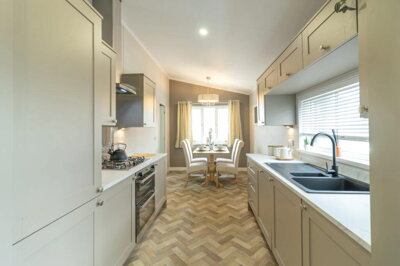
Browse 1 home new builds in Langham from local developer agents.
The 2 bed house market features detached, semi-detached, and terraced properties with two separate bedrooms plus living spaces. Properties in Langham range across contemporary developments, with pricing varying across different neighbourhoods.
Langham’s property market covers a fair spread of homes for different budgets and ways of living. Detached houses make up 49.6% of the stock, and that category averages £651,250. Semi-detached homes sit around £290,000, while terraced properties come in at roughly £172,500. In LE15 7, there were 25 sales over the last twelve months, so activity has kept moving even with recent price changes across most parts of the market.
Over the last year, prices have edged down in most property types rather than falling sharply. Terraced homes saw the biggest dip at 1.9%, while detached properties proved the steadiest with only a 0.6% fall. Across the market as a whole, the drop was 1.2%, which does open the door for buyers who want value in this Rutland village. Two new build schemes are live in Langham. Langham Place by Davidsons Homes offers two, three, four, and five bedroom homes from £299,995, and The Langham by Francis Jackson Homes has three, four, and five bedroom properties from £395,000.
Langham’s housing stock still shows its history. Around 62.8% of properties were built before 1980, and 25.5% date from before 1919. That leaves buyers with the chance to find character homes built from local materials, including the distinctive Clipsham stone. The 37.2% built since 1980 brings more modern methods into the mix, with better insulation and newer standards appealing to buyers who want something more contemporary. Flats and maisonettes account for 7.4% of homes, so there are a few lower-cost routes into the village for first-time buyers or landlords looking at the rental market.

Langham feels like a proper English village, but it still works as a place to live day to day. Much of the historic core sits within a designated Conservation Area, which helps protect the look of the traditional stone buildings. Period houses, along with numerous Grade II listed buildings, give the centre a strong sense of continuity. The Church of St Peter and St Paul is a clear landmark, and its medieval beginnings give the village a real sense of depth.
Geology has shaped more than the landscape here. Langham sits on Jurassic limestone, especially the Great Oolite Group, with clay deposits above it, including the Oxford Clay Formation. Builders in the area have long used Clipsham stone from nearby quarries, so the local materials and the local setting have grown up together. Clay soils do bring practical issues, including a moderate to high shrink-swell risk that can affect foundations. Even so, the same geology gives the Rutland countryside its character, with limestone ridges and rolling farmland all around.
Day to day, Langham is mostly a residential village, and that gives it a calm feel. Jobs within the village are limited, so many residents travel to Oakham, Melton Mowbray, Leicester, or Peterborough. The A606 gives the village good road links, which makes commuting manageable while still allowing people to come back to a quieter setting in the evening. Local pubs, village shops, and recreational facilities cover the basics without taking away the rural atmosphere.
Community life is active too. The parish council takes a hand in looking after the Conservation Area and runs seasonal events that bring people together across the year. Rutland Water is close by and adds a lot for anyone who likes the outdoors, with sailing, cycling, and walking trails all on the doorstep. It is a strong base if we want countryside access without giving up day-to-day convenience.
Families have education options that work at different stages of schooling. St Peter’s Church of England Primary School serves the village and gives early years and Key Stage 1 pupils a local place to start. For many homes, it is within walking distance. The school keeps close links with the village church and places weight on academic progress and Christian values, which suits families drawn to a more traditional approach. In a village this size, smaller class groups and more individual attention can be a real plus.
For secondary school, Oakham is the main nearby choice, sitting about three miles away and linked by regular bus services along the A606. Oakham School, founded in 1584, is a long-established independent option for pupils aged 10 to 18, with both day and boarding places. There are also state secondary schools in the town for families who prefer maintained education. By car, the trip from Langham to Oakham takes around 10 minutes, and the school bus gives a practical alternative for households without a second vehicle.
Sixth form students usually head to Oakham, Melton Mowbray, or further afield. Some continue at colleges in Leicester or Peterborough, where there is a wider choice of A-level subjects and vocational courses. Oakham School’s sixth form is close enough for day-to-day travel, while Leicester College and Peterborough College both offer broad further education provision with decent transport links. For higher education, the University of Leicester and the University of Nottingham are both within reach.
Before buying in Langham, it is worth checking school catchments and admissions rules properly, because they can affect both value and availability on particular streets. Rutland’s local education authority publishes details on school places, oversubscription criteria, and transport for pupils living beyond walking distance. Plenty of buyers come here because they want village life and access to good schools nearby, so school proximity does matter in the local market. Homes close to the school bus route or within walking distance of St Peter’s Primary School can attract a premium.

Road connections are one of Langham’s stronger points. The village sits just off the A606, which links Oakham and Melton Mowbray and also gives access to the A1 trunk road at both the northern and southern ends. That makes commuting workable, with Leicester usually taking about 45 minutes by car in normal traffic and Peterborough around 50 minutes via the A1. Because the A606 runs straight through the village, Langham stays well connected to the wider Rutland countryside and to nearby employment centres.
Bus services link Langham with Oakham, where the nearest railway station sits on the Birmingham to Stansted Airport line. Services along the A606 run regularly through the day, although they thin out in the evening and at weekends. From Oakham station, there are trains to Leicester, Birmingham, and Cambridge, with connections to London St Pancras through Leicester. For London commuters, journey times from nearby stations can be under two hours, so occasional or regular trips into the capital are realistic.
One practical point stands out, though. A car is usually essential here, especially for families with school-age children and anyone working irregular hours. Parking in the village is generally manageable, but buyers should check it carefully when viewing, particularly with older houses in the Conservation Area where street space may be tight. On Main Street and nearby roads, there can be on-street restrictions during busy periods, so it pays to look at parking before committing.
Cycling is possible, but the setup is basic rather than extensive. That said, the surrounding Rutland countryside is excellent for leisure rides, with quiet lanes and wide views drawing cyclists from a larger area. The national cycle route passes through nearby towns, which gives longer journeys without too much traffic. For Oakham commuters, the flat stretch along the A606 makes cycling realistic, and most riders can make it in about 25 minutes.

Start with current listings in Langham and a clear read on prices. The average property price is £406,625, while detached homes average £651,250, so it helps to measure your budget against local values before narrowing the search. It is also worth weighing up period stone cottages in the Conservation Area against newer homes on the developments when you set your priorities. We would also suggest setting up alerts with local estate agents, as good homes in Langham can move quickly where supply is limited.
Before booking viewings, sort a mortgage agreement in principle with a lender. It shows estate agents and sellers that you are serious and financially ready, which can matter when offers start coming in. Mortgage rates shift around, so it is sensible to compare several lenders rather than taking the first figure offered. You should also budget for stamp duty and solicitor fees. In LE15 7, mortgage brokers who know the Rutland market can often find sharper rates than lenders with less local experience.
Once you are viewing, pay close attention to how the house is built and what age it is. Many Langham homes are made from local stone and are more than 50 years old, so damp, roof condition, and any cracking linked to the clay soils are all worth checking. Take photographs and notes so you can compare properties afterwards. For homes in the Conservation Area, or anything listed, think about whether the restrictions on alterations fit with what you want to do next.
A Level 2 Survey is especially useful in Langham, given the number of older houses and the moderate to high shrink-swell clay risk in the area. Survey fees usually sit between £450 and £600 for a three-bedroom semi-detached home, and £550 to £750 for larger detached properties. It should pick up defects that affect value or need work before you buy. For period homes, or properties with significant alterations, a fuller RICS Level 3 Building Survey may be the better call.
Once you are ready to move on, appoint a conveyancing solicitor to deal with the legal side of the purchase. They will carry out searches with Rutland County Council, check the title, and handle the transfer of funds on completion. Because Langham includes a Conservation Area and listed buildings, extra searches may be needed to check for planning conditions. We would also expect the solicitor to confirm that any extensions or alterations have the right planning permissions and building regulation approvals.
After the surveys, searches, and mortgage arrangements are all in place, your solicitor will work with the seller’s legal team to exchange contracts and set a completion date. On completion day, the balance is transferred and you receive the keys to your new Langham home. Buildings insurance should be in force from exchange of contracts, as homes on clay soils and in flood risk areas need suitable cover. It also helps to arrange utility transfers and register with local services before moving day, so the handover is as smooth as possible.
Buying in Langham means keeping an eye on a few local issues that may not be obvious at first glance. The village’s shrink-swell clay soils mean foundations deserve close attention, along with any signs of subsidence or movement. Cracks in external walls, doors or windows that stick, and gaps around frames can all point to ground movement that needs professional review before purchase. The Oxford Clay geology affects properties across the village to different degrees, so an older home really does need a thorough survey.
Homes inside the Conservation Area come with extra planning controls on what owners can change. Exterior alterations, extensions, and even some internal works may need Listed Building Consent or Conservation Area approval from Rutland County Council. Buyers should factor those limits into both price and plans, because they can make future renovation work more complicated. Local Clipsham stone also brings its own maintenance needs, including lime-based mortars and traditional pointing rather than standard brickwork repairs.
Surface water flooding is another point to think about in parts of Langham. Some low-lying spots and homes near drainage routes have been identified as medium to high risk. We would suggest checking the Environment Agency flood maps and, where relevant, asking for a drainage survey. Insurance may cost more where flood risk is known, and long-term ownership costs should include any mitigation needed. During viewings, look for water marks, warped skirting boards, or damp smells on the ground floor.
With 62.8% of homes built before 1980, older services are also part of the picture. Buyers may find outdated electrical systems, plumbing, or insulation, especially where wiring has only been partly updated. Solid wall stone construction has good thermal mass, but it can need internal or external insulation if energy performance is to match modern expectations. An EPC can be a useful way to see how a property is performing before you commit.

The average house price in Langham is £406,625. Detached homes average £651,250, semi-detached properties sit around £290,000, and terraced houses are roughly £172,500. Over the last twelve months, the market as a whole has fallen by 1.2%, with terraced homes down 1.9% and detached homes more resilient at 0.6% down. In England’s smallest county, those figures point to a steady market where village homes continue to attract demand despite wider national shifts. The LE15 7 postcode recorded 25 property sales over the past year, which shows a healthy level of movement for this Rutland location.
Langham homes fall under Rutland County Council, and council tax bands run from A to H depending on value and size. Most terraced and semi-detached properties here tend to sit in bands B through D, while bigger detached houses and period homes can move up to bands E through G. The exact band for any address can be checked through the Valuation Office Agency using the property address or council tax reference number. With everything from compact terraced cottages to large detached family homes, the tax bill will vary quite a bit.
St Peter’s Church of England Primary School serves the village directly and gives early years and Key Stage 1 education on the doorstep. For secondary schooling, Oakham School is around three miles away on the A606 and offers independent education from age 10 to 18, including sixth form provision. Oakham also provides state secondary options for families across the wider Rutland area. Bus links are good, but catchments should always be checked with Rutland County Council before buying if school admissions are a major factor.
Langham has local bus services into Oakham, where the nearest railway station offers trains to Leicester, Birmingham, and Cambridge, plus connections into the national rail network. Road access is straightforward too, with the A606 just off the village and access to the A1 trunk road at both northern and southern points. For London commuters, travel times from nearby stations to the capital are usually between 90 minutes and two hours, so flexible or hybrid working is realistic. A car is still generally essential for everyday life because the village is rural and evening and weekend buses are limited.
For homeowners and investors alike, Langham has a lot going for it. Character houses, Conservation Area status, and limited new development combine to keep demand steady from people who want traditional village living within reach of major employment centres. Rental interest is supported by professionals working in nearby towns who like the quality of life Rutland offers. Langham Place and The Langham, the two active new build developments, add modern homes with warranty cover, though supply remains tight because of the village’s restricted development boundaries.
Stamp duty applies in the usual way for purchases in Langham. Most buyers pay nothing on properties up to £250,000, then 5% on the slice between £250,001 and £925,000, 10% on the portion from £925,001 to £1.5 million, and 12% above £1.5 million. First-time buyers get relief on the first £425,000, with 5% applying between £425,001 and £625,000. At the village average of £406,625, many buyers of terraced or semi-detached homes may fall within first-time buyer relief, while detached homes averaging £651,250 sit above that threshold.
The main risks with older Langham homes come back to the geology and the way they were built. Around 63% of properties were built before 1980, and many are stone-built on clay soils with a moderate to high shrink-swell risk. Damp can show up in solid wall construction without modern damp-proof courses, older roofs may have worn slates or tiles, and clay movement can lead to subsidence or structural movement. Homes near drainage routes can also face surface water flooding. A thorough survey before purchase is the best way to spot problems that might need work or negotiation.
Yes, there are two active new build developments in Langham, both offering modern homes in the village. Langham Place by Davidsons Homes on Main Street, LE15 7JE, has two, three, four, and five bedroom homes from £299,995. The Langham by Francis Jackson Homes, also on Main Street, offers three, four, and five bedroom properties from £395,000. Both developments come with new build warranties, modern construction standards, and better energy efficiency than many of the older period homes nearby. For buyers wanting less immediate maintenance, they are an appealing option.
Much of Langham’s historic centre sits within the Conservation Area, which protects the look and feel of the village. Properties in this area face extra planning controls on extensions, exterior changes, and other alterations. Any significant works may need consent from Rutland County Council as well as standard planning permission. Those rules help preserve the village character, but buyers who want to remodel should consider them carefully. Many of the Grade II listed buildings within the Conservation Area also bring added maintenance and alteration requirements.
Budgeting for a purchase in Langham means looking beyond the asking price. Stamp Duty Land Tax is part of the upfront cost, and the amount depends on the purchase price, first-time buyer status, and whether you already own other property. A first-time buyer purchasing a terraced home at the village average of £172,500 would not pay stamp duty under the current relief thresholds. But once the price goes above £425,000, the tax has to be calculated in line with the relevant band, so it is sensible to factor that into the numbers from the start.
Conveyancing fees usually sit somewhere between £500 and £1,500, depending on the complexity of the sale and whether the property is freehold or leasehold. You will also need local authority searches with Rutland County Council, which cover planning history, environmental issues, and any conditions affecting the property. Because Langham has a Conservation Area, your solicitor may need to check compliance with planning conditions and look at any works carried out by previous owners. For listed buildings, additional checks on listed building consents may also be required.
Survey fees are another key cost, especially in a place like Langham with a large older housing stock. A RICS Level 2 Survey for a three-bedroom semi-detached home usually costs between £450 and £600, while larger detached homes may need £550 to £750. With so much stone construction and those clay soil conditions, a proper survey can flag problems that would be much more expensive to fix after purchase if they were missed. Moving firms, estate agent fees if you are selling at the same time, and mortgage arrangement fees should also be built into the budget. Buildings insurance should begin at exchange of contracts, and homes in flood risk or clay soil areas may need specialist cover.

Properties New Builds In London

Properties New Builds In Plymouth

Properties New Builds In Liverpool

Properties New Builds In Glasgow

Properties New Builds In Sheffield

Properties New Builds In Edinburgh

Properties New Builds In Coventry

Properties New Builds In Bradford

Properties New Builds In Manchester

Properties New Builds In Birmingham

Properties New Builds In Bristol

Properties New Builds In Oxford

Properties New Builds In Leicester

Properties New Builds In Newcastle

Properties New Builds In Leeds

Properties New Builds In Southampton

Properties New Builds In Cardiff

Properties New Builds In Nottingham

Properties New Builds In Norwich

Properties New Builds In Brighton

Properties New Builds In Derby

Properties New Builds In Portsmouth

Properties New Builds In Northampton

Properties New Builds In Milton Keynes

Properties New Builds In Bournemouth

Properties New Builds In Bolton

Properties New Builds In Swansea

Properties New Builds In Swindon

Properties New Builds In Peterborough

Properties New Builds In Wolverhampton

Enter your details to see if this property is within your budget.
Loans, cards, car finance
Estimated property budget
Borrowing + deposit
You could borrow between
Typical borrowing
Monthly repayment
Est. at 4.5%
Loan-to-value
This is an estimate only. Your actual budget may vary depending on interest rates, credit history, and personal circumstances. For an accurate affordability assessment, speak to one of our free mortgage advisors.
This calculator provides estimates for illustrative purposes only and does not constitute financial advice. Your home may be repossessed if you do not keep up repayments on your mortgage. Estimates based on 4.5% interest rate, repayment mortgage. Actual rates depend on your circumstances.
Homemove is a trading name of HM Haus Group Ltd (Company No. 13873779, registered in England & Wales). Homemove Mortgages Ltd (Company No. 15947693) is an Appointed Representative of TMG Direct Limited, trading as TMG Mortgage Network, which is authorised and regulated by the Financial Conduct Authority (FRN 786245). Homemove Mortgages Ltd is entered on the FCA Register as an Appointed Representative (FRN 1022429). You can check registrations at NewRegister or by calling 0800 111 6768.

We use cookies to show you personalised content and improve your experience of our website. Find out more in our Privacy policy and Cookie policy.