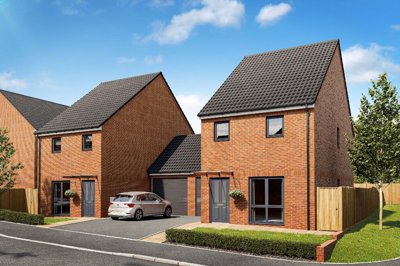
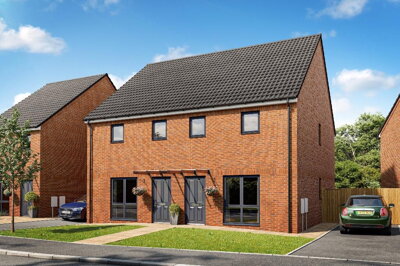
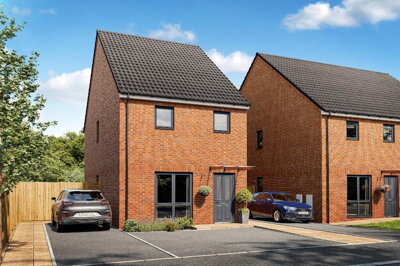
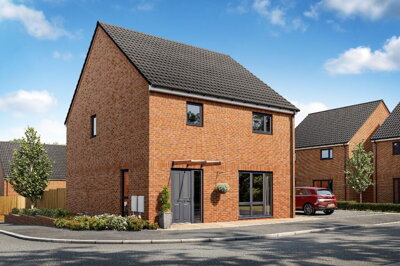
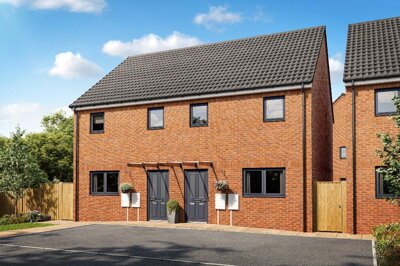
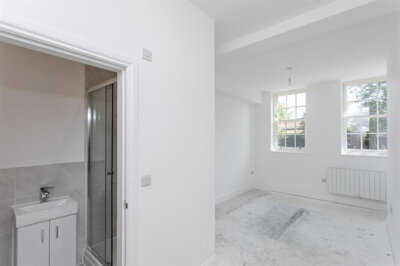
Browse 6 homes new builds in Hutton Conyers from local developer agents.
homedata.co.uk puts the 2025 median sale price for detached homes in Hutton Conyers at £415,000, drawn from one completed sale. In a village where only a few homes sell in any given year, one transaction can make the annual figures look jumpy. The better read is that buyers need to judge each house on its own merits, including plot, condition, parking, outbuildings and setting. For a steadier benchmark, we would keep the 56 recorded sales and the longer-term £334,500 median in view as well.
There is not much stock, which is part of the appeal and part of the challenge. On home.co.uk, a 4-bedroom semi-detached house is currently listed at £325,000, showing the sort of entry point that can still crop up in this rural market. The historic figures are thin: terraced homes had a median sale price of £195,000 in 2019, and semi-detached homes showed a £230,000 median in 2020, both from single sales. No flat sales data is available for Hutton Conyers, and we did not definitively verify any active new-build development within the village boundary, so most searches will be around existing homes rather than fresh phases.

Hutton Conyers is properly village-scale, with daily life taking its cue from the North Yorkshire countryside around it. That suits buyers who want somewhere quieter than Ripon, without being cut off from shops, services and routine errands. We did not verify a detailed local census profile for the parish, so we would treat it as a small, low-density settlement, not a place with a long list of urban facilities. Privacy, open views and a closer link with the landscape are the main pull.
Pretty surroundings are only half the story here. Ripon is likely to be the practical service centre for larger food shops, healthcare appointments and the jobs that need a town nearby. We did not find confirmed data for geology, flood risk zones or conservation-area coverage specifically for Hutton Conyers, so every individual property needs its own checks. In country homes, access, parking, drainage and boundaries can vary far more than they do on a denser estate, and those details can affect comfort as well as running costs.
For families, schooling usually means looking outside the village itself. The wider Ripon area is the obvious starting point, with Ripon Grammar School the best-known selective secondary option that many buyers ask about first. Primary choices are normally found in Ripon or nearby villages too, so catchment checks matter as much as the drive time on a map. North Yorkshire admissions should be checked before an offer goes in, because being closer by road does not always mean an easier school place.
School-run practicalities can shape the whole move, especially where childcare, after-school clubs or sixth-form travel are part of the week. We could not verify a full list of local schools, Ofsted outcomes or exact catchment lines for Hutton Conyers alone, so buyers should see the village as part of the broader Ripon education area. Admissions criteria, transport and priority areas all need checking against the exact address. The nearest school is not always the one that works best in February rain, at 8 am, with work starting at 9.

Most commuting from Hutton Conyers is car-led. The village is small, and public transport choices are naturally slimmer than they would be in a larger town. Ripon acts as the nearest practical travel hub, while the wider road network connects into the A1(M) corridor and routes across North Yorkshire. Leeds, York, Harrogate and the surrounding market towns are all possible destinations, although rail journeys will normally start from a station outside the village. Parking can be less stressful than in a town centre, but older lanes and narrow rural approaches still make careful manoeuvring part of daily life.
Rural bus services in North Yorkshire can help with certain journeys, but few households will find they replace a car for the full weekly routine. Anyone relying on trains should be particularly honest about station access, as Hutton Conyers is not a rail commuter suburb with platforms close by. Cycling may work for local trips, although countryside distances and road conditions make it as much a leisure choice as a commuting plan. We would map the regular journeys first, then weigh fuel, parking and time against the quieter village setting.
If your job pulls you into the city several times a week, the trade-off needs to be clear from the start. Hutton Conyers can work well for people commuting a few days rather than every day, especially with flexible hours. A buyer who wants a walk-to station address or frequent buses may be better served by a larger settlement. For those who can live with the travel pattern, the space and calm make a persuasive case.
Begin with the comparison that matters: Hutton Conyers against nearby Ripon and the wider HG4 market. Look at sold prices, current asking prices and how long homes remain available. Then decide whether the priority is a rural setting, a larger plot, or quicker access to local services before arranging viewings.
We would have a mortgage agreement in principle ready before viewings start. In a small market, sellers and agents tend to respond better when your budget is already clear, and it gives you room to move quickly if a strong house appears. The best homes may not sit around for long.
On viewings, do not stop at room sizes and the garden. Check parking, access, privacy, boundary lines, drainage and how the property might feel in winter as well as summer. Rural homes can look ideal in the photographs, but the day-to-day test is different when the nearest amenities are a short drive away.
A good conveyancer should get into the title documents, searches and any restrictions attached to a village property. Shared access, unusual boundaries or historic arrangements can all matter. We prefer early instruction, so the legal work is moving while surveys are booked and the mortgage is being finalised.
For a conventional property in reasonable condition, book a RICS Level 2 Survey. If the house is older, altered or showing signs of past repair, talk through whether a fuller survey is the safer route. Roof defects, damp, movement and hidden repair work are all better found before exchange of contracts.
Once the numbers, survey and legal checks all make sense, you can agree a completion date and get the rest of the move in order. That means moving costs, stamp duty and any immediate work the home needs. In a smaller market, a calm finish often comes from doing the dull planning early.
Village houses often need a closer look than buyers expect, and Hutton Conyers is no different. Because we could not verify local flood mapping, conservation-area detail or geology-specific risks for the parish, we would check the Environment Agency flood maps, the title pack and any planning history before making an offer. With an older home, pay attention to the roof, windows, insulation and any signs of damp, as repair costs can change the true purchase price. Access and maintenance are not side issues in a rural property, they are part of the value.
Freehold and leasehold terms still need reading properly, even though most village houses are freehold. If you are considering a flat, a conversion or any shared setup, ask about service charges, ground rent and who pays for external repairs. Some rural homes also depend on private drainage or have boundary arrangements that are not obvious on a quick viewing, so your solicitor should confirm how everything is managed. The home.co.uk listing at £325,000 shows there are still entry points below the local average, but upkeep has to fit the budget as well as the purchase price.
Extensions and planning history are worth checking early, particularly where a house has already been enlarged. In a small parish setting, changes to outbuildings, parking or landscaping can alter the feel of a plot more noticeably than they might on a busy town street. A survey is useful for defects, but it also helps you decide whether the home is ready to live in or needs a planned schedule of work. The right Hutton Conyers house should feel comfortable on day one and still manageable years later.
homedata.co.uk records show an average house price over the last year of £415,000, which was 22.1% higher than the previous year. The same figures also sit 43% below the 2022 peak of £722,475, so the recent movement has been sharp. Across the 56 recorded sales, the longer-run median is £334,500, a useful guide to the village’s underlying price level. With a market this small, one expensive or cheaper sale can move the headline average quickly.
Council tax for Hutton Conyers properties is handled by North Yorkshire Council, but the band is tied to the individual home. Two houses in the same village can sit in different bands because of size, property type or valuation history. Before exchange, check the exact band on the listing, the council tax record or through the conveyancer. For budgeting, treat council tax as a house-by-house cost rather than a single postcode figure.
Hutton Conyers is a small village, so school planning usually points towards the wider Ripon area. Ripon Grammar School is the nearby selective secondary name most people recognise, while primary schools in Ripon and surrounding villages may also be in play. The exact address can affect catchment, so admissions need checking carefully before an offer. Transport, wraparound care and sixth-form options can matter just as much as the school’s reputation.
Public transport is more limited than it would be in a town or city, and most residents will use a car day to day. Ripon is the nearest practical hub, while rail usually involves travelling to a station elsewhere before the main journey begins. That makes Hutton Conyers better suited to buyers who do not need a train on the doorstep every morning. If bus or rail commuting is central to the move, test the route at the exact times you would use it.
For long-term buyers who like scarcity and a rural North Yorkshire address, Hutton Conyers can make sense. It is not a high-turnover market, though. The 56 recorded sales and the 43% fall from the 2022 peak show how sensitive pricing can be to property type and timing. Careful buying can work in your favour, but resale value will still depend heavily on condition, setting and the individual appeal of the house. For most investors, the argument is steady owner-occupier demand rather than rapid trading.
Under the current 2024-25 rules, standard buyers pay 0% up to £250,000, 5% from £250,000 to £925,000, 10% from £925,000 to £1.5 million, and 12% above that. On a £415,000 purchase, a standard buyer pays 5% on the £165,000 above £250,000, giving a bill of £8,250. First-time buyers pay 0% up to £425,000, then 5% from £425,000 to £625,000, with no relief above £625,000. Stamp duty should sit in the budget beside legal fees, survey costs and mortgage arrangement charges.
We could not definitively verify any active new-build development inside Hutton Conyers itself. In practice, that means buyers are likely to be choosing from existing homes, not a regular run of newly released plots. In a small parish market, well-kept older houses can therefore become especially important. If a new-build is non-negotiable, widen the search to nearby areas and compare the commute with what you would give up by not living in the village.
The average Hutton Conyers purchase price of £415,000 falls into a range where stamp duty can noticeably affect the budget. For a standard buyer under the current rules, the first £250,000 is taxed at 0%, and the part from £250,000 to £415,000 is taxed at 5%, which creates a stamp duty bill of £8,250 on that example. First-time buyers have a better position if they qualify, because relief runs up to £425,000, meaning a £415,000 home could sit inside the 0% band if it is their only home. That is why we would run the affordability check before offers start going in.
Stamp duty is only one line in the total cost. Rural purchases can also bring survey fees, legal costs, mortgage arrangement charges, searches and removals, all on top of the asking price. Older homes may need money set aside for immediate repairs or energy improvements too. In a small market like Hutton Conyers, keeping a margin after completion is sensible, because the right house can still need a bit of practical fine-tuning. Our property search helps compare asking prices, and the buying process tends to feel calmer when the finances are planned from the start.
Properties New Builds In London

Properties New Builds In Plymouth

Properties New Builds In Liverpool

Properties New Builds In Glasgow

Properties New Builds In Sheffield

Properties New Builds In Edinburgh

Properties New Builds In Coventry

Properties New Builds In Bradford

Properties New Builds In Manchester

Properties New Builds In Birmingham

Properties New Builds In Bristol

Properties New Builds In Oxford

Properties New Builds In Leicester

Properties New Builds In Newcastle

Properties New Builds In Leeds

Properties New Builds In Southampton

Properties New Builds In Cardiff

Properties New Builds In Nottingham

Properties New Builds In Norwich

Properties New Builds In Brighton

Properties New Builds In Derby

Properties New Builds In Portsmouth

Properties New Builds In Northampton

Properties New Builds In Milton Keynes

Properties New Builds In Bournemouth

Properties New Builds In Bolton

Properties New Builds In Swansea

Properties New Builds In Swindon

Properties New Builds In Peterborough

Properties New Builds In Wolverhampton

Enter your details to see if this property is within your budget.
Loans, cards, car finance
Estimated property budget
Borrowing + deposit
You could borrow between
Typical borrowing
Monthly repayment
Est. at 4.5%
Loan-to-value
This is an estimate only. Your actual budget may vary depending on interest rates, credit history, and personal circumstances. For an accurate affordability assessment, speak to one of our free mortgage advisors.
This calculator provides estimates for illustrative purposes only and does not constitute financial advice. Your home may be repossessed if you do not keep up repayments on your mortgage. Estimates based on 4.5% interest rate, repayment mortgage. Actual rates depend on your circumstances.
Homemove is a trading name of HM Haus Group Ltd (Company No. 13873779, registered in England & Wales). Homemove Mortgages Ltd (Company No. 15947693) is an Appointed Representative of TMG Direct Limited, trading as TMG Mortgage Network, which is authorised and regulated by the Financial Conduct Authority (FRN 786245). Homemove Mortgages Ltd is entered on the FCA Register as an Appointed Representative (FRN 1022429). You can check registrations at NewRegister or by calling 0800 111 6768.

We use cookies to show you personalised content and improve your experience of our website. Find out more in our Privacy policy and Cookie policy.