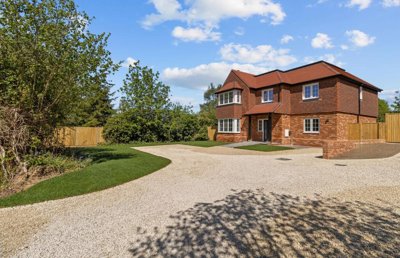
Browse 1 home new builds in Horsted Keynes from local developer agents.
The Horsted Keynes property market offers detached, semi-detached, and terraced houses spanning various price ranges and neighbourhoods. Each listing includes detailed property information, photographs, and direct contact with the marketing agent.
Horsted Keynes has been a notably firm market, with homedata.co.uk showing sold prices in the village were 105% up on the previous year, which points to strong demand for homes in this well-liked spot. homedata.co.uk also records a marked rise in property values over the last twelve months, a sign that village living, with major transport links still within reach, continues to draw buyers. Across 2024 and 2025 there were 25 property sales, and the 6 sales completed in 2025 alone averaged £1,402,500, so activity remains steady in this tighter part of the market.
We see detached and semi-detached homes dominate Horsted Keynes, and the housing stock reflects its past as a prosperous Sussex settlement. Horsted Keynes Parish data spanning from 2018 shows 74 detached property sales, 43 semi-detached sales, and 19 terraced sales during that period, which underlines the clear preference for family-sized homes here, according to home.co.uk listings data. Detached properties sit at the top of the price range, averaging £1,451,625, while semi-detached homes average around £562,500 and terraced homes approximately £885,000.
Older houses are a big part of the picture too. On home.co.uk, the dominant property type in the RH17 7BP postcode area is period houses built between 1800 and 1911. Current availability includes a 1930s detached country home and properties built in the late 1950s, so buyers can look at very different architectural eras. The village also has stand-out buildings, including a Victorian chapel with planning consent to be reshaped as a family home, which says a lot about the sort of opportunities on offer.
Over the long term, values in RH17 7BP have climbed by 19.4% in the past decade, outpacing wider regional movement and reinforcing the investment appeal of Horsted Keynes. The South East as a whole saw a 1% decline in average prices over the twelve months to December 2025, yet the village has kept its pull thanks to the lifestyle, schooling and commuting convenience it offers.

Horsted Keynes feels like a classic English village, set in the High Weald Area of Outstanding Natural Beauty in rural West Sussex. At its centre is a traditional village green, edged by period cottages, a village shop and old-fashioned public houses that still act as social anchors. Beyond that sit rolling farmland, ancient woodlands and the ridge-and-furrow topography that marks this part of Sussex, giving daily life a striking natural backdrop.
There is a lively local scene as well, with clubs, societies and events running through the year. Residents have a well-regarded primary school, a village hall with regular activities and a choice of pubs serving good food made with locally sourced ingredients. For bigger shops or a broader range of amenities, Haywards Heath and East Grinstead are close by, while Crawley and Brighton work well for a day out or a more serious shopping trip.
Green space is one of Horsted Keynes’s main strengths. Footpaths and bridleways cross the surrounding countryside, so walking, cycling and horse riding are part of everyday life for many people. Working farms and open fields keep the agricultural character visible, while hedgerows and woodland support local wildlife across the High Weald. That mix of village charm, natural beauty and community spirit suits families, retirees and professionals looking for a better balance without losing access to urban job centres.

Horsted Keynes Primary School is the focus of education in the village, serving children from reception through to Year 6. Its rural setting and smaller class sizes help create the kind of close teacher-pupil relationships parents often want for younger children. For families, it offers a solid start in a setting that fits the village’s community-minded feel.
For secondary education, children from Horsted Keynes usually head to nearby towns, where a number of respected schools sit within reasonable commuting distance. The wider Mid Sussex area has grammar schools and comprehensive secondary schools, many of which post strong examination results and good Ofsted ratings. Haywards Heath, East Grinstead and Burgess Hill all provide workable transport links from the village, so the school run remains practical for older pupils.
Catchment areas matter here, and they can affect values street by street. Homes in the best school catchments tend to command a premium, so buyers with children of school age should look into admissions criteria and local availability early on. There are also several private and independent schools in the wider area, which gives families options beyond the state sector.
Family demand is heavily shaped by school proximity, especially for homes on streets within easy walking distance of the village primary school. We often hear from working parents who commute to London from Haywards Heath station that the educational side of the move is just as important as the rail link, and sometimes even more so.

Rural it may be, but Horsted Keynes still has good transport links for anyone who needs to travel for work. The village sits about 4 miles from Haywards Heath station, where regular services run to London Victoria in around 50 minutes, making the capital realistic for daily commuters. Gatwick Airport is also within easy reach, at roughly 20 minutes by car, which is handy for business trips and families with overseas ties.
Road access is strong too. Horsted Keynes lies close to the A272 and is within easy reach of the A23, giving straightforward routes to Brighton, Crawley and the wider motorway network. Brighton is around 30 minutes away by car, and the M23 opens up links to London and the South Coast. Local bus services run through the village for days when driving is not ideal, while the quiet country roads are popular with cyclists exploring the High Weald.
Working from home has become part of the routine for many people since the post-pandemic era, and Horsted Keynes suits that shift well. Digital connectivity is improving, and the quiet setting helps make remote working more productive. With less congestion than many commuter locations, the occasional office trip is also less of a slog, while the quality of life gains are obvious. Cycling is another strong point, with routes ranging from demanding rides for fitness to gentler family outings.

A proper look around Horsted Keynes is sensible before committing to a purchase. Think about commuting, schools and lifestyle, then spend time in the village at different points in the day. Period properties and a close-knit community give the place a distinct feel, and speaking to residents will quickly show whether it fits your circumstances.
We would usually suggest arranging a mortgage agreement in principle before viewings begin, because it shows estate agents and sellers that finance is already in hand. Horsted Keynes homes attract serious buyers, so having the funding side sorted can put you in a stronger position when the right property appears. Our mortgage comparison service can help us find competitive rates from leading lenders.
Once suitable homes have been identified, we can arrange viewings through the estate agents working in the village. When the right home comes along, a competitive offer that reflects current market conditions matters. Our property search tool lets us browse all available homes in Horsted Keynes and set up instant alerts for new listings.
An experienced conveyancing solicitor should be appointed to handle the legal side of the purchase, including searches, contracts and registration. Horsted Keynes has plenty of period properties, so it helps if the solicitor is used to older homes with unusual features or historical planning permissions. Our conveyancing comparison service connects buyers with experienced solicitors in the area.
We would also recommend a RICS Level 2 Survey before completion, especially in Horsted Keynes where period homes can bring issues such as damp, outdated electrics or roof maintenance needs. A careful survey may reveal problems that change the decision, or simply give useful negotiating leverage for repairs.
Once the surveys, searches and legal work all come back satisfactorily, the solicitor will exchange contracts and set a completion date. On completion day the property becomes yours, the keys are handed over and life in Horsted Keynes can begin in earnest.
Buying in Horsted Keynes means paying close attention to the make-up of the local housing stock, because much of it is period property with character features and ongoing maintenance needs. A lot of homes date from the Victorian and Edwardian periods, so they were built before modern building regulations and may still have original timber windows, solid walls or outdated electrical and plumbing systems that need updating. A proper property survey is essential here, because the charm of these homes comes with responsibilities that newer construction does not carry.
Given the picturesque setting and historic architecture, conservation areas and listed buildings are likely to be part of the picture in Horsted Keynes. Homes listed as being of architectural or historic interest can face restrictions on alterations, extensions or renovation work, and that can affect both your plans and later resale value. The Victorian chapel with planning consent among recent listings is a good example of the distinctive opportunities and considerations that come with historic property in the village.
There are environmental points to check too. Shrink-swell clay soils are common across parts of West Sussex and the High Weald, and they can cause subsidence or movement in homes with shallow foundations. Flood risk needs to be looked at for specific locations, and the solicitor should run or refresh the relevant environmental searches during conveyancing. Because the village is rural, broadband speed, mobile signal strength and the availability of services are worth checking as well.
Older Horsted Keynes homes often show familiar defects. Rising or penetrating damp is common in period properties built before damp-proof courses became standard, so walls need a close look. Roofs deserve careful inspection too, because original slates or tiles may have gone well past their expected life, and timber frames can suffer from rot or woodworm if they have not been maintained properly. Victorian and Edwardian electrics frequently need complete rewiring to meet current standards, so buyers should allow for upgrades.

Prices in Horsted Keynes vary depending on the source, with homedata.co.uk reporting an overall average of £1,238,455 for the last year, while homedata.co.uk indicates an average price paid of £1,311,000 as of January 2026. Detached properties remain the most expensive, averaging approximately £1,451,625, while semi-detached homes average around £562,500 and terraced properties approximately £885,000. The village has also seen strong price growth, with homedata.co.uk showing sold prices were 105% up on the previous year, and the RH17 7BP postcode has risen by 19.4% over the past decade, which is well ahead of wider regional movement.
Horsted Keynes falls under Mid Sussex District Council, and council tax bands run from A to H depending on the property’s assessed value. Band A carries the lowest annual charge and Band H the highest. Exact figures for a specific address can be checked on Mid Sussex District Council’s website or on the government valuation agency website. Because the village is so desirable and many homes are larger detached properties, a lot of addresses sit in bands D through G. Buyers of premium period homes or substantial family houses should expect annual council tax at the upper end of that range.
Horsted Keynes Primary School serves the village and takes children from reception through to Year 6, giving local families a community-focused start in a rural setting. For secondary education, pupils usually travel to schools in Haywards Heath, East Grinstead and Burgess Hill, where several well-rated options sit within a workable commute. The wider Mid Sussex area has a solid mix of state and independent schools, and parents should check current Ofsted ratings and admissions rules if they are moving with school-age children. Homes within walking distance of Horsted Keynes Primary School often attract a premium from families keen to secure a place at this popular village school.
Local bus services connect Horsted Keynes with nearby towns, and Haywards Heath station is about 4 miles away, with regular trains to London Victoria taking around 50 minutes. Gatwick Airport is reachable in about 20 minutes by car, so international travel is straightforward. A car is usually essential for day-to-day life because of the rural location, although the transport options do make the odd journey without one possible for those who plan ahead. The A272 and A23 give good road links to Brighton, Crawley and the M23 motorway network.
Horsted Keynes has shown solid property value growth over recent years, and it remains an attractive rural location within the High Weald. Village character, strong transport links and access to major employment centres all help support capital growth and rental demand. Even so, the market is small and transaction volumes are limited, so investors should weigh up void periods, the upkeep needed for period properties and any local planning policies that might affect future values. Homes suitable for letting are likely to appeal to professionals who want village life while commuting to nearby towns or working from home.
Residential Stamp Duty Land Tax in England is charged at 0% on the first £250,000, 5% on £250,001 to £925,000, 10% on £925,001 to £1.5 million, and 12% on anything above £1.5 million. First-time buyers get relief on the first £425,000 of a property worth up to £625,000, then pay 5% on the amount between £425,001 and £625,000. With Horsted Keynes average prices above £1.2 million, most purchases will fall into the higher bands, so buyers should budget for SDLT alongside solicitor fees, survey costs and removal expenses. For a typical detached home at the village average of £1,238,455, SDLT would be about £38,850 at current rates.
At the moment, we have not identified any large-scale new build developments specifically within the Horsted Keynes postcode area, and most available homes are period properties or older construction. Some listings may be described as newly renovated or modernised, but those are usually older houses that have been updated rather than newly built. Buyers wanting a brand new home in the area may need to widen the search to neighbouring villages or towns, although Horsted Keynes often offers beautifully converted or restored period homes that deliver many of the same benefits without the premium attached to modern construction.
When viewing period homes in Horsted Keynes, damp should be at the top of the checklist. Many Victorian and Edwardian properties were built before modern damp-proof courses became standard, so ground-level walls should be inspected for tide marks, bubbling plaster or any musty smell that suggests ongoing moisture problems. Roof condition matters just as much, because original tiles or slates can need replacing after decades in British weather. It is also sensible to ask about the age of the electrical and plumbing systems, since older homes may need complete rewiring or repiping. Solid walls behave differently from cavity walls, so insulation and heating costs should be judged with that in mind.
From 4.5% APR
Find competitive mortgage rates for a Horsted Keynes purchase
From £499
Expert legal services for your property purchase
From £350
Professional property survey for your Horsted Keynes home
From £600
Comprehensive building survey for older properties
From £80
Energy performance certificate for your property
Buying in Horsted Keynes brings a few costs beyond the purchase price, and it pays to understand them before moving ahead. Stamp Duty Land Tax is usually the biggest extra bill, and a home bought at the village average price of approximately £1.24 million would attract SDLT of around £38,850, worked out at 5% on the slice between £250,000 and £925,000 and 10% on the rest. First-time buyers of properties under £625,000 may still qualify for relief, which can reduce the bill sharply, although the relief disappears entirely above that level.
Survey costs are especially important in Horsted Keynes because so many homes are period properties. A RICS Level 2 Survey usually starts from £350 for smaller homes, then rises for larger or more complex properties, and it gives a detailed condition report that flags defects needing attention. For older or listed buildings, a RICS Level 3 Building Survey may suit better, since it looks more closely at the structure and construction. The outlay is small compared with the purchase price, but it can save a great deal by spotting issues before completion or giving room to negotiate.
Conveyancing for a Horsted Keynes purchase usually begins at around £499 for basic legal services, with higher fees for more complex transactions involving older homes, conservation areas or unusual title arrangements. There are also search fees charged by local authorities for drainage, environmental and planning history checks, all of which matter when you are trying to understand the property properly. Removal costs, mortgage arrangement fees and any work needed after purchase should also sit in the budget. Planning these costs carefully helps us complete the move without financial strain and settle into a new Horsted Keynes home with confidence.

Properties New Builds In London

Properties New Builds In Plymouth

Properties New Builds In Liverpool

Properties New Builds In Glasgow

Properties New Builds In Sheffield

Properties New Builds In Edinburgh

Properties New Builds In Coventry

Properties New Builds In Bradford

Properties New Builds In Manchester

Properties New Builds In Birmingham

Properties New Builds In Bristol

Properties New Builds In Oxford

Properties New Builds In Leicester

Properties New Builds In Newcastle

Properties New Builds In Leeds

Properties New Builds In Southampton

Properties New Builds In Cardiff

Properties New Builds In Nottingham

Properties New Builds In Norwich

Properties New Builds In Brighton

Properties New Builds In Derby

Properties New Builds In Portsmouth

Properties New Builds In Northampton

Properties New Builds In Milton Keynes

Properties New Builds In Bournemouth

Properties New Builds In Bolton

Properties New Builds In Swansea

Properties New Builds In Swindon

Properties New Builds In Peterborough

Properties New Builds In Wolverhampton

Enter your details to see if this property is within your budget.
Loans, cards, car finance
Estimated property budget
Borrowing + deposit
You could borrow between
Typical borrowing
Monthly repayment
Est. at 4.5%
Loan-to-value
This is an estimate only. Your actual budget may vary depending on interest rates, credit history, and personal circumstances. For an accurate affordability assessment, speak to one of our free mortgage advisors.
This calculator provides estimates for illustrative purposes only and does not constitute financial advice. Your home may be repossessed if you do not keep up repayments on your mortgage. Estimates based on 4.5% interest rate, repayment mortgage. Actual rates depend on your circumstances.
Homemove is a trading name of HM Haus Group Ltd (Company No. 13873779, registered in England & Wales). Homemove Mortgages Ltd (Company No. 15947693) is an Appointed Representative of TMG Direct Limited, trading as TMG Mortgage Network, which is authorised and regulated by the Financial Conduct Authority (FRN 786245). Homemove Mortgages Ltd is entered on the FCA Register as an Appointed Representative (FRN 1022429). You can check registrations at NewRegister or by calling 0800 111 6768.

We use cookies to show you personalised content and improve your experience of our website. Find out more in our Privacy policy and Cookie policy.