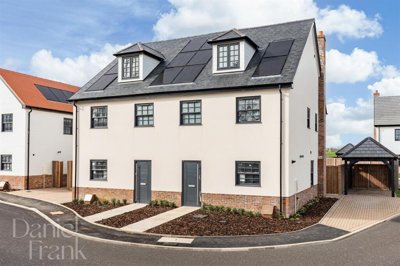
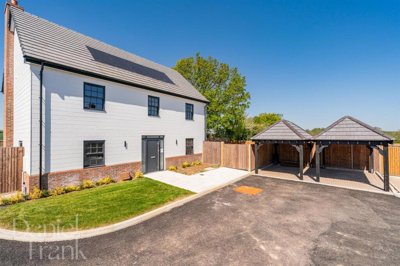
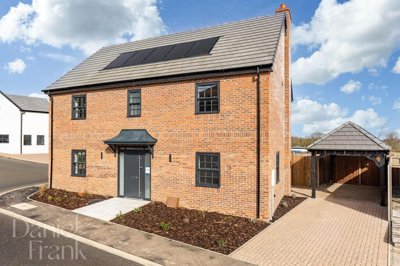
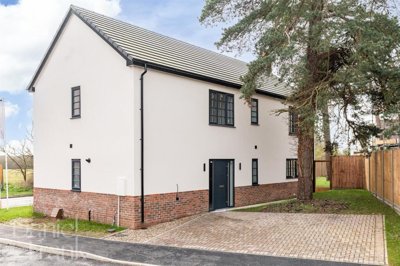
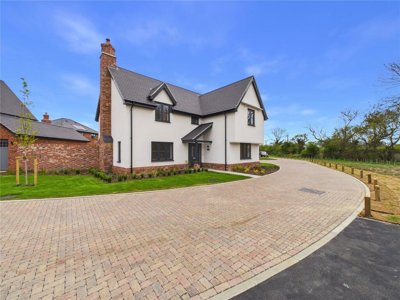
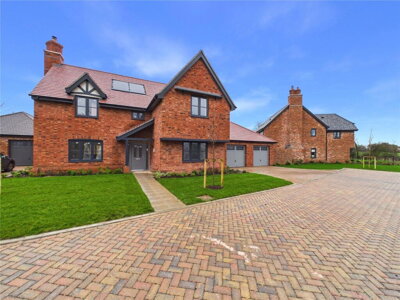
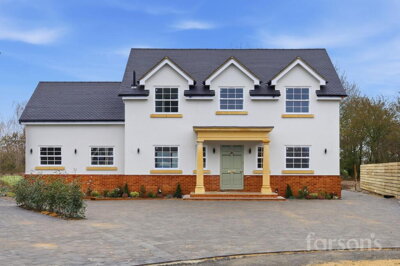
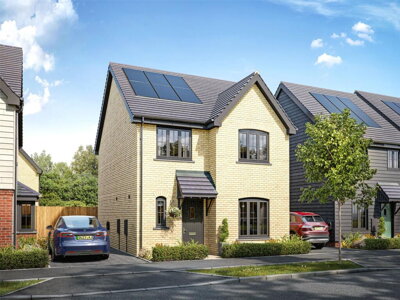
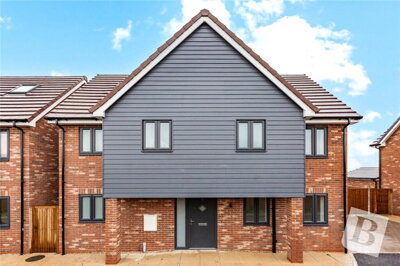
Browse 9 homes new builds in High Ongar from local developer agents.
The larger property sector typically features multiple bathrooms, substantial reception space, and private gardens or off-street parking. Four bedroom houses in High Ongar span detached, semi-detached, and occasionally terraced configurations, with styles ranging from period properties to modern executive homes.
High Ongar covers a surprisingly broad spread of property types, so buyers here are not looking at a one-note market. Based on home.co.uk listings data, detached homes have been achieving the highest prices, with an average sale price of about £1,020,261, while semi-detached properties have been averaging £618,325 and terraced homes around £603,333. Over the past twelve months the market has shifted noticeably, with home.co.uk reporting an 18% decrease and homedata.co.uk pointing to a steeper 45% correction. That reset has created real openings for buyers who are ready to move, rather than simply watch from the sidelines. homedata.co.uk recorded 246 total sales in the parish across the last twelve months, which shows that activity has continued even as prices have softened. In 2025, semi-detached homes made up 66.7% of all sales, making them the most commonly traded type in High Ongar. The current median price sits at about £762,500, which keeps the village competitive within the Epping Forest district, where similar villages often carry much stronger premiums. Before starting a search in earnest, we always suggest lining up a mortgage agreement in principle so you know where you stand. With prices ranging from around £603,333 for terraced homes to more than £1,020,261 for detached houses, a clear maximum budget helps narrow the field quickly. It also pays to budget beyond the headline purchase price. On a typical High Ongar home at roughly £762,500, a buyer who does not qualify for first-time buyer relief would pay stamp duty on £512,500 at 5%, which comes to £25,625. First-time buyers purchasing up to £625,000 can use the higher nil-rate threshold of £425,000, which can make a meaningful difference. Legal fees usually fall between £500 and £1,500, depending on how straightforward the transaction is and whether the property is freehold or leasehold. Search costs matter too, especially in a village with a conservation area, where checks on listed building status and conservation area conditions can be relevant. Those searches often add between £200 and £400 in total, with bank transfer charges and title registration fees adding a little more. We would also strongly recommend a RICS Level 2 Survey for any High Ongar purchase. Fees are commonly between £400 and £800, and on older or more historic homes a Level 3 Building Survey can be the wiser choice because it goes further into construction and condition. Price data does vary depending on the dataset used. home.co.uk gives an average of about £687,857 for the last year, while homedata.co.uk and home.co.uk point to averages around £485,000-£490,000. Even with that variation, the current median price is still around £762,500, and the reported 18% to 45% correction has made entry easier than it was at the peak, especially for semi-detached homes at £618,325 and terraced properties at about £603,333. The SDLT bands in England remain 0% on the first £250,000, 5% from £250,001 to £925,000, 10% from £925,001 to £1,500,000, and 12% above £1,500,000. For first-time buyers purchasing up to £625,000, the relief is 0% on the first £425,000 and 5% on the slice from £425,001 to £625,000. As most High Ongar homes fall below £925,000, many buyers here pay 5% on the portion above £250,000, and the SDLT return is normally dealt with by the solicitor during conveyancing.
For buyers who are ready to act, the recent adjustment in High Ongar has opened a more realistic buying window. homedata.co.uk logged 246 sales across the parish in the past twelve months, so this is not a market that has ground to a halt. In 2025, semi-detached homes accounted for 66.7% of all sales, making them the property type changing hands most often. The current median price is £345,000, which leaves High Ongar looking competitive within the Epping Forest district, where similar villages can attract much higher premiums. We think first-time buyers and investors will both want to keep an eye on these levels before any recovery takes hold.
New build supply right in High Ongar is still thin on the ground, with no verified active developments in the CM5 postcode area. There are some unverified references to smaller schemes in the wider Ongar area, including an exclusive four-property development about two miles from Chelmsford City. Anyone set on a brand new home may need to widen the search to nearby places such as Chipping Ongar, where larger sites offer more choice. For many buyers, though, the lack of new stock is part of the point, because the conservation area and its existing homes remain the main draw.

Life in High Ongar still feels rooted in the sort of English village setting that has lasted for centuries. Along The Street, the conservation area protects the historic core, where listed buildings sit close together and St Mary's Church, a Grade I listed building, remains a central part of village life. The Forrester's Arms public house, dating from the late 18th century, still acts as a social anchor. There is plenty of heritage in the local restaurant scene as well, with the former Red Lion and Rectory buildings now used for dining in structures dating from the mid-17th century.
Families and professionals are often drawn to High Ongar because it balances rural calm with day-to-day practicality. Village events, the primary school, and sport at the village grounds all help keep the community stitched together. Across the wider Epping Forest district there are strong options for walking and cycling, and Epping Forest itself carries Site of Special Scientific Interest status under the management of the City of London Corporation. Chipping Ongar is close by too, which matters, because that is where many residents head for extra shopping, healthcare, and places to eat.
With a parish population of 1,427, High Ongar has the feel of a settled place where family links run deep. Its housing reflects that long history, from 15th-century timber-framed and weather-boarded cottages to larger Victorian and Edwardian houses built as the village expanded. The oldest surviving house in High Ongar still shows the timber framing and weatherboard cladding associated with earlier construction methods in the area. Newer homes have been added, but generally in a way that respects the older fabric rather than drowning it out.

At the centre of education in the village is High Ongar Primary School, a Victorian building dating from 1871 in a prominent spot within the conservation area. It serves children aged 4 to 11 from the surrounding parish and remains a key part of local family life. Because the building is Grade II listed, the school is part of High Ongar's built heritage as well as its present-day community. When families talk to us about moving here, the school comes up again and again.
For secondary schooling, families in High Ongar usually look across the wider Epping Forest district. Catchment areas and admissions policies need checking carefully, because they can have a direct effect on which school a child may be offered. Epping, Loughton, and Chipping Ongar all provide options, with some schools offering specialist subjects and better facilities than others. Most pupils will not be walking there, so school buses or family lifts are typically part of the routine.
Sixth-form choices are broader once students look beyond the village. Epping and other larger nearby towns give access to school sixth forms and sixth form colleges, with a wider spread of A-level and vocational courses than High Ongar could offer on its own. We would always advise parents to check current Ofsted grades and exam results across the district before making decisions. The combination works well for many households, with the village primary school covering the early years and nearby towns picking up the next stages.

High Ongar's transport picture is what you would expect from a village in the Epping Forest district, rural, but not cut off. The M25 is within reasonable reach, linking residents to London, the Home Counties, and the wider motorway network. Commuters heading to the City or Canary Wharf usually combine road and rail travel, and a typical run to London Liverpool Street is about one hour once the drive to the nearest station is factored in. It is workable, though not effortless.
There is no railway station in High Ongar itself, so most public transport journeys start with a bus or car trip out of the village. Bus routes in the wider Ongar area connect towards Epping, where the London Underground Central line gives direct access into central London. Nearby stations on the Greater Anglia network provide services to London Liverpool Street and Stansted Airport. Those bus links matter locally as well, especially for shopping, school journeys, and medical appointments for residents without a car.
Not everyone living in High Ongar commutes to London. The village also sits within reach of Epping, Chipping Ongar, and Chelmsford, all of which provide jobs in retail, healthcare, education, and professional services. Most everyday travel involves country roads, so we always suggest building that into commuting plans rather than relying on optimistic timings. Some residents cycle shorter distances, especially in summer, although the rural road network needs a bit of care. Parking is usually adequate for homes, but in the village centre spaces can tighten up at busier times.

Before we start shortlisting homes in High Ongar, it makes sense to have a mortgage agreement in principle in place. Prices in the village currently run from about £380,000 for terraced properties to more than £750,000 for detached houses, so knowing the upper limit of your budget saves time. We would also factor in stamp duty, legal fees, survey costs, and removals from the outset rather than treating them as afterthoughts.
We list High Ongar properties in a way that lets you narrow the search by property type, bedrooms, and price range. Once a home looks promising, the next step is to contact the selling agent and book a viewing for a time that works. During the visit, we would pay close attention to the building's condition, its setting within the conservation area, and any maintenance points that could need money spent after completion.
Finding the right house is only the start. Once you are ready to proceed in High Ongar, the offer goes in formally through the estate agent handling the sale. It should be grounded in comparable evidence, the current state of the market, and anything that came to light during the viewing. With prices having come down from earlier highs, there is often room to negotiate on figure or terms, and we would keep the offer subject to survey, mortgage, and the usual checks.
We strongly advise arranging a RICS Level 2 Survey before committing to a purchase here. In High Ongar, where some buildings date back to the 15th century, that extra scrutiny matters. A good survey should flag damp, roofing problems, structural movement, and ongoing maintenance issues that may affect both value and your appetite to proceed. Sometimes it also gives buyers useful leverage in later negotiations.
Once an offer is accepted, a solicitor or conveyancer should take over the legal side of the purchase. They will deal with contracts, searches, and title registration, while also liaising with the seller's legal team and obtaining the local authority information needed for the transaction. In High Ongar, conservation area homes can call for extra checks on listed building status and planning restrictions. That is especially true along The Street.
After the searches are back and the mortgage is fully confirmed, contracts are exchanged and the deposit is paid. Completion may follow within days or in some cases weeks, after which the keys are released for your new High Ongar home. Your solicitor will then register the transfer of ownership on the official title and notify the relevant parties of the address change. That final stretch often feels the longest.
High Ongar properties come with a few local points that buyers should look at closely. Homes inside the conservation area along The Street may face tighter planning controls on extensions, exterior changes, and some forms of development. If you already have alterations in mind, it is sensible to check what permissions might be needed before you commit. The large number of listed buildings in the centre also means the property you are buying, or one next door, may carry listed status, with extra responsibilities around maintenance and alteration.
Because so much of High Ongar's housing is older, condition matters. Timber-framed buildings, including the oldest surviving house in the village and other heritage homes, need checking for movement, rot, and woodworm that could point to structural trouble. Weatherboard cladding should also be inspected for wear and how securely it is fixed. Add in Victorian brick houses and traditional cottages, and it is clear that each construction type brings its own maintenance demands.
Village life has practical sides as well as scenic ones, so we would look beyond appearances at a viewing. Broadband speed, mobile signal, and access to everyday services can all differ in a rural setting from what buyers are used to in town. Standard searches should also cover flood risk and drainage, both of which can affect insurance and future resale. Distance to the village centre, the primary school, and the bus routes can make a real difference to daily life, especially for families and anyone relying on public transport. A careful, all-round assessment now can save a lot of frustration later.

Buying in High Ongar means budgeting for more than the agreed price. Stamp duty land tax is one of the larger extra costs, and the usual residential rates apply in this part of Essex. On a typical property at the current median of about £345,000, a buyer who does not qualify for first-time buyer relief would pay 5% on £95,000, which comes to £4,750. First-time buyers purchasing up to £625,000 can use the higher nil-rate threshold of £425,000, which may reduce their SDLT bill by a fair margin.
Conveyancing fees are commonly between £500 and £1,500, depending on how involved the transaction becomes and whether the home is freehold or leasehold. On top of that come search costs, including local authority checks covering planning history, environmental matters, and other points relevant to the property. In High Ongar's conservation area, extra enquiries on listed building status and any conditions tied to the designation may also be needed. Those searches usually add £200 to £400 in total, and you should also expect bank transfer fees and title registration fees.
For High Ongar purchases, we would treat a RICS Level 2 Survey as standard rather than optional. The village has a good deal of older housing stock, and survey fees usually fall between £400 and £800 depending on size and value. On a more historic building, a Level 3 Building Survey can be the better route despite the higher cost, because it gives a deeper view of construction and condition. Removals, mortgage arrangement charges, and building insurance all need to be in the budget too. It is much easier to plan for these costs early than be surprised by them just before completion.

Price evidence in High Ongar is not perfectly uniform, and that is worth bearing in mind when comparing figures. home.co.uk reports an average of about £687,857 over the last year, while homedata.co.uk and home.co.uk place average values closer to £485,000-£490,000. The current median price stands at roughly £345,000 according to home.co.uk. Over the last twelve months, home.co.uk has reported an 18% fall, while other data points suggest declines of up to 45%. For buyers, that has made the market easier to access than it was at the top, particularly with semi-detached homes averaging £665,000 and terraced properties around £380,000.
High Ongar homes fall within Epping Forest District Council's council tax system, with bands running from A to H according to property value. A large share of village homes are likely to sit in bands C to E, which fits the local mix of cottages and family houses. The banding for any individual property can be checked through the Valuation Office Agency website or confirmed by the solicitor during conveyancing. Those council tax payments help fund local services such as education, waste collection, and emergency services.
High Ongar Primary School is the main educational draw within the village and has been serving local children since 1871. It takes pupils from Reception to Year 6 and operates from a Grade II listed building inside the conservation area, which says a lot about its place in the community. For secondary education, most families widen the search to the rest of the Epping Forest district, including schools in Epping, Loughton, and other nearby towns. Admission rules and current Ofsted outcomes are both worth checking before any move is finalised.
Getting around by public transport from High Ongar usually means relying first on bus services. Those routes connect the village with places such as Epping and Chipping Ongar, and from Epping residents can join the London Underground Central line for direct journeys into central London and across the wider Tube network. Rail links in the broader area are provided by Greater Anglia, with services to London Liverpool Street and Stansted Airport. Because High Ongar has no station of its own, most train journeys involve a bus-and-rail combination. For anyone without a car, those connection times need to be part of the calculation.
From an investor's point of view, High Ongar has a few features that stand out. Its conservation area status can support values, the historic setting gives it a character that is hard to replicate, and the wider Epping Forest district remains attractive to a range of tenants and buyers. With prices having dropped back from previous peaks, the current correction may also present a buying opportunity if the market steadies and starts to recover. Rental demand could come from local workers, commuters priced out of London, and people who actively want village living. Even so, the limited new build pipeline and the possibility of planning restrictions on conversions or extensions are both points we would weigh carefully.
Residential SDLT rates in England are 0% on the first £250,000, then 5% on the portion from £250,001 to £925,000, 10% on the slice from £925,001 to £1,500,000, and 12% on anything above £1,500,000. First-time buyers purchasing up to £625,000 get relief at 0% on the first £425,000 and 5% on the amount from £425,001 to £625,000. As most High Ongar homes sit below £925,000, many buyers here end up paying 5% on the amount above £250,000. The SDLT return is usually calculated and submitted by the solicitor as part of the conveyancing process.
Historic homes in High Ongar need a sharper eye than newer stock. Buildings dating back to the 15th century can bring issues associated with timber-framed construction, including movement, woodworm, and wear to traditional materials. We would also want the survey to comment on weatherboard cladding, roofing condition, and any restrictions affecting works to the property. In the conservation area, some homes may be listed or affected by planning conditions, so it is sensible to obtain all available building and planning records before exchange.
From £400
Our Level 2 survey gives a detailed inspection of the property's condition, and it is well suited to standard homes in High Ongar.
From £600
For older properties and conservation homes, our more thorough structural survey is usually the better fit.
From £60
An energy performance certificate is required for every High Ongar property sale.
From £150
We can also arrange the official valuation needed for Help to Buy ISA and Lifetime ISA bonus claims.
Properties New Builds In London

Properties New Builds In Plymouth

Properties New Builds In Liverpool

Properties New Builds In Glasgow

Properties New Builds In Sheffield

Properties New Builds In Edinburgh

Properties New Builds In Coventry

Properties New Builds In Bradford

Properties New Builds In Manchester

Properties New Builds In Birmingham

Properties New Builds In Bristol

Properties New Builds In Oxford

Properties New Builds In Leicester

Properties New Builds In Newcastle

Properties New Builds In Leeds

Properties New Builds In Southampton

Properties New Builds In Cardiff

Properties New Builds In Nottingham

Properties New Builds In Norwich

Properties New Builds In Brighton

Properties New Builds In Derby

Properties New Builds In Portsmouth

Properties New Builds In Northampton

Properties New Builds In Milton Keynes

Properties New Builds In Bournemouth

Properties New Builds In Bolton

Properties New Builds In Swansea

Properties New Builds In Swindon

Properties New Builds In Peterborough

Properties New Builds In Wolverhampton

Enter your details to see if this property is within your budget.
Loans, cards, car finance
Estimated property budget
Borrowing + deposit
You could borrow between
Typical borrowing
Monthly repayment
Est. at 4.5%
Loan-to-value
This is an estimate only. Your actual budget may vary depending on interest rates, credit history, and personal circumstances. For an accurate affordability assessment, speak to one of our free mortgage advisors.
This calculator provides estimates for illustrative purposes only and does not constitute financial advice. Your home may be repossessed if you do not keep up repayments on your mortgage. Estimates based on 4.5% interest rate, repayment mortgage. Actual rates depend on your circumstances.
Homemove is a trading name of HM Haus Group Ltd (Company No. 13873779, registered in England & Wales). Homemove Mortgages Ltd (Company No. 15947693) is an Appointed Representative of TMG Direct Limited, trading as TMG Mortgage Network, which is authorised and regulated by the Financial Conduct Authority (FRN 786245). Homemove Mortgages Ltd is entered on the FCA Register as an Appointed Representative (FRN 1022429). You can check registrations at NewRegister or by calling 0800 111 6768.

We use cookies to show you personalised content and improve your experience of our website. Find out more in our Privacy policy and Cookie policy.