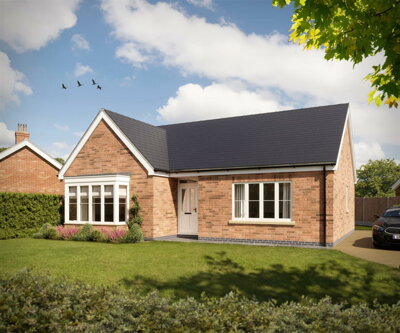
Browse 1 home new builds in Great Carlton from local developer agents.
The Great Carlton property market offers detached, semi-detached, and terraced houses spanning various price ranges and neighbourhoods. Each listing includes detailed property information, photographs, and direct contact with the marketing agent.
In Great Carlton, the average sold house price is £382,000, which says a lot about how highly buyers rate this Lincolnshire village. Recent transaction evidence points to a market led by detached homes, with sales running from about £200,000 for smaller character properties up to roughly £550,000 for larger family houses. Rose Cottage on Castle Lane, for example, sold for £395,000.
For buyers trying to get into Great Carlton at a lower price point, semi-detached homes have historically sat between £105,000 and £160,000. Much of the village stock reflects the traditional architecture of the Lincolnshire Wolds region, with local brick and render used throughout. There are no active new-build developments in the immediate Great Carlton postcode area, so most purchases involve established homes with mature gardens, settled plots and the sort of genuine village character that newer schemes often miss. That lack of fresh supply tends to underpin values and helps keep homes for sale in Great Carlton attractive to buyers who want proper rural character.
To make sense of Great Carlton properly, we also look at what is happening across the wider Lincolnshire market. Across the UK, house prices rose by 1.3% in the 12 months to January 2026, and those regional shifts do feed into local pricing. Even so, the village continues to draw buyers who put quality of life, space and countryside access first, which supports steady values over time. We keep a close watch on local activity and share current information on homes for sale in Great Carlton, so buyers can judge the market on what is really happening, not guesswork.

Great Carlton has the feel many people picture when they think of an English village. It is rooted in Lincolnshire countryside, with a close community and a clear agricultural heritage, yet it still benefits from being near larger settlements for everyday practicalities. There are wide views over farmland and softly rolling hills, and the network of public footpaths and bridleways makes it easy to get out for walks or time outdoors. Life moves more slowly here, and for plenty of buyers that is exactly the point.
Inside the village, amenities are fairly limited, but Louth is only a short drive away and fills the gap well. Residents can head there for supermarkets, independent shops, restaurants and healthcare services, without needing to rely on a larger city. As the capital of the Lincolnshire Wolds, Louth also brings markets, community events and cultural attractions that add to day-to-day life for nearby villages. From Great Carlton, getting into Louth takes only minutes by car, so regular trips are straightforward.
The community side of Great Carlton is a real part of its appeal. Local events and shared activities help keep neighbourly ties strong, something many buyers feel has thinned out in larger places. For families, it is the sort of setting where children can play safely and people tend to know one another. New arrivals are usually drawn in quickly, and that mix of rural calm, solid community spirit and workable access to wider amenities is a big reason buyers look seriously at this part of Lincolnshire.

Families moving to Great Carlton have schooling options in the surrounding area, including primary schools that serve the village and nearby communities. A local primary school can offer a strong start for younger children, and smaller class sizes often mean more individual attention along with good community involvement. Parents should still check catchment boundaries and current Ofsted ratings for any school they favour, because both can affect family routines and nearby property values. We always suggest visiting schools in person before committing to a purchase.
For older pupils, the choice shifts into nearby towns. Several secondary schools and colleges are within a reasonable travelling distance, offering comprehensive courses, A-levels and vocational qualifications. Families focused on academic standards should dig into each school's performance data and go to see them firsthand before they buy. School transport from Great Carlton to surrounding education sites helps make those options workable, despite the village itself having limited provision close by. Many households decide the extra journey is a fair trade for village life.

Getting in and out of Great Carlton is mainly a matter of road travel, as the village sits within the East Lindsey district of Lincolnshire. The A16 runs through nearby Louth and gives direct access towards Grimsby as well as links onwards to the wider road network. For residents with a car, nearby towns are generally within sensible reach. Public transport is thinner than it would be in a town, so it is wise to check exactly what you would need for work, school or regular appointments before you buy. We always advise matching the location to your real daily travel pattern.
Rail users need to factor in a drive first, because the nearest station options are in larger towns rather than the village itself. The nearest major railway station with wider national links is usually in places such as Grimsby or Peterborough, with services reaching cities including London and Leeds. Buses do run in the area, but frequency can be limited, so most Great Carlton residents find car ownership close to essential. Quieter rural lanes are a plus for cyclists, though weather and the shorter daylight of winter both matter when planning commutes or school runs. For leisure, the countryside routes are hard to beat when conditions are good.

We usually tell buyers to begin with the live listings in Great Carlton and the neighbouring villages. That gives you a feel for the stock on the market, the style of home available and the budget you will need, with average prices in the village typically around £610,000. Once that picture is clear, it becomes much easier to narrow down what genuinely suits your needs. We keep our information on homes for sale in Great Carlton regularly updated so you can start from the current market, not old assumptions.
Before booking too many viewings, get a mortgage agreement in principle from a lender. Sellers and agents take a buyer more seriously when finance is already lined up, and it also tells you exactly what budget you are working with. Rates can vary a lot, so it pays to compare more than one provider before choosing the best fit for your circumstances. We work with mortgage advisers who know the Great Carlton market and can help you sort suitable finance.
Then it is time to view. Pick out the properties that fit your criteria and, if possible, see them at different times of day so you can judge the setting, traffic, noise and natural light properly. Photos and written notes make later comparisons much easier, especially after several appointments. Our team can join you on viewings and give an extra opinion on the local area as well as the condition of the property itself.
Once a property stands out, we would usually suggest arranging a RICS Level 2 Homebuyer Report. It can flag structural issues, defects and maintenance concerns before you are too far down the road. In a village where many homes are more than 50 years old, that matters. Our RICS-qualified surveyors know traditional Lincolnshire construction well and look closely for the kinds of issues that come up in Great Carlton properties.
Legal work comes next, and that means choosing a conveyancing solicitor. They will deal with searches, check the contract papers and liaise with the seller's legal team right through to completion. Rural purchases can throw up their own quirks, so experience helps. We can point buyers towards conveyancing firms familiar with Lincolnshire properties and the local requirements that can come with them.
After the searches are back and your finances are fully in place, the purchase moves to exchange of contracts and payment of the deposit. Completion normally follows not long after that, and this is the stage when the keys are released and the home becomes yours. We stay on hand for any final questions that crop up as matters are wrapped up.
Buying in a rural Lincolnshire village such as Great Carlton calls for a bit more care than a standard modern estate purchase. Much of the housing is older, so roof condition, damp proofing and the state of traditional materials all deserve close attention. Drainage can also be a key point, particularly where a property is outside mains sewerage and relies on a septic arrangement that carries its own upkeep responsibilities. We always advise a thorough survey before committing, because village houses can hide defects that are not obvious on a first viewing.
Damp is one of the more common issues in older village houses, and it can show up in different ways depending on how the building was constructed and how it has been maintained. Roofs are another area to inspect carefully, especially traditional pitched roofs with traditional coverings, which may need more regular work than newer systems. Electrical installations can also lag behind current standards in older homes and may need updating either before moving in or soon after. These are exactly the points our surveyors focus on when inspecting homes for sale in Great Carlton.
Tenure needs checking early. Most rural village homes are freehold, but some can include leasehold elements or shared ownership arrangements, and it is far better to clarify that before you are committed. If there are communal spaces, buyers should understand any service charges and maintenance liabilities, along with responsibilities for boundaries or shared access roads. Planning restrictions may matter too, particularly given the rural character of the area. We usually suggest discussing any extension or alteration plans with the East Lindsey District Council planning department before purchase, just to avoid finding out too late that the idea is not likely to be allowed.

The average sold house price in Great Carlton is around £610,000, which reflects the village's sought-after rural setting and the quality of the homes that come up for sale. Detached houses commonly reach between £280,000 and over £615,000, depending on size, condition and where they sit in the village. Recent examples include Rose Cottage on Castle Lane at £560,000 and Hall Farm Cottage on Glebe Road at £280,000, showing the spread within the detached market. Semi-detached homes have historically offered a cheaper route in, with sales generally between £105,000 and £160,000.
Great Carlton falls within East Lindsey District Council for council tax, with charges set by valuation bands A through H. In practice, many detached family houses in the village sit in bands D through F, while smaller cottages and lower-value homes may fall below that. It is worth checking the exact band of any property before you proceed, because council tax is a recurring annual cost and it affects overall affordability. Across the district, residential bills typically range from £1,400 to £2,100 each year, depending on band.
Schooling for Great Carlton is spread across the surrounding villages and towns rather than centred entirely in the village itself. Access to Louth is helpful here, as it opens up a range of primary options, and smaller classes can mean more individual attention along with strong involvement from families and the local community. For secondary education, most families look towards Louth and other nearby towns that form the usual catchment areas for pupils from Great Carlton. Before buying, parents should check Ofsted ratings, admission rules and academic performance for each school in light of their own circumstances.
Public transport is one of the trade-offs of living in Great Carlton. Because it is a small rural village, bus services are available but usually much less frequent than in town, which can make commuting harder for anyone without a car. Railway stations are not on the doorstep either, with the nearest options in larger towns and onward travel by taxi or car often needed. Most residents therefore depend on private vehicles for work, shopping and day-to-day life. The main road link is the A16, giving access towards Grimsby and then onwards to larger road networks.
Great Carlton can also appeal to buyers looking at property as a longer-term investment. Its rural character, the lack of new build supply and the ease of reaching Louth all help support steady values. There is rental interest from people wanting a Lincolnshire village lifestyle, although the smaller population means the market is naturally narrower than in bigger towns. We would still treat it like any other investment purchase and look closely at local demand, likely voids and the wider market before moving ahead. Even so, sustained interest in village homes across the Lincolnshire Wolds gives a useful base for a long-term plan.
For 2024-25, stamp duty land tax is charged at 0% on the first £250,000, then 5% on the portion from £250,001 to £925,000, 10% on the portion from £925,001 to £1.5 million, and 12% on anything above £1.5 million. First-time buyers have higher thresholds, paying 0% on the first £425,000 and 5% from £425,001 to £625,000. On a typical Great Carlton purchase at £610,000, that means a standard buyer would pay £18,000, while a first-time buyer would pay £9,250.
Secure financing for your Great Carlton property purchase
From 4.5% APR
Expert legal services for your property transaction
From £499
Professional survey for your village property
From £350
Energy performance certificate for your property
From £85
The purchase price is only part of the budget in Great Carlton. Buyers also need to allow for solicitor conveyancing fees, which usually start from £499 for a straightforward transaction and can rise if the legal work is more involved. Survey fees matter too, particularly for older village homes, and a RICS Level 2 Homebuyer Report will often start from about £350 depending on the size and value of the property. homedata.co.uk fees, searches and other disbursements add another layer of cost that can run to several hundred pounds. We break these figures down clearly so buyers can budget properly before they commit.
After completion, the regular outgoings continue. In East Lindsey district, council tax usually falls somewhere between £1,400 and £2,100 a year depending on the band, and buildings insurance is another essential cost for homeowners, with rural premiums often shaped by repair and rebuild considerations. Some homes may also carry ground rent or service charges, particularly where leasehold arrangements or shared communal areas are involved, so those commitments need checking in advance. Maintenance is a big part of the picture too, especially with older village houses. Traditional brick and render homes in Lincolnshire often need periodic repointing and weatherproofing that a more modern property may avoid.

Properties New Builds In London

Properties New Builds In Plymouth

Properties New Builds In Liverpool

Properties New Builds In Glasgow

Properties New Builds In Sheffield

Properties New Builds In Edinburgh

Properties New Builds In Coventry

Properties New Builds In Bradford

Properties New Builds In Manchester

Properties New Builds In Birmingham

Properties New Builds In Bristol

Properties New Builds In Oxford

Properties New Builds In Leicester

Properties New Builds In Newcastle

Properties New Builds In Leeds

Properties New Builds In Southampton

Properties New Builds In Cardiff

Properties New Builds In Nottingham

Properties New Builds In Norwich

Properties New Builds In Brighton

Properties New Builds In Derby

Properties New Builds In Portsmouth

Properties New Builds In Northampton

Properties New Builds In Milton Keynes

Properties New Builds In Bournemouth

Properties New Builds In Bolton

Properties New Builds In Swansea

Properties New Builds In Swindon

Properties New Builds In Peterborough

Properties New Builds In Wolverhampton

Enter your details to see if this property is within your budget.
Loans, cards, car finance
Estimated property budget
Borrowing + deposit
You could borrow between
Typical borrowing
Monthly repayment
Est. at 4.5%
Loan-to-value
This is an estimate only. Your actual budget may vary depending on interest rates, credit history, and personal circumstances. For an accurate affordability assessment, speak to one of our free mortgage advisors.
This calculator provides estimates for illustrative purposes only and does not constitute financial advice. Your home may be repossessed if you do not keep up repayments on your mortgage. Estimates based on 4.5% interest rate, repayment mortgage. Actual rates depend on your circumstances.
Homemove is a trading name of HM Haus Group Ltd (Company No. 13873779, registered in England & Wales). Homemove Mortgages Ltd (Company No. 15947693) is an Appointed Representative of TMG Direct Limited, trading as TMG Mortgage Network, which is authorised and regulated by the Financial Conduct Authority (FRN 786245). Homemove Mortgages Ltd is entered on the FCA Register as an Appointed Representative (FRN 1022429). You can check registrations at NewRegister or by calling 0800 111 6768.

We use cookies to show you personalised content and improve your experience of our website. Find out more in our Privacy policy and Cookie policy.