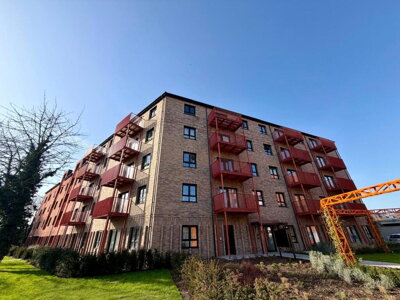
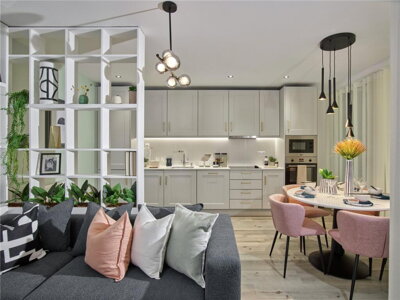
Browse 2 homes new builds in Great Barton from local developer agents.
Studio apartments feature open-plan living spaces without separate bedrooms, incorporating sleeping, living, kitchen, and bathroom facilities. The Great Barton studio market includes properties in modern apartment complexes, modern purpose-built developments and new residential complexes.
Great Barton's property market shows why buyers keep looking here for rural homes with proper space. We list properties across all price ranges, from terraced homes averaging £279,625 to substantial detached residences commanding around £807,079. In 2025, detached properties made up 72.7% of all sales, which says a lot about the village's family-friendly feel and the generous plots that run through the stock.
Recent transaction figures point to steady local demand, with 22 properties selling during 2025 at a median price of £531,000. Over the past decade, about 470 properties have changed hands in Great Barton, so activity has held up. Semi-detached homes have averaged £466,667 in the latest sales, giving buyers a more accessible way into this sought-after village. Strong price growth and consistent turnover make it a practical home choice and a serious long-term hold.
The next few years will bring a noticeable shift. The Severals development on Bury Road, a 194-acre site being delivered by Vistry, has planning permission for up to 1,375 new homes, with detailed permission already in place for 287 units. Off School Road, The Triangle, jointly owned by Suffolk County Council and West Suffolk Council, proposes up to 191 homes with 30% affordable housing, plus bungalows and self-build plots. Supply will rise gradually, though demand still runs ahead of availability in this popular West Suffolk village.

Great Barton has the sort of Suffolk character that people tend to picture first. Much of that comes from its 19th-century heritage, with buildings along The Street commissioned by Sir Henry Edward Bunbury, the local landowner who left such a mark on the village. The building mix is properly regional too, with Suffolk whites, flint, and brick appearing in places like West Lodge on Fornham Road. Walk the lanes and you'll find listed buildings beside period homes, a streetscape that has grown piece by piece over centuries.
The village centre covers the basics, with a post office, village store and a local pub for easy meet-ups. Great Barton also sits in Suffolk's horse racing story, with close links to the former Abbey at Bury St Edmunds. Underfoot, the plateau of light loams and sandy soils gives the surrounding countryside a gentle roll that suits walks and time outdoors. For more choice, Bury St Edmunds is only a short drive away and brings shopping, dining and leisure into reach.
A fire at Barton Hall in 1914 changed the village's course in a very real way. Later, post-World War II growth brought estates such as Hall Park and the Barton Hamlet area, broadening Great Barton's housing mix and adding to its present-day streetscape. Buyers can still choose between older period homes built in traditional ways and later family houses tucked into established roads.

Great Barton Primary School is the village's main local option for younger children, taking pupils from Reception through to Year 6. It draws families from the village and the surrounding countryside, which helps keep the sense of community strong. We'd suggest visiting open events and speaking with the school directly about current admissions criteria and class sizes.
Children in Great Barton can move on to secondary schools in nearby Bury St Edmunds, roughly four miles away. Choices include King Edward VI School, a long-established comprehensive for students aged 11 to 16, along with St Benedict's Catholic School and Samuel Ward Academy. For grammar school routes, the Bury St Edmunds area has selective places, but admission depends on passing the eleven-plus examination. Catchment areas and admission policies should be checked through Suffolk County Council, as place allocation changes with proximity and oversubscription rules each year.
For sixth form, students usually travel into Bury St Edmunds for a broad mix of A-level subjects and vocational courses at the town's colleges. We recommend checking the latest Ofsted reports and speaking with local education authorities about catchment boundaries, since both can have a marked effect on property values. Good schools within a sensible reach are a big part of Great Barton's appeal for families at different stages of education.

Great Barton sits neatly on the A143, so road links run directly west to Bury St Edmunds and out into the wider Suffolk network. The village is around four miles from Bury St Edmunds town centre, which keeps commuting straightforward for local workers. From there, the A14 trunk road is easy to reach, putting Cambridge roughly one hour to the northwest and Felixstowe port around 45 minutes to the southeast. That kind of access has helped make the village popular with commuters who want rural peace without losing easy links to major employment centres.
Bus services are the main public transport option, linking Great Barton with Bury St Edmunds and nearby villages for those without a car. Routes run through the day, giving residents access to town centre shops, healthcare and railway stations. From Bury St Edmunds station, regular trains reach Cambridge in approximately 40 minutes, Ipswich in around 35 minutes and London Liverpool Street in approximately 1 hour 40 minutes via the West Anglia route. For flights, London Stansted can be reached in about one hour by road, while Norwich Airport gives an extra regional option within reasonable driving distance.
Cycling around Great Barton is pleasant on the quiet lanes, though the traffic on the A143 needs to be factored in, especially at peak times. Near the post office, the village once had an Air Quality Management Area because of historic A143 traffic concerns, but that designation was revoked in August 2025 after air quality measures improved. Broadband is still improving across the village, and we always advise checking the exact availability and speed at each property, particularly for anyone working from home who needs dependable high-speed internet connections.

Before booking viewings, get to know Great Barton's neighbourhoods and the price brackets that go with them. Detached homes usually sit at £800,000-plus, while terraced properties start at around £280,000. An agreement in principle from your lender helps when you make an offer. With average household incomes of around £37,100 in the village, most purchases at these levels will still depend on sizeable deposits and mortgage finance.
Use Homemove to see the full selection of properties for sale in Great Barton, filtering by price, property type and number of bedrooms. We would keep an eye on both period homes with historic character and newer builds that may come with modern specifications and warranties. The stock runs from 17th-century farmhouses with thatched roofs to post-war family houses in places such as Hall Park and Barton Hamlet.
When we arrange viewings through the listed estate agents, it's sensible to judge both the property's condition and the neighbourhood at different times of day. Great Barton offers everything from 17th-century farmhouses to post-war developments, and each one needs a proper look. We would pay close attention to construction materials, because cob, flint, brick and Suffolk whites all appear in the village's older housing.
Because many Great Barton homes are over 50 years old and built with traditional materials such as flint, brick and thatch, a careful survey matters. A Level 2 Homebuyer Report usually costs £400-£550 in this price bracket and will pick up structural issues, damp and maintenance concerns. For listed buildings or homes with unusual construction, we would often point buyers towards a Level 3 Building Survey instead.
We would appoint a solicitor who knows West Suffolk properties well to handle the legal side of the purchase. They will carry out searches, manage contracts and deal with the transfer of ownership through the title register. With 22 listed buildings in Great Barton, legal work can also involve extra attention to permitted development rights and historic-property restrictions.
Once the surveys come back clean and searches are complete, contracts are exchanged and the deposit is paid. Completion usually follows within 2-4 weeks, at which point the keys are handed over and ownership of the new Great Barton home changes hands. Set aside extra money too, including stamp duty of approximately £22,390 for a £697,808 property, plus solicitor fees and removal costs.
Great Barton's architectural heritage is part of the attraction, though it does come with a few practical considerations. The village has 22 listed buildings, among them the Grade I Church of the Holy Innocents, two Grade II buildings including Barn at Manor Farm and Conyers Green Farmhouse, and a number of Grade II properties. Buying any listed building means treating alterations carefully, because permitted development rights can be limited and changes need to respect the building's historic character. In some cases, specialist surveys are sensible, and they may cost more than a standard Level 2 report.
Traditional materials run right through Great Barton, so they deserve close inspection during a purchase. Homes built in cob, flint and brick can age differently from modern brick or timber-frame properties. Great Barton Farmhouse, an early to mid-17th century listed home, shows cob construction with a brick plinth and wheat-reed thatched roof, so it needs specialist knowledge and regular upkeep. West Lodge on Fornham Road uses Suffolk whites, flint and brick quoin construction with a slate roof, while Nos. 4-8 The Street show the brick and flint work that is typical of the village's 19th-century buildings.
If a property comes with service charges, we would look closely at those and at the state of any shared facilities in flats or managed estates. Beneath the parish lies a plateau of light loams and sandy soils, which generally suits construction, although a survey should still pick up structural problems, damp penetration or outdated electrical systems that turn up in older homes. Near the A143, the village had an Air Quality Management Area in the past, but that was revoked in August 2025, pointing to better local environmental conditions. It also makes sense to weigh up the transport convenience of the A143 against the possibility of traffic noise.

home.co.uk data shows an average house price of £697,808 for Great Barton, with detached properties averaging around £807,079 and semi-detached homes at approximately £466,667. Terraced properties sit nearer £279,625, though they are less common in the village. The median sale price in 2025 was £531,000 across 22 transactions. Prices are up 17% year-on-year and 27% since the 2022 peak of £549,009, which points to strong demand in this West Suffolk village.
West Suffolk Council is the local authority for Great Barton. Council tax bands run from A to H depending on value, with most family homes in the village sitting in bands D to F. The more premium detached homes can fall into bands G or H. We recommend checking the banding on the Valuation Office Agency website, because new-build and recently altered homes may sit outside the standard classification.
Great Barton Primary School serves the village directly from Reception through Year 6. Nearby Bury St Edmunds, about four miles away, offers a number of respected secondary choices, including King Edward VI School, St Benedict's Catholic School and Samuel Ward Academy. Grammar schools in the Bury St Edmunds area give selective options for pupils who pass the eleven-plus examination. Parents should check current catchment areas with Suffolk County Council, because residential proximity can affect access.
Bus routes connect Great Barton with Bury St Edmunds and the surrounding villages, giving residents without a car a useful link into town. At Bury St Edmunds railway station, mainline services run to Cambridge in approximately 40 minutes, Ipswich in around 35 minutes and London Liverpool Street in approximately 1 hour 40 minutes. The A143 puts Bury St Edmunds roughly four miles away by road, while the A14 trunk road opens up broader regional travel towards Cambridge, Felixstowe and the wider East Anglia region.
Great Barton's property market has kept moving, with prices up 27% since 2022 and detached homes making up 72.7% of transactions. Planned schemes such as The Severals, with up to 1,375 homes on Bury Road, and The Triangle, with up to 191 homes off School Road and 30% affordable housing, point to further demand. For investors, the proximity to Bury St Edmunds, strong local amenities and historically limited new supply all support rental demand and capital growth potential, although the premium price point calls for significant capital outlay.
Stamp Duty Land Tax in 2024-25 starts at 0% for properties up to £250,000, then moves to 5% between £250,001 and £925,000. First-time buyers get relief on homes up to £625,000, with 5% charged on the portion between £425,001 and £625,000. On a typical Great Barton home at £697,808, a standard buyer would pay about £22,390 in stamp duty, made up of £12,390 on the portion between £250,000 and £697,808. First-time buyers at this price would not qualify for the relief, because the home is over the £625,000 threshold.
Competitive rates for Great Barton properties
From 4.5% APR
Expert legal support for West Suffolk properties
From £499
Essential for traditional construction properties
From £350
Energy performance certificates
From £60
Keeping track of the full cost of buying in Great Barton helps buyers budget properly for the move. Beyond the purchase price, the extra outlay includes Stamp Duty Land Tax, solicitor fees, survey costs and removal expenses. At the village average of £697,808, a standard buyer would pay about £22,390 in stamp duty after the nil-rate threshold of £250,000. First-time buyers may qualify for reduced rates on homes up to £625,000, but properties at or above that level do not meet the relief rules. Second-home and investment purchases also attract additional SDLT surcharges.
Survey fees vary with property type and value, with RICS Level 2 Homebuyer Reports usually costing £400 to £550 in this bracket, and around £586 for homes above £500,000. In Great Barton, where older houses often use cob, flint, brick and thatched construction, that money can be well spent, because a solid survey helps flag issues with traditional building methods, listed building obligations and age-related maintenance. Homes with unusual construction may still be better served by a Level 3 Building Survey, even at the higher price.
Solicitors handling conveyancing usually charge between £500 and £1,500, depending on complexity, and there are extra costs for local searches, including drainage and water checks, title registration fees and bank transfer charges. Removal costs change with distance and the amount of furniture, while mortgage arrangement fees often sit between £0 and £2,000 depending on the lender. As a rule of thumb, we would budget £3,000 to £5,000 for these purchase costs together, alongside your mortgage deposit and the property price.

Properties New Builds In London

Properties New Builds In Plymouth

Properties New Builds In Liverpool

Properties New Builds In Glasgow

Properties New Builds In Sheffield

Properties New Builds In Edinburgh

Properties New Builds In Coventry

Properties New Builds In Bradford

Properties New Builds In Manchester

Properties New Builds In Birmingham

Properties New Builds In Bristol

Properties New Builds In Oxford

Properties New Builds In Leicester

Properties New Builds In Newcastle

Properties New Builds In Leeds

Properties New Builds In Southampton

Properties New Builds In Cardiff

Properties New Builds In Nottingham

Properties New Builds In Norwich

Properties New Builds In Brighton

Properties New Builds In Derby

Properties New Builds In Portsmouth

Properties New Builds In Northampton

Properties New Builds In Milton Keynes

Properties New Builds In Bournemouth

Properties New Builds In Bolton

Properties New Builds In Swansea

Properties New Builds In Swindon

Properties New Builds In Peterborough

Properties New Builds In Wolverhampton

Enter your details to see if this property is within your budget.
Loans, cards, car finance
Estimated property budget
Borrowing + deposit
You could borrow between
Typical borrowing
Monthly repayment
Est. at 4.5%
Loan-to-value
This is an estimate only. Your actual budget may vary depending on interest rates, credit history, and personal circumstances. For an accurate affordability assessment, speak to one of our free mortgage advisors.
This calculator provides estimates for illustrative purposes only and does not constitute financial advice. Your home may be repossessed if you do not keep up repayments on your mortgage. Estimates based on 4.5% interest rate, repayment mortgage. Actual rates depend on your circumstances.
Homemove is a trading name of HM Haus Group Ltd (Company No. 13873779, registered in England & Wales). Homemove Mortgages Ltd (Company No. 15947693) is an Appointed Representative of TMG Direct Limited, trading as TMG Mortgage Network, which is authorised and regulated by the Financial Conduct Authority (FRN 786245). Homemove Mortgages Ltd is entered on the FCA Register as an Appointed Representative (FRN 1022429). You can check registrations at NewRegister or by calling 0800 111 6768.

We use cookies to show you personalised content and improve your experience of our website. Find out more in our Privacy policy and Cookie policy.