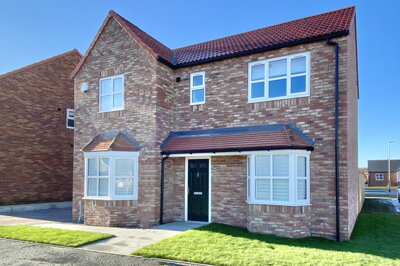
Browse 1 home new builds in Garton, East Riding of Yorkshire from local developer agents.
Three bedroom properties represent a significant portion of the Garton housing market, offering space for families with multiple reception rooms and gardens in many cases. Browse detached, semi-detached, and terraced options ranging across new residential developments.
£220k
3
0
219
Source: home.co.uk
Showing 3 results for 3 Bedroom Houses new builds in Garton, East Riding of Yorkshire. The median asking price is £220,000.
Source: home.co.uk
Semi-Detached
2 listings
Avg £205,000
Terraced
1 listings
Avg £325,000
Source: home.co.uk
Source: home.co.uk
homedata.co.uk records point to a small, closely held market in Garton, with an overall average price of around £272,912 and only 12 recorded sales in the past year. The top-line picture is heavily influenced by tiny samples, including a detached median of £349,950 from one sale in 2021, a semi-detached median of £67,500 from one sale in 1998, and a terraced median of £120,000 from one sale in 2023. In the record we reviewed, there is no flats sales data for Garton at all, which says plenty about how limited the transaction pool can be. In a market this thin, one sale can shift the average noticeably, so we think each listing needs careful comparison.
For a broader sense of value, the wider East Riding of Yorkshire market is a useful benchmark. homedata.co.uk shows an average house price of £221,000 in December 2025, with detached homes at £337,000, semi-detached homes at £214,000, terraced homes at £170,000, and flats and maisonettes at £103,000. Across the year to December 2025, the county average increased by 4.8%, semi-detached prices rose 5.6%, and flats stayed broadly flat. Set against that, Garton sits in a rural pocket where supply is scarce, demand can hold up well, and tidy homes often draw serious interest quickly.
In villages this size, buyers tend to focus on the things that cannot easily be added later, plot size, parking, natural light, and a quieter setting. Our research found no active new-build development within Garton itself, so most moves here are likely to involve existing homes rather than brand-new schemes. That will appeal to some buyers because of character, but it also puts more weight on condition, layout, and long-term upkeep. With so few recorded sales, a well-presented village home can feel genuinely hard to replace.

Small is really the point with Garton. It is a rural parish in the East Riding, and the research does not provide a full population or household count for the village itself. That lack of published detail helps paint the picture of a place that is quiet, lightly traded, and not densely built up. Agriculture is likely to have a place in the local economy, while the surrounding countryside gives the area a much more open feel than a larger settlement. For plenty of buyers, that means more space, less traffic, and better privacy.
The East Riding landscape changes from place to place, with chalky ground in the Wolds and lower-lying clay areas elsewhere in the county. For buyers, that matters, because soil conditions, drainage, and ground movement can all shape maintenance needs, especially in older homes. Our research did not flag a specific conservation area or flood hotspot within Garton itself, but we would still treat any village property as a site-by-site case. Survey advice earns its keep here, since countryside settings can hide defects that do not show up on a quick walk-through.
Amenities are more likely to be spread across the wider East Riding than clustered in Garton itself, so day-to-day life often revolves around nearby settlements for shopping, healthcare, and leisure. Some buyers actively want that slower rhythm and do not mind planning a few extra trips across the week. It also means the decision is about more than the house alone, it is about how well a rural routine fits. If that part works, Garton can be an easy place to settle.
School data was not returned in the research for Garton, which is not unusual for a village of this size. We would rely on East Riding of Yorkshire Council admissions and catchment information rather than assuming a school is just around the corner. Families with younger children often prioritise a manageable primary journey, while secondary choices can depend more on bus routes, car access, and how the trip feels in bad weather. If schooling sits high on the list, check the exact address against the catchment map before making an offer.
The research also does not show a local grammar school or sixth form within Garton itself. Most rural buyers compare options across the wider East Riding and then decide whether the term-time journey, especially in winter, is realistic. A mortgage agreement in principle helps with that planning, because homes in favoured school areas can move fast when supply is tight. We usually say it is better to line up the finance first and then fit the house around the school routine, not the other way round.
Older students are likely to depend on sixth forms or FE options in larger nearby settlements rather than anything in the village itself. That brings timing, transport, and parking into the daily routine, particularly where one adult commutes or children start at different times. In practice, a house with enough parking, strong broadband, and a spare room for study may prove more useful than a slightly bigger place with a more awkward journey. Thinking ahead about the school run often pays off well after completion.

For travel, Garton is best viewed as a car-led location, since the research did not identify a direct rail station in the village itself. That gives flexibility, but buyers should still test peak-hour routes and think about winter road conditions before committing. Bus services in small East Riding villages can be sparse, so regular commuters need to read the timetables properly rather than making a rough guess. We always think it is worth driving the route at the same time of day as the usual trip to work.
Walking and cycling can suit local errands and leisure, but in a rural setting they are less likely to replace the car for school runs, shopping, or commuting. Off-road parking matters in a village like Garton, especially for households with more than one car or regular visitors. Anyone who needs rail access should check where the nearest station is, how parking works there, and whether train times genuinely fit working hours. Those small practical points often decide whether a home feels straightforward or compromised.
Rural living brings its own practical checks, deliveries, broadband, and the time needed to reach everyday services. A house may look ideal on paper, but a long driveway or a narrow lane can change access in poor weather or at busy times. That is why we encourage buyers to visit in person, inspect the road outside the front door, and get finance lined up before searching in earnest. In Garton, the commute sits inside the property decision rather than somewhere off to the side.
No flood-risk data was identified specifically for Garton, so buyers should check Environment Agency maps and ask clear questions about drainage and surface water. In rural parts of the East Riding, homes can also rely on private services, so it is sensible to confirm who is responsible for septic systems, ditches, and any shared access roads. Where a property comes with a larger plot, boundaries and rights of way deserve a close look before anything is agreed. Points like these can affect daily life now and resale later.
Older homes can come with damp, roof, and timber issues, especially where maintenance has been uneven or extensions have been added over time. The research did not identify a concentration of listed buildings or a conservation area in Garton itself, but we would still want planning history and alterations checked properly. Flats are unusual in the recorded sales data, and there are no flat sales recorded in the Garton figures we reviewed, so any flat purchase needs close attention to service charges and lease terms. With houses, it is still worth confirming freehold status and any split in boundary maintenance.
With sales volume this limited, buying well in Garton means looking past the asking price and judging the longer-term fit. A home with adequate insulation, sensible heating, and a sound roof may be the better buy than one that photographs nicely but needs more work. If the property dates from before 1976, a RICS Level 2 Survey can be particularly helpful for spotting issues that are easy to miss during a short viewing. Our view is straightforward, check the structure, the access, the paperwork, and the running costs before the setting wins the argument.

First things first, we would secure a mortgage agreement in principle before doing anything else, so it is easier to move quickly when the right home appears in Garton. It also gives a clear budget before viewings begin.
Each property should be weighed against the road layout, parking, access, and any nearby farm traffic or quiet-lane considerations. A village home can feel one way on a calm afternoon and quite another at school-run time or in winter.
Where possible, we would visit more than once and pay attention to light, noise, drainage, and garden orientation. Rural homes often reveal more on a second look, especially at a different time of day.
For older or altered homes, a RICS Level 2 Survey is a sensible early step, particularly where the property is traditional brick or shows signs of past movement. A survey can save money by bringing problems to light before exchange.
Our conveyancer would check title, boundaries, access, searches, and any rural rights or obligations. Where a home has private drainage, a long access track, or shared maintenance, those points need to be set out clearly.
Once the searches, survey, and mortgage checks are finished, it is much easier to move from exchange to completion with confidence. In a small village market like Garton, being well organised often counts for more than making the highest emotional bid.
In Garton, homedata.co.uk records show an average price of about £272,912, drawn from a very small pool of recorded sales in the HU11 village. The most recent detailed figures include a detached median of £349,950 in 2021 from one sale and a terraced median of £120,000 in 2023 from one sale, so movement can be sharp when the sample is this limited. With only 12 sales in the past 12 months, we would focus on the exact property rather than leaning too heavily on one average. For county context, the wider East Riding average was £221,000 in December 2025.
Council tax is not one-size-fits-all here. Bands vary by property and by exact address, even in a small village like Garton. The billing authority is East Riding of Yorkshire Council, so that is where the band should be checked before an offer goes in. A detached family house and a smaller terrace can fall into very different bands, which is why one figure will not cover the whole area. We would ask the agent or solicitor to confirm the band for the individual property being bought.
The research did not identify a school within Garton itself, and that is fairly typical for a small rural parish. Buyers generally compare nearby primary and secondary options across the wider East Riding, then check admissions and catchment maps before deciding. If school proximity matters, it is worth testing the route at the same time of day as the usual term-time journey. A rural move can feel quite different once the school run becomes part of everyday life.
No one is likely to choose Garton for doorstep rail or bus links. The research did not identify a direct station, so most residents are likely to rely on the car for regular travel. That does not automatically make the village inconvenient, but it does mean bus times, parking, and commuting routes need proper checking. Where daily rail access matters, the extra drive and station parking time should be built into the decision.
Garton may suit a long-term buyer who likes limited supply, rural appeal, and a quieter setting. homedata.co.uk records show 12 sales in the last 12 months, so turnover is low and the market is not especially busy, which can support scarcity but can also make valuations less fluid. Across the wider East Riding, the market rose 4.8% from December 2024 to December 2025, suggesting county demand is still moving in a positive direction. For investors, we would look more at holding power, maintenance costs, and resale appeal than at quick flips.
Stamp duty for a standard buyer is 0% up to £250,000, then 5% on the slice from £250,000 to £925,000. On a purchase at Garton’s recorded average price of £272,912, that would produce a bill of about £1,146 for a main home buyer. First-time buyers pay 0% up to £425,000, so at that price they would not pay stamp duty unless the purchase goes above the relief threshold. Anyone who already owns another home may face a higher rate, so we would check the full position before an offer is made.
A survey makes good sense in Garton, especially where the home is older, extended, or stands on a generous rural plot. The research does not point to one specific local defect pattern, but older village properties often justify checks for damp, roofing, timber, and drainage. A RICS Level 2 Survey can flag issues early, which matters in a market where transaction volumes are low and each decision carries weight. If the building appears complex or heavily altered, we would ask whether a more detailed survey is the better fit.
The current stamp duty bands are 0% up to £250,000, 5% from £250,000 to £925,000, 10% from £925,000 to £1.5m, and 12% above £1.5m. For first-time buyers, the rates are 0% up to £425,000, then 5% from £425,000 to £625,000, with no relief above £625,000. So a main-home buyer paying Garton’s recorded average price of £272,912 would owe about £1,146 in stamp duty, while a first-time buyer at the same price would pay nothing. If the purchase is a second home or an investment property, a surcharge can push the bill higher, so we would budget for that before negotiations begin.
Stamp duty is only one element of the upfront spend. Buyers should also budget for the mortgage arrangement fee, valuation costs, conveyancing, searches, survey fees, and moving expenses. In a small market like Garton, the true cost of buying is often shaped as much by the survey and legal work as by the tax bill itself. Setting that budget early can stop a good village home becoming a financial stretch.
Properties New Builds In London

Properties New Builds In Plymouth

Properties New Builds In Liverpool

Properties New Builds In Glasgow

Properties New Builds In Sheffield

Properties New Builds In Edinburgh

Properties New Builds In Coventry

Properties New Builds In Bradford

Properties New Builds In Manchester

Properties New Builds In Birmingham

Properties New Builds In Bristol

Properties New Builds In Oxford

Properties New Builds In Leicester

Properties New Builds In Newcastle

Properties New Builds In Leeds

Properties New Builds In Southampton

Properties New Builds In Cardiff

Properties New Builds In Nottingham

Properties New Builds In Norwich

Properties New Builds In Brighton

Properties New Builds In Derby

Properties New Builds In Portsmouth

Properties New Builds In Northampton

Properties New Builds In Milton Keynes

Properties New Builds In Bournemouth

Properties New Builds In Bolton

Properties New Builds In Swansea

Properties New Builds In Swindon

Properties New Builds In Peterborough

Properties New Builds In Wolverhampton

Enter your details to see if this property is within your budget.
Loans, cards, car finance
Estimated property budget
Borrowing + deposit
You could borrow between
Typical borrowing
Monthly repayment
Est. at 4.5%
Loan-to-value
This is an estimate only. Your actual budget may vary depending on interest rates, credit history, and personal circumstances. For an accurate affordability assessment, speak to one of our free mortgage advisors.
This calculator provides estimates for illustrative purposes only and does not constitute financial advice. Your home may be repossessed if you do not keep up repayments on your mortgage. Estimates based on 4.5% interest rate, repayment mortgage. Actual rates depend on your circumstances.
Homemove is a trading name of HM Haus Group Ltd (Company No. 13873779, registered in England & Wales). Homemove Mortgages Ltd (Company No. 15947693) is an Appointed Representative of TMG Direct Limited, trading as TMG Mortgage Network, which is authorised and regulated by the Financial Conduct Authority (FRN 786245). Homemove Mortgages Ltd is entered on the FCA Register as an Appointed Representative (FRN 1022429). You can check registrations at NewRegister or by calling 0800 111 6768.

We use cookies to show you personalised content and improve your experience of our website. Find out more in our Privacy policy and Cookie policy.