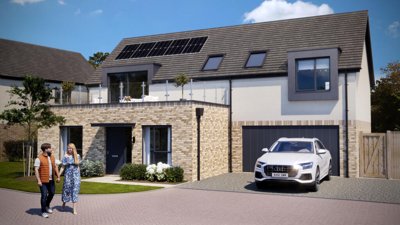
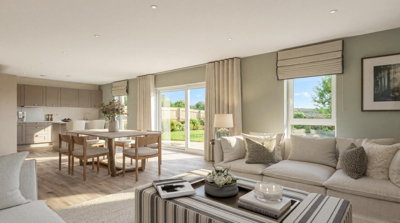
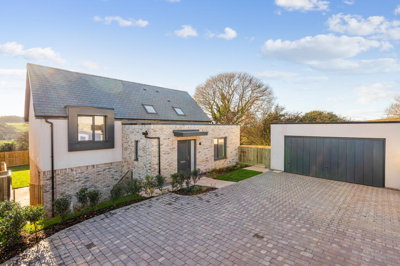
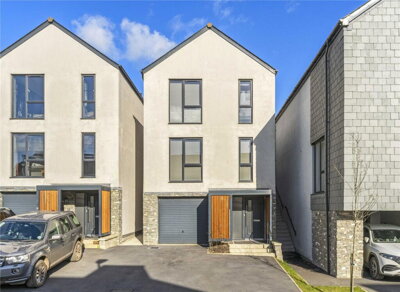
Browse 7 homes new builds in Frogmore and Sherford from local developer agents.
The Frogmore And Sherford property market offers detached, semi-detached, and terraced houses spanning various price ranges and neighbourhoods. Each listing includes detailed property information, photographs, and direct contact with the marketing agent.
Frogmore and Sherford sit side by side, but they offer very different housing stories. Frogmore keeps a more traditional village feel, with period homes fetching premium prices, including detached properties averaging £1,216,667 and terraced homes around £287,500. Flats average £165,000, so there are still some more approachable choices for first-time buyers or for anyone after a lower-maintenance home. Its heritage is plain to see in the building stock, with stone rubble walls, thatched roofs, and historic properties such as Keynedon Barton Manor and Stonesettle, both dating from the 17th century.
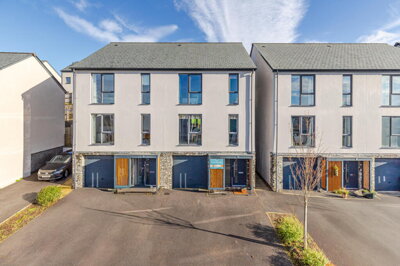
Sherford takes a different path altogether, as a major new town scheme delivering thousands of contemporary homes. Prices start from £350,000 for a two-bedroom property, three-bedroom homes are available from around £360,000, and larger four-bedroom houses average £825,000. Developers such as Taylor Wimpey, Bovis Homes, Linden Homes, and Latimer (Clarion Housing Group) are building in a range of styles, from traditional Devon vernacular to sharper modern designs using white render, wooden weatherboard cladding, and grey stonework.
The price picture has moved quite sharply in Frogmore, where the overall average now sits at £755,714 and the median price is £625,000. Sherford has been steadier, with values easing by approximately 1-7% from earlier highs. Shared ownership through SO Living at Woodland Walk and Oak Green gives first-time buyers another route in, with 35% shares on three-bedroom homes starting from around £109,375, which brings ownership within reach on more modest household incomes.

Set at the head of a tidal creek in the Kingsbridge Estuary, Frogmore feels closely tied to Devon’s landscape. Residents get waterfront views and easy access to walking routes along the water’s edge, while the village remains small, with a population of approximately 495 supported by the active Frogmore and Sherford Parish Council. The former bakery building, dating from the 19th century, adds to the local story, and the mix of stone walls and thatched roofs gives the place a very clear rural identity.
Sherford, by contrast, is planned for modern community life and folds amenities into the layout from the start. The development sets aside 20% of all homes for affordable housing, which helps create a more mixed community. New infrastructure, shared facilities, and open spaces are built in as part of the neighbourhood, and the South Devon Area of Outstanding Natural Beauty is close by, with the South West Coast Path giving residents quick access to some of the best coastal and countryside scenery in the country.
The parish leans towards established households. 49.3% of households are made up of two people, above the England average of 34%, and 47.5% own their homes outright. There is also a strong work-from-home presence, with 33.3% of the working population mainly based at home, which suits people who want village life without giving up a career. Local economic activity shows 45.5% of residents in employment, and average household incomes are around £18,000 for those registered with Devon Home Choice.

Schooling needs a bit of local checking for families moving here. Primary places are not in Frogmore or Sherford themselves, so the parish sits within the wider South Hams school pattern, with Kingsbridge and nearby villages serving many younger children. We would always look at Ofsted ratings and admissions rules for each school, because catchment lines can change placement outcomes. Sherford’s new neighbourhood includes provision for educational facilities as part of the wider plan, so future residents should be able to find school places closer to home.
For primary age children, the Kingsbridge area is usually the starting point. Families often look at Charleton Church of England Academy or Stokenham Area Primary School, depending on where they live in the parish. Kingsbridge Primary Academy covers Reception through Year 6 and is reachable in reasonable time from most parts of Frogmore and Sherford. Secondary education usually means Kingsbridge Community College, which has a broad curriculum and extras such as sports teams and music programmes. Its catchment reaches across the South Hams, so it remains a realistic option for many families even with the journey involved.
Faith schools and grammar routes are part of the picture too. There are several church schools in the surrounding area that may be worth considering during a property search, and oversubscribed schools can be highly competitive, especially for popular year groups. Living close to a school does not guarantee a place if oversubscription rules are applied. Transport needs a careful look as well, since school buses do not cover every route, and households without a car will want to factor that in. Plymouth also opens up more choice, including grammar schools reached through the Plymouth selection process.

Road access is straightforward by rural Devon standards, though not especially fast. The A379 is the main route through the parish, linking Frogmore with Kingsbridge to the south and Sherford towards Plymouth to the north. Sherford’s planned road network is part of the new development, with connections designed to cope with rising traffic as the community grows. Drivers should expect narrow and winding roads in this part of Devon, so confidence behind the wheel matters.
Buses do the heavy lifting here. Services link Frogmore and Sherford with Kingsbridge, where it is possible to connect into the wider Devon network. The Stagecoach 93 is particularly useful, running between Plymouth and Kingsbridge via Sherford and giving residents without a car a way to commute or shop. Rail travel means heading to Totnes, around 20 miles away, or to Plymouth, both of which have services to London Paddington, Exeter, and regional destinations. Totnes gives access to the scenic Tarka Line and the national network, while Plymouth offers more frequent trains and Greater Western Railway routes. For people working in Plymouth, Sherford sits comfortably within the commuter catchment.
Cyclists and walkers get plenty back for the effort. The terrain rises and falls, so a certain level of fitness helps, but the reward is wide-open views across the estuary and countryside. National Cycle Route 2 and the South West Coast Path both pass through the area, giving traffic-free options for leisure and for greener commuting where distances allow. Exeter Airport is about 40 miles away, and Plymouth Airport offers regional flights, so the area is fairly well linked for domestic and international travel.

Construction details matter here, especially in Frogmore. Historic homes often use stone rubble walls, usually plastered on the outside, following traditional building practice from the 17th and 18th centuries when local stone was the obvious material. These single-leaf walls, typically 200-300mm thick, behave very differently from modern cavity wall construction. They need a different approach to heat and moisture, and lime-based mortars are generally more suitable than Portland cement products.
Thatched roofs give Frogmore much of its character. Several properties, including notable heritage buildings, use this traditional covering, which calls for specialist knowledge when it comes to maintenance and insurance. Surveys need to look carefully at sarking, reed layers, and ridge work. Thatch can push up both insurance premiums and day-to-day upkeep, so buyers should take specialist advice before committing. Rendered rubble axial stacks, or chimneys, with brick shafts are also common locally, and these need regular checks for weathering and stability.
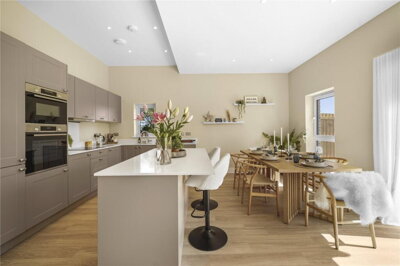
Sherford’s new homes are built in the style of modern UK housing for good reason. Cavity wall construction with brick and blockwork is standard, and the external look is varied with white render, wooden weatherboard cladding, and grey stonework. Most homes include uPVC windows, central heating, and insulation that meets current building regulations. They usually bring fewer maintenance headaches than period homes, though snagging, waterproofing faults, and settlement cracks can still show up in the first few years. BGS GeoSure data points to shrink-swell susceptibility in the local geology, so clay-rich ground can still affect foundations, old or new.

A first visit should be practical, not rushed. Spend time in both Frogmore and Sherford, because one offers historic village character and period homes while the other gives you modern houses with newer amenities. Think about commute times, school catchments, and the type of property you want before narrowing the search. It also helps to come back at different times of day and on different days of the week, then speak to residents about what day-to-day life is actually like.
Before any viewing gets too serious, we would want a mortgage agreement in principle from a lender. It shows estate agents and sellers that we are financially ready, which can strengthen an offer. Our mortgage partners can help compare rates and find the best deal for the situation. We would also factor in deposit size, loan-to-value ratio, and whether a fixed or variable rate makes more sense over the long term.
Seeing several homes side by side pays off. Compare features, condition, and value across both villages, and keep an eye on the age of Frogmore’s older homes because they may need maintenance or renovation. New builds in Sherford often come with NHBC or similar warranties. For period properties, it is sensible to take a torch and check roof spaces for damp, timber decay, or structural movement that could mean costly repairs later on.
Once an offer has been accepted, we would arrange a RICS Level 2 HomeBuyer Report to assess the property’s condition. For older period homes in Frogmore, budget £420-495 depending on bedrooms. New builds can still benefit from snagging inspections, even though structural warranties add another layer of cover. Our team of chartered surveyors knows local building types well, from traditional stone walls and thatch roofing to cavity wall systems, so we can give a proper assessment of each kind of property.
Your solicitor will handle the legal side, including searches, contracts, and title transfers. They will look into flood risk, which is relevant to Frogmore’s estuarine setting, as well as planning restrictions and any conservation area requirements. Conveyancing costs usually start from £499. The legal process generally takes about 8-12 weeks, although listed buildings or new build purchases can take longer.
Completion day brings the final practical steps together. Buildings insurance, the last mortgage arrangements, and the handover all need to be in place, and then the keys are yours. After that, you can move into your new Frogmore or Sherford home. We would want removals booked, utilities switched into your name, and any keys or access codes for communal areas collected from the previous owner or developer.
Flood risk deserves close attention in Frogmore. The village sits at the head of the Kingsbridge Estuary tidal creek, and the Frogmore and Sherford Neighbourhood Plan highlights that setting and the need to keep the creek working for flood defence. Homes closest to the watercourse may face a higher flood risk, so buildings insurance should be checked before purchase. Surface water flooding can also happen in heavy rain, which means drainage and guttering deserve a careful look.
Traditional materials change the maintenance picture. Many Frogmore homes use stone rubble walls, thatch roofs, and single-leaf construction methods that are very different from modern cavity wall properties. Those materials need a different approach, with lime-based mortars and traditional building techniques usually preferred over Portland cement products. Buyers should allow for the upkeep of heritage features and think hard about whether a period property fits their day-to-day needs.
Planning controls matter more here than many buyers expect. The Neighbourhood Plan recognises heritage assets across Frogmore, including historic bridges, listed buildings, and buildings of local interest. Homes in conservation areas, or with listed building status, may face restrictions on alterations, extensions, or even external painting and window replacement. The Grade II listed Keynedon Barton Manor in Sherford and Stonesettle in Frogmore are good examples of heritage properties that need specialist thought. For significant historic homes, a specialist RICS Level 3 Building Survey may be the right choice.
Sherford’s new build homes bring a different set of checks. Buyers should look carefully at leasehold terms, service charges, and any estate management charges, because the community management structure is not the same as traditional freehold ownership and does bring ongoing costs. Developers such as Countryside Homes, Taylor Wimpey, and others offer different warranty packages, but we would still advise an independent survey so any construction defects can be picked up before the warranty period runs out.

There is a clear gap between the two markets. Frogmore commands higher values, with detached homes averaging £1,216,667 and the overall average standing at £755,714. Sherford is more affordable, with average prices around £625,000, while new build two-bedroom homes start from £350,000 and three-bedroom homes from £360,000. Recent corrections have also been noticeable, with Frogmore down 11% from its 2022 peak of £499,000 and Sherford down approximately 4-6% from its 2023 peak of around £341,000.
Council tax is handled through South Hams District Council and Devon County Council. Banding depends on the property’s value and type, so older village homes are often in bands C to E, while newer Sherford homes can fall anywhere from bands A through E depending on assessed value. It is worth checking the exact band with the vendor or through the local authority’s online records, because annual costs affect the budget and can range from around £1,400 to £2,200 annually for most homes in the area.
Schooling starts beyond the parish boundary. There is no primary school in the parish itself, so parents need to look at schools in Kingsbridge and nearby communities, checking Ofsted ratings and catchment areas as part of the search. Charleton Church of England Academy and Stokenham Area Primary School serve different parts of the parish depending on location. Secondary options in the South Hams include Kingsbridge Community College, and families should confirm admissions with Devon County Council, which runs the coordinated admissions process across the district.
Bus and rail links are workable, though car ownership still matters. The Stagecoach 93 gives regular links between Frogmore, Sherford, Kingsbridge, and Plymouth, while rail travel means heading to Totnes, around 20 miles away, or Plymouth for mainline services, including Great Western Railway routes to London Paddington. The A379 is the main road connection to surrounding towns, but anyone working further afield should allow for longer journeys and the practical demands of having a car for everyday life.
For investors, the two places point in different directions. Frogmore’s limited supply of period homes in a designated Area of Outstanding Natural Beauty suggests long-term value retention, although lower transaction volumes may mean less liquidity. Sherford’s large new development is changing the area, with 5,500 homes potentially affecting supply and demand as each phase completes. Shared ownership gives more accessible entry points, and the estuary setting plus proximity to the South West Coast Path should keep demand healthy among buyers looking for Devon village life or a new community.
Stamp Duty Land Tax, or SDLT, follows the usual UK thresholds, 0% on the first £250,000, 5% on £250,001 to £925,000, 10% on £925,001 to £1.5 million, and 12% above £1.5 million. First-time buyers get relief on the first £425,000 at 0%, with 5% between £425,001 and £625,000. For a typical £350,000 home in Sherford, standard buyers pay £7,500 in SDLT, while first-time buyers pay £0 on the first £425,000. We would always suggest checking liability with a financial adviser based on the individual case.
For older period homes in Frogmore with stone walls, thatch roofing, or listed status, we would normally recommend a RICS Level 3 Building Survey rather than a standard Level 2 HomeBuyer Report. The Level 3 survey gives a fuller look at traditional construction, heritage defects, and the right maintenance approach, including the use of lime mortar. New builds in Sherford usually call for a RICS Level 2 survey or a dedicated snagging inspection so defects are found before warranties run out. Our surveyors have extensive experience across Devon, from 17th-century farmhouses to contemporary new builds.
The Neighbourhood Plan shapes what can and cannot change. Frogmore is covered by the Frogmore and Sherford Neighbourhood Plan, which protects heritage assets and uses planning controls to preserve the village’s character. Homes in conservation areas or with listed building status can face restrictions on alterations, extensions, and even external painting or window replacement. Sherford’s new town development has its own design codes covering materials, styles, and boundary treatments across the various phases. Anyone planning changes should check South Hams District Council’s planning portal and, where listed buildings are involved, seek specialist heritage advice before buying.
From 4.5% APR
Compare mortgage rates from leading lenders
From £499
Expert legal services for your property purchase
From £420
Detailed condition reports for any property type
From £595
Comprehensive surveys for period and heritage properties
Buying here means budgeting beyond the headline price. SDLT is the biggest extra cost for many purchasers, with standard rates of 0% on the first £250,000, 5% between £250,001 and £925,000, 10% up to £1.5 million, and 12% above that level. For a median-priced home in the area at around £625,000, standard buyers would pay around £18,750 in SDLT, while first-time buyers benefit from relief on the first £425,000, which brings that figure down to £10,000 for qualifying purchases.
Relief for first-time buyers can make a real difference. The zero-rate threshold rises to £425,000, with 5% charged between £425,001 and £625,000. Above £625,000, the relief falls away completely. As an example, a £500,000 property would bring SDLT of £3,750 for a first-time buyer, with £0 on the first £425,000 and 5% on the remaining £75,000, compared with £12,500 for someone who is not a first-time buyer. We would advise checking eligibility with HMRC before completion, because incorrect claims can lead to penalties.
There are still the usual extras to budget for. Mortgage arrangement fees are often 0-0.5% of the loan amount, and there may also be valuation fees, survey costs, and conveyancing fees from £499. RICS Level 2 survey costs start from £420 for a two-bedroom property. Buildings insurance needs to be in place from completion, removals costs will vary by distance and volume, and leasehold homes in Sherford need ground rent and service charges checked as they affect affordability. Allowing roughly 3-5% of the property price for total associated costs gives a sensible buffer.
Properties New Builds In London

Properties New Builds In Plymouth

Properties New Builds In Liverpool

Properties New Builds In Glasgow

Properties New Builds In Sheffield

Properties New Builds In Edinburgh

Properties New Builds In Coventry

Properties New Builds In Bradford

Properties New Builds In Manchester

Properties New Builds In Birmingham

Properties New Builds In Bristol

Properties New Builds In Oxford

Properties New Builds In Leicester

Properties New Builds In Newcastle

Properties New Builds In Leeds

Properties New Builds In Southampton

Properties New Builds In Cardiff

Properties New Builds In Nottingham

Properties New Builds In Norwich

Properties New Builds In Brighton

Properties New Builds In Derby

Properties New Builds In Portsmouth

Properties New Builds In Northampton

Properties New Builds In Milton Keynes

Properties New Builds In Bournemouth

Properties New Builds In Bolton

Properties New Builds In Swansea

Properties New Builds In Swindon

Properties New Builds In Peterborough

Properties New Builds In Wolverhampton

Enter your details to see if this property is within your budget.
Loans, cards, car finance
Estimated property budget
Borrowing + deposit
You could borrow between
Typical borrowing
Monthly repayment
Est. at 4.5%
Loan-to-value
This is an estimate only. Your actual budget may vary depending on interest rates, credit history, and personal circumstances. For an accurate affordability assessment, speak to one of our free mortgage advisors.
This calculator provides estimates for illustrative purposes only and does not constitute financial advice. Your home may be repossessed if you do not keep up repayments on your mortgage. Estimates based on 4.5% interest rate, repayment mortgage. Actual rates depend on your circumstances.
Homemove is a trading name of HM Haus Group Ltd (Company No. 13873779, registered in England & Wales). Homemove Mortgages Ltd (Company No. 15947693) is an Appointed Representative of TMG Direct Limited, trading as TMG Mortgage Network, which is authorised and regulated by the Financial Conduct Authority (FRN 786245). Homemove Mortgages Ltd is entered on the FCA Register as an Appointed Representative (FRN 1022429). You can check registrations at NewRegister or by calling 0800 111 6768.

We use cookies to show you personalised content and improve your experience of our website. Find out more in our Privacy policy and Cookie policy.