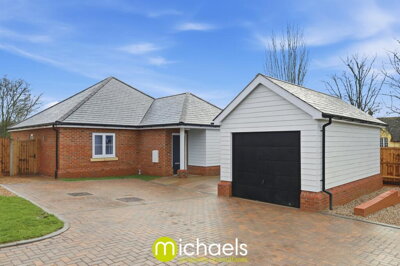
Browse 1 home new builds in Fingringhoe, Colchester from local developer agents.
Three bedroom properties represent a significant portion of the Fingringhoe housing market, offering space for families with multiple reception rooms and gardens in many cases. Browse detached, semi-detached, and terraced options ranging across new residential developments.
£0k
0
0
0
Source: home.co.uk
Showing 0 results for 3 Bedroom Houses new builds in Fingringhoe, Colchester.
Detached homes set the pace in Fingringhoe, which fits a desirable Essex village where space and privacy matter. Our data shows detached properties averaging £590,667 in recent sales, so they sit at the top end of the market. Semi-detached homes are more reachable at approximately £357,500, while terraced houses average around £310,000. No flats were listed for sale in Fingringhoe, which underlines the village’s house-heavy character and its appeal to buyers after traditional family homes.
Recent activity points to a bit of easing after the highs seen in 2023. home.co.uk data shows sold prices around 2% down on the previous year and 15% below the 2023 peak of £618,858. home.co.uk also reports a sharper correction of 27.9% over the last 12 months, with the average price paid at £595,000 as of early 2026. For buyers who have been waiting on the sidelines, that may open a window, especially in a village that usually trades at a premium to nearby urban areas. homedata.co.uk’s rolling annual average of £562,500 sits between those figures, which points to an active but fairly measured market.
Within Fingringhoe itself, new build activity is still very limited, and there are no active developments currently verified in the CO5 7 postcode area. Wivenhoe, Great Bentley and Rowhedge have all seen some new homes, but Fingringhoe has largely held onto its older stock. That absence of fresh supply helps keep the village’s established feel, so buyers are taking on homes with real historical context and mature surroundings. It also helps support values over time, as demand keeps running ahead of the small amount of housing available here.

Life in Fingringhoe has a clear Essex countryside feel, and the village centre includes historic buildings such as the Church of St Andrew, a Grade I listed structure with centuries behind it. The Whalebone Public House is another familiar landmark, its pebble-dashed and rendered exterior showing traditional Essex building methods. Upper Haye Farmhouse adds to that picture, with its painted brick facade and red plain tile roof reflecting 18th-century construction. That concentration of listed buildings says a lot about the village’s past, and about the care taken to keep it intact.
The Fingringhoe Wick Nature Reserve is one of the village’s biggest assets, run by the Essex Wildlife Trust and centred on the former gravel quarry known as Freshwater Pit. It covers glacial sand and gravel laid down by meltwater from the Anglian ice sheet around 450,000 years ago. Residents and visitors use the trails, watch wildlife and learn more about the local ecology at the visitor centre. It adds a great deal to daily life in Fingringhoe, and it brings jobs as well as open space right to the doorstep.
That reserve also feeds into the local economy, with the Essex Wildlife Trust providing work at the visitor centre. Long before that, the area was shaped by sand and gravel extraction, and Fingringhoe Wick stayed a working quarry until 1959. Roman occupation left its mark too, with salt-producing sites identified on the landscape, known locally as red hills. All of that gives Fingringhoe a strong sense of depth and identity. A well-regarded primary school, a village pub and active community groups, with regular events across the year, round things out.

Education here centres on a well-regarded primary school serving both the village and the surrounding catchment. For families thinking about Fingringhoe, schooling is often a major part of the decision, and most homes are within walking distance of a respected primary institution. Place allocation is based on catchment boundaries set by Essex County Council, so buyers need to check the school position against the exact property they have in mind.
For secondary education, Fingringhoe residents usually look to Colchester, reached by regular bus services or by driving along the A133. Colchester Grammar School and Colchester Royal Grammar School are the better-known selective choices for academically able pupils, while the wider area also has non-selective secondary schools offering education for all abilities. Current Ofsted ratings and admission policies are worth checking, as they can affect both outcomes and property values in nearby streets. The drive to Colchester secondary schools takes roughly 15-20 minutes by car, and several schools run dedicated bus services from the Fingringhoe area.
Colchester also gives the area a broader educational offer through further and higher education. The University of Essex, just outside Colchester’s western boundary, draws students and academic staff into the region and adds to local life and spending. Sixth form options are available at Colchester’s secondary schools and through colleges serving the wider Tendring district. That means families moving to Fingringhoe can plan for every stage, from early years through to university. Buyers with links to academia often see the proximity to a major university as a real plus.

Getting out of Fingringhoe is fairly straightforward because of its position near Colchester, Essex’s main city and a major employment centre. The village sits south of Colchester, and the A133 is the main road link into the city centre. From there it also runs towards Clacton and the Essex coastline, which opens up both leisure spots and more work options along the coast. For anyone commuting into Colchester, the journey is manageable and compares well with the longer daily drives many people now face across the southeast.
Rail travel from Colchester gives access to London Liverpool Street, with journey times of about 50 minutes to an hour, so a daily commute to the capital is workable for those who need it. Colchester stations serve both the main line to London and the branch lines to Clacton and other destinations, so rail coverage is broad enough for people who are happy to get into the city first. That connection lifts Fingringhoe’s appeal for buyers who need London access but still want village living. Standard off-peak tickets to London Liverpool Street usually cost between £20-40, depending on when they are booked.
There are local bus links between Fingringhoe, Colchester and the surrounding villages, which matter if you do not have a car. The village’s rural setting does mean some journeys, especially in the evening or at weekends, need a bit of planning. Even so, for day-to-day commuting, the mix of road and rail options from nearby Colchester makes Fingringhoe a practical base for work in the city or beyond. Cycling routes are improving too, with rural lanes offering scenic but sometimes testing rides for confident cyclists. The ground around Fingringhoe is generally flat, so cycling is workable, although the A133 into Colchester needs care at busy times.

Start by looking at properties in Fingringhoe through Homemove and comparing the current listings with recent sold prices. Knowing the gap between asking prices and actual achieved values helps you judge whether a home is fairly priced and shape a sensible offer. With an average sold price of £562,500 according to homedata.co.uk property data, buyers should also note that home.co.uk and homedata.co.uk figures may vary slightly.
Before you book viewings, get a mortgage agreement in principle from a lender. It shows how much you can borrow and tells estate agents that you are serious, with funding already in place. Given that Fingringhoe’s average property prices sit above £500,000, the right mortgage set-up matters. In a village market like this, sellers often favour buyers who can set out their financial position clearly.
Once you are viewing homes, take time to look beyond the front door. We would check the property itself, of course, but also the surrounding street, the distance to the school, any road noise and the general state of neighbouring houses. Fingringhoe’s listed buildings may need a closer look because of age and construction, so seeing more than one property helps you get a feel for what is normal in the village.
Because Fingringhoe has so many older houses and listed buildings, a proper survey matters. A RICS Level 2 Home Survey gives a detailed view of condition and flags issues such as damp, roof problems and repairs that may be needed. Budget £400-800 for this, with older or non-standard homes sometimes needing extra spend. Pre-1900 properties can carry a 20-40% premium on survey costs because they are more complex to inspect.
After an offer is accepted, we would instruct a solicitor to handle the legal side of the purchase. Searches are carried out, the contract is reviewed and funds are managed through to completion. Local knowledge of Essex transactions can help, especially for homes near the coast or in places with specific planning issues. The solicitor should check flood risk, conservation areas and any past land use that could affect the property.
The last stretch is about agreeing a completion date, exchanging contracts with the seller and then completing the purchase. On completion day, the keys to the new Fingringhoe home are handed over. Our solicitor will deal with registration of the ownership in the title register. For leasehold homes, all ground rent and service charge paperwork should be read carefully before you go ahead.
Buyers in Fingringhoe do need to think about a few local issues carefully. The coastal setting puts flood risk firmly on the radar. Current GOV.UK flood information shows very low risk from rivers, sea and groundwater, but historical breaches in the sea wall at Fingringhoe Wick have flooded fields and roads, including Furcliffe Lane. Climate projections suggest that coastal places like Fingringhoe could face higher flooding risk by 2040, so resilience and insurance matter. We always recommend checking the EA flood map and talking to current owners or neighbours before you commit.
The underlying glacial sand and gravel in parts of Fingringhoe usually means lower shrink-swell risk than you would find in clay-rich areas, which is helpful when thinking about subsidence. Still, the quarrying history at Fingringhoe Wick, which ran until 1959, means some sites may have different ground conditions worth investigating. Our inspectors often find that homes built on or near former industrial land benefit from detailed ground checks through the right searches. A proper survey should flag any stability concerns, and the solicitor ought to carry out suitable searches into historical land use.
There are also plenty of listed buildings in Fingringhoe, so some homes may come with extra rules. Grade II listed buildings need consent for certain changes and alterations, which can affect future renovation plans and mortgage options. Well-known listed properties include the Church of St Andrew, Grade I, the Whalebone Public House, Upper Haye Farmhouse and several cottages around Church Green. Older houses can mean higher survey bills too, with pre-1900 construction often attracting a 20-40% premium above standard survey fees. The charm is real, but so are the responsibilities.
Freehold and leasehold ownership need to be understood, although freehold homes are more common in a rural place like Fingringhoe. Where leasehold elements do exist, ground rent clauses and service charges need close attention. Some parts of the village may also fall within a conservation area, which can restrict permitted development rights and affect how owners can alter their homes. Our solicitor should check these matters through local authority searches before any purchase goes ahead. Homes with original features such as sash windows, period fireplaces or exposed timber framing may also need specialist maintenance knowledge.

home.co.uk data shows the average sold house price in Fingringhoe over the last year was £528,417, while homedata.co.uk reports £562,500. Detached properties averaged £590,667, semi-detached homes £357,500 and terraced properties £310,000. The market has seen some correction, with prices about 2% down on the previous year and 15% below the 2023 peak of £618,858. home.co.uk also indicates a steeper 27.9% adjustment over 12 months, with average prices paid at £595,000 as of early 2026. No flats were recorded as sold in Fingringhoe during the research period, which reflects the village’s house-only character.
Fingringhoe properties sit within Colchester Borough Council administration and the CO5 7 postcode area. Council tax bands in the area follow the usual England structure from A through to H, with the actual band depending on value and the features that were assessed at the last valuation in 1991. Band D is a common middle point for many standard homes in the village, while larger detached houses such as those on Fingringhoe Road may sit in higher bands. Prospective buyers should check the exact band for any home they are considering through the VOA website or by asking the selling agent, because council tax feeds directly into annual running costs and needs to sit alongside mortgage payments and maintenance in the budget.
A well-regarded primary school serves Fingringhoe directly, and most residential parts of the village are within walking distance of the school gates. Secondary school choices are in Colchester, including the selective Colchester Grammar School and Colchester Royal Grammar School for academically able pupils, both with strong reputations in Essex. Essex County Council sets catchment areas, so families should check which schools apply to specific addresses, especially if the property sits near the village edge. Current Ofsted ratings are worth reviewing too, since school performance shapes both education and property values. The A133 is the main road to Colchester secondary schools, and the drive usually takes 15-20 minutes by car.
Bus services link Fingringhoe with Colchester and the surrounding villages, giving basic public transport access for everyday needs. Rail is available from Colchester main station and Colchester Town station, with London Liverpool Street usually about 50 minutes to an hour away. Because the village sits south of Colchester, getting to the stations means either a bus ride or private transport, and the A133 is the main road connection. For London commuters, that makes Fingringhoe workable despite its village setting, though anyone relying on buses should plan connections in advance. The nearest major airport is London Stansted, around 45 miles away, reached via the A120 and M11 for international travel.
For buyers who care about lifestyle as well as long-term value, Fingringhoe has plenty going for it. Its rural feel, closeness to Colchester and attractive surroundings, including Fingringhoe Wick Nature Reserve, all point to steady demand from people after village living. Homes with historic features or views over the reserve may be especially attractive to future buyers. That said, coastal flooding risk and possible climate change impacts need to sit in the picture too. With little new build activity in CO5 7, existing homes face less competition from new supply, which can support values. As always, location, condition and wider market conditions should shape the decision, and we recommend speaking to a local estate agent who knows the Fingringhoe market well.
Stamp Duty Land Tax, or SDLT, applies to property purchases in England, including Fingringhoe. Standard rates begin at 0% for homes up to £250,000, then rise to 5% on the portion between £250,001 and £925,000. On a typical Fingringhoe home worth around £528,417, SDLT is worked out on the amount above £250,000 at 5%, which gives roughly £13,921 in stamp duty for non-first-time buyers. First-time buyers get relief up to £425,000, with 5% due between £425,001 and £625,000. Always check the current thresholds with HMRC or a solicitor, because rates can change and the correct figure needs to be applied to the specific purchase.
From 4.5%
Find competitive mortgage rates when buying in Fingringhoe
From £499
Legal support for your Fingringhoe property purchase
From £400
Condition reporting for Fingringhoe’s older homes
From £85
Energy performance certificate for your new home
Understanding the full cost of buying in Fingringhoe helps with budgeting and stops nasty surprises later. Alongside the purchase price, buyers need to factor in Stamp Duty Land Tax, which is charged at progressive rates depending on value and buyer status. On a home priced at the current average of £528,417, a non-first-time buyer would pay around £13,921 in SDLT, worked out as 5% on the portion between £250,000 and £528,417. First-time buyers have more generous thresholds, with nothing due on the first £425,000 and 5% on amounts between £425,001 and £625,000, although the average Fingringhoe price still means most buyers will pay some SDLT.
Survey costs are another sizeable item, especially with Fingringhoe’s older housing stock. A RICS Level 2 survey usually costs between £400 and £800, with the national average around £455. Homes valued above £500,000 average £586, and pre-1900 properties can carry a 20-40% premium because their construction is more complicated. Since many Fingringhoe homes date from the 18th century or earlier, it makes sense to budget towards the upper end of the range. Listed building status can push survey costs higher again and may call for specialist heritage assessments, though that extra spend helps protect buyers from unexpected maintenance liabilities on historic homes.
Conveyancing fees usually start from around £499 for straightforward transactions, and costs rise as matters become more involved. Extra charges include search fees, usually about £200-400 for local authority, drainage and environmental searches, title registration fees and telegraphic transfer charges. For Fingringhoe purchases, we recommend that the solicitor also includes a flood risk search because of the coastal location and the history of sea wall breaches, plus historical land use searches given the former gravel quarrying at Fingringhoe Wick. Mortgage arrangement fees vary from lender to lender, from flat sums to percentage-based charges. Buildings insurance must be in place from completion, and buyers should also budget for removals, any storage needed and urgent repairs or renovations highlighted by the survey. In all, about £2,000-4,000 should be set aside for typical ancillary costs on a Fingringhoe purchase.

Properties New Builds In London

Properties New Builds In Plymouth

Properties New Builds In Liverpool

Properties New Builds In Glasgow

Properties New Builds In Sheffield

Properties New Builds In Edinburgh

Properties New Builds In Coventry

Properties New Builds In Bradford

Properties New Builds In Manchester

Properties New Builds In Birmingham

Properties New Builds In Bristol

Properties New Builds In Oxford

Properties New Builds In Leicester

Properties New Builds In Newcastle

Properties New Builds In Leeds

Properties New Builds In Southampton

Properties New Builds In Cardiff

Properties New Builds In Nottingham

Properties New Builds In Norwich

Properties New Builds In Brighton

Properties New Builds In Derby

Properties New Builds In Portsmouth

Properties New Builds In Northampton

Properties New Builds In Milton Keynes

Properties New Builds In Bournemouth

Properties New Builds In Bolton

Properties New Builds In Swansea

Properties New Builds In Swindon

Properties New Builds In Peterborough

Properties New Builds In Wolverhampton

Enter your details to see if this property is within your budget.
Loans, cards, car finance
Estimated property budget
Borrowing + deposit
You could borrow between
Typical borrowing
Monthly repayment
Est. at 4.5%
Loan-to-value
This is an estimate only. Your actual budget may vary depending on interest rates, credit history, and personal circumstances. For an accurate affordability assessment, speak to one of our free mortgage advisors.
This calculator provides estimates for illustrative purposes only and does not constitute financial advice. Your home may be repossessed if you do not keep up repayments on your mortgage. Estimates based on 4.5% interest rate, repayment mortgage. Actual rates depend on your circumstances.
Homemove is a trading name of HM Haus Group Ltd (Company No. 13873779, registered in England & Wales). Homemove Mortgages Ltd (Company No. 15947693) is an Appointed Representative of TMG Direct Limited, trading as TMG Mortgage Network, which is authorised and regulated by the Financial Conduct Authority (FRN 786245). Homemove Mortgages Ltd is entered on the FCA Register as an Appointed Representative (FRN 1022429). You can check registrations at NewRegister or by calling 0800 111 6768.

We use cookies to show you personalised content and improve your experience of our website. Find out more in our Privacy policy and Cookie policy.