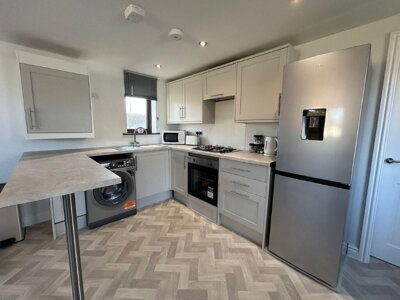
Browse 1 home new builds in Fangfoss, East Riding of Yorkshire from local developer agents.
£500k
4
0
179
Source: home.co.uk
Source: home.co.uk
Barn Conversion
1 listings
Avg £465,000
House
1 listings
Avg £595,000
Semi-Detached Bungalow
1 listings
Avg £280,000
detached
1 listings
Avg £535,000
Source: home.co.uk
Source: home.co.uk
Fangfoss is modest in scale, but the village market still gives buyers real choice if they know where to look. Our data puts detached homes at an average of around £486,000, which sits in the premium end of the local market where extra space, privacy and, often, period features carry a premium. Semi-detached properties average approximately £230,000, so they remain a sensible route for first-time buyers and families who want village life without stretching quite as far. Recent sales activity shows most transactions have involved semi-detached homes, with detached properties next, and that shift has changed the tone of the market a little.
After the peaks seen in 2022, the market has eased back. That year, the village average reached £570,625 according to home.co.uk listings data, while the current average of £315,333 marks a sharp adjustment. home.co.uk says prices are down around 40% on the previous year and 45% below that 2022 high, and its figures show a 26.2% fall over the past 12 months as of early 2026. For buyers who were pushed out before, that opens a door. Sellers, though, need to price against today’s comparable sales, not the old top of the market. The two major portals do not line up perfectly, because they work to different methods and update at different times, but both point in the same direction.
There are still some individual homes on the market in and around Fangfoss. The Old Station House on Station Lane is a three-bedroom detached home at £500,000, and it is being offered with no onward chain. The Paddock is another four-bedroom detached option at £549,000, while Chestnut Way offers a further four-bedroom property at £495,000. So buyers looking specifically for Fangfoss do have a workable level of supply, even if larger new build schemes inside the village are thin on the ground and most activity sits in nearby Pocklington and the surrounding villages. That lack of major development helps the village keep its character and supports existing values.

Homes in Fangfoss reflect the building traditions of the East Riding of Yorkshire, where red brick has been the dominant material since the Georgian period onwards. Most village properties were built with locally sourced brick, usually with timber frame internal structures, and roofs tend to be clay tile or natural slate depending on the age and original budget of the house. Stone appears too, especially in older cottages from the 18th century or earlier, and that is part of what gives the village centre its appeal. For buyers, knowing how these homes were built helps with both appreciation and maintenance planning.
Geology matters here. Much of the lower-lying land around Fangfoss sits on clay soils, stretching towards the flatter country that leads on towards York. Clay brings shrink-swell risk, so the ground can contract in dry spells and then expand once it becomes saturated. That means foundations need to cope with movement, and older buildings can show cracking or shifting if the original footing was not up to modern expectations. Our inspectors see this regularly on surveys across the East Riding region.
From the 1980s onwards, newer Fangfoss homes generally came with the sort of features buyers expect now, including cavity wall insulation, central heating and double glazing as standard. They usually cost less to run and need less day-to-day maintenance than older houses, although they may not have the same character. The local stock spans several eras, from pre-1919 cottages through to recently built individual homes, so buyers can choose between period charm and modern convenience. Most of the village sits in the post-1945 to 1980 age bracket, but there is still a meaningful number of older properties for those who want original features.
Set in the East Riding of Yorkshire countryside, Fangfoss occupies a peaceful spot where the rolling Yorkshire Wolds meet flatter ground heading towards York. The name comes from the Old Norse "Fangfoss", meaning a ford or crossing point, which hints at the village’s role as a place people passed through on the route between the coast and inland settlements. That quiet feel remains today. Stone and brick cottages, a traditional village green, and a slower pace of life still define it.
Life in Fangfoss is very much community-led. The village is tight-knit and active, with events through the year bringing people together for celebrations, fundraisers and seasonal get-togethers. The pub acts as a social hub, somewhere to eat, drink and catch up with neighbours in a relaxed atmosphere. For day-to-day shopping and services, most residents make the short trip to Pocklington, a busy market town with supermarkets, independent shops, healthcare facilities and a twice-weekly market selling local produce and crafts. It is only a few miles away, so people get a sense of rural seclusion without giving up practical access to services.
The surrounding countryside is excellent for getting out and about. Footpaths, bridleways and quiet lanes give plenty of scope for walking, cycling and horse riding, while the nearby Pocklington Canal offers scenic boat trips and riverside walks. Hikers and nature lovers often head for the Yorkshire Wolds, where the terrain becomes more testing. Across the East Riding, traditional brick houses with tile or slate roofs create a coherent look, and Fangfoss has kept that identity over generations. It feels settled, not newly imposed.

For schooling, Fangfoss residents mainly look to Pocklington, which has a strong choice of schools within easy commuting distance. Pocklington Infant School and Pocklington Junior School both have good reputations for pastoral care and progress, and the wider area also includes primary schools in villages such as Barmby Moor and Wilberfoss. That gives families a settled start while staying within the community they have chosen. The infant school on Kilwick Road and the junior school on West Green both have established track records and serve children from across the surrounding villages, including Fangfoss.
Secondary education is well covered by Pocklington School, an established independent school with a long record of strong academic results and university placements. For state-funded options, there are grammar schools in York and other nearby towns. Families should check catchment areas and admissions criteria carefully, because these can vary a great deal and may change from year to year with demand and available places. For grammar schools, the selective entry process can make entrance exam preparation a real factor in deciding where to settle in the wider region.
Sixth form and further education are easy to reach in York, around 12 miles from Fangfoss, where students can choose from A-level subjects, vocational courses and apprenticeship programmes. The University of York and York St John University give local higher education options for those who want to stay close to home. York College also offers a wide spread of further education courses across different subjects. For families with school-age children, having those choices within a manageable commute is a major part of the area’s appeal.
Road access is the main transport strength here. Fangfoss sits well placed for both the A1079 York to Hull road and the A166, which runs through the Yorkshire Wolds towards Beverley. The A64 gives direct access to York for commuters, and the drive normally takes around 30 minutes depending on traffic. If you are heading to Leeds or further afield, the road network links towards the M1 and A1(M), although those journeys are longer and suit people who are comfortable with less frequent commuting. The village gives residents genuine flexibility about where they work while still living in the countryside.
Public transport is more limited, which is exactly what you would expect from a rural village and from the recent reduction in services. Bus routes to Pocklington and York run on a fairly infrequent basis, so most residents rely on a car for everyday travel. The nearest railway stations are in York and Selby, both on the East Coast Main Line, with services to London, Edinburgh, Leeds and other major cities. York station is especially useful, with LNER high-speed trains to the capital in under two hours, so day trips to London are entirely possible for people with flexible working patterns.
For people working from home, or those with flexible arrangements, Fangfoss strikes a useful balance between rural calm and digital connectivity. Superfast broadband is available in most areas, so remote working is practical rather than aspirational. Cycling is popular for short trips, with quiet country lanes making pleasant routes to Pocklington and the neighbouring villages, and dedicated cycle paths are being developed across the region to support more sustainable travel. Reliable internet, a peaceful setting and decent road links have made the village increasingly appealing to remote workers and small business owners.
Start by looking at the current listings in Fangfoss, then compare them with recent sold prices, which average £315,333 for all property types according to homedata.co.uk data. Getting to grips with the 26-40% price correction from recent peaks will help you judge what is competitive when the right home appears. We would also suggest checking both home.co.uk and homedata.co.uk so you can compare current asking prices with recent sales and build a fuller picture of what similar homes in the village have actually achieved.
Before you book any viewings, get a mortgage agreement in principle from a lender. It shows sellers that finance is already under consideration, which strengthens your position in what can still be a competitive village market. Mortgage rates typically start from around 4.5% APR, although the rate you are offered will depend on your credit profile and deposit size. Having that paperwork ready means you can move quickly when the right Fangfoss property comes up.
Contact local estate agents and arrange viewings for homes that fit your brief. Fangfoss properties range from traditional stone cottages to modern detached family houses, so it is worth seeing several types to judge where the best value sits in the current market. We would recommend viewing both older and newer homes, since the trade-off between character and convenience is one of the things that really defines the local market.
Once your offer has been accepted, arrange a RICS Level 2 Homebuyer Report to check the property condition. That matters especially with older village houses, where damp, roofing problems and timber defects are common in traditional East Riding construction. Our inspectors know the local stock well and are used to brick-and-tile buildings on clay soils. Survey fees usually sit between £350 to £800, depending on the size and value of the home.
Appoint a solicitor to deal with the legal side of the purchase, including searches, contract review and registration. Local conveyancers who know East Riding properties can usually keep things moving efficiently, and standard transactions often cost from £499, although more complicated purchases may be higher. Your solicitor will carry out local authority searches, drainage and water enquiries, and environmental searches to check for issues affecting the property.
Once the mortgage is finalised and your stamp duty is paid, completion takes place on the agreed date. Your solicitor transfers the funds, and then you collect the keys and start your new life in Fangfoss. On a typical Fangfoss property at £315,333, SDLT would be zero for most buyers under the current thresholds, although first-time buyer status can change the final figure.
Fangfoss properties cover several periods, from traditional brick and stone cottages that may be over a century old to more modern detached homes built in later decades. When we view village properties, we pay close attention to roof condition, because older buildings may have partially replaced roofs or signs of wear. Traditional East Riding houses were often built with solid walls rather than cavity insulation, which affects heat retention and moisture management, so any retrofit or renovation work needs checking carefully when a buyer is weighing up maintenance costs.
Flood risk in Fangfoss deserves a proper look, particularly because of the clay soils found in parts of the East Riding geology. Those soils can shrink and swell in dry and wet weather, which can affect foundations over time, especially where mature trees are nearby or where houses were built to older standards. There is limited specific flood risk data for Fangfoss itself, so checking the Environment Agency flood maps and asking your solicitor to review any local drainage history is sensible before you commit. The village sits away from major watercourses, which helps, although surface water flooding can still happen in exceptional conditions.
Listed buildings and period homes in villages like Fangfoss often come with planning restrictions and consent requirements that buyers need to understand before going ahead. Any work to a listed building, from exterior painting to internal changes, usually needs Listed Building Consent from the local planning authority. Older homes can also cost more to maintain than modern ones, so a thorough building survey and a realistic repair budget are both sensible steps for anyone considering a character property in the village. Our inspectors always look for earlier alterations, extensions and any unauthorised changes that could affect value or create legal problems.
In older Fangfoss properties, electrical and plumbing systems may be behind current standards and could need upgrading before, or soon after, purchase. Rewiring is disruptive and costly, but it is important for safety compliance, while a new heating system can make a huge difference to comfort in period homes that were originally set up for coal-fired systems. Budgeting for a full renovation should also leave room for hidden defects that only emerge once work begins, especially where previous owners have delayed maintenance for years.

The average sold price in Fangfoss over the past year is £315,333 according to homedata.co.uk data and home.co.uk. Detached properties average around £486,000, while semi-detached homes sit nearer £230,000. The market has corrected quite sharply, with prices down 26-40% from previous highs depending on which portal you use, and that has created chances for buyers who were once priced out of the village. home.co.uk data shows the 2022 peak reached £570,625, so the market still offers clear value for people moving in now.
Fangfoss falls under East Riding of Yorkshire Council. Council tax bands run from A through H depending on value, and most village properties usually sit in bands B through E. It is worth checking the band for any home you are considering, because it will affect annual running costs, and property listings often include the information as well. East Riding of Yorkshire Council sets the rates using property valuation bands determined by the Valuation Office Agency.
There is no school inside Fangfoss itself, but nearby Pocklington, Barmby Moor and Wilberfoss provide primary education. Pocklington Infant School on Kilwick Road and Pocklington Junior School on West Green both offer well-regarded education with good Ofsted ratings, while the independent Pocklington School provides secondary education with excellent academic results and strong university placement records. Families should check current catchment areas and admissions policies with East Riding of Yorkshire Council, because these can change every year depending on demand and available capacity.
Transport by bus is limited from Fangfoss, which reflects the village’s rural character and the wider reduction in bus services across rural England in recent years. Services to Pocklington and York run infrequently, so car ownership is essential for most residents when it comes to daily travel. The nearest railway stations are in York and Selby, both on the East Coast Main Line, with links to major cities including London in under two hours to the capital. York station gives the widest range of connections, including LNER high-speed services.
Fangfoss has real potential for property investment, especially since the price correction from the 2022 peaks has brought village homes back within reach of buyers who were priced out before. Its position near York, plus strong road links via the A64 and A1079, works in its favour, and the limited new build supply helps support existing values. Buyers looking for rental income should weigh up demand from commuters and families who want village life but still need access to major employment centres, although rental demand in smaller villages is usually weaker than in larger towns.
For 2024-25, Stamp Duty Land Tax rates are 0% on the first £250,000 of residential property purchases, 5% on the portion between £250,001 and £925,000, and 10% on the amount up to £1.5 million. A typical Fangfoss property at the average price of £315,333 would attract no SDLT for most buyers under the current thresholds, which makes the village especially appealing to first-time buyers. First-time buyers get relief on the first £425,000, with 5% charged between £425,001 and £625,000, although this does not apply to buy-to-let properties or second homes.
Older Fangfoss homes usually come with solid brick walls, traditional timber construction and slate or tile roofs, all of which can need more attention than modern equivalents. Our inspectors commonly find damp in solid walls without cavity insulation, ageing roof structures with damaged or slipped tiles, and electrical systems that fall short of current safety standards. Clay soil in the East Riding also means foundations should be checked for movement or cracking that could point to subsidence risk. A proper RICS Level 2 or Level 3 survey before purchase will highlight any defects that need attention.
Buying in Fangfoss means looking beyond the purchase price and budgeting carefully for the full cost of the move. For residential purchases in England in 2024-25, Stamp Duty Land Tax is nothing on the first £250,000 of value, 5% on the portion from £250,001 to £925,000, 10% on the next section up to £1.5 million, and 12% on any amount above that. At the village average of £315,333, most buyers would pay no SDLT at all because the whole price sits within the zero-rate band. That is a sizeable saving compared with higher-value areas.
First-time buyers benefit from a higher SDLT relief threshold of £425,000, with 5% charged between £425,001 and £625,000. To qualify, buyers must never have owned property anywhere in the world and must intend to live in the Fangfoss home as their main residence. Buy-to-let purchases and second homes do not qualify for that relief, and they face the standard rates plus a 3% surcharge on the whole purchase price. That surcharge applies wherever the buyer already owns another property, so investment purchases become much more expensive in SDLT terms.
Beyond SDLT, there are still the other costs to budget for. Solicitor conveyancing usually starts from around £499 for a standard transaction, although it can reach £1,500 or more where the purchase is more complex, such as with leasehold property or extensive documentation. A RICS Level 2 Homebuyer Report generally costs between £350 and £800 depending on property size and value, while a RICS Level 3 Building Survey for larger or older homes may be £800 or more depending on the specific property. Add in removal costs, mortgage arrangement fees and possible renovation work, and the total starts to build up.
There are also the Land Registry registration fees, which are usually around £200-500 depending on property value, along with any mortgage arrangement fees charged by your lender. Buildings insurance needs to be in place from completion day, and you should also factor in the cost of any immediate purchases or renovations once you move in. Our team can talk through the likely budget for a Fangfoss purchase in more detail, based on the property type and your circumstances.

Properties New Builds In London

Properties New Builds In Plymouth

Properties New Builds In Liverpool

Properties New Builds In Glasgow

Properties New Builds In Sheffield

Properties New Builds In Edinburgh

Properties New Builds In Coventry

Properties New Builds In Bradford

Properties New Builds In Manchester

Properties New Builds In Birmingham

Properties New Builds In Bristol

Properties New Builds In Oxford

Properties New Builds In Leicester

Properties New Builds In Newcastle

Properties New Builds In Leeds

Properties New Builds In Southampton

Properties New Builds In Cardiff

Properties New Builds In Nottingham

Properties New Builds In Norwich

Properties New Builds In Brighton

Properties New Builds In Derby

Properties New Builds In Portsmouth

Properties New Builds In Northampton

Properties New Builds In Milton Keynes

Properties New Builds In Bournemouth

Properties New Builds In Bolton

Properties New Builds In Swansea

Properties New Builds In Swindon

Properties New Builds In Peterborough

Properties New Builds In Wolverhampton

Enter your details to see if this property is within your budget.
Loans, cards, car finance
Estimated property budget
Borrowing + deposit
You could borrow between
Typical borrowing
Monthly repayment
Est. at 4.5%
Loan-to-value
This is an estimate only. Your actual budget may vary depending on interest rates, credit history, and personal circumstances. For an accurate affordability assessment, speak to one of our free mortgage advisors.
This calculator provides estimates for illustrative purposes only and does not constitute financial advice. Your home may be repossessed if you do not keep up repayments on your mortgage. Estimates based on 4.5% interest rate, repayment mortgage. Actual rates depend on your circumstances.
Homemove is a trading name of HM Haus Group Ltd (Company No. 13873779, registered in England & Wales). Homemove Mortgages Ltd (Company No. 15947693) is an Appointed Representative of TMG Direct Limited, trading as TMG Mortgage Network, which is authorised and regulated by the Financial Conduct Authority (FRN 786245). Homemove Mortgages Ltd is entered on the FCA Register as an Appointed Representative (FRN 1022429). You can check registrations at NewRegister or by calling 0800 111 6768.

We use cookies to show you personalised content and improve your experience of our website. Find out more in our Privacy policy and Cookie policy.