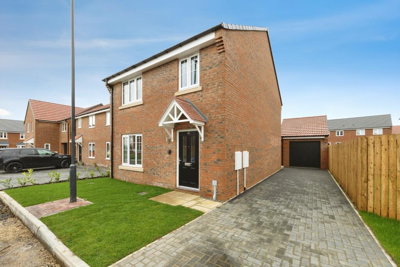
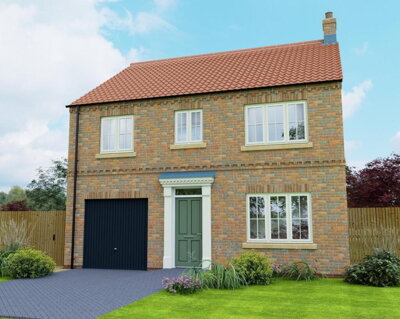
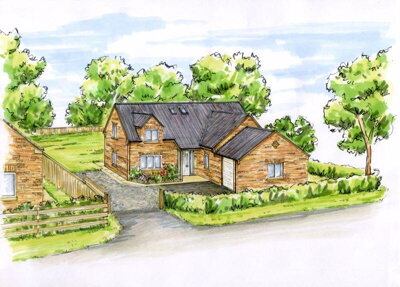
Browse 3 homes new builds in Exelby, Leeming and Londonderry from local developer agents.
The larger property sector typically features multiple bathrooms, substantial reception space, and private gardens or off-street parking. Four bedroom houses in Exelby span detached, semi-detached, and occasionally terraced configurations, with styles ranging from period properties to modern executive homes.
In Exelby, Leeming and Londonderry, the market is small enough that one sale can shift the mood more than it would in a larger town. homedata.co.uk shows Exelby prices fell by 31.0% over the last 12 months, while Londonderry prices were 2% up on the previous year and close to the 2023 peak of £285,495. Within the DL7 9ND part of Londonderry, values have risen by 3.9% over the past year, pointing to a steadier pattern there than in Exelby itself. To us, that is a clear sign that buyers need to judge the exact village and postcode carefully, because prices can move in different directions within one small parish.
There is more variety in the housing stock than you might expect from such a small patch. Since 2018, detached homes have averaged £413,150 across the wider parish, comfortably ahead of the semi-detached average of £209,168 and the terrace average of £135,542. Flats hardly feature, with just 2 recorded sales at £99,250, so apartment buyers will be working with a very short list. New-build supply looks light as well, with one 2025 snapshot showing 0.0% of Exelby sales coming from new builds, leaving the market largely centred on existing homes.
If you can wait, limited turnover can actually help, because the strongest properties often separate themselves from the rest more clearly. It also makes pricing trickier. In a market like this, one substantial detached sale can pull the average around far more than it would in a busier location. That is why we advise comparing the exact house type, plot size and village position before offering, then checking what genuinely similar homes have sold for nearby rather than relying on the headline figure alone.

This is a parish made up of small villages, not one single built-up centre, and daily life tends to follow that pattern. In DL7 9ND, terraced homes account for around 48% of transactions, with semis and detached houses also in the mix, so the stock feels practical rather than highly exclusive. We would read that as a sign that the area appeals to different kinds of buyers, from people after a manageable village house to those wanting more space, land or parking. Part of the attraction is the slower pace, with the road network doing much of the work that a busy high street might do elsewhere.
Amenities are likely to work in a mixed way here, with residents using village surroundings for home life and nearby towns for shopping, schools and services. The research supplied for this page did not identify confirmed local geology, flood-risk hotspots, conservation areas or concentrations of listed buildings, so plot-specific checks are essential. In a rural parish, the details that often matter most are drainage, access, boundary lines and whether any land is shared. One house can feel completely different from another simply because it sits in a small group of homes, or on a more open edge-of-village plot.
The demographic picture suggests a place where homes do not change hands quickly and many buyers are thinking long term. That tends to suit people looking for space, quieter surroundings and a move shaped by lifestyle as much as price. Homes that pair decent road access with manageable running costs and a layout that suits modern family life can hold attention well. From our perspective, Exelby, Leeming and Londonderry rewards a careful search, patient comparison and quick decisions once the right property appears.
We were not given a definitive list of schools within the parish itself, which is fairly typical for a small rural location. Most families widen the search to nearby villages and larger North Yorkshire settlements, then confirm catchment arrangements direct with the schools and the local admissions team. Catchment boundaries can shift by year group and intake, so it is better to check before making an offer than after. If schooling is central to your move, ask the agent whether the property has previously sat within a preferred catchment, then verify the current admissions position yourself.
For rural buyers, the useful education question is often not just where the nearest school is, but how dependable the route is in winter, whether after-school transport exists and how long the school day becomes once travel is added in. The parish’s position near the A1(M) corridor can make a wider choice of schools more realistic than in a more remote spot, but it still needs checking in practical terms. Sixth forms and further education options are usually broader once you reach the larger towns nearby, giving older students more flexibility than younger children. We often find that a mortgage agreement in principle and a school-place plan should be sorted side by side.
School demand can still shape competition, even in a small parish where turnover is modest. A house that falls on the edge of one catchment and comfortably within another may affect future resale as much as it affects the weekly routine. We would always suggest looking at the full education journey, from primary through to sixth form, before committing to a purchase. That extra checking can be the difference between a home that only just works and one that properly supports family life.

One of the parish’s clearest advantages is road access. Being close to the A1(M) corridor makes north-south driving much easier than in many deeper-rural parts of North Yorkshire. For commuters splitting time between nearby towns and wider regional destinations, that connection is often a big part of the appeal. Parking is also usually less pressured than in denser urban markets, which is a real plus for families and for households running multiple vehicles.
Anyone travelling by rail will usually look beyond the parish and use Northallerton for main-line connections, with East Coast Main Line services opening routes towards York, Leeds and London. That keeps the area workable for hybrid workers and regular travellers who do not need a station on the doorstep every day. Bus links are likely to be thinner than they would be in a town centre, so we would check the timetable before buying if public transport matters to your routine. Here, the right property depends as much on your travel pattern as it does on the bedroom count.
The surrounding lanes and countryside are likely to appeal more to walkers and cyclists than any built-up streetscape, although rural routes need a bit of planning, especially after dark or in poor weather. If commuting is part of the picture, ask about travel times at the exact time of day you would usually set off, because country-road and A-road conditions can change fast. Buyers with a mortgage agreement in principle are often able to act more quickly once those day-to-day travel checks are done. In this parish, convenience forms part of the value.
We would begin by comparing Exelby, Leeming and Londonderry with nearby North Yorkshire locations, then narrow the focus to the exact plot, the road access and the house type. In a parish this small, two homes on the same street can offer a very different feel, so the postcode on its own is not enough.
Once your mortgage agreement in principle is in place, book viewings quickly. Stock is limited, and the better homes can draw interest fast. Before you return for a second viewing, ask about tenure, parking, garden boundaries, drainage and any shared access.
For many properties here, a RICS Level 2 survey is a sensible step, especially where the home is older or has been altered over time. It can bring roof issues, damp, movement or maintenance problems to light before they become expensive surprises.
After you have settled on a property, bring in a conveyancer to review the title, searches and contract pack. Rural homes often carry extra detail around access rights, services or land boundaries, so careful legal checking really matters.
Use local sold evidence from homedata.co.uk, together with the property’s condition and exact setting, to support your offer. If the survey or searches uncover problems, deal with them early, so the chain is not held up later on.
Once contracts are exchanged, line up your buildings insurance, funds and removal arrangements. Completion tends to run far more smoothly when every professional and financial step has been dealt with in advance.
Because the supplied research did not identify a firm flood-risk map, geology note or conservation-area record for this exact parish, the survey becomes even more valuable. We would look closely at drainage, signs of historic damp, roof condition and any movement in brick or stonework, particularly where a house has been altered over time. Rural properties may also involve private services, shared access routes or boundary arrangements that are easy to miss on a brief viewing. The more secluded the plot, the more important it is to understand what lies beyond the garden fence.
Leasehold flats are unusual here, but if one does come up, ground rent, service charge and the management company all need a close look. Houses may be freehold, but the title still deserves scrutiny, especially where there is a drive, shared lane or outbuilding on land used by somebody else. Buyers should also ask about planning restrictions, listed-building considerations or future development proposals nearby, even though the research did not identify a concentration of those issues in the parish. In a small market, paperwork matters because each home can come with its own quirks.
Running costs deserve the same attention as the purchase price. A detached home at £413,150 will normally bring a different maintenance pattern from a terrace at £135,542, and your budget should reflect that from the outset. In places like this, buyers can get drawn to the space and setting, then overlook heating, insurance and access costs. Our view is straightforward, check the structure, study the title and think about long-term upkeep before the view wins you over.
The research for this small parish does not clearly publish one exact combined average, because the evidence is spread across different local records. As a guide, homedata.co.uk records show a median sold price of £227,500 for Exelby based on 106 sales, Leeming averaged £175,121 over the last 12 months, and Londonderry averaged £285,074. The wider parish figures also put detached homes at £413,150, semis at £209,168, terraces at £135,542 and flats at £99,250, so the result depends heavily on house type.
Properties in the parish fall under North Yorkshire Council, and the council tax band is attached to the individual home rather than the village name. In a rural area with terraces, semis and detached houses side by side, it is normal to find several different bands within a very small patch. We always suggest asking the agent to confirm the exact band for the property you are considering, because it feeds straight into annual running costs. It is an easy check, and it can spare you an unwelcome surprise after completion.
No single standout school within the parish was named in the supplied research, which is common in a small rural area. Most families look instead to nearby schools in surrounding North Yorkshire villages and larger towns, then confirm the latest catchment position directly with the admissions team. If school travel is part of your buying decision, check journey time, after-school arrangements and the year-group intake before you offer. A house can look perfect on paper and still prove awkward if the catchment does not line up.
For transport, the parish is strongest by road, particularly because of its access to the A1(M) corridor. Rail users generally travel to Northallerton for main-line services, opening routes towards York, Leeds and London. Bus services are likely to be more limited than in a town centre, so the timetable is worth checking carefully if you need public transport every day. For plenty of buyers, the appeal lies in that balance, strong driving links and a quieter rural setting.
It can be a good place to buy, particularly if you want a lower-volume market where stronger homes stand out and rural surroundings still attract interest. homedata.co.uk shows that Exelby prices fell by 31.0% over the last 12 months, while Londonderry prices rose by 2% and DL7 9ND was up 3.9%, so the market is mixed rather than consistent. New-build supply looks extremely limited, with one 2025 snapshot showing 0.0% of Exelby sales coming from new builds, which can help scarcity value. We would focus on buying the right house type in the right part of the parish, while allowing for the slower pace of the local market.
Under current 2024-25 rules, standard stamp duty is 0% up to £250,000, then 5% from £250,000 to £925,000, 10% from £925,000 to £1.5 million and 12% above that. Buy at £227,500 and standard SDLT is £0, because the price sits below the threshold. First-time buyers also pay 0% up to £425,000, with 5% only on the slice from £425,000 to £625,000. Once a purchase goes above £250,000, the bill can climb quickly, so we would budget for it early.
From the research we reviewed, new-build supply looks very limited. One local snapshot showed 0.0% of Exelby sales in 2025 coming from new builds, suggesting that existing homes dominate the market. That will suit buyers who prefer character, or simply a more established village feel. It also means a newly built home could attract extra attention when one does reach the market.
Yes, we think a survey is a wise move here, especially because the research did not identify exact local geology, flood-risk or conservation detail for every plot. A RICS Level 2 survey is a practical choice for many standard homes and can highlight defects before you commit fully. Rural houses can hide issues involving drainage, roof wear, access and older alterations, so the cost of a survey often pays back in caution. If the property is older, unusual or heavily altered, a more detailed report may be the better route.
Stamp duty is one of the main costs to budget for, and the current 2024-25 thresholds are clear enough. Standard buyers pay 0% up to £250,000, 5% from £250,000 to £925,000, 10% from £925,000 to £1.5 million and 12% above £1.5 million. First-time buyers get relief up to £425,000, then pay 5% between £425,000 and £625,000, with no relief above £625,000. That matters locally because many parish properties sit at or below the zero-rate threshold.
Take the Exelby median of £227,500 as an example, and there would usually be no stamp duty for either standard buyers or first-time buyers. A purchase at £285,074 would create a standard SDLT bill of about £1,753.70, while a first-time buyer would still pay nothing because the price remains under £425,000. A detached home at £413,150 would also sit within first-time buyer relief, but a standard buyer would pay more, so buyer status makes a real difference. We always tell buyers to total the full cash requirement, not just the asking price, because legal fees, survey costs, mortgage fees and removals soon add up.
Before viewings become serious, get your mortgage agreement in principle sorted and compare the likely tax bill with your deposit and moving budget. That helps even more in a small parish where the right property may sell quickly and where the market is shaped by a narrow pool of comparable sales. We would also keep money aside for searches, conveyancing, insurance and any immediate repair work flagged by the survey. Map those costs early, and you can move from shortlist to offer with much more confidence.
Properties New Builds In London

Properties New Builds In Plymouth

Properties New Builds In Liverpool

Properties New Builds In Glasgow

Properties New Builds In Sheffield

Properties New Builds In Edinburgh

Properties New Builds In Coventry

Properties New Builds In Bradford

Properties New Builds In Manchester

Properties New Builds In Birmingham

Properties New Builds In Bristol

Properties New Builds In Oxford

Properties New Builds In Leicester

Properties New Builds In Newcastle

Properties New Builds In Leeds

Properties New Builds In Southampton

Properties New Builds In Cardiff

Properties New Builds In Nottingham

Properties New Builds In Norwich

Properties New Builds In Brighton

Properties New Builds In Derby

Properties New Builds In Portsmouth

Properties New Builds In Northampton

Properties New Builds In Milton Keynes

Properties New Builds In Bournemouth

Properties New Builds In Bolton

Properties New Builds In Swansea

Properties New Builds In Swindon

Properties New Builds In Peterborough

Properties New Builds In Wolverhampton

Enter your details to see if this property is within your budget.
Loans, cards, car finance
Estimated property budget
Borrowing + deposit
You could borrow between
Typical borrowing
Monthly repayment
Est. at 4.5%
Loan-to-value
This is an estimate only. Your actual budget may vary depending on interest rates, credit history, and personal circumstances. For an accurate affordability assessment, speak to one of our free mortgage advisors.
This calculator provides estimates for illustrative purposes only and does not constitute financial advice. Your home may be repossessed if you do not keep up repayments on your mortgage. Estimates based on 4.5% interest rate, repayment mortgage. Actual rates depend on your circumstances.
Homemove is a trading name of HM Haus Group Ltd (Company No. 13873779, registered in England & Wales). Homemove Mortgages Ltd (Company No. 15947693) is an Appointed Representative of TMG Direct Limited, trading as TMG Mortgage Network, which is authorised and regulated by the Financial Conduct Authority (FRN 786245). Homemove Mortgages Ltd is entered on the FCA Register as an Appointed Representative (FRN 1022429). You can check registrations at NewRegister or by calling 0800 111 6768.

We use cookies to show you personalised content and improve your experience of our website. Find out more in our Privacy policy and Cookie policy.