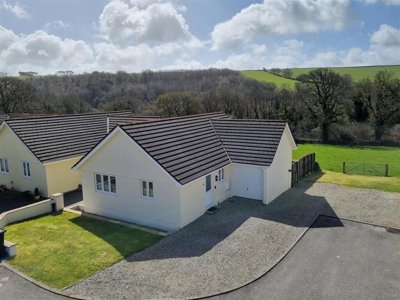
Browse 1 home new builds in Egloskerry, Cornwall from local developer agents.
The Egloskerry property market offers detached, semi-detached, and terraced houses spanning various price ranges and neighbourhoods. Each listing includes detailed property information, photographs, and direct contact with the marketing agent.
£400k
2
0
276
Source: home.co.uk
Showing 2 results for Houses new builds in Egloskerry, Cornwall. The median asking price is £399,975.
Source: home.co.uk
Detached
1 listings
Avg £500,000
Terraced
1 listings
Avg £299,950
Source: home.co.uk
Source: home.co.uk
Egloskerry’s housing market has stayed remarkably resilient over the last few years. Prices are up by 4% on the previous year, yet they still sit roughly 15% below the 2022 peak of £388,900, so buyers who missed that earlier surge may find room to move. Over the past twelve months, three properties have sold on the main village thoroughfare, which points to steady activity for a parish this size. Supply is limited, demand is there, and that keeps the market nicely balanced.
Detached homes lead the pack in Egloskerry, with an average price of £375,000. Semi-detached properties sit at around £290,000, while terraced homes trade at approximately £321,000, so buyers are clearly paying more for the extra space and privacy that comes with detached living. There are no recent flat sales in the records, which is no surprise in a village made up mainly of houses rather than apartments. The area appeals to buyers who want character and room to breathe, and home.co.uk listings data shows that detached properties dominate recent sales activity.
Two postcode pockets tell rather different stories. Properties in the PL15 8RY postcode area have risen sharply, with average values up 41.7% since September 2013 to £429,898 today. The PL15 8RT sector has gone the other way, falling by 8.1% since August 2022 to around £315,929. In rural Cornwall, that kind of spread matters, because even neighbouring streets can behave very differently. New build activity remains thin on the ground too, with no active developments identified in the PL15 postcode sector.

Walk through Egloskerry and the history is hard to miss. The settlement’s roots stretch back to at least the Domesday Book, when the historic manor of Penheale was recorded. Its name comes from the Cornish language and roughly means the church of St Keri, while the parish church of St Keri and St Petroc reflects centuries of uninterrupted habitation. This 15th-century place of worship still contains original Norman wall sections, and it remains both a local landmark and a centre of village life. Around it lie rolling farmland, hedgerow-lined lanes and smallholdings, the sort of landscape that gives this part of Cornwall its character.
Home ownership here sits above the national average, which helps to give the parish a settled, close-knit feel where neighbours often know one another by name. The 2021 Census puts the population at between 354 and 412 residents, so it is very much the sort of place where local events still matter. Egloskerry has long been an agricultural community, and although there are few major employers inside the parish itself, Launceston is close by for shopping, services and work. It is around five miles away, which gives residents a workable balance between rural quiet and day-to-day convenience.
Water shapes this parish as much as the fields do. Egloskerry sits on an affluent of the River Tamar and is bounded to the north by the River Ottery, both of which help to carve out the green valleys around the village. In parts of Cornwall, clay soils can bring shrink-swell risks for foundations, although no specific geological data for Egloskerry itself was documented in the surveys we saw. Older homes should always be checked properly, because site-specific ground conditions can still affect a purchase even when the wider area looks settled.

Families looking at Egloskerry will find primary education within a sensible travelling distance, with schools in surrounding villages and towns serving the parish. The village falls within the catchment for schools in the Launceston area, where pupils usually move on to secondary education before sixth form or college. Cornwall Council oversees a rural school network that includes many smaller primaries, and those schools often provide a very personal setting for children. Before making a purchase, parents should check the latest catchment boundaries and admission rules with Cornwall Council.
For secondary school, most children from Egloskerry travel into Launceston, about five miles away, where schools take pupils from the wider rural catchment. GCSE courses are followed by A-level or vocational options at sixth form level, giving a route into higher education or work. Further education is also available at colleges across the region, with Cornwall College and other providers offering vocational training and degree-level study at several campuses. Transport needs matter here, because daily journeys outside the village usually mean either family transport or school bus provision where that is available.
The old buildings around Egloskerry do more than shape the skyline, they also give the village real educational value. The 15th-century church and Penheale Manor link present-day residents to Cornwall’s past in a very tangible way, and that sense of continuity runs through the parish. Families who settle here join a community where traditional values sit comfortably alongside educational aspiration, with younger residents growing up in a landscape that has shaped generations of Cornish families before them.

Roads do most of the work here. Egloskerry sits about five miles northwest of Launceston, the nearest substantial town for retail, healthcare and administrative services. The A388 is the main route in and out, linking the village to Launceston and the wider Cornwall road network, so residents can reach jobs, schools and leisure facilities across the region. For longer commutes, Plymouth is around 45 minutes by car, while Exeter is roughly 90 minutes away via the A30 trunk road, Cornwall’s main east-west corridor.
Public transport is limited, which is exactly what you would expect in a rural settlement like this. Local bus services do run to Launceston and neighbouring villages, although they may be less frequent than urban routes. Anyone without a private car should check the current timetable and service pattern before buying, because daily life can involve some adjustment where buses are sparse. The nearest railway stations are in Exeter and Plymouth, both about 90 minutes away by car, and both offer direct services to London Paddington and other major destinations on the national rail network.
For air travel, Exeter Airport and Bristol Airport provide domestic and international connections, and the drive from Egloskerry to Exeter takes about two hours by car. The nearby A30 gives reasonably efficient access to Cornwall Airport Newquay, which operates seasonal routes to various European destinations. Cycling here is mainly a country-lane affair, enjoyable for confident riders but less comfortable in winter or for those who are less experienced. In practice, life in rural Egloskerry tends to work best with car ownership and independent mobility.

We begin by scanning current property listings in Egloskerry through Homemove, looking at prices, property types and recent sale prices to get a feel for the market. Detached homes average £375,000, semi-detached properties around £290,000, and terraced houses approximately £321,000.
Before viewings are booked, we suggest securing a mortgage agreement in principle from a lender. It confirms borrowing capacity and shows sellers that the buyer is serious, which can make a useful difference in a competitive rural market.
We always advise visiting homes that fit the brief, and in Egloskerry that means paying close attention to the condition of older properties. Keep an eye out for damp, roof damage or structural concerns that may need a qualified surveyor to take a closer look.
For conventional properties in reasonable condition, a RICS Level 2 survey gives a solid assessment of the home’s condition. Because Egloskerry has so much older housing stock, a more detailed RICS Level 3 survey may be the better choice for period homes or listed properties.
We appoint a conveyancing solicitor to handle the legal side of the purchase, from searches and contracts through to registration of title. That solicitor should also look into local issues such as flood risk, rights of way and any planning restrictions affecting the property.
Once the searches come back clean and the finances are in place, our solicitor exchanges contracts and agrees a completion date with the seller’s representative. On completion day, the keys to the new Egloskerry home are handed over and the settling-in can begin.
Buying in Egloskerry means thinking beyond the usual bricks and mortar. The village has plenty of listed buildings, including the Grade II listed St Keri and St Petroc church, along with several farmhouses, cottages and boundary markers that all contribute to the parish’s architectural heritage. Anyone considering a listed home needs to know that alterations, extensions and even some maintenance works will need consent from Cornwall Council’s planning authority, which can narrow renovation options and add to ownership costs.
Local stone and slate are the hallmarks of Egloskerry’s older buildings, as Badharlick Farmhouse shows with its slate roof, gable ends and brick chimney stacks. Those traditional materials need regular care, and repairs often call for experience as well as time, so buyers should factor in costs beyond the purchase price. Homes built before modern building regulations may also have outdated electrics, plumbing and insulation that need updating later on. A thorough RICS Level 2 survey will pick up defects that need attention before a buyer commits.
Flood risk deserves careful thought here, especially with the River Ottery running along the northern edge of Egloskerry. No specific flood risk data for individual properties was detailed in the records we reviewed, but any home near a watercourse or in a low-lying spot should be checked through the proper environmental searches. Subsidence risk is also worth assessing, particularly on clay soils with shallow foundations, and older homes may need extra scrutiny because they could have moved over decades of occupation. The same caution applies to the historic properties scattered across the village.

Egloskerry’s housing stock includes plenty of homes that are well over 50 years old, and many were built before modern building regulations came into force. Those older properties often bring defects that are quite different from newer builds, so buyers need to know what to watch for during the process. Damp is one of the more common issues across Cornwall, caused by poor ventilation, weak damp-proofing or deteriorating external render that lets moisture into the building fabric. Our inspectors regularly find rising damp in ground floor rooms and penetrating damp on external walls, especially where traditional solid walls do not have the cavity construction found in post-war homes.
Roof problems are another common theme in Egloskerry’s older houses, where original clay or slate tiles have often been in place for decades, or even centuries. Replacing them with heavier concrete tiles has caused structural issues in some period homes, including roof spread and damage to supporting timbers. Slipped or missing tiles let water in, which can ruin ceiling timbers, plasterwork and insulation, while crumbling chimney stacks can raise safety concerns and need urgent attention. Our surveyors check roof voids during inspections, looking at timber condition, signs of wood-boring insects and the adequacy of the insulation already in place.
Outdated electrics and plumbing are another major concern in Egloskerry’s older properties. Rewiring is often needed where original electrical systems are still in place, because they were never designed for modern power demands and may no longer meet current safety standards. Lead or galvanised steel pipes can corrode too, which affects water quality and pressure and increases the risk of leaks. Our inspectors test electrical and plumbing systems as part of standard surveys, and we recommend upgrade works where the defects raise safety concerns or limit modern living.
Some Cornish properties are affected by subsidence and foundation movement because of clay soils that shrink and swell as moisture levels change. Egloskerry’s older homes often have shallow foundations, which makes them more vulnerable to movement, particularly where trees or large shrubs grow close to the structure. Our surveyors look for the usual warning signs, diagonal cracks, sticking doors and windows, and uneven floors that may point to foundation problems needing further investigation. If subsidence is suspected, we recommend a structural engineer to assess the extent of movement and advise on the right remedial work.
The average house price in Egloskerry is £328,667 over the past year. Detached properties fetch the highest average at around £375,000, while semi-detached homes come in at about £290,000 and terraced properties at £321,000. Prices are 4% higher year-on-year, yet they remain roughly 15% below the 2022 peak of £388,900, which may give buyers a chance to step in below the top of the last cycle.
Cornwall Council handles council tax for properties in Egloskerry, with residential homes placed in bands A through H according to their 1991 valuation. The exact band depends on the assessed value of the property, and buyers can check it through the Valuation Office Agency website or ask for the information during conveyancing when the seller provides the paperwork.
There is no school within the village boundaries, so children usually go to primary schools in nearby villages or travel into Launceston, which is about five miles away. The nearest secondary schools are in Launceston too, serving pupils from the wider rural catchment area. Parents should check current catchment boundaries and admission arrangements with Cornwall Council’s education department before making a final decision, because school places can affect how suitable a property is for a family.
Transport in Egloskerry reflects its rural setting, with only limited bus services linking the village to Launceston and the surrounding area. The nearest railway stations are in Exeter and Plymouth, about 90 minutes away by car, and both provide direct services to London Paddington and other major destinations. Most residents rely on private vehicles for day-to-day travel, with the A388 providing the main road link to Launceston and the A30 opening up access to wider regional destinations.
Egloskerry has real appeal for investors because of its rural setting, historic character and closeness to Launceston. House prices have risen by 4% over the past year, and some postcode areas have seen growth of over 40% since 2013, according to property price data. Cornwall remains a popular relocation destination, though rental demand in a small rural settlement may be less strong than in a larger town. Any investment should take account of the upkeep required by older homes and the planning restrictions that can apply to listed buildings.
Stamp duty land tax applies to all property purchases in England, with current thresholds starting at 0% for homes up to £250,000. First-time buyers receive relief on purchases up to £425,000, paying 5% on the portion between £425,000 and £625,000. On a typical Egloskerry home at the current average price of £328,667, a standard buyer would pay no stamp duty on the first £250,000 and 5% on the remaining £78,667, which comes to roughly £3,933. Buyers should check the latest HMRC guidance, as thresholds and rates can change.
Because Egloskerry has such a large stock of older homes, we usually recommend a RICS Level 2 survey for most conventional properties in reasonable condition. It gives a detailed view of construction, condition and potential defects. For older homes, listed properties or buildings with non-standard construction, a more comprehensive RICS Level 3 building survey may be the better fit. National survey costs average around £455 for a Level 2 report, with higher figures for larger or more complex properties.
The River Ottery forms the northern edge of Egloskerry, so any property close to that watercourse or in a low-lying area deserves careful flood risk checks before a purchase goes ahead. Specific flood risk data for individual homes was not detailed in the records we reviewed, but environmental searches carried out during conveyancing will show flood warnings, flood risk zone designations and any historic flooding incidents affecting a particular property. Our surveyors also inspect the grounds and visible fabric for signs of previous water damage that could point to a flooding history.
From 3.94%
Compare rates from leading lenders
From £499
Expert solicitors handling your purchase
From £380
Detailed assessment of property condition
From £600
Comprehensive structural survey for older homes
Properties New Builds In London

Properties New Builds In Plymouth

Properties New Builds In Liverpool

Properties New Builds In Glasgow

Properties New Builds In Sheffield

Properties New Builds In Edinburgh

Properties New Builds In Coventry

Properties New Builds In Bradford

Properties New Builds In Manchester

Properties New Builds In Birmingham

Properties New Builds In Bristol

Properties New Builds In Oxford

Properties New Builds In Leicester

Properties New Builds In Newcastle

Properties New Builds In Leeds

Properties New Builds In Southampton

Properties New Builds In Cardiff

Properties New Builds In Nottingham

Properties New Builds In Norwich

Properties New Builds In Brighton

Properties New Builds In Derby

Properties New Builds In Portsmouth

Properties New Builds In Northampton

Properties New Builds In Milton Keynes

Properties New Builds In Bournemouth

Properties New Builds In Bolton

Properties New Builds In Swansea

Properties New Builds In Swindon

Properties New Builds In Peterborough

Properties New Builds In Wolverhampton

Enter your details to see if this property is within your budget.
Loans, cards, car finance
Estimated property budget
Borrowing + deposit
You could borrow between
Typical borrowing
Monthly repayment
Est. at 4.5%
Loan-to-value
This is an estimate only. Your actual budget may vary depending on interest rates, credit history, and personal circumstances. For an accurate affordability assessment, speak to one of our free mortgage advisors.
This calculator provides estimates for illustrative purposes only and does not constitute financial advice. Your home may be repossessed if you do not keep up repayments on your mortgage. Estimates based on 4.5% interest rate, repayment mortgage. Actual rates depend on your circumstances.
Homemove is a trading name of HM Haus Group Ltd (Company No. 13873779, registered in England & Wales). Homemove Mortgages Ltd (Company No. 15947693) is an Appointed Representative of TMG Direct Limited, trading as TMG Mortgage Network, which is authorised and regulated by the Financial Conduct Authority (FRN 786245). Homemove Mortgages Ltd is entered on the FCA Register as an Appointed Representative (FRN 1022429). You can check registrations at NewRegister or by calling 0800 111 6768.

We use cookies to show you personalised content and improve your experience of our website. Find out more in our Privacy policy and Cookie policy.