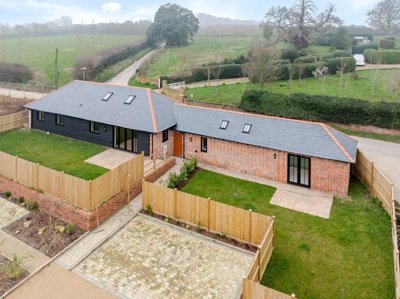
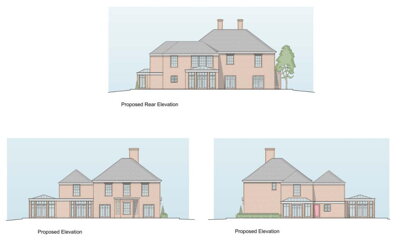
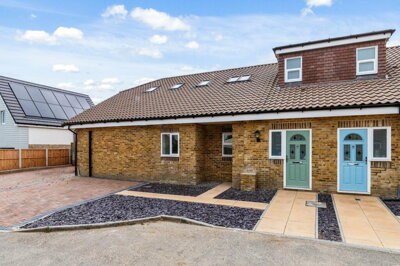
Browse 3 homes new builds in Eastry, Dover from local developer agents.
The Eastry property market offers detached, semi-detached, and terraced houses spanning various price ranges and neighbourhoods. Each listing includes detailed property information, photographs, and direct contact with the marketing agent.
£650k
21
0
159
Source: home.co.uk
Showing 21 results for Houses new builds in Eastry, Dover. The median asking price is £650,000.
Source: home.co.uk
Detached
14 listings
Avg £880,714
Semi-Detached
4 listings
Avg £291,250
Terraced
3 listings
Avg £368,333
Source: home.co.uk
Source: home.co.uk
Eastry's property market mirrors the wider draw of rural Kent living. Detached homes command the highest prices, averaging £813,526, and they usually come with sizeable gardens, multiple bedrooms and the sort of generous plots that are part of the Kent countryside's appeal. Semi-detached properties average £349,286, which gives families a more approachable step up from a terraced house without losing too much space. Buyers can pick from compact starter homes through to substantial family residences, depending on budget and how much room they need.
Terraced homes in Eastry average £315,000, so they remain a sensible way into village life for first-time buyers and investors. Flats and apartments start from approximately £190,000, which suits anyone after a lower-maintenance home or a buy-to-let purchase. Recent activity points to an average sold price of £521,462 according to homedata.co.uk property data, while home.co.uk records 551 property sales in the area over the past year, a healthy level of turnover for a village of this size.
Active new-build schemes do not currently exist specifically within the CT13 postcode area, but Eastry does see the occasional newly converted property and barn-style home that mixes modern living with a rural feel. Homes from the 1840s sit alongside Victorian properties and newer conversions, so buyers can choose between period character and more contemporary construction. Prices have eased back from the 2022 peak of £868,750, and that correction leaves the current market looking good value for anyone after a quality home in a sought-after countryside setting.

Eastry feels like a classic English village, set in the rolling countryside of the Dover district. A historic church sits at the centre, while homes are often found along country lanes edged with hedgerows and farmland. One Grade II Listed property, with tunnels beneath the village, adds a striking historical layer to the area and hints at the centuries of activity buried in the landscape. Buyers who want authenticity and a genuine sense of place tend to find plenty to like here, especially if uniform modern estates are not their thing.
Day to day, the village covers the basics well. There is a local shop, a pub and community facilities for residents to use, while the Kent countryside around it opens up a good network of walking and cycling routes. Public footpaths cross farmland towards neighbouring villages such as Woodnesborough and Sandwich, and the Kent Downs Area of Outstanding Natural Beauty gives outdoor enthusiasts even more room to explore. Deal and Sandwich are close enough for beach days and seaside dining, and the slower pace of Eastry is especially appealing to families who want children to grow up in a safe, community-minded place.
Living in Eastry also keeps Dover and Canterbury within practical reach. Dover brings the ferry port and links to continental Europe, while Canterbury offers the cathedral, universities and a strong cultural scene. Around the village, the Kent countryside is made up of arable farmland, orchards and traditional villages, the familiar rural English landscape that has helped make the county one of the most sought-after places to live in the southeast. Local clubs, community events and the village pub all create chances to meet people, and that steady social rhythm is a big part of life here.

Families moving to Eastry have a decent spread of primary options to look at in the village and nearby. Several primary schools in surrounding villages serve the area, and a number of good and outstanding rated schools sit within a short drive. Across the wider Dover area, village schools often mean smaller class sizes and a strong sense of community, so children can stay close to home while still getting a solid education. Catchment areas matter, though, because admissions rules can affect both property values and which schools are realistically available.
Secondary choices in the Dover district are mixed, with grammar and non-selective schools both available, so families can match options to academic ability and learning style. Schools in Deal and Sandwich have strong reputations and good examination results, which draws pupils from a wider area. Sandwich High School serves Eastry-area students, while those aiming for grammar places often apply to Dover Grammar School for Boys or Dover Grammar School for Girls. Sixth form provision can be found in Dover and Canterbury, and Canterbury also has university-level study at the University of Kent campus.
Kent's independent school scene adds another layer, with choices ranging from preparatory schools to senior schools. Beechwood Sacred Heart School in Tunbridge Wells and St. Lawrence College in Ramsgate both sit within reasonable driving distance. Transport arrangements and school bus services mean children can reach schools in nearby towns without daily commuting from central Kent towns. Families moving to Eastry from elsewhere should remember that Kent uses a selective education system, so it pays to look at admissions criteria well before the move rather than after the house has been secured.

Transport links from Eastry give the village a useful balance of rural living and access to main routes. The A256 is close by and offers direct links to Dover and the ferry port, while the A2 connects through to Canterbury and the wider Kent road network. By car, Dover is roughly 20 minutes away, which keeps regular port travel realistic for commuters, business trips and leisure journeys alike. From Canterbury, the M2 opens up the M25 and London, with the capital usually reachable in approximately 90 minutes under normal traffic conditions.
The rail network is also within reach, with nearby stations giving access to London, Canterbury and the Kent coast. Dover Priory is the nearest station, and its high-speed service reaches London St Pancras International in around one hour and ten minutes, which makes commuting to the capital workable for people who would rather live in the Kent countryside. Eastry is served by local buses too, including an hourly service to Dover and less frequent routes to Sandwich and Deal. Services generally run through the day, although evenings and weekends are quieter than urban routes.
Cycling has become more practical in Kent over recent years, helped by quieter country lanes that are popular with both leisure riders and commuters. The land around Eastry is fairly flat, and some major roads now have dedicated cycle paths, so shorter trips to nearby villages can be realistic by bike. For flights, Gatwick Airport is reachable in approximately 90 minutes via the M25 and A23, while Heathrow takes around two hours via the M4 and M25. Road, rail and ferry links together put Eastry in a useful position for travel at home and abroad.

A sensible starting point is to research the Eastry market properly before arranging viewings. Look at recent sale prices, note the gap between detached homes averaging £813,526 and terraced properties at £315,000, and get a mortgage agreement in principle from a lender. It also helps to factor in stamp duty, solicitor fees and surveys when working out the full move budget.
Once suitable properties from our listings have been identified, arrange viewings through the listed estate agents. We would take notes on the condition of each home, watch for damp or structural concerns in older Victorian and 1840s properties, and ask about recent renovations or maintenance work. Viewing at different times of day can also reveal noise levels, light and the feel of the surrounding community.
For homes over 50 years old, which covers most period properties in Eastry, a RICS Level 2 Survey is a sensible move before committing. That survey will pick up structural issues, roof condition, damp and any repairs likely to be needed. Grade II Listed properties call for specialist surveys as well, because historic buildings bring their own requirements and planning restrictions.
After an offer is accepted, the next step is to instruct a conveyancing solicitor to deal with the legal side of the purchase. They will carry out searches with Dover District Council, check planning permissions and building regulations compliance, and manage the transfer of ownership. We recommend a solicitor with experience in Kent properties, so local requirements and conservation area considerations are familiar territory.
From there, the solicitor works with the seller's legal team to exchange contracts, and at that point the sale becomes legally binding. Completion usually follows in 4-6 weeks, though chain length and mortgage processing times can stretch that out. On completion day, the keys to the new Eastry home are handed over and village life can begin.
Construction and age matter here, especially because Eastry has so many period homes. Many date from the Victorian era or earlier, and some go back to the 1840s. They have plenty of character, but they can also ask for more upkeep than newer builds. Roofs, plumbing, electrics and timber structures all deserve close attention, because repairs or replacement in older houses can be costly.
Flood risk should be checked for any property in the village, though our experience in Kent suggests there are no significant flood risk issues specifically affecting Eastry. During conveyancing, the Environment Agency can provide flood risk reports for individual homes, and your solicitor should be able to obtain those. There is also the question of conservation area or listed building status, such as the unique Grade II Listed property with underground tunnels, which may limit alterations and renovations. Knowing that in advance helps avoid expensive surprises later on.
Leasehold buyers need to read the lease carefully. Ground rent, service charges and any restrictions on how the property can be used all need to be clear from the start. Freehold homes are common in Eastry, especially houses, though flats may be leasehold. A proper review of the lease terms and any planned changes to management arrangements can save a lot of money and hassle down the line. Our solicitors should set out all financial obligations before you commit to the purchase.

The average house price in Eastry over the last year was £521,462, which is 6% higher than the previous year. Detached properties average £813,526, semi-detached homes £349,286 and terraced homes £315,000, while flats start from around £190,000. Even though the market is 4% down from the 2022 peak of £868,750, it still looks stable for both main home buyers and investors.
For council tax, Eastry falls under Dover District Council, and the village's mix of homes usually sits in bands A to E. A typical Victorian terraced house might be band B or C, while a sizeable detached home could be band D or E. For 2024-25, Dover District Council council tax rates range from around £1,400 per year for band A properties to approximately £2,500 for band E, although the exact figure depends on the individual valuation. Your solicitor can confirm the precise band during conveyancing.
Primary education in and around Eastry is led by Eastry Church of England Primary School for younger children in the village itself. Deal and Sandwich nearby also have several well-regarded primaries, including The Drew Primary School and Sandwich Infant School. For secondary school age, Sandwich High School and the selective Dover Grammar Schools are both in the picture, and parents can weigh up location and academic ability when making choices. Because Kent uses a selective system, it makes sense to study admissions criteria and think about how catchment areas may shape the options.
Bus services link Eastry with surrounding villages and towns, including routes into Dover for shopping and ferry connections. The nearest railway stations are Dover and Deal, and both offer access to London through the high-speed service to St Pancras International, which reaches the capital in around one hour and ten minutes. Road travel is straightforward too, with the A256 giving direct access to Dover in approximately 20 minutes and the A2 linking to Canterbury. Dover's ferry port adds international routes into continental Europe, which suits anyone who travels abroad often.
Eastry has a few clear points in its favour for investors. Average prices have risen by 6% over the past year, and the mix of period properties, including Victorian and 1840s homes, gives room for different strategies, from renovation projects to rental income. Strong transport links to London and the ferry port at Dover help keep demand steady from commuters and from people wanting a rural base with international travel within reach. With properties starting from £190,000, the village offers entry points for investors, and the character of the area, together with limited new-build supply, supports long-term value retention for good-quality homes.
Stamp duty for 2024-25 is 0% on the first £250,000 of property value, 5% on the portion from £250,001 to £925,000, 10% on £925,001 to £1.5 million, and 12% on anything above £1.5 million. First-time buyers get relief on the first £425,000, then pay 5% on the portion from £425,001 to £625,000. With the average Eastry property price sitting at £338,548, a standard buyer at that level would pay no stamp duty, and first-time buyers would also pay nothing under the current thresholds.
Eastry includes areas of historical significance and listed buildings, both of which can limit what owners are allowed to change. In conservation areas, certain alterations such as extensions, roof changes and some exterior works need planning permission from Dover District Council. Listed buildings bring extra obligations too, especially where historical features have to be retained, and work often needs consent from the conservation officer. Buyers should understand how these designations affect their plans and allow for specialist requirements and longer planning times.
From 4.5%
Find competitive mortgage rates for your Eastry purchase
From £499
Expert conveyancing solicitors for Kent properties
From £350
Professional survey for period properties
From £60
Energy performance certificate
Buying in Eastry involves more than the purchase price, so it pays to budget properly from the outset. Stamp duty land tax (SDLT) is usually the biggest extra cost, although the good news is that homes priced at or near the Eastry average of £521,462 fall comfortably within the level where no stamp duty is due. For 2024-25, the standard SDLT rate is 0% on the first £250,000 of property value, so buyers at the average price point benefit from tax relief on most of the purchase.
First-time buyers in Eastry get even better treatment, because SDLT is waived on the first £425,000 of a property purchase. In practice, that means a first-time buyer paying the village average would not pay any stamp duty under current government thresholds. For purchases above £425,000, 5% is charged on the part between £425,001 and £625,000. That kind of relief makes rural village homes more reachable for buyers who have been pushed out of urban markets closer to London.
There are other costs to plan for as well, not just stamp duty. Solicitor conveyancing fees typically begin at around £499 for a straightforward purchase, although listed building status or leasehold arrangements can push that higher. A RICS Level 2 Survey starts from £350 and is especially useful in Eastry because of the number of period properties, as it can flag structural concerns before you commit. Survey fees vary with property value and size, and removal costs, mortgage arrangement fees and possible renovation bills should all sit in the overall budget for moving to a new Eastry home.

Properties New Builds In London

Properties New Builds In Plymouth

Properties New Builds In Liverpool

Properties New Builds In Glasgow

Properties New Builds In Sheffield

Properties New Builds In Edinburgh

Properties New Builds In Coventry

Properties New Builds In Bradford

Properties New Builds In Manchester

Properties New Builds In Birmingham

Properties New Builds In Bristol

Properties New Builds In Oxford

Properties New Builds In Leicester

Properties New Builds In Newcastle

Properties New Builds In Leeds

Properties New Builds In Southampton

Properties New Builds In Cardiff

Properties New Builds In Nottingham

Properties New Builds In Norwich

Properties New Builds In Brighton

Properties New Builds In Derby

Properties New Builds In Portsmouth

Properties New Builds In Northampton

Properties New Builds In Milton Keynes

Properties New Builds In Bournemouth

Properties New Builds In Bolton

Properties New Builds In Swansea

Properties New Builds In Swindon

Properties New Builds In Peterborough

Properties New Builds In Wolverhampton

Enter your details to see if this property is within your budget.
Loans, cards, car finance
Estimated property budget
Borrowing + deposit
You could borrow between
Typical borrowing
Monthly repayment
Est. at 4.5%
Loan-to-value
This is an estimate only. Your actual budget may vary depending on interest rates, credit history, and personal circumstances. For an accurate affordability assessment, speak to one of our free mortgage advisors.
This calculator provides estimates for illustrative purposes only and does not constitute financial advice. Your home may be repossessed if you do not keep up repayments on your mortgage. Estimates based on 4.5% interest rate, repayment mortgage. Actual rates depend on your circumstances.
Homemove is a trading name of HM Haus Group Ltd (Company No. 13873779, registered in England & Wales). Homemove Mortgages Ltd (Company No. 15947693) is an Appointed Representative of TMG Direct Limited, trading as TMG Mortgage Network, which is authorised and regulated by the Financial Conduct Authority (FRN 786245). Homemove Mortgages Ltd is entered on the FCA Register as an Appointed Representative (FRN 1022429). You can check registrations at NewRegister or by calling 0800 111 6768.

We use cookies to show you personalised content and improve your experience of our website. Find out more in our Privacy policy and Cookie policy.