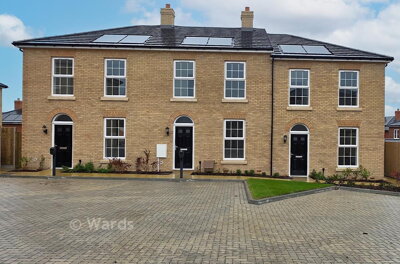
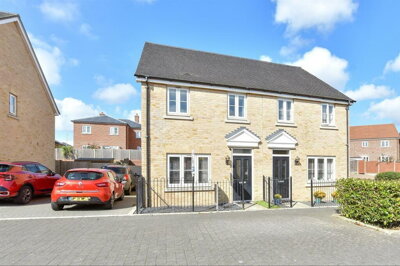
Browse 2 homes new builds in Dover from local developer agents.
The 2 bed house market features detached, semi-detached, and terraced properties with two separate bedrooms plus living spaces. Properties in Dover range across contemporary developments, with pricing varying across different neighbourhoods.
Buyers in Dover have a broad mix of homes to choose from, and the market covers a wide spread of budgets and property types. In the CT16 postcode area, our listings show terraced homes accounting for much of the recent sales activity, with an average price of £214,989 for the traditional houses found along many of Dover's residential streets. Semi-detached properties come in at an average of £271,258 and have performed especially well, with prices up 5.0% in the year to December 2025. For more room and privacy, detached family houses sit at the top end, averaging £466,480 across Dover, and detached sales in CT16 also average £466,480.
Over the last year, flat values in Dover have been fairly steady, with homes in places such as East Cliff averaging around £147,949. That steadiness can make flats a practical route into coastal living, especially for buyers who want to avoid the higher upkeep that often comes with houses. New build choices add to the picture too. Elkington House in Charlton Green includes retirement apartments priced from £147,949 to £171,119, while semi-detached homes at Primrose Road and Kearsney Avenue start from £271,258. At the upper end, Temple Ewell has detached five-bedroom homes at about £427,139 on Malvern Road. Taken together with 3.6% annual growth, the market points to steady demand from both owner-occupiers and investors looking for solid long-term prospects.
New housing is still being added around Dover. Whitfield, within the CT16 postcode, has seen notable building activity, including White Fields Court on Manley Close, a McCarthy Stone retirement scheme. Planning has also moved forward for a much larger expansion there, with Phase 2 proposals for up to 430 dwellings now under consideration. On Napchester Road in Whitfield, a scheme completed in March 2023 delivered 26 affordable homes made up of both flats and houses. For anyone weighing up investment or rental potential, that level of building shows continued backing for the Whitfield area, which may help support future values and tenant demand.

Dover's position on the Kent coast runs through the whole town, from the way it looks to the way it works. Much of it sits on the chalk geology behind the white cliffs, and that bedrock usually gives properties sound foundations with generally low shrink-swell risk. The same chalk extends across a large part of the surrounding Kent countryside, so homes in Whitfield and the villages along the North Downs Way will often stand on ground that performs well. Even so, superficial deposits can vary from one spot to another, and our surveyors always look out for clay-rich layers that could alter ground conditions.
The River Dour cuts through the town centre before meeting the sea, giving Dover a green corridor through the built-up area and a character that goes beyond its port. Homes near the river, especially in the lower ground towards the seafront, can carry a higher flood risk, so buyers should check the government's flood risk assessment tools carefully. Across the town, the mix is part of the appeal, historic buildings, Victorian terraces and newer schemes all sit side by side. East Cliff, for example, has Victorian and Edwardian homes with period detail, while more recent developments suit buyers who place a premium on modern insulation and heating systems.
A great deal of the local economy still turns on the Port of Dover. It remains one of the world's busiest ferry ports and supports substantial employment for people living locally. Above the town, Dover Castle dominates the hillside, a UNESCO World Heritage Site and one of England's standout fortifications, bringing visitors throughout the year and feeding into the tourism trade. Day to day, the centre covers the basics well with supermarkets, independent shops and the White Cliffs Shopping Centre, and the seafront has benefited from ongoing investment in recent years. Step outside town and there is quick access to the Kent countryside, with the North Downs Way and other footpaths opening up good walks across the chalk downland.

For families moving into Dover, there is a decent spread of schools across the town and nearby villages. Primary provision is established in a number of neighbourhoods, and several schools are rated Good or Outstanding by Ofsted. That includes schools serving the town centre, residential parts of Whitfield and the coastal districts. Catchment matters, though. In Kent, admissions work on a ranked preference system linked to distance from the school, so parents should check the detail before they commit to a purchase. Villages such as Kearsney and Temple Ewell can fall into different catchment patterns.
Secondary schooling brings a few different routes. Dover has grammar school options for academically able pupils, in keeping with Kent's selective system, and that is a draw for some families. Entry depends on the Kent Test, which determines eligibility. Alongside that, local secondary schools serve a varied intake and run a range of GCSE and A-Level courses. If a broader sixth form or college offer is important, Canterbury and Folkestone add extra choice nearby.
Higher education is close enough to be realistic without being on the doorstep. The University of Kent in Canterbury is approximately 20 miles away, which keeps it within sensible commuting distance for older students and for parents taking part-time study. Canterbury Christ Church University also runs degree courses with strong local links, and the University of Creative Arts in Folkestone offers specialist art and design programmes. For younger children, several nursery and primary schools in the Dover area include early years provision, which can make childcare arrangements easier for working parents.

One of Dover's clearest strengths is transport, particularly for people who travel often for work or who have family overseas. Dover Priory station has regular trains to London Victoria, with journey times of approximately two hours. There is also the high-speed Javelin service from Dover to St Pancras International via Ashford, cutting journey times for those who need a faster trip into central London. Southeastern Railway runs the local rail services, and season tickets are still cheaper than comparable journeys from many commuter towns elsewhere in the South East.
From the ferry terminal, Dover has multiple daily sailings to Calais in France. P&O Ferries and DFDS operate crossings that take approximately 90 minutes, which is a major practical advantage for anyone with business or family ties in continental Europe, or for those who simply like the option of quick weekend breaks. Those sailings matter locally too, because freight and logistics businesses linked to the port create jobs for residents. By road, connections are strong as well, with the A2 trunk road running towards Canterbury and the M2 motorway linking into the wider motorway network.
Canterbury sits approximately 20 miles away, and both Folkestone and Ashford are also an easy drive from Dover. Ashford International, only 15 miles away, gives another route to London St Pancras, with high-speed services in under 40 minutes for people who need quicker access to the capital. For wider travel, Dover's ferry links put European destinations within easy reach for business trips or short breaks. Stagecoach buses connect the town centre with surrounding villages, but anyone looking at more rural spots such as Alkham or Shepherdswell should think realistically about car use for everyday errands.

It is worth browsing our listings with your budget in mind before you start booking viewings. In Dover, that can mean terraced homes averaging £214,989 at one end, or detached houses at £466,480 and above at the other. Area choice matters just as much, from period homes in East Cliff to Victorian terraces near the town centre, newer stock in Whitfield, and extra space in villages such as Kearsney and Temple Ewell.
Before you begin viewing in earnest, we suggest speaking to a mortgage broker and getting an agreement in principle in place. It can strengthen your hand when you make an offer in Dover's competitive market. With average prices at around £239,654, many buyers here may need smaller loans than in other parts of Kent, but sellers still take financial preparation seriously.
Try not to judge Dover from a single street or a single viewing. We recommend seeing homes in East Cliff, the town centre and the surrounding villages so you can compare what each area feels like in practice. Spend a bit of time there at different points in the day as well. Traffic noise, parking pressure and the general atmosphere can change more than buyers expect.
A homebuyers report is a sensible step for any property you are seriously weighing up, and it matters even more with the older Victorian and Edwardian stock that is common in Dover. Our surveyors regularly come across issues involving period features, flat roofs and outdated services. Those points can affect both your decision to proceed and the way you negotiate on price.
The legal side tends to move more smoothly when you instruct a solicitor who already knows Kent transactions. We recommend choosing someone who can deal efficiently with searches, contracts and exchange, and who understands Dover District Council procedures as well as Kent drainage authorities. That local knowledge can save time where delays might otherwise creep in.
After that, it is a matter of finalising the mortgage, paying stamp duty and collecting the keys on completion day. In many cases this happens 4-6 weeks after exchange of contracts. Our team can point you towards conveyancing solicitors and surveyors who are used to dealing with Dover property, which can help the whole process run more smoothly.
Anyone buying in Dover should look closely at a few local factors that can affect both the housing stock and the cost of ownership. Flood risk is one of them, given the coastal setting and the River Dour running through the town. Most residential areas are not exposed to major flooding, but homes near the river or in low-lying coastal parts should still be checked carefully through the government's flood risk assessment tools before purchase. Our surveys will highlight any obvious concerns, and buyers should also confirm that buildings insurance gives proper cover for flood-related risks.
Dover's long history leaves its mark on the housing market. Some areas sit within conservation zones, and some homes are listed buildings, which can place limits on alterations, extensions or renovation plans. Our surveyors regularly inspect period properties across Kent and know what to look for in listed stock, from historic brickwork and original windows to the upkeep needed to stay in line with heritage requirements. If a property has listed status, it is wise to allow for the extra cost of specialist contractors and Listed Building Consent before planning any works.
Because Dover has so much terraced housing, many homes are freehold, but flats need closer attention on tenure. Buyers should check the lease terms carefully, including ground rent and service charges. There is also a clear difference between older and newer stock. Developments in Whitfield and East Cliff generally bring modern construction, better insulation and newer heating systems, while older homes may still need work to electrics, plumbing or insulation. Our surveyors often find solid walls without cavity insulation in Victorian and Edwardian terraces, and that can mean higher heating costs than buyers first expect.

The average house price in Dover was £239,654 in December 2025, according to homedata.co.uk provisional data. That marks a 3.6% increase from £284,000 in December 2024. In the CT16 postcode area, the average property price over the last year was £296,253. Values also vary widely by type, with terraced properties averaging £214,989, semi-detached homes at £271,258, and detached properties at £466,480 or more.
For council tax, Dover properties fall under Dover District Council. Bands run from A for the least expensive homes through to H for the highest value ones. In practice, many terraced houses and smaller flats sit in bands A to C, while larger detached family properties are more likely to fall into bands E to G. Before setting a budget, buyers should check the exact band for any address on the Valuation Office Agency website.
Families looking at Dover have a fair amount of choice on schooling. Across the town, several primary schools hold Good or Outstanding Ofsted ratings and serve different neighbourhoods. At secondary level, the area includes both comprehensive schools and grammar schools for academically able pupils, in line with Kent's selective system. It is sensible to look at individual performance data and to keep catchment areas in mind while house-hunting, because proximity plays a major part in admissions. That is especially important in villages such as Whitfield, Kearsney and Temple Ewell, where the relevant Dover or nearby school can vary by postcode.
Dover Priory gives the town regular rail links to London Victoria, with journey times of approximately two hours, and the high-speed Javelin route via Ashford provides quicker services to St Pancras International. At the port, multiple daily ferry crossings run to Calais in France and take approximately 90 minutes. Buses serve the town itself and link Dover with surrounding villages and nearby places including Folkestone and Canterbury. For people commuting to Canterbury or Ashford, Stagecoach services are available, though journey times of 45-60 minutes often make driving the more practical option.
There has been steady movement in Dover's market, with prices up 3.6% over the past year and average values still comparatively affordable against other coastal towns in the South East. The ferry port helps underpin demand, particularly from commuters and buyers with European links. Whitfield is one area to watch, as planning approval for hundreds of new homes points to continued investment. Buyers still need to weigh the usual risks carefully, including local economic conditions, flood exposure in some locations, and the balance between rental demand and capital growth. One notable shift is in East Cliff flats, where prices have fallen 25% from their 2023 peak of £340,000, which may interest investors prepared to take a longer-term view.
From April 2025, the stamp duty rates used in England apply in Dover as well. Standard rates are 0% on the first £250,000, 5% on £250,001 to £925,000, 10% on £925,001 to £1.5 million, and 12% on amounts above £1.5 million. First-time buyers get relief on the first £425,000, then pay 5% on £425,001 to £625,000, with no relief above that point. Since Dover's average price is £239,654, many purchases here will attract little stamp duty or none at all, and some first-time buyers will pay nothing on homes that sit within the relief threshold.
Getting the full buying costs straight at the start makes budgeting much easier. With an average property price of £239,654, plenty of Dover purchases fall below the standard £250,000 stamp duty threshold, with duty of £2,200 on a typical property. First-time buyers purchasing up to £425,000 can use relief to reduce or remove that bill altogether, which helps keep Dover accessible for people buying their first home. Above £425,000, first-time buyers pay 5% on the portion from £425,001 to £625,000.
Stamp duty is only one part of the total. Buyers should also allow for solicitor fees of around £500 to £1,500 for conveyancing on a Dover purchase, covering local searches, title registration and handling the transaction. In Dover, those searches include enquiries with Dover District Council and Kent County Council, plus drainage and water checks through Southern Water. A RICS Level 2 survey starts from £350, and it can be money well spent, especially where a property may involve Victorian brickwork, flat roofs or period details that need specialist attention.
Mortgage arrangement fees depend on the lender, but they often range from £0 to £1,500, so they need to be part of any fair comparison between mortgage products. We usually suggest booking a mortgage appointment early, so you can lock in favourable rates and get a clear picture of the total borrowing cost. Buildings insurance also needs to be in place from exchange of contracts, and for a standard Dover property that will typically cost £200 to £400 each year. With the right planning and solid professional advice, Dover can still offer very good value against many other parts of Kent and the South East.

Properties New Builds In London

Properties New Builds In Plymouth

Properties New Builds In Liverpool

Properties New Builds In Glasgow

Properties New Builds In Sheffield

Properties New Builds In Edinburgh

Properties New Builds In Coventry

Properties New Builds In Bradford

Properties New Builds In Manchester

Properties New Builds In Birmingham

Properties New Builds In Bristol

Properties New Builds In Oxford

Properties New Builds In Leicester

Properties New Builds In Newcastle

Properties New Builds In Leeds

Properties New Builds In Southampton

Properties New Builds In Cardiff

Properties New Builds In Nottingham

Properties New Builds In Norwich

Properties New Builds In Brighton

Properties New Builds In Derby

Properties New Builds In Portsmouth

Properties New Builds In Northampton

Properties New Builds In Milton Keynes

Properties New Builds In Bournemouth

Properties New Builds In Bolton

Properties New Builds In Swansea

Properties New Builds In Swindon

Properties New Builds In Peterborough

Properties New Builds In Wolverhampton

Enter your details to see if this property is within your budget.
Loans, cards, car finance
Estimated property budget
Borrowing + deposit
You could borrow between
Typical borrowing
Monthly repayment
Est. at 4.5%
Loan-to-value
This is an estimate only. Your actual budget may vary depending on interest rates, credit history, and personal circumstances. For an accurate affordability assessment, speak to one of our free mortgage advisors.
This calculator provides estimates for illustrative purposes only and does not constitute financial advice. Your home may be repossessed if you do not keep up repayments on your mortgage. Estimates based on 4.5% interest rate, repayment mortgage. Actual rates depend on your circumstances.
Homemove is a trading name of HM Haus Group Ltd (Company No. 13873779, registered in England & Wales). Homemove Mortgages Ltd (Company No. 15947693) is an Appointed Representative of TMG Direct Limited, trading as TMG Mortgage Network, which is authorised and regulated by the Financial Conduct Authority (FRN 786245). Homemove Mortgages Ltd is entered on the FCA Register as an Appointed Representative (FRN 1022429). You can check registrations at NewRegister or by calling 0800 111 6768.

We use cookies to show you personalised content and improve your experience of our website. Find out more in our Privacy policy and Cookie policy.