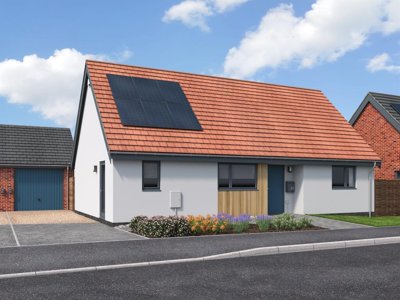
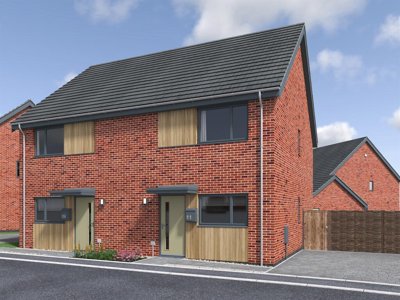
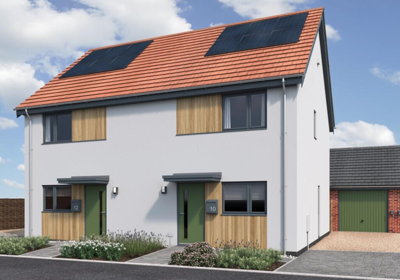
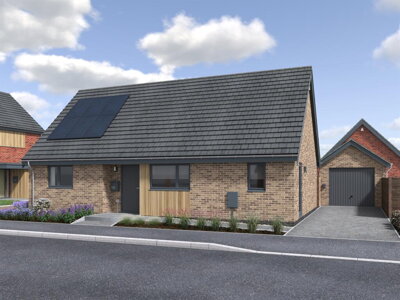
Browse 4 homes new builds in Cockley Cley from local developer agents.
The 2 bed house market features detached, semi-detached, and terraced properties with two separate bedrooms plus living spaces. Properties in Cockley Cley range across contemporary developments, with pricing varying across different neighbourhoods.
Cockley Cley’s property market is shaped by its rural setting, with limited stock and a close community of homeowners. Detached homes command an average of £400,000, while semi-detached houses sit nearer £275,000, offering a more accessible way in. Over the past 12 months, only 2 property sales completed in the village, which says a lot about how rare opportunities can be here.
Prices in Cockley Cley have eased by -10.6% over the last year, though that needs to be read against the village’s already premium rural position. For some buyers, that correction brings selected homes a little closer to reach. Much of the stock is older, with many properties dating from before 1945 and showing the classic Norfolk mix of brick, flint, and render that gives the area its distinctive feel.
Modern homes are thin on the ground in the PE37 postcode area, so anyone looking for newer specifications may need to widen the search or accept that Cockley Cley offers character and authenticity that new builds rarely match. The conservation designation helps keep the village’s historic look intact, and that protects the investment from unsuitable development around it. We track new listings across the village and can alert buyers as soon as something matching the brief appears.

Community spirit still shapes daily life in Cockley Cley, along with the slower rhythm of rural Norfolk. With just 159 residents, the village offers a clear break from urban pressure, while still staying connected to the wider county. The Cockley Cley public house is a natural meeting point, and the ancient parish church gives the village both a spiritual centre and a place for local events through the year.
Out beyond the village, the Breckland landscape opens up plenty of scope for outdoor time. People walk across farmland and woodland, cycle quiet lanes, and explore the heathland habitats that make this part of Norfolk so recognisable. Oxburgh Estate, looked after by the National Trust, adds another draw, with its historic manor house, gardens, and year-round events programme pulling visitors in from across the region.
Day-to-day errands usually mean heading to Swaffham, about 15 minutes’ drive away, where there are shops, supermarkets, healthcare facilities, and schools. The town also has a GP surgery, pharmacy, and post office, plus a traditional market. Further north, King’s Lynn brings retail, dining, entertainment, and mainline rail services to London and Cambridge. That mix of village calm and workable access to town conveniences is a big part of Cockley Cley’s appeal.

Families moving to Cockley Cley will find school options within a sensible drive across Breckland. For younger children, the village sits within the catchment areas for several well-regarded primary schools in nearby villages and market towns. These schools tend to serve small communities, so teachers can give pupils more individual attention and build strong links with parents as well as children.
The nearest primary schools are in the surrounding villages of the Breckland district, and many have been rated Good or Outstanding by Ofsted. Small rural schools like these often benefit from committed staff who know every child well, which creates a supportive atmosphere that some families prefer to larger town schools. Parents should check current catchment boundaries with Norfolk County Council, as those can affect allocation.
Secondary schooling is available in Swaffham and elsewhere across Breckland. The Hamond’s High School in Swaffham is one of the main choices for village families, with GCSE and A-Level courses on offer. It is still worth checking catchment arrangements and admission policies directly with Norfolk County Council, because they can change and may shape school placements. School buses often serve the surrounding rural area too.
Independent schooling is also an option, with Norfolk home to several long-established preparatory and senior schools, many of them boarding schools. Ely, about 45 minutes’ drive away, adds further choice, including the well-known King’s School Ely. University access is straightforward via Norwich, Cambridge, and the wider East Anglia region, helped by strong road and rail links from King’s Lynn and Ely.

Although Cockley Cley sits away from the main transport corridors, it still has reasonable links to the wider region. The village is around 15 miles east of King’s Lynn, where mainline trains run to London King’s Cross, taking approximately 1 hour 40 minutes, and to Cambridge, at around 50 minutes. That makes regular commuting to those centres realistic for people working in professional services, healthcare, or education.
For most residents, road travel is the everyday backbone. The A1065 gives direct access west to Swaffham and links onwards to the A11 trunk road towards Norwich. The A47 runs nearby to the north, opening routes to Norwich and the midlands. Cambridge journeys are usually made via the A10 through Ely. Weekend trips to the Norfolk coast, Areas of Outstanding Natural Beauty, and Broads National Park are easy enough on the county’s well-signposted roads.
Public transport is limited, which is exactly what you would expect in a village of this size. Bus services linking Cockley Cley with neighbouring villages and market towns run at reduced frequencies, as is common in rural Norfolk. The 46 bus service connects surrounding settlements, but the timetable is really aimed at school runs and market day trips rather than everyday commuting. Residents planning to travel by bus should check current times with Norfolk County Council or local operators. Many homes keep 2 vehicles, and cycling is popular when the weather behaves.

Age and construction mean properties in Cockley Cley need a careful eye. The housing stock is mostly older, with many homes dating from the Victorian era and earlier, built using solid walls rather than modern cavity construction. Our inspectors often find damp to be the main issue in these homes, whether rising damp from missing or failed damp-proof courses, penetrating damp through porous brick and flint walls, or condensation linked to old ventilation systems.
Brick, flint, and render in the traditional Norfolk style bring their own set of challenges, and they are not the same as those in a modern house. Solid walls do not insulate like cavity construction, so heat loss and condensation can become a problem, especially where air circulation is poor. We pay close attention to render finishes, because when they crack or fail they can trap moisture against the structure and lead to damage in the brick and timber beneath.
Roof condition is another area we would always check in Cockley Cley. Many homes have slate or clay tile roofs with traditional timber roof structures, both of which can be vulnerable to rot and woodworm over long periods of exposure. Our inspectors look carefully for slipped or missing tiles, worn leadwork around chimneys and valleys, and any sagging or movement in roof timbers that could point to structural problems needing attention.
The local geology around Cockley Cley, mainly chalk and sand deposits with some clay pockets, can create subsidence risks in certain homes. Properties close to mature trees, or set on ground with varying conditions, may move as clay soils shrink and swell with seasonal moisture changes. We assess a property’s relationship to trees and watercourses, and look for crack patterns and other signs of structural movement that could suggest foundation concerns.

Cockley Cley Conservation Area status brings specific limits on external alterations within the village boundary. Buyers planning changes need to know that windows, doors, roof materials, external paint colours, or boundary features may all require consent from Breckland Council planning department. Those controls are there to preserve the village’s historic character and to protect the investment of all property owners.
Several listed buildings sit within the village, including the Grade I listed Church of St Mary the Virgin, which carries the highest level of architectural and historic significance. Grade II and Grade II* properties face extra controls, worked through Historic England alongside the local planning authority. Any work to a listed building, inside or out, that could affect its character or structure needs Listed Building Consent before it can go ahead.
Heritage homes in conservation areas can be tricky to buy, and our team knows how to guide that process. We can connect buyers with surveyors who specialise in historic buildings. For listed properties in Cockley Cley, we usually suggest a RICS Level 3 Survey (Building Survey) rather than a standard Level 2 assessment, because it gives a fuller picture of traditional construction techniques, historic materials, and the issues that often affect older homes. The extra cost is often justified by the depth of detail and the recommendations provided.

Our starting point is simple, explore the current listings and get a feel for what makes Cockley Cley different. With only 2 sales in the past year, homes do not come up often, so regular monitoring matters if timing is important. We can set up property alerts so new homes matching the brief are flagged as soon as they appear in the village.
Before viewings begin, it makes sense to get a mortgage agreement in principle from a lender. Sellers and estate agents see that as a sign of financial credibility, which strengthens a buyer’s position in a market where rural homes can draw several interested parties. Because rural properties can take longer to sell thanks to a smaller buyer pool, having finance arranged shows real intent.
Local estate agents with Cockley Cley homes on their books can arrange viewings. The village’s conservation status and older housing stock mean that seeing a property in person is the best way to judge its character, condition, and whether it suits the way you want to live. We suggest looking at homes at different times of day and in different weather, so the year-round behaviour of the property is clear.
Most Cockley Cley homes are over 50 years old and built using traditional methods with brick, flint, and solid walls, so a proper survey should not be skipped. Our network of RICS qualified surveyors can identify damp, roof defects, timber decay, and signs of subsidence before anyone commits to the purchase. For listed buildings, a Level 3 Building Survey is worth considering for the more detailed analysis it provides.
Once an offer has been accepted, the next step is to instruct a solicitor with rural Norfolk experience to manage the legal transfer. Conveyancing for heritage homes can mean extra checks on listed building consents, conservation area restrictions, and unusual title arrangements that are fairly common in older village properties. They should also look at drainage, since some rural homes use private water supplies or septic tanks rather than mains services.
From there, it is a case of keeping close contact with the solicitor and mortgage lender until all documents and funds have been dealt with. On completion day, the keys to a new Cockley Cley home are handed over and village life can begin in earnest. We recommend arranging buildings insurance from exchange of contracts, because responsibility shifts at that point even before ownership passes.
Age and construction are the reasons many Cockley Cley properties need close inspection. Traditional Norfolk brick and flint, often used in solid wall form without cavity insulation, means damp prevention deserves particular attention. Buyers should look for rising damp in ground-floor rooms and basements, and check whether modern damp-proof courses have been added where the original build predates their standard installation.
The village’s conservation area designation means external changes are not free-for-all territory, so buyers should be clear on what can and cannot be altered without planning permission. Grade I, Grade II*, and Grade II listed properties face extra controls administered by Historic England and Breckland Council. Any plan to change windows, doors, roof materials, or other external features on a listed building needs Listed Building Consent, which does add complexity to renovation work.
Flood risk in Cockley Cley has to be judged property by property. River and tidal flooding are generally low risk here, but heavy rainfall can lead to surface water pooling in lower spots and affect some homes. The Environment Agency flood risk maps show that land near watercourses and valley bottoms has a higher surface water flood risk than properties on higher ground. A drainage history check, plus a look at where the home sits relative to nearby watercourses, gives useful context.
Properties close to mature trees need particular scrutiny, because the clay pockets within the mainly chalk geology can lead to ground movement. We inspect for diagonal cracking around doors and windows, uneven floors, and gaps between walls and skirting boards, all of which may point to historic or ongoing subsidence. Trees nearby, especially those with high moisture demand, can make shrink-swell movement worse in clay-rich subsoils.
Recent market data puts the average house price in Cockley Cley at £357,500. Detached properties average around £400,000, while semi-detached homes usually sell for about £275,000. The market has slipped by -10.6% over the last 12 months, which reflects wider rural property trends. With only 2 transactions recorded in the past year and stock so limited, quality homes are still likely to draw interest quickly when they appear.
Breckland Council is the authority for council tax in Cockley Cley. The band depends on valuation, but most traditional Norfolk homes in the village, including older detached houses and converted farm buildings, usually fall within bands C through E. Buyers should check the exact band with Breckland Council or on the Valuation Office Agency website, since this will form part of the ongoing cost of ownership.
There is no school inside Cockley Cley itself, so families usually look to nearby primary schools in surrounding villages and the broader Breckland catchment area. Good-rated primaries within about 20 minutes’ drive include those in Swaffham and neighbouring villages, many of which serve small rural communities much like Cockley Cley. Swaffham also has several well-regarded primary and secondary schools within about 15 minutes’ drive, including The Hamond’s High School for secondary education. Norfolk County Council’s school admissions portal should be checked for catchment areas and application deadlines, because these can change every year.
Cockley Cley’s small population of 159 residents is reflected in the transport options. Rural bus services link the village with nearby market towns on weekdays, but frequencies are lower than urban routes, and some services run only on certain days for market visits. The nearest railway stations are King’s Lynn and Ely, both about 15-20 miles away by car, with direct trains to London and Cambridge from each. Most residents depend on private vehicles for commuting and errands, with decent road access to surrounding towns via the A1065 and links to the A11 and A47.
Cockley Cley has a very particular investment profile, shaped by its rural setting and conservation status. Demand is driven by the quiet lifestyle, the pull of Norfolk’s natural attractions including the Breckland heaths and the National Trust’s Oxburgh Estate, and the small number of homes available at any one time. Capital growth may not match busy urban markets, but limited stock means values tend to hold up better in downturns. The conservation area helps keep the village attractive to future buyers, while renovation projects may appeal to investors even though listed building status adds cost and complexity.
Stamp Duty Land Tax (SDLT) applies to a Cockley Cley purchase according to the property price and buyer status. For 2024-25, standard rates start at 0% on the first £250,000, then rise to 5% on the portion between £250,001 and £925,000. First-time buyers purchasing below £625,000 receive relief on the first £425,000, and pay 5% only on the slice between £425,001 and £625,000. Properties above £625,000 do not qualify for first-time buyer relief, while purchases above £1.5 million attract the 12% rate on the amount above that threshold.
Because most Cockley Cley homes predate 1945 and use traditional solid-wall construction with brick, flint, and render, we strongly recommend a RICS Level 2 Survey (Homebuyer Report). That assessment covers walls, roofs, floors, dampness, timber conditions, and signs of subsidence. Where a property is listed, or where there are serious structural concerns, a RICS Level 3 Survey (Building Survey) gives a more detailed reading of construction materials and possible defects. In Norfolk, survey costs usually sit between £400 and £900, with detached properties tending towards the higher end.
Cockley Cley generally carries low river and tidal flood risk, but surface water flooding still needs checking for each property. The Environment Agency’s flood maps show that homes near watercourses and in low-lying parts of the village face a higher surface water flood risk during heavy rainfall. Higher ground away from drainage channels usually has far fewer concerns. We recommend a property-specific flood risk report and a look at nearby drainage ditches and watercourses before any purchase.
Period homes in Cockley Cley often bring maintenance questions tied to their age and traditional build. Our inspectors regularly identify damp caused by absent or failed damp-proof courses, outdated plumbing and electrical systems that need bringing up to current regulations, and wear to traditional materials such as flint pointing and render finishes. Roof maintenance is also common, with slipped tiles, failing leadwork, and timber rot in roof structures. Many properties are less energy-efficient than newer homes because modern insulation levels are missing, although upgrading solid walls can be difficult where listed building restrictions apply.
Buying in Cockley Cley means looking beyond the sale price and factoring in SDLT, legal fees, survey costs, and the ongoing outlay. Take a typical detached home at the village average of £400,000. A standard buyer with no first-time buyer status would pay £7,500 in stamp duty, made up of £0 on the first £250,000 and 5% on the remaining £150,000. First-time buyers would pay £0 on the first £425,000, so under the current relief rules that purchase would be SDLT-free.
Survey costs deserve close attention in a village with such an old housing stock. RICS Level 2 Surveys in Norfolk usually range from £400 for smaller terraced homes to £900 or more for large detached houses with complex roof structures or annexes. An Energy Performance Certificate is required and costs from £80 depending on property size. Conveyancing fees for a straightforward rural purchase start from around £500, though listed buildings or homes with complex titles may lead to extra charges.
There are also the practical extras, mortgage arrangement fees, often 0.5-1% of the loan amount, search fees for local authority, drainage, and environmental checks at approximately £300-500, and removals costs. Buildings insurance should be in place from exchange of contracts, and buyers need to think about the ongoing costs of council tax, utilities, and maintenance reserves. Working with a fee-based mortgage broker rather than a bank-only route can help secure the most competitive rate for a rural purchase.
Properties New Builds In London

Properties New Builds In Plymouth

Properties New Builds In Liverpool

Properties New Builds In Glasgow

Properties New Builds In Sheffield

Properties New Builds In Edinburgh

Properties New Builds In Coventry

Properties New Builds In Bradford

Properties New Builds In Manchester

Properties New Builds In Birmingham

Properties New Builds In Bristol

Properties New Builds In Oxford

Properties New Builds In Leicester

Properties New Builds In Newcastle

Properties New Builds In Leeds

Properties New Builds In Southampton

Properties New Builds In Cardiff

Properties New Builds In Nottingham

Properties New Builds In Norwich

Properties New Builds In Brighton

Properties New Builds In Derby

Properties New Builds In Portsmouth

Properties New Builds In Northampton

Properties New Builds In Milton Keynes

Properties New Builds In Bournemouth

Properties New Builds In Bolton

Properties New Builds In Swansea

Properties New Builds In Swindon

Properties New Builds In Peterborough

Properties New Builds In Wolverhampton

Enter your details to see if this property is within your budget.
Loans, cards, car finance
Estimated property budget
Borrowing + deposit
You could borrow between
Typical borrowing
Monthly repayment
Est. at 4.5%
Loan-to-value
This is an estimate only. Your actual budget may vary depending on interest rates, credit history, and personal circumstances. For an accurate affordability assessment, speak to one of our free mortgage advisors.
This calculator provides estimates for illustrative purposes only and does not constitute financial advice. Your home may be repossessed if you do not keep up repayments on your mortgage. Estimates based on 4.5% interest rate, repayment mortgage. Actual rates depend on your circumstances.
Homemove is a trading name of HM Haus Group Ltd (Company No. 13873779, registered in England & Wales). Homemove Mortgages Ltd (Company No. 15947693) is an Appointed Representative of TMG Direct Limited, trading as TMG Mortgage Network, which is authorised and regulated by the Financial Conduct Authority (FRN 786245). Homemove Mortgages Ltd is entered on the FCA Register as an Appointed Representative (FRN 1022429). You can check registrations at NewRegister or by calling 0800 111 6768.

We use cookies to show you personalised content and improve your experience of our website. Find out more in our Privacy policy and Cookie policy.