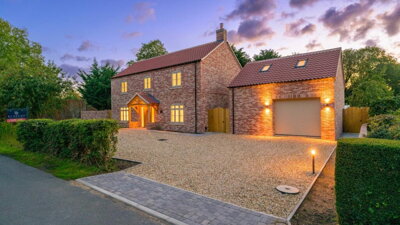
Browse 1 home new builds in Carlton-le-Moorland from local developer agents.
The Carlton Le Moorland property market offers detached, semi-detached, and terraced houses spanning various price ranges and neighbourhoods. Each listing includes detailed property information, photographs, and direct contact with the marketing agent.
Carlton-le-Moorland punches above its weight as a small, sought-after village in rural Lincolnshire. homedata.co.uk shows that in 2011 the median house price was approximately £265,000, with the lower quartile sitting around £169,950. The figures need a cautious reading, though, because the sales count was limited and a few expensive completions can move the averages sharply. Anyone wanting a proper feel for the place should arrange a viewing and speak to local estate agents about current pricing and available stock in the village and nearby.
Most homes here are traditional period properties built before 1919, which fits the village’s long history. Local brick and stone are the usual materials, in line with the wider Lincolnshire building tradition. The geology of Greater Lincolnshire, with its mudstones, limestones and ironstones from the Jurassic period, has shaped how buildings were made for generations. The stock ranges from cosy cottages to substantial detached houses, with semi-detached and terraced homes sitting alongside the larger individual dwellings you tend to find in an English village of this sort.
We have not identified any active new-build schemes specifically within the Carlton-le-Moorland postcode area, although there has been housing growth here over recent decades. Existing homes still dominate the market, which suits buyers drawn to period features and honest craftsmanship. With the village’s heritage and its several listed buildings, renovation work may well need to be part of the plan. A RICS Level 2 Survey is a sensible way to pick up issues in older properties before a purchase is pushed over the line.

A close-knit atmosphere is part of the appeal in Carlton-le-Moorland, especially for those looking to leave urban life behind. The village supports a surprising spread of local businesses, from a butchers and garden centre to a veterinary surgeon, estate agents, solicitors and a book publisher, which says a lot about the small but varied local economy. The village hall gives residents a clear focal point for events and social life through the year. You will also find a laundry, security services, an accountancy firm and a computer software developer, so modern businesses sit comfortably beside older trades here.
Rolling farmland surrounds the village, the kind of North Kesteven landscape people picture when they think of rural Lincolnshire. The River Witham and River Brant mark out parish boundaries and add to the setting, while also creating decent walking routes and supporting wildlife. Buyers near watercourses should still keep flood risk in mind. Parts of Lincolnshire also sit on clay geology that can contribute to ground movement, so it is worth looking closely at the flood risk and ground conditions for any property before going ahead.
At the centre of village life, the White Hart offers a straightforward traditional pub experience and doubles as a familiar meeting point for locals. Carlton-le-Moorland also has a fire station, which underlines the community’s practical side as much as its social one. For more shops, dining and entertainment, Sleaford and Lincoln are within reach, giving residents the balance of rural living and town convenience. Sleaford brings regular markets and major supermarkets, while Lincoln offers the usual retail choice as well as its cathedral and castle.

Education in Carlton-le-Moorland is anchored by a primary school serving the village and the surrounding catchment. It has long provided local families with a basic educational foundation close to home. Parents thinking about a move should still check current school performance data, Ofsted ratings and catchment boundaries before they buy, since all three can affect both education and property values. Primary admissions usually give priority to children living within the catchment, so being near the school matters for families with younger children.
Secondary pupils usually travel on to nearby towns, where the choice broadens out. North Kesteven offers a number of secondary school options, including schools in Sleaford and the surrounding villages. Lincoln’s grammar schools give academically inclined pupils another route, although places can be competitive. The wider area includes both state-funded and independent schools, so parents have some flexibility in matching provision to their children’s needs and learning style.
Further education and sixth form options sit in nearby towns and cities, with Lincoln also offering the University of Lincoln for higher education. That makes Carlton-le-Moorland workable for families at different stages, from primary years through to university preparation. Vocational courses and apprenticeships are available at colleges in Sleaford and Lincoln too, giving students a route into trades and technical careers. Families budgeting for a move should allow for transport costs linked to secondary and further education, since rural journeys are likely to mean private car travel.

From Carlton-le-Moorland, residents can reach employment centres in the surrounding towns and cities with relative ease. The village’s position in North Kesteven puts Lincoln to the north and Sleaford to the east within practical reach, both with train stations serving the wider region. For drivers, the A15 and A17 act as the main arteries into nearby job markets. The A15 runs north towards Lincoln, past neighbouring villages and on to the A46 bypass, while the A17 cuts east to west across Lincolnshire and links towns including Newark and King's Lynn.
Rail users have several useful options. Lincoln Central Station provides regular services through the day to Nottingham, Sheffield and Peterborough, and sits on the Nottingham to Lincoln line, tying into the broader rail network. Sleaford railway station adds routes to Peterborough, Grantham and beyond via the East Coast Main Line, which is handy for people travelling towards London or other major destinations. Grantham station is also reachable by road from Carlton-le-Moorland and offers faster services to London King's Cross, with journey times of around one hour.
Living here usually means owning a car, simply because the village is rural and daily commuting without one can be awkward. The upside is that the pace is calmer, with little of the pressure that comes from city rush hour travel. Local bus services do link Carlton-le-Moorland with neighbouring villages and towns, giving non-drivers some public transport cover. Even so, frequencies can be thin, especially on weekends and evenings, so it is wise to check timetables before relying on buses for regular trips. Walking and cycling through the village and out into the countryside are still attractive options for shorter journeys.

Before arranging viewings in Carlton-le-Moorland, we always suggest getting a mortgage agreement in principle from a lender. It shows sellers and estate agents that the finance is already in hand, which strengthens any offer on a village property. In a smaller market with limited stock, mortgage pre-approval can also help buyers move quickly when the right home comes up.
Spend time looking at Carlton-le-Moorland’s amenities, schools, transport links and community feel. Come at different times of day, and if possible, speak to residents so you get a sense of how daily life really works in this North Kesteven village. It also helps to understand recent sales and current listings, because that gives a clearer picture of the market and whether the village fits both lifestyle and investment aims.
Local estate agents are the best starting point when arranging viewings of suitable homes. In a small village, stock can be limited, so properties that match both budget and brief may not stay available for long. During viewings, make notes and ask about the age of the property, any recent renovations and any known building issues. For period homes in Carlton-le-Moorland, the history of maintenance and previous structural work deserves particular attention.
Once an offer has been accepted, a RICS Level 2 Survey should be booked to check the condition of the property. That matters even more with older homes in Carlton-le-Moorland, where the historic building stock can come with the usual period-property quirks. Our inspectors have experience with traditional Lincolnshire houses and can spot common defects such as damp, roof condition issues and outdated electrical systems that often turn up in older buildings around the village.
We would also appoint a solicitor to deal with the legal side of the purchase, including searches, contracts and registration with the property register. North Kesteven knowledge can be useful here, especially where rights of way, flood risk assessments or planning restrictions on listed buildings may come into play. Those village-specific points can make a real difference to the smooth running of a transaction.
After that, the mortgage is finalised, the deposit is paid and the legal formalities are completed. On completion day, the keys to the new Carlton-le-Moorland home are handed over, and village life in this Lincolnshire community can begin. Our team can point buyers towards local tradespeople and services to help them settle in, from building contractors who know period properties to garden designers who understand the local soil and climate conditions.
Age and construction are the first things to look at in Carlton-le-Moorland’s historic housing stock. Many of the village’s older properties were built before 1919, and the familiar defects in period homes include damp, roof condition issues and outdated electrical systems. A detailed RICS Level 2 Survey can flag these problems before a buyer is committed. We survey properties across Lincolnshire and know the typical issues that affect traditional buildings here, including the effect of clay soils on foundations and the wear patterns seen in older roofing materials.
Flood risk matters for homes near the River Witham or River Brant, since both form parts of the parish boundary. The River Witham runs along the northwest edge of the parish, while the River Brant touches the eastern side, so some village properties sit close to these watercourses. Buyers should look at Environment Agency flood maps and check the flood history of individual homes. Insurance can be more expensive where flood risk is present, so it needs to be built into the overall budget. Our inspectors can also check drainage and look for signs of previous water damage or damp penetration.
Listed buildings in Carlton-le-Moorland bring their own set of considerations, not least the Grade I listed Church of Saint Mary and several Grade II listed properties such as the Lych-Gate war memorial, Carlton House, Cobblers Cottage, Manor Farm House, Manor Lane Farmhouse and The Old Vicarage. Listed status limits the alterations, renovations and improvements that can be carried out, which may affect future use. Anyone considering one of these homes should understand the maintenance obligations and the impact of planned changes. We can also recommend specialist surveyors with experience of heritage properties and the defects that come with them.
homedata.co.uk shows that in 2011 the median house price in Carlton-le-Moorland was approximately £265,000, with lower quartile prices around £169,950. Even so, the figure needs caution because it rests on limited sales volume. There were only 46 property sales recorded in 2011, and small sample sizes can distort average price calculations quite sharply. Market conditions now may look very different, given the age of the data and the shifts that have taken place since then. Local estate agents can give current pricing guidance and show what is available in the village right now.
For council tax, properties in Carlton-le-Moorland fall under North Kesteven District Council. The local bands run from Band A to Band H, although most village homes tend to sit towards the lower to mid bands because so much of the stock is traditional. The exact band depends on the property’s valuation, and buyers can check that on the Valuation Office Agency website. Council tax needs to be included in affordability calculations because it is an ongoing cost of ownership. North Kesteven District Council sets the rates each year, and residents can use direct debits or payment plans to spread the cost.
Families in Carlton-le-Moorland have a primary school within the village and its surrounding catchment, taking children from early years through to Year 6. For secondary education, most families look to schools in nearby towns such as Sleaford or other North Kesteven locations, where both comprehensive and grammar options are available. Current Ofsted ratings, school performance data and admission catchments should all be checked carefully, since eligibility can depend on where a child lives. Lincoln offers more choice, including grammar schools such as The King's School and The Cathedral School, while the University of Lincoln adds higher education for older students.
Bus services do run from Carlton-le-Moorland to surrounding towns and villages, but the frequency is limited, which is fairly typical for rural Lincolnshire. Sleaford and Lincoln both have railway stations with connections to major cities across the region, including direct services to Nottingham, Sheffield and Peterborough. Road access comes via the A15 to Lincoln and the A17 across wider Lincolnshire and beyond, with links to towns including Newark-on-Trent and King's Lynn. Even so, private vehicle ownership is usually the practical choice here, especially for daily commuting or for the kind of flexibility school runs and shopping trips demand.
There is some investment appeal in Carlton-le-Moorland, thanks to its rural village character, historical feel and proximity to larger centres such as Lincoln and Sleaford. The limited housing stock and settled community can suit long-term holding, while period properties tend to attract buyers looking for homes with character and original features. Rental demand may be softer than in urban areas because the population is small and amenities are limited, so investors should think carefully about void periods and tenant profile. Before committing to a purchase in this North Kesteven village, it makes sense to test the investment case, study local conditions and allow for maintenance costs on older homes.
Stamp duty land tax rates for residential properties (2024-25) are 0% on the first £250,000, 5% on £250,001 to £925,000, 10% on £925,001 to £1.5 million, and 12% above £1.5 million. First-time buyers get relief on the first £425,000, then 5% on the next £200,000. With Carlton-le-Moorland’s median house price around £265,000, most first-time buyers would pay no stamp duty, while additional rate buyers would pay 5% on the part above £250,000. A stamp duty calculator is useful for working out the exact figure, and our team can talk through the costs of buying in the village.
A RICS Level 2 Survey is especially important before buying in Carlton-le-Moorland because of the village’s age profile and housing stock. Our inspectors understand the issues that can affect period properties in Lincolnshire, from structural matters linked to traditional construction methods to the way local geology can influence foundations. A survey can uncover damp, timber decay, roofing faults and electrical problems that might not be obvious on a standard viewing. For homes near the River Witham or River Brant, our team can assess drainage and flood risk indicators, while listed buildings bring their own set of heritage-related implications.
Getting the full cost picture for a Carlton-le-Moorland purchase is important if the budget is to hold together. In addition to the price of the property, buyers should allow for stamp duty land tax, solicitor fees, survey costs and moving expenses. Residential stamp duty starts at 0% on the first £250,000 of the purchase price, then rises to 5% on the portion between £250,001 and £925,000. Because prices in Carlton-le-Moorland are often in the lower bands, the village can be a workable option for buyers who are keeping an eye on spending.
First-time buyers who purchase properties up to £625,000 can benefit from stamp duty relief, paying 0% on the first £425,000 and 5% on the portion up to £625,000. That can make a meaningful difference to the overall bill and helps open the market to people taking their first step onto the ladder. The relief does not apply above £625,000, where standard rates take over. The government's website has calculators that help buyers work out their stamp duty liability using their own circumstances and purchase price.
There are several extra costs to keep in mind, including a RICS Level 2 Survey, which typically costs £400-1,000 depending on the size of the property, conveyancing fees, often from £499-1,500, mortgage arrangement fees and removal costs. With older Carlton-le-Moorland homes, it is wise to keep a contingency fund aside for repairs or renovation work. The village’s historic building stock can need ongoing maintenance, and knowing those costs upfront makes the purchase process far less stressful. Insurance premiums may also be higher for homes near watercourses, so buyers should include those recurring costs in their longer-term budget.

From 4.5%
Specialist mortgage advice for Carlton-le-Moorland property purchases
From £499
Expert property solicitors handling your legal work
From £400
Thorough property survey for Carlton-le-Moorland homes
From £60
Energy performance certificate for your property
Properties New Builds In London

Properties New Builds In Plymouth

Properties New Builds In Liverpool

Properties New Builds In Glasgow

Properties New Builds In Sheffield

Properties New Builds In Edinburgh

Properties New Builds In Coventry

Properties New Builds In Bradford

Properties New Builds In Manchester

Properties New Builds In Birmingham

Properties New Builds In Bristol

Properties New Builds In Oxford

Properties New Builds In Leicester

Properties New Builds In Newcastle

Properties New Builds In Leeds

Properties New Builds In Southampton

Properties New Builds In Cardiff

Properties New Builds In Nottingham

Properties New Builds In Norwich

Properties New Builds In Brighton

Properties New Builds In Derby

Properties New Builds In Portsmouth

Properties New Builds In Northampton

Properties New Builds In Milton Keynes

Properties New Builds In Bournemouth

Properties New Builds In Bolton

Properties New Builds In Swansea

Properties New Builds In Swindon

Properties New Builds In Peterborough

Properties New Builds In Wolverhampton

Enter your details to see if this property is within your budget.
Loans, cards, car finance
Estimated property budget
Borrowing + deposit
You could borrow between
Typical borrowing
Monthly repayment
Est. at 4.5%
Loan-to-value
This is an estimate only. Your actual budget may vary depending on interest rates, credit history, and personal circumstances. For an accurate affordability assessment, speak to one of our free mortgage advisors.
This calculator provides estimates for illustrative purposes only and does not constitute financial advice. Your home may be repossessed if you do not keep up repayments on your mortgage. Estimates based on 4.5% interest rate, repayment mortgage. Actual rates depend on your circumstances.
Homemove is a trading name of HM Haus Group Ltd (Company No. 13873779, registered in England & Wales). Homemove Mortgages Ltd (Company No. 15947693) is an Appointed Representative of TMG Direct Limited, trading as TMG Mortgage Network, which is authorised and regulated by the Financial Conduct Authority (FRN 786245). Homemove Mortgages Ltd is entered on the FCA Register as an Appointed Representative (FRN 1022429). You can check registrations at NewRegister or by calling 0800 111 6768.

We use cookies to show you personalised content and improve your experience of our website. Find out more in our Privacy policy and Cookie policy.