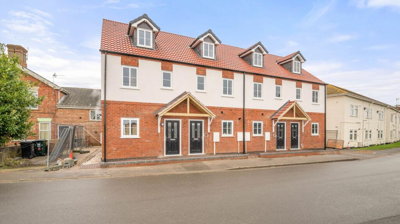
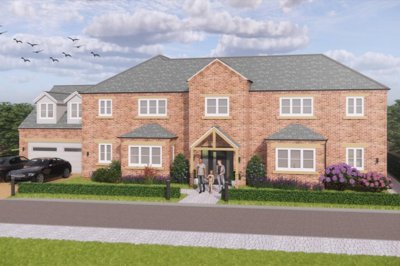
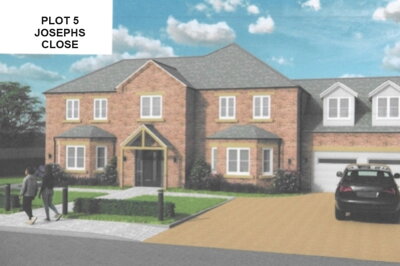
Browse 3 homes new builds in Burgh le Marsh from local developer agents.
Burgh le Marsh gives off a very English village feel, with community spirit and rural charm combining to make it a place that suits residents of all ages. There are 2,096 people living across 960 households, so it stays close-knit, neighbours tend to know each other, and local events draw people together through the year. The centre covers day-to-day needs, and the surrounding countryside opens out into long walking routes and the scenery you expect on the Lincolnshire Wolds fringe area.
The local economy draws strength from several sectors, and tourism matters a great deal thanks to the village’s position near the popular Lincolnshire coast. Many residents work in hospitality, leisure, and related service industries, while agriculture still supports the wider rural economy. Inside the village, local shops, schools, and service providers create work too, which cuts down the need for long commutes into larger towns. That spread of employment helps the community stay steady, even in a rural setting.
Much of the village’s character comes from its architecture, and St Peter and St Paul’s Church is the Grade I listed landmark that anchors the Conservation Area. The medieval church, largely dating from the 14th century with later additions, sits at the spiritual and geographical centre of the village. A number of listed buildings from the 18th and 19th centuries add to the street scene, and that suits anyone with an eye for historic homes. Red brick is the dominant material within the Conservation Area, which reflects the traditional building methods of this part of Lincolnshire, where local clay deposits gave builders a ready supply of material for generations.
Burgh le Marsh’s property market follows the character of this historic Lincolnshire village, with a mix of homes that suit different budgets and requirements. Detached properties sit at the top of the market, averaging £485,138, which makes them a strong option for families wanting space and gardens. Semi-detached homes, at £224,244 on average, offer solid value for first-time buyers or anyone moving up from terraced accommodation. Space and character matter here more than urban convenience, and that is part of the appeal.
Over the last twelve months, prices have softened a little, with the overall market down 2.6%. Detached properties have fallen by 3.1% and semi-detached homes by 1.5%, while terraced homes are down 2.5% to an average of £150,000. Flats have held steady, with no change recorded. The picture is of a balanced market, where buyer interest is still there even against wider economic uncertainty in the national housing sector.
A lot of Burgh le Marsh’s housing stock is older, and many homes built before 1919 sit within the designated Conservation Area. The village also has inter-war properties, post-war developments, and newer builds, so buyers can choose between period cottages with original features and later homes with more modern conveniences. Our listings are updated regularly as local estate agents place new instructions across the PE24 postcode area.

The local primary school sits at the centre of education in Burgh le Marsh, serving families with children of primary school age in the village and the wider catchment. Parents thinking about a move should check current Ofsted ratings and admission arrangements, because catchment areas can play a big part in school placement. Having a village primary school means younger children do not need to travel into larger towns for early years education, which is a real plus for anyone looking for a genuinely local community.
Secondary schooling is based in nearby towns, and transport usually runs from Burgh le Marsh to places such as Spilsby, Horncastle, or Skegness. Families need to check the latest transport arrangements and allow for journey times, because both can shape day-to-day routines in a big way. Sixth form provision is generally concentrated in larger towns, so older students will need to travel for advanced level courses.
For families who put education first, it pays to look closely at school performance data, curriculum choices, and extracurricular activities before committing to a purchase. Burgh le Marsh sits within East Lindsey district, so school performance can vary, and proper research helps match educational priorities to what is actually available nearby. Buyers with young children should also think about catchment boundaries early on, so they do not run into problems when admission offers are made.
Burgh le Marsh is a rural Lincolnshire village, so road travel is still the main way residents reach surrounding towns and cities. The A158 is the key route, linking the village to larger settlements including Lincoln to the west and Skegness to the east. It acts as the main road for commuting, school runs, and for getting to services that are not available locally. Bus routes do run to neighbouring towns, although they are less frequent than what you would find in urban areas.
For anyone needing rail travel, the nearest stations are in towns such as Wainfleet or Thorpe Culvert, both of which connect into the East Midlands and the national rail network. Journey times to larger employment centres depend on the destination, though Lincoln can usually be reached by road in approximately 45 minutes under normal traffic conditions. Car ownership remains important for most residents, but the roads through the Lincolnshire countryside are calm enough to make driving more pleasant than stressful.
The area does have cycling routes, mostly on rural lanes that draw recreational cyclists, especially in summer when the flat Lincolnshire landscape makes the roads accessible for riders of different abilities. Walking is another strong point, with footpaths crossing farmland and linking the village to nearby settlements. For people working from home or running a local business, the village gives a quiet setting for productive remote working, while still leaving reasonable access to larger towns for the odd meeting or client visit.
Before we arrange viewings, it helps to spend time in Burgh le Marsh at different times of day and on different days of the week. Visit the local shops, watch the traffic, and talk to residents so we can get a proper feel for the community. Keep workplace distance, school catchment boundaries, and the flood risk in lower-lying areas in mind while comparing properties.
We recommend getting a mortgage agreement in principle from a lender before starting the search. It strengthens our position when offers go in and shows sellers that we are serious. The full purchase budget needs to cover stamp duty, solicitor fees, survey costs, and removal expenses too. For Burgh le Marsh properties, budget around £400-£500 for a RICS Level 2 Survey on homes up to £200,000.
We use Homemove to browse all available properties in Burgh le Marsh, filtering by price range, property type, and number of bedrooms. Once a shortlist is in place, we contact the estate agents to book viewings. Taking notes during each visit and going back for a second look before making an offer helps us check that the home still fits the brief.
Once we find the right home, we put the offer forward through the selling estate agent. Price negotiation is often part of the process, especially where a property has sat on the market for several weeks. An agreement in principle and proof of funds both help our negotiating position, and it can be sensible to add conditions such as a mortgage offer deadline.
After an offer is accepted, we instruct a solicitor to handle the conveyancing and a surveyor to assess the property’s condition. With so many older homes in Burgh le Marsh, a RICS Level 2 Survey suits most properties. Homes in the Conservation Area, or those over 100 years old, may benefit from a more detailed RICS Level 3 Survey.
Our solicitor takes care of the local authority searches, property checks, and contract exchange. On completion day, the remaining balance is transferred and the keys to the new Burgh le Marsh home are released. We then register the title and update the address with the relevant organisations.
Burgh le Marsh homes need careful checking before anyone commits to a purchase. The village sits on soils made up of boulder clay deposits over bedrock chalk and limestone, and those soils can show shrink-swell behaviour in periods of dry weather or heavy rainfall, which can affect foundations. A full survey can pick up signs of past movement, such as cracks in walls or doors that no longer close as they should. Large trees nearby can raise the risk further, because roots draw moisture from the clay subsoil.
Flood risk is another point to look at, and parts of Burgh le Marsh have surface water flooding potential, especially in lower-lying areas. The Environment Agency flood maps show the affected zones, and we always recommend that prospective buyers check the exact property location and any record of past flooding. Homes in those areas can face higher insurance premiums, and sellers must complete a Flood Risk questionnaire as part of the conveyancing process. Speaking with current owners or surveyors about flood resilience measures can give useful insight into how any problems have been handled.
The Conservation Area designation changes what owners can do inside its boundaries, because certain alterations, extensions, and demolitions need planning permission. Anyone planning work on a period property should check whether the scheme would need Conservation Area consent. Listed buildings face extra restrictions on alterations, and works usually need Listed Building Consent from East Lindsey District Council. Traditional materials can also be more expensive to maintain, so that needs to sit in the budget from the start.
Older building materials deserve close attention during surveys. Traditional brick construction, which is common throughout Burgh le Marsh, can suffer from rising damp if original damp-proof courses have failed or were never installed. Solid walls usually perform less well thermally than modern cavity wall construction, so heating bills can be higher. Wiring in older homes may also need updating to current safety standards, especially where it has not been replaced for several decades.

The average house price in Burgh le Marsh is £304,204 as of February 2024, according to property market data. Detached homes average £485,138, semi-detached properties £224,244, terraced houses £150,000, and flats £85,000. With prices down 2.6% over the last twelve months, the market looks buyer-friendly and properties may be open to negotiation below asking price. Compared with larger towns in the East Midlands region, pricing here is still relatively accessible.
For council tax purposes, properties in Burgh le Marsh fall under East Lindsey District Council. Depending on the assessed value, bands run from A through H, although many period homes in the village are likely to sit in bands A through D. We always suggest checking the exact band on the Valuation Office Agency website, because it sits alongside mortgage payments, utilities, and maintenance costs in the household budget.
Burgh le Marsh has a primary school for the local community, while secondary education is usually found in nearby towns such as Spilsby, Horncastle, and Skegness. Current Ofsted reports and performance data are worth reviewing, because ratings can change and do differ between schools. There are transport arrangements from the village to those secondary schools, although the latest routes and timings should always be checked. Catchment boundaries matter too, since they affect admission chances and should shape the property search.
Public transport in Burgh le Marsh includes bus services to neighbouring towns and rail access at Wainfleet and Thorpe Culvert, both of which connect into the wider rail network. Even so, service frequency is limited compared with urban areas, so car ownership is practically essential for most residents. The A158 gives decent road links to Lincoln and the coast, with Skegness reachable in approximately 20 minutes under normal traffic conditions. Journey times and transport availability need to sit at the centre of any commuting decision.
Burgh le Marsh can appeal to buyers who want a rural lifestyle at more accessible price points, although returns may be more modest than in fast-growing urban areas. Its proximity to the Lincolnshire coast brings tourism, which can support rental demand for holiday lets or long-term tenancies. Properties in the Conservation Area, especially those with character features, may hold value well because supply is limited, while homes with flood risk need a closer look before any purchase. It comes down to investment horizon, and to whether long-term capital growth or rental income fits the financial plan better.
From April 2024, Stamp Duty Land Tax rates mean buyers pay 0% on the first £250,000 of residential property purchases, 5% on the portion from £250,001 to £925,000, 10% from £925,001 to £1.5 million, and 12% above £1.5 million. First-time buyers get relief on purchases up to £625,000, with 0% on the first £425,000 and 5% between £425,001 and £625,000. At Burgh le Marsh’s average price of £304,204, most buyers would pay no stamp duty at all, although additional property purchases still attract a 3% surcharge on the total purchase price.
Some parts of Burgh le Marsh are exposed to surface water flooding risk, especially in lower-lying areas and during heavy rainfall when drainage can be overwhelmed. The Environment Agency flood maps show the affected zones across the village, and sellers have to provide flooding information as part of the conveyancing process under the Property Information Form requirements. Homes with a flood history can carry higher insurance costs or be harder to cover, so we recommend getting insurance quotes before completion. Our surveyors check for signs of past water ingress and look at possible remediation steps that could reduce future risk.
We have not verified any active new-build developments within the Burgh le Marsh postcode area, with most new housing activity centred in larger towns across the East Lindsey district. Buyers who want a brand new home may need to look beyond the village or accept that choice here is limited. Existing properties bring character and established gardens that new homes cannot copy, while the village’s historic housing stock gives buyers period features, settled neighbourhoods, and the feel of traditional Lincolnshire construction.
From 4.5% APR
Compare mortgage deals from leading lenders
From £499
Expert solicitors for your property purchase
From £400
Thorough inspection for properties in Burgh le Marsh
From £80
Energy performance certificate for your new home
Knowing the full cost of buying in Burgh le Marsh helps us budget properly and avoid surprises during the transaction. For most buyers, the biggest cost is Stamp Duty Land Tax, which applies to purchases above £250,000 at 5% on the portion between £250,001 and £925,000. With the average property price in Burgh le Marsh at £304,204, plenty of buyers at or below that level will pay no stamp duty at all, which makes the village a fairly accessible entry point into the market for first-time buyers.
First-time buyers benefit from a stronger relief that lifts the zero-rate threshold to £425,000 and applies 5% to the next £200,000, which can save thousands against older thresholds. The relief is for buyers who have never owned property anywhere in the world and who are buying alone or with another first-time buyer. Once a purchase goes above £625,000, the relief drops away and standard rates apply. Investors and anyone buying an additional property pay a 3% surcharge on every band, which changes the numbers sharply for buy-to-let in the village.
Beyond stamp duty, we need to allow for solicitor fees, which usually range from £800 to £1,500 depending on complexity and property value. Survey costs vary by property type and report level, with RICS Level 2 Surveys for homes up to £200,000 priced locally from £400 to £500, while larger or more complex properties cost more. Removal costs, mortgage arrangement fees, and valuation charges add further expenses that can total £2,000 to £3,000 or more, depending on the situation. Setting aside a contingency fund of at least 5% of the purchase price gives a buffer for those costs and for anything unexpected that turns up in the survey.

Properties New Builds In London

Properties New Builds In Plymouth

Properties New Builds In Liverpool

Properties New Builds In Glasgow

Properties New Builds In Sheffield

Properties New Builds In Edinburgh

Properties New Builds In Coventry

Properties New Builds In Bradford

Properties New Builds In Manchester

Properties New Builds In Birmingham

Properties New Builds In Bristol

Properties New Builds In Oxford

Properties New Builds In Leicester

Properties New Builds In Newcastle

Properties New Builds In Leeds

Properties New Builds In Southampton

Properties New Builds In Cardiff

Properties New Builds In Nottingham

Properties New Builds In Norwich

Properties New Builds In Brighton

Properties New Builds In Derby

Properties New Builds In Portsmouth

Properties New Builds In Northampton

Properties New Builds In Milton Keynes

Properties New Builds In Bournemouth

Properties New Builds In Bolton

Properties New Builds In Swansea

Properties New Builds In Swindon

Properties New Builds In Peterborough

Properties New Builds In Wolverhampton

Enter your details to see if this property is within your budget.
Loans, cards, car finance
Estimated property budget
Borrowing + deposit
You could borrow between
Typical borrowing
Monthly repayment
Est. at 4.5%
Loan-to-value
This is an estimate only. Your actual budget may vary depending on interest rates, credit history, and personal circumstances. For an accurate affordability assessment, speak to one of our free mortgage advisors.
This calculator provides estimates for illustrative purposes only and does not constitute financial advice. Your home may be repossessed if you do not keep up repayments on your mortgage. Estimates based on 4.5% interest rate, repayment mortgage. Actual rates depend on your circumstances.
Homemove is a trading name of HM Haus Group Ltd (Company No. 13873779, registered in England & Wales). Homemove Mortgages Ltd (Company No. 15947693) is an Appointed Representative of TMG Direct Limited, trading as TMG Mortgage Network, which is authorised and regulated by the Financial Conduct Authority (FRN 786245). Homemove Mortgages Ltd is entered on the FCA Register as an Appointed Representative (FRN 1022429). You can check registrations at NewRegister or by calling 0800 111 6768.

We use cookies to show you personalised content and improve your experience of our website. Find out more in our Privacy policy and Cookie policy.