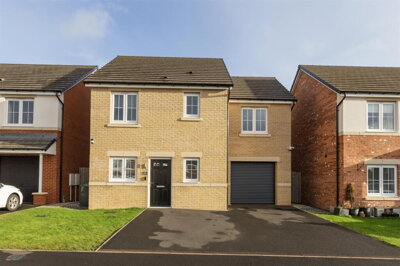
Browse 1 home new builds in Brancepeth, County Durham from local developer agents.
The Brancepeth property market offers detached, semi-detached, and terraced houses spanning various price ranges and neighbourhoods. Each listing includes detailed property information, photographs, and direct contact with the marketing agent.
£400k
1
0
114
Source: home.co.uk
Showing 1 results for Houses new builds in Brancepeth, County Durham. The median asking price is £400,000.
Source: home.co.uk
Terraced
1 listings
Avg £400,000
Source: home.co.uk
Source: home.co.uk
Brancepeth’s property market still feels steady for buyers, even with prices edging down by 1.3% over the past twelve months. That small correction sits alongside wider regional movement, while the village keeps its place as a premium spot in County Durham. Detached homes sit at the top end at roughly £400,000, and they tend to suit families or buyers after space and privacy. Semi-detached houses give a lower entry point at around £340,000, while terraced properties start from £400,000, though there are not many to choose from because of the village’s historic housing stock.
As a conservation area with a strong heritage, Brancepeth is full of older homes, and many predate 1919. Solid walls in traditional red brick or local stone, timber suspended floors and original features are the norm here, not the exception. Sales are few and far between, partly because the village is small and partly because homes often stay within families or go to buyers who know how rare it is to get a foothold in such a sought-after place.
New build activity in the DH7 8 postcode area is still very limited, and we have not verified any active developments in Brancepeth itself. Buyers after a brand new home may need to look towards Durham or Brandon, although that shortage does help character properties hold a premium within the village conservation boundary. With no major development pressure, Brancepeth has kept its distinctive look and community feel, which is part of the reason people keep coming back. We usually tell buyers to move promptly when something suitable appears, because competition can be fierce even when transaction numbers stay modest.
Brancepeth’s homes reflect the village’s long history, with Victorian and Edwardian properties forming much of the residential picture. In the centre, stone cottages with thick walls and traditional slate roofs line the streets, while larger detached houses sit on generous plots at the edges. There is very little flat development, since the conservation area status and the village setting have limited higher-density building. So buyers expecting village life will mostly find houses rather than apartments, and that helps keep the atmosphere family-friendly.
Heritage and landscape shape life in Brancepeth, and the conservation area designation underlines the village’s architectural importance. Brancepeth Castle, a Grade I listed building, sits at the centre of local identity and dominates the skyline. The village green, the stone cottages and the historic Church of St. Brandon give the place a lived-in, centuries-old feel that still works for modern families and professionals. Beyond the village, farmland, woodland and the River Wear offer plenty of scope for rural walks and outdoor pursuits.
Employment in and around Brancepeth reflects its rural setting, with agriculture and tourism both playing a part locally. Brancepeth Castle and its grounds, including the well-regarded golf course, bring visitors in throughout the year and provide a useful local focus. Those same grounds add to village life, while the historic fabric of the area supports the tourism side of nearby businesses. Even so, many residents travel out to work in Durham, Bishop Auckland and Newcastle upon Tyne, using the transport links while enjoying the quieter pace of village living.
Village facilities are modest but useful, with a village hall and a local pub acting as the main gathering points for residents. The pub gives people a traditional place to meet, and the village hall hosts community events through the year. For wider day-to-day needs, Durham city is about five miles away and provides supermarkets, healthcare and restaurants without much trouble. That mix of small-village character and easy access to city amenities suits a broad range of buyers, from retired couples after peace and quiet to families who need schools and transport for commuting.
There is a genuine community spirit in Brancepeth, and residents put real effort into events and traditions that keep the sense of place strong. Newcomers often mention the welcome they receive and the neighbourly connections that quickly become part of village life. For buyers who want more than just a house, Brancepeth offers a social fabric that newer estates simply cannot copy. Combined with the beauty of the conservation area, that creates a place people tend to stay in for decades.

Families thinking about a move to Brancepeth will find schooling available both locally and across County Durham. Primary provision comes through schools in nearby villages and Durham suburbs, and several have favourable Ofsted ratings. Parents should look closely at catchment areas and admission rules, because they can make a real difference to school places and to house prices on nearby streets. With such a small population, most primary-aged children travel to schools elsewhere, so being close to school bus routes or main roads is worth bearing in mind during a property search.
Secondary schooling is available in Durham city and the surrounding towns, while academically selective pupils may be able to access grammar school provision through the County Durham selection process. Durham city itself has several well-regarded secondary schools, so reputation often plays a big part in buying decisions within commuting distance. For school runs, families usually need a car or a dependable public transport link, which makes the village’s access to bus routes an important point. We would suggest visiting schools and speaking to admissions teams directly to check the current arrangements before committing to a purchase.
Durham University, which is consistently ranked among the UK’s leading institutions, adds another layer to the education picture for buyers with older children or those looking at investment property. Student rental demand in Durham city can create buy-to-let opportunities, although Brancepeth itself is much more of a residential village than a student market. For families who place value on strong education from primary level right through to university, the combination of Brancepeth’s quiet setting and Durham’s academic reputation is a persuasive one. Families with older children often cite the access to quality education at every stage as one of the main reasons for choosing the area.

Road links are the key to getting in and out of Brancepeth, with Durham city around five miles away and mainline rail services from there to Newcastle, York, Leeds and London King’s Cross. The A690 Durham to Sunderland road runs nearby, putting residents onto the wider regional network and towards the A1(M) for north-south travel. Local bus services connect Brancepeth and Durham, giving those without a car at least some public transport options, although they are not as frequent as urban routes. In practice, most residents find car ownership close to essential, even if anyone working in Durham city can manage without.
Daily commuting from Brancepeth usually means heading into Durham, and many residents work in healthcare, education, retail and professional services there. By car, the journey to Durham city centre usually takes about fifteen to twenty minutes in normal traffic, although that can stretch to around thirty minutes at busy times. For Newcastle, the drive is closer to forty minutes, or you can use Durham railway station and reach Newcastle Central in around twenty minutes by train. The East Coast Main Line from Durham makes the northern cities straightforward to reach, and London is under three hours away.
Parking in Brancepeth reflects the village’s rural layout, so on-street parking is the usual arrangement in residential areas. Homes with private driveways or garages tend to fetch a premium, especially family houses where several vehicles need to be accommodated. Narrow lanes and the historic street pattern mean off-street parking can be scarce in some parts, so buyers should check parking details carefully when viewing period properties. Cycling provision is limited locally, although the surrounding countryside does offer attractive routes along quiet lanes for leisure riders. For commuters, Durham station gives a clear advantage, and that helps shape values across nearby villages including Brancepeth.

Before we begin a property search in Brancepeth, we suggest sorting out your finances with a mortgage agreement in principle from a lender. With average prices around £370,000, it also makes sense to budget for stamp duty, solicitor fees and survey costs. Older houses can bring extra expenditure, especially where listed buildings or conservation area properties need specialist surveys or ongoing maintenance. Our team can talk through the likely costs in the area and point you towards local conveyancers who are used to dealing with village homes.
Current listings on home.co.uk are the best place to see what is available in Brancepeth right now. With roughly 10 sales a year in the village, homes appear only occasionally, so keeping an eye on new instructions matters. It is also worth registering with estate agents in the Durham area for early notice of properties coming to market, especially those in the village centre or close to the conservation area. We keep in touch with local agents and can let you know when something matching your brief comes up.
Once you have a shortlist, arrange viewings and give the age and condition of the building proper attention. Brancepeth properties often use older construction methods and retain original features, so a careful look is essential. We always advise a RICS Level 2 Survey before you proceed, particularly because historic homes can hide defects that are not obvious at first glance. Our survey partners know the local building types and can spot issues that are common in the village’s older housing stock.
Brancepeth’s geology and mining history mean it is wise to go beyond a standard survey. We strongly recommend a mining report from the Coal Authority to check for historic mining activity under the property, because the Durham coalfield runs beneath this area. Homes near the River Wear should be checked against Environment Agency flood maps, and clay foundations may need a look at subsidence risk, particularly in extreme weather. These reports are relatively cheap, but they give useful information when you are making a buying decision.
After an offer is accepted, we can suggest conveyancing solicitors who are familiar with village properties and the legal transfer of ownership. Your solicitor should know about conservation area restrictions and listed building regulations if they apply to the property you have chosen. They will carry out local authority searches with Durham County Council, review title deeds and handle exchange and completion, which usually takes eight to twelve weeks for standard transactions. We stay in touch throughout so the process moves towards completion without unnecessary delays.
Buying in Brancepeth means keeping an eye on issues that are specific to historic villages and County Durham conditions. Conservation area status can restrict permitted development rights, which may limit future extensions, outbuildings or major external changes. Before you buy, check with the Durham County Council planning department what applies and how it might affect any plans you have for the property. Many homes, including Brancepeth Castle and related structures, are listed, and that brings extra controls, with Listed Building Consent needed for a range of alterations. Those designations protect the village’s character, but they need to be understood before any work is planned.
The ground beneath Brancepeth brings its own set of considerations. Properties sit over Carboniferous rocks, including coal measures from the Durham coalfield, so historic mining may have influenced ground stability. Clay soils are common too, and they can shrink and swell in extreme weather, which may affect the foundations of older houses with shallower construction. A Coal Authority mining report should be obtained for all properties, and any sign of subsidence, cracking or movement ought to be assessed by a professional before purchase. Homes near mature trees deserve extra scrutiny, because root systems and clay soils can work together to worsen foundation movement in dry periods.
Construction in Brancepeth tells you a lot about the age of the village, with many homes built in solid brick or local stone, timber suspended floors and original slate or tile roofs. Those materials give a lot of character, but they can also bring problems such as damp penetration through solid walls without effective damp-proof courses, timber rot in floor structures and roof timbers, and old electrical or plumbing systems. Properties over fifty years old often need money spent on modernisation, so buyers should budget for rewiring, plumbing updates and energy efficiency improvements. For listed buildings, specialist surveys may need to go beyond the standard approach, and RICS Level 3 Building Surveys are often the better option for significant heritage homes.
During viewings, we would pay close attention to the roof, because original slate or tile coverings on period properties often reach the point where replacement is needed. Look for damp on walls and in corners, inspect window frames for timber decay, and check that original features such as fireplaces and staircases are still in place. Homes that have been sensitively modernised while keeping their period character often offer the strongest value, since they combine modern convenience with less renovation work than a full restoration project. We can arrange viewings through local partners who know which homes represent proper value in the current market.
The average property price in Brancepeth currently stands at £370,000 according to recent home.co.uk market data. Detached homes average around £400,000, semi-detached properties sit at approximately £340,000, and terraced houses start from £400,000. Over the past twelve months, the market has slipped by 1.3%, which may open up opportunities for buyers in a place where only around 10 properties sell annually. Condition, position in the village, proximity to the conservation area and listed status all influence price, with character homes usually commanding more than similar modern properties.
Council tax in Brancepeth falls under Durham County Council. The exact band depends on valuation, although Victorian and Edwardian homes in conservation areas usually sit in bands C to E. It is always worth checking each property individually through the Durham County Council valuation office listing, because the band reflects assessed value and affects yearly council tax bills. For context, a home at the village average of £370,000 would probably fall into band E, with annual charges currently around £2,500 to £2,800 depending on current council tax rates. Some first-time buyers and other groups may qualify for discounts or exemptions.
There is no school in Brancepeth itself, so primary-aged children usually attend schools in nearby villages such as Bearpark or Neville Cross, or in Durham suburbs including Gilesgate and Framwellgate Moor. Several local primary schools have good or outstanding Ofsted ratings, and we suggest visiting them directly to judge which ones suit your family best. Secondary options include Durham School, St. Mary’s Catholic School and Durham Johnston Comprehensive in Durham city, while some families look at grammar school admission through the County Durham selection process at age 11.
Bus services link Brancepeth to Durham city, but the evening and weekend timetable is limited, so planning ahead is usually necessary. Durham railway station, about five miles away, runs mainline services to Newcastle (20 minutes), York (1 hour), Leeds (1.5 hours) and London King’s Cross (under 3 hours) on the East Coast Main Line. For day-to-day commuting, most residents rely on private vehicles, though the rail link keeps Brancepeth practical for people working in Durham city or travelling further afield for business. If public transport matters to you, we would check current bus timetables with County Durham Passenger Transport before buying.
Brancepeth’s limited supply, conservation area status and historic character point towards strong long-term value retention for the right property. Buyers who want rural living with city access continue to show steady interest, especially families and professionals drawn by the village’s character and community. Rental demand across Durham is supported by the city’s universities and hospitals, although Brancepeth itself has little buy-to-let stock because it is mainly owner-occupied and village lets can be harder to manage with fewer local services. Renovation projects can still offer value for buyers with the right budget and patience for older-house upkeep.
Homes near the River Wear in Brancepeth carry a higher fluvial flood risk, and surface water flooding can also affect parts of the village during heavy rain because of the local topography and drainage patterns. We strongly recommend checking Environment Agency flood risk maps for each property before you buy, since flood risk can have a direct impact on insurance and mortgage availability. A professional flood risk assessment is part of sensible due diligence for any home near the river, and buyers should confirm that insurance can be arranged before exchange. Slightly elevated parts of the village may offer less flood exposure while still keeping the benefits of the conservation area.
From April 2025, Stamp Duty Land Tax rates are 0 up to £250,000, 5% between £250,000 and £925,000, 10% between £925,000 and £1.5 million, and 12% above £1.5 million. First-time buyers get 0 up to £425,000 and 5% between £425,000 and £625,000. On a typical Brancepeth property at £370,000, standard buyers pay £6,000 in stamp duty, while first-time buyers pay nothing under the current thresholds. Professional advice should confirm your position, especially if you own other property or the purchase involves complications such as agricultural ties or right-to-buy arrangements.
With much of Brancepeth’s housing stock predating 1919, a RICS Level 2 Survey gives an important assessment of construction condition that a mortgage valuation will not cover. Our inspectors often find issues in village homes such as rising damp through solid walls, timber decay in suspended floors, worn roof coverings and outdated electrical installations that need bringing up to current safety standards. A survey can also give useful room for negotiation if defects appear, and the price reduction may well outweigh the survey cost itself. For listed buildings, we would consider a RICS Level 3 Building Survey for a fuller review of heritage construction.
There are costs beyond the asking price when buying in Brancepeth, and knowing them early helps with realistic budgeting. Stamp Duty Land Tax is the biggest extra cost for most buyers. At current rates, a property at the village average of £370,000 attracts £6,000 in stamp duty for standard buyers purchasing with an existing property. First-time buyers with eligible homes benefit from higher thresholds, which can reduce or remove that cost depending on their circumstances and whether relief conditions are met. The SDLT calculation becomes more involved for higher-value properties, and we would suggest using the HMRC calculator or speaking to a solicitor for exact figures.
Conveyancing fees usually fall between £500 and £1,500, depending on how complex the transaction is and whether the property is leasehold or has added factors such as listed building status or conservation area restrictions. Local searches with Durham County Council are part of the legal process and usually cost around £250 to £350. Disbursements, including Land Registry fees, bankruptcy checks and teleport charges, add roughly £150 to £300. Leasehold purchases may also bring management company enquiries and deed tracking costs. We can recommend solicitors who know village properties well and understand the issues that come with heritage homes.
Property surveys are a worthwhile spend in Brancepeth because of the age and character of the housing stock. RICS Level 2 Surveys usually cost between £400 and £900 depending on size, with larger detached homes at the £400,000 price point often coming in at £700 to £900. Because of the village’s mining history and older construction, we strongly recommend a Coal Authority mining report at about £25 to check for historical coal mining beneath the property. Surveyors in the Durham area who know historic construction can give property-specific quotes, and buyers should not try to cut corners on survey costs when hidden defects can be common in older village homes.
From £400
Professional RICS survey for modern homes and apartments
From £500
Detailed building survey for older and complex properties
From £25
Essential mining risk assessment for County Durham properties
From £499
Solicitors experienced with village and listed properties
Ready to see what Brancepeth has to offer? Our property search platform brings together listings from local estate agents and major property portals, so you can get a clear picture of the homes currently on the market in the village. From a traditional stone cottage to a family house with generous gardens or a period home with original features, we can help you find properties that fit both your brief and your budget.
With only about 10 properties changing hands in Brancepeth each year, keeping tabs on new listings really matters. We update our listings regularly and can set up alerts for homes that match your search. Speak to our local team about what you are looking for and we can show you why Brancepeth remains one of County Durham’s most desirable village locations, with historic character and strong links to regional jobs, education and transport.

Properties New Builds In London

Properties New Builds In Plymouth

Properties New Builds In Liverpool

Properties New Builds In Glasgow

Properties New Builds In Sheffield

Properties New Builds In Edinburgh

Properties New Builds In Coventry

Properties New Builds In Bradford

Properties New Builds In Manchester

Properties New Builds In Birmingham

Properties New Builds In Bristol

Properties New Builds In Oxford

Properties New Builds In Leicester

Properties New Builds In Newcastle

Properties New Builds In Leeds

Properties New Builds In Southampton

Properties New Builds In Cardiff

Properties New Builds In Nottingham

Properties New Builds In Norwich

Properties New Builds In Brighton

Properties New Builds In Derby

Properties New Builds In Portsmouth

Properties New Builds In Northampton

Properties New Builds In Milton Keynes

Properties New Builds In Bournemouth

Properties New Builds In Bolton

Properties New Builds In Swansea

Properties New Builds In Swindon

Properties New Builds In Peterborough

Properties New Builds In Wolverhampton

Enter your details to see if this property is within your budget.
Loans, cards, car finance
Estimated property budget
Borrowing + deposit
You could borrow between
Typical borrowing
Monthly repayment
Est. at 4.5%
Loan-to-value
This is an estimate only. Your actual budget may vary depending on interest rates, credit history, and personal circumstances. For an accurate affordability assessment, speak to one of our free mortgage advisors.
This calculator provides estimates for illustrative purposes only and does not constitute financial advice. Your home may be repossessed if you do not keep up repayments on your mortgage. Estimates based on 4.5% interest rate, repayment mortgage. Actual rates depend on your circumstances.
Homemove is a trading name of HM Haus Group Ltd (Company No. 13873779, registered in England & Wales). Homemove Mortgages Ltd (Company No. 15947693) is an Appointed Representative of TMG Direct Limited, trading as TMG Mortgage Network, which is authorised and regulated by the Financial Conduct Authority (FRN 786245). Homemove Mortgages Ltd is entered on the FCA Register as an Appointed Representative (FRN 1022429). You can check registrations at NewRegister or by calling 0800 111 6768.

We use cookies to show you personalised content and improve your experience of our website. Find out more in our Privacy policy and Cookie policy.