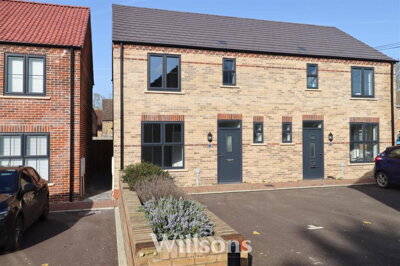
Browse 1 home new builds in Bilsby, East Lindsey from local developer agents.
£312k
8
1
192
Source: home.co.uk
Source: home.co.uk
Detached
5 listings
Avg £332,990
Detached Bungalow
2 listings
Avg £337,500
Semi-Detached
1 listings
Avg £275,000
Source: home.co.uk
Source: home.co.uk
In Bilsby, the market tends to move in step with the village itself, small-scale and fairly distinctive. homedata.co.uk records an average house price of £210,000 over the past year, and our reading of the numbers points to a correction of approximately 12-14% across the last twelve months, with homedata.co.uk showing a fall of 11.7% in sold prices as of early 2026. After a stretch of relative stability across the wider East Lindsey district, that shift may open the door for buyers looking at rural Lincolnshire at more accessible price points.
Bilsby remains a niche village market, and that shows in the figures. Over the past year, homedata.co.uk puts the average house price at £282,767, while our data indicates a correction of approximately 12-14% over the last twelve months, with homedata.co.uk reporting a fall of 11.7% in sold prices as of early 2026. Following a calmer period in the wider East Lindsey district, buyers may now find a more achievable entry point into the rural Lincolnshire property market.
Anyone weighing up investment potential in Bilsby is really looking at scarcity as much as setting. The Lincolnshire Wolds still draws buyers searching for lifestyle purchases, holiday lets, and long-term residential investments, but transaction volumes are very low and there are typically very few sales in any given period. Because homes so rarely reach the open market here, the current listings stand out for serious buyers keen to secure a place in this sought-after village location.

Bilsby has the feel many people picture when they think of an English village, set neatly within the Lincolnshire Wolds. Much of it follows a linear settlement pattern along the main road, with open farmland, gentle valleys, and a web of public footpaths around it that keep walkers and outdoor enthusiasts coming back. Across the surrounding countryside, you get broad views over rolling arable land, hedgerows, small woodlands, and scattered farms, the kind of patchwork landscape East Lindsey is known for.
Community life in Bilsby is close-knit in the way small Lincolnshire villages often are. Traditional pub venues, parish meetings, and village events help keep residents connected, while Alford, just three miles away, covers the practical side with convenience stores, a post office, a doctors surgery, and a good mix of independent shops. Alford also keeps a weekly market, which still gives this part of rural Lincolnshire that long-established market-town rhythm.
Because Bilsby sits within the Lincolnshire Wolds Area of Outstanding Natural Beauty, planning controls are tighter and the landscape is better protected. That helps preserve the villages attractive setting, its rural approach, and the surrounding countryside for future generations. Residents can head out to the coastline at Skegness and the wider Lincolnshire coast without much difficulty, or spend time inland visiting Wolds attractions such as historic churches, manor houses, and villages including Louth and Horncastle.

For families thinking about Bilsby, schooling is centred on the surrounding villages and East Lindsey market towns rather than within the village itself. Primary provision includes the school in Alford, where children attend from reception through to Year 6. Smaller village primaries like these often mean more intimate class sizes and stronger ties with the local community, which can suit children well in their early years of education.
Secondary pupils generally travel out of Bilsby each day. There are several schools within reasonable daily travelling distance, and families in the area can use bus services linking to places such as Alford, Louth, and Skegness, which gives some choice in educational approach. For older students, sixth form provision is available in the larger market towns, with Louth especially noted for a well-regarded sixth form college attracting students from across the Lincolnshire Wolds.
School choice across East Lindsey is varied, so families with particular preferences are not limited to one model. The wider area includes academy schools, community schools, and faith schools, although performance differs across the district and Ofsted inspection reports are worth checking for any school under consideration. In practice, Bilsby's rural location also makes transport a real part of the decision, so buyers with school-age children should weigh commute times and transport costs carefully before committing.

Transport in Bilsby is shaped by its rural Lincolnshire setting and its place within the Lincolnshire Wolds. The village sits off the A16, which passes through nearby Alford and acts as the main north-south route linking coastal towns with inland market towns such as Louth and Spilsby. For drivers, that gives fairly straightforward wider access, although local journeys still involve the winding country lanes typical of Wolds villages.
Public transport is limited here, which will not surprise anyone familiar with small Lincolnshire villages. Bus services connect Alford with nearby villages and towns and provide an important option for residents without private vehicles, but frequencies are likely to be modest, so most people will find car ownership practically essential. The nearest railway stations are in places including Skegness to the east and Thorpe Culvert further inland, both offering links into the wider rail network, though reaching them from Bilsby usually means driving first.
Commute times from Bilsby need to be judged with its rural location in mind. Grimsby is approximately 45 minutes away by car, Lincoln city centre is around an hours drive, and Skegness, which brings both tourism and local employment, is approximately 20 minutes away. The A16 corridor does provide reasonable access to employment centres across East Lindsey, but we would always suggest checking the day-to-day practicality of any specific journey before settling on a village base like Bilsby.

We suggest starting with the current listings in Bilsby through Homemove so you can see what is actually available, where the price points sit, and what a given budget may secure in this Lincolnshire Wolds village. In a place with such limited transaction volume, being organised before a property comes to market can make a real difference.
Before booking viewings, we recommend getting a mortgage agreement in principle from a lender so your borrowing capacity is clear from the outset. Sellers can then see that finance is already lined up, which matters all the more in villages where a well-priced home may draw multiple enquiries.
It is best to view any available Bilsby property in person. We would pay close attention not only to the home's condition, character, and setting, but also to the rural context, the ease of reaching amenities in nearby Alford, and how country lanes and access routes may change through different seasons.
Once you have found the right place in Bilsby, we would usually advise commissioning a RICS Level 2 Survey. Many village homes are older and may involve traditional construction methods, so a professional inspection is a sensible way to pick up potential issues before you commit to the purchase.
After that, appoint a conveyancing solicitor to deal with the legal side. They should carry out the standard searches relevant to Lincolnshire property, including local authority checks with East Lindsey District Council, along with drainage and water searches and environmental searches covering the area.
From there, we would work through the final stages with your solicitor and mortgage lender until the transaction is ready to complete. On completion day, the keys are released and you take ownership of your new Bilsby home, becoming part of this Lincolnshire Wolds village community.
Small villages can hide practical issues that do not show up on a first viewing, and Bilsby is no exception. Its rural position means access roads, including the country lanes leading towards nearby towns, may be narrow, unlit, and vulnerable to flooding during heavy rainfall. We would strongly suggest driving those routes more than once, and in different weather conditions, so the day-to-day reality of travel from the village is clear.
The survey stage matters here because the age and build of Bilsby properties can vary quite a bit. Traditional cottages and farmhouses in the Lincolnshire Wolds were often constructed using local materials and methods that do not always align with modern standards. A thorough RICS Level 2 Survey should highlight structural concerns, roof condition, any damp or timber issues, and the state of plumbing and electrical systems in older homes.
Planning rules can be stricter in the Lincolnshire Wolds Area of Outstanding Natural Beauty, so buyers should not assume that future changes to a property will be straightforward. It is sensible to check with East Lindsey District Council whether the home is affected by restrictions on alterations or extensions, especially where modifications are part of the plan. The council holds records for planning permissions, listed building statuses, and enforcement actions, and rural drainage should also be looked into carefully because some village properties rely on private septic tanks or soakaways rather than mains sewerage.

Most of the local stock in Bilsby is detached, and detached homes account for the majority of sales in recent transactions. Even so, the village still offers some variety, from traditional detached houses and semi-detached homes to character cottages from earlier building periods. At the top end of the current market, a notable new build on Sutton Road is available at £525,000, offering a modern detached home with contemporary fittings and the generous plot sizes often found in village settings.
For council tax, Bilsby falls within East Lindsey District Council. The exact band depends on the individual valuation, but standard family homes in small Lincolnshire villages commonly sit between Band A and Band D, while larger detached houses and period cottages may fall into higher bands. The precise band for a particular property can be checked through the East Lindsey District Council website or the government council tax valuation service.
Bilsby does not have a primary school of its own, so most children attend in nearby Alford, including the local primary school serving the town and surrounding villages. Secondary pupils usually travel to market-town schools such as Alford Academy, or to schools in Louth and Skegness, with school bus services helping to make those journeys possible. For post-16 study, the nearest further education college is in Louth, where sixth form and vocational courses serve students from across the Lincolnshire Wolds region.
Getting around without a car from Bilsby can be difficult. Bus routes do connect Alford with nearby villages and towns, but frequencies are modest and typically run several times daily on weekdays, with reduced services at weekends. The nearest railway stations are at Skegness and Thorpe Culvert, and both normally require car travel from the village, so daily commuting without a car would be challenging for most jobs in this part of the Lincolnshire Wolds.
Recent sales data over the past year puts the average house price in Bilsby at £282,767. Over the last twelve months, prices have fallen by approximately 12-14%, and homedata.co.uk records a drop of 13.9% in sold prices. That correction mirrors wider movement across the East Lindsey market and may create opportunities for buyers hoping to enter the rural Lincolnshire Wolds property market at more accessible levels.
From an investment angle, Bilsby is more likely to appeal to buyers interested in lifestyle property, holiday homes, or long-term holdings than to those chasing quick turnover. Its location within an Area of Outstanding Natural Beauty gives it clear appeal, and the limited supply means homes rarely come up for sale. Even so, the very small transaction volume and rural setting may hold back capital growth when compared with urban areas, though the present average price of £282,767 does reflect a correction from earlier highs and may look more realistic to some investors.
Life in Bilsby is very much countryside life, with the Lincolnshire Wolds Area of Outstanding Natural Beauty shaping the setting. Residents have scenic walking routes, traditional pubs, and a slower rural Lincolnshire pace on the doorstep, while Grimsby, approximately 20 miles away, is the nearest major town offering fuller amenities. Skegness is close enough for straightforward days out by the coast, and everyday essentials, including shops, a post office, and a doctors surgery, are available in nearby Alford. Development is tightly controlled, which helps keep the villages rural character intact for years to come.
Stamp duty Land Tax rates from April 2025 are 0% on the first £250,000, 5% on the portion from £250,001 to £925,000, 10% on £925,001 to £1.5 million, and 12% on anything above £1.5 million. First-time buyers relief increases the nil-rate threshold to £425,000, with 5% payable between £425,001 and £625,000. On a typical Bilsby purchase at £282,767, most buyers would pay no stamp duty under the current thresholds.
There are a few practical points we would weigh carefully before buying in Bilsby or a similar Lincolnshire Wolds village. Local amenities are limited, so everyday shopping and services often mean trips to market towns such as Alford. Some properties may depend on private drainage systems like septic tanks, broadband speeds can be slower than in urban locations, the Area of Outstanding Natural Beauty designation can restrict extensions or major alterations, and flood risk on access roads is worth checking during heavy rainfall. Sparse public transport is another factor, which makes car ownership essential for most residents.
Bilsby's housing stock is shaped by its rural Lincolnshire Wolds setting. Detached houses make up most of what is available locally, with older character options including traditional stone-fronted cottages and farmhouses, while semi-detached homes can provide a more affordable route in for families. At the newer end of the market, a single new build on Sutton Road is currently asking £525,000. Stock runs from period cottages built in earlier construction periods to contemporary detached homes, but supply stays tight because the village itself is small.
Budgeting for a Bilsby purchase should include stamp duty Land Tax as well as the agreed price and the usual extra costs. Using the current threshold of £250,000 for standard purchases, a home bought at the Bilsby average of £282,767 would, as set out here, sit within the nil-rate band, so no stamp duty would be payable on the purchase. That can leave buyers with a useful saving compared with higher-value markets and helps keep village property in the Lincolnshire Wolds within reach for many purchasers.
First-time buyers in Bilsby benefit from the higher £425,000 threshold for first-time buyer relief, which means a purchase at the current average price of £282,767 stays fully exempt from stamp duty. The relief covers the portion up to £425,000, and 5% applies to any amount from £425,001 to £625,000 where the purchase price is higher. Given the village market in Bilsby and the usual local price range, most first-time buyer transactions should remain comfortably inside the nil-rate band.

Properties New Builds In London

Properties New Builds In Plymouth

Properties New Builds In Liverpool

Properties New Builds In Glasgow

Properties New Builds In Sheffield

Properties New Builds In Edinburgh

Properties New Builds In Coventry

Properties New Builds In Bradford

Properties New Builds In Manchester

Properties New Builds In Birmingham

Properties New Builds In Bristol

Properties New Builds In Oxford

Properties New Builds In Leicester

Properties New Builds In Newcastle

Properties New Builds In Leeds

Properties New Builds In Southampton

Properties New Builds In Cardiff

Properties New Builds In Nottingham

Properties New Builds In Norwich

Properties New Builds In Brighton

Properties New Builds In Derby

Properties New Builds In Portsmouth

Properties New Builds In Northampton

Properties New Builds In Milton Keynes

Properties New Builds In Bournemouth

Properties New Builds In Bolton

Properties New Builds In Swansea

Properties New Builds In Swindon

Properties New Builds In Peterborough

Properties New Builds In Wolverhampton

Enter your details to see if this property is within your budget.
Loans, cards, car finance
Estimated property budget
Borrowing + deposit
You could borrow between
Typical borrowing
Monthly repayment
Est. at 4.5%
Loan-to-value
This is an estimate only. Your actual budget may vary depending on interest rates, credit history, and personal circumstances. For an accurate affordability assessment, speak to one of our free mortgage advisors.
This calculator provides estimates for illustrative purposes only and does not constitute financial advice. Your home may be repossessed if you do not keep up repayments on your mortgage. Estimates based on 4.5% interest rate, repayment mortgage. Actual rates depend on your circumstances.
Homemove is a trading name of HM Haus Group Ltd (Company No. 13873779, registered in England & Wales). Homemove Mortgages Ltd (Company No. 15947693) is an Appointed Representative of TMG Direct Limited, trading as TMG Mortgage Network, which is authorised and regulated by the Financial Conduct Authority (FRN 786245). Homemove Mortgages Ltd is entered on the FCA Register as an Appointed Representative (FRN 1022429). You can check registrations at NewRegister or by calling 0800 111 6768.

We use cookies to show you personalised content and improve your experience of our website. Find out more in our Privacy policy and Cookie policy.