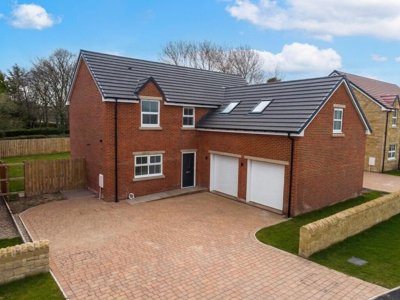
Browse 1 home new builds in Belford, Northumberland from local developer agents.
The larger property sector typically features multiple bathrooms, substantial reception space, and private gardens or off-street parking. Four bedroom houses in Belford span detached, semi-detached, and occasionally terraced configurations, with styles ranging from period properties to modern executive homes.
£538k
4
0
417
Source: home.co.uk
Showing 4 results for 4 Bedroom Houses new builds in Belford, Northumberland. The median asking price is £537,500.
Source: home.co.uk
Detached
4 listings
Avg £510,000
Source: home.co.uk
Source: home.co.uk
Belford’s property market gives buyers plenty to think about across a range of budgets. home.co.uk listings data puts the average house price at approximately £345,462, while homedata.co.uk records figures around £295,000 to £295,000 for the NE70 postcode area. That sits against a sharp reset in the market, with prices down 26% on the year and 29% below the 2008 peak of £312,094. For anyone stepping in now, that correction opens up value that has not really been there for more than a decade. Street by street, the picture shifts, West Street has taken a 31% year-on-year fall from its 2023 peak of £380,000, while South Road has held up better, with only a 7% drop from its 2012 peak of £295,000.
Different homes in Belford suit different household plans and different bank balances. Detached properties average around £481,667, and they tend to suit families who want breathing room, plus larger gardens that make sense in the village’s semi-rural setting. Semi-detached homes come in at about £226,000, which keeps them popular with first-time buyers and people moving down from bigger places. Terraced homes, including the stone cottages on Church Street and West Street, average £220,571. Then there are the headline sales, like East Pavilion at Belford Hall, sold for £460,000 in June 2022. Character clearly carries weight here.
The village’s housing stock says a lot about Belford’s past. Many buildings date from the post-medieval period, especially the mid-18th century, when woollen factories, tanneries, collieries and lime kilns were all part of local life. That history still shows in the conservation area, where a large share of homes are over 200 years old and built in the old way, with thick sandstone walls and solid construction that has lasted well. Older homes do ask more of their owners in upkeep, but they bring a sense of character and sturdiness that newer places often struggle to match.

New build schemes have added a different option to the market in recent years. South Meadows, built by Ida Homes, is one of the more important arrivals. It sits only a five-minute walk from Belford High Street and includes 2, 3, 4, and 5-bedroom houses and bungalows, priced from £380,000 to £615,000. The homes use timber frames, energy-saving technology, solar panels and air source heat pumps, so they suit buyers who want a modern finish without losing village convenience. The site sits between Sunnyhills Farm Shop and South Meadows Caravan Park, which helps it plug neatly into the existing village layout.
The NB Clark development brought 90 new build homes into the village centre, adding houses and bungalows in the old coaching village heart. That extra stock has helped answer what Ida Homes calls "a proven need for more high-quality homes in Northumberland." Buyers who prefer conversions and heritage settings may look instead to North Farm Steading near Warenford, where six stone-built cottages start from £460,000. These schemes show how demand around Belford keeps pulling developers in two directions, towards traditional looks on the one hand and modern specifications on the other. Warenford’s closeness to Belford means residents still have the village centre close by.
Modern specifications bring a clear premium, and Belford is no exception. South Meadows homes offer contemporary insulation standards and renewable energy systems, which can reduce day-to-day utility bills quite significantly. By contrast, sandstone properties may ask for more upkeep, but they also bring the kind of thick walls and durable construction that were common before modern building regulations took over. Those walls offer natural thermal mass, too. The choice often comes down to what matters more, low-maintenance convenience or the feel of a traditional village house.
Life in Belford revolves around the conservation area, where stone-fronted buildings and traditional architecture still reflect its coaching village past. Even with a modest population of around 1,314 residents, the village has good local amenities and a settled, sustainable feel. Its mid-18th century prosperity came from woollen factories, tanneries, collieries and a large lime kiln. Today it draws professionals, families and retirees who want quality of life and a handy position halfway between Alnwick and Berwick-upon-Tweed. Tourism matters as well, with visitors heading for Bamburgh Castle, Holy Island and the Northumberland coast, only four kilometres east of the village.
Day-to-day living is practical enough, with shops, pubs and the basics all within reach. Sunnyhills Farm Shop sells locally sourced produce and keeps that agricultural link alive, which suits residents who like to know where their food has come from. Step outside the village and the landscape does a lot of the work, with coastal walks by the nearby beaches, quiet country lanes for cycling and rolling farmland all around. The A1 is close enough to keep larger towns accessible without losing the village feel. Local events and traditions add to the sense of belonging that many people say draws them to Belford in the first place.
Architecturally, Belford has real weight. Around 48 listed buildings sit within the conservation area, creating a streetscape of considerable historic interest. Belford Hall, a Grade I listed building within Grade II registered parkland, is the village’s key heritage asset. The Post Office on Church Street is another strong example, built in mid-19th century limestone ashlar with a Welsh slate roof and brick chimneys. High Street, Church Street, West Street and the homes near St Mary’s churchyard all help shape the look of the place, and the Watch House near St Mary’s churchyard is one of the Grade II listed buildings that keeps that protected character intact.

Families have a well-regarded primary school on the doorstep. Belford Primary School teaches children from reception through to Year 6, which means local schooling without having to travel to a larger town. Small class sizes and committed teaching staff help pupils get individual attention, something parents often value highly. We hear the same point again and again, the nurturing atmosphere and strong community ties at Belford Primary are a major reason people choose the village. The school’s size also means teachers can shape lessons around each child’s learning style and stage of development.
For secondary education, most pupils travel to Alnwick or Berwick-upon-Tweed, where there is a choice of secondary schools and sixth form colleges. Journeys are manageable from Belford, especially with the A1 providing a direct route to both towns. Alnwick Academy offers secondary education with strong academic and vocational programmes, while The King’s School in Berwick-upon-Tweed teaches through to A-levels. Parents should look closely at admissions criteria and catchment areas, because both can have a real effect on property values and what is available. Many families decide the travel is a fair trade for having the primary school within the village itself.
Independent schools in the region add another layer of choice for families who want a different educational approach. Belford also attracts households because the local school offer sits alongside Northumberland’s wider cultural life, which helps create a rounded childhood. Further education is easy enough to access in the nearby market towns, where colleges and training providers run a mix of vocational and academic courses. Before buying in Belford, families should check current school Ofsted ratings and admissions policies, since those details can affect both outcomes and the long-term value of the property. For many, the village makes the wider investment feel worthwhile.

Despite the rural setting, Belford is well connected. The village sits directly on the A1 trunk road, giving a straight route north to Edinburgh and south towards Newcastle upon Tyne. That road link makes the place feel far less remote than it first appears. Newcastle is about one hour by car, while Edinburgh is reachable in around 90 minutes. The A1 also ties Belford to Alnwick, 20 minutes away, and Berwick-upon-Tweed, 25 minutes away, so everyday services are not far off. Its position on such a major route has helped keep demand strong from buyers who want country living without being cut off.
The rail picture adds more choice. The East Coast mainline runs nearby, and Berwick-upon-Tweed station has regular services to London, Edinburgh and Newcastle. London King’s Cross is under four hours from Berwick, which makes a day trip to the capital possible for work or leisure. Newcastle Central station is also within reach via the same line. Buses connect Belford with surrounding villages and towns, giving people without a car a workable way to get about. Those routes to Alnwick and Berwick-upon-Tweed sit nicely alongside the rail services from Berwick station.
For cyclists, the quiet lanes and coastal routes are a real draw. The ground around Belford is fairly flat, so most abilities can manage it, and the rides towards Bamburgh or Holy Island come with excellent views. Newcastle International Airport is roughly one hour away, which gives the village useful domestic and international links as well. Put together, road, rail and air make Belford a practical base for anyone who needs to stay connected to larger cities but prefers village life. In many cases, the travel times compare well with what people put up with in outer suburbs of those same cities.

Before any viewings, we would get a mortgage agreement in principle from a lender. It fixes the budget in black and white and shows sellers that you are serious. In a market like Belford’s, that can matter. A mortgage broker who knows rural Northumberland can often find better fits for local property types, and the average price of around £345,462 means many buyers will be looking below the current stamp duty threshold, which may save thousands at the point of purchase.
It pays to spend proper time in Belford before you commit. Walk the village centre at different times of day and on different days of the week, check the local amenities, and get a feel for the individual neighbourhoods within the village. Think about the A1 and the traffic noise that can come with it, flood risk near the Belford Burn, and the effect of being inside the conservation area with its 48 listed buildings. We would also look at the local geology south of the village, where Carboniferous sandstones and shales are common, and consider what that might mean for foundations. The fact that Belford sits four kilometres inland means some areas may still have coastal exposure to weigh up.
Local estate agents are useful when it comes to arranging viewings of homes that fit your brief. In Belford, that might mean a sandstone cottage on Church Street or West Street, a modern new build at South Meadows, or a conversion like North Farm Steading. Take notes, revisit if needed, and give yourself room to compare one place against another. Construction details matter here, older homes usually have sandstone or limestone walls with traditional lime mortar pointing, while newer homes may use quite different methods.
Once an offer is accepted, we would commission a RICS Level 2 survey before completion. Belford has plenty of older and listed properties, so a proper survey is not optional in practice, it is the sensible move. Common defects locally include damp from unsuitable modern materials, roof deterioration on older slate-covered buildings and problems with drainage. Survey fees usually sit between £400 to £1,000 depending on property value and complexity. For the village’s many listed buildings, a more detailed Level 3 survey may be the better fit because of the specialist demands of heritage property.
A conveyancing solicitor takes care of the legal side of the purchase. They will carry out local searches, check flood risk and drainage, and make sure the title is clean. In Belford, those searches should look specifically at the village’s Natural Flood Management Scheme, any historic mining activity south of the village, and planning restrictions linked to the conservation area designation. Homes near the Belford Burn can have drainage issues worth probing in detail. Any planning conditions attached to the property should also be checked properly.
After exchange of contracts, the purchase becomes legally binding. On completion day, the keys to the Belford home are handed over. Buildings insurance needs to be in place from exchange onwards, because that is the point from which the property is at risk on your side. If the home sits in the conservation area, or is listed, any future alterations need to be approached with a clear understanding of the restrictions that come with it.
Buying in Belford means looking beyond the first impression. Flood risk is one of the big local issues, because the village has a documented history of flooding from the Belford Burn, the small stream that runs through the centre. Between 1997 and 2007, flooding happened on 10 separate occasions, although a Natural Flood Management Scheme has since lowered the risk through 35 Run-off Attenuation Features (RAFs). Ask about any previous flood incidents and check where the property sits in relation to the flood plain. The survey should cover drainage and any remaining flood risk, especially where the stream course is close by.
The conservation area designation affects a lot of homes in the centre of Belford, and the approximately 48 listed buildings mean alterations and extensions are tightly controlled. Anyone thinking about future changes should find out whether a property is listed and what that means in practice. Belford Hall, Grade I listed, sits within Grade II registered parkland, so nearby homes may face extra heritage considerations. A specialist survey is a sensible step for listed buildings, because a standard report may miss the construction methods and materials used in older properties. Sandstone and limestone are common here, so the assessor needs to understand traditional materials and appropriate repairs.
Geology adds another layer to the buying decision. South and south-west of Belford, Carboniferous sandstones, shales and limestones are common, along with coal outcrops that were worked historically. To the north and north-east, whinstone appears, including at Craigmill Quarry and Chapel Crag. Clay-rich soils can lead to shrink-swell movement, which may affect foundations and cause structural issues over time. Older homes with shallow foundations are particularly exposed to that sort of movement, so a survey should look closely at the ground and any signs of previous movement. Old coal workings in some locations also mean local authority searches ought to include mining records.
Building materials around Belford mirror both the geology and the old construction methods. Sandstone is the main material, with Belford Hall using ashlar stonework and slate roofs, while the Post Office on Church Street combines limestone ashlar, Welsh slate roofing and brick chimneys. During viewings, we would look carefully for weathering, stone decay, the state of the pointing and any sign of water getting in. Traditional solid-wall homes with lime mortar need a different approach from modern cavity wall construction, and knowing that helps with budgeting for maintenance.

home.co.uk listings data puts the average house price in Belford at approximately £345,462, while homedata.co.uk records similar figures around £295,000 to £295,000 for the NE70 postcode. Prices have corrected quite noticeably, down 26% year-on-year and 29% from the 2008 peak of £312,094. Detached homes average around £481,667, semi-detached properties around £226,000, and terraced homes £220,571. South Meadows pushes into a higher bracket, with new build prices from £380,000 to £615,000 depending on size and specification. East Pavilion at Belford Hall, sold for £460,000 in June 2022, shows the premium that heritage homes can still command.
Homes in Belford fall under Northumberland County Council and sit in council tax bands A through to H. Most stone cottages and terraces on Church Street and West Street are usually in bands A to C, which reflects their more modest valuations. Larger detached homes and newer places at South Meadows often fall into higher bands because of their size and modern specification. The precise band comes from the Valuation Office Agency, so buyers should check the exact band for any home they are considering, either through the VOA website or via their solicitor during conveyancing.
Belford Primary School serves the village from reception through Year 6, giving local families the convenience of school on the doorstep and small class sizes that allow teachers to focus on each child. The school has a good reputation in the community and benefits from strong parental involvement. For secondary education, pupils usually travel to Alnwick or Berwick-upon-Tweed, where Alnwick Academy and The King’s School in Berwick offer solid academic and vocational programmes. Parents should check current school performance data and admissions criteria through Ofsted reports, because catchment areas can shape placements and have a bearing on which homes suit a family best.
Bus services keep Belford linked with nearby towns such as Alnwick and Berwick-upon-Tweed, which is useful for anyone without private transport. The A1 trunk road runs through the village and gives direct road access to Newcastle, about one hour away, and Edinburgh, about 90 minutes away, so commuting is possible. Berwick-upon-Tweed railway station is about 25 minutes by car and opens up the East Coast mainline, with services to London, Edinburgh and Newcastle, while London King’s Cross is under four hours away. Newcastle International Airport can be reached in around one hour by car, so Belford’s rural look hides a fairly practical transport set-up.
For investors, Belford has a few things going for it. Tourist demand is helped by nearby Bamburgh Castle, Holy Island and the Northumberland coast, so rental potential is solid. Prices have eased from recent peaks, which may open up value for longer-term investors who can see beyond the short-term noise and recognise the village’s limited housing supply and lasting appeal. South Meadows and the wider interest in quality homes point to continued demand. Even so, conservation area controls, flood risk near the Belford Burn and the village’s relatively small population all deserve careful thought. Holiday lets may work better than standard residential rentals in some parts of the market.
Stamp Duty Land Tax applies to every property purchase in England, Belford included, and for 2024-25 the first £250,000 of a purchase price is charged at 0%. With an average price of around £345,462, many local properties fall low enough to avoid stamp duty for standard buyers. Between £250,000 and £925,000, the rate is 5% on the amount above £250,000, while purchases above £1.5 million pay 12% on the portion over that level. First-time buyers get enhanced relief, with 0% on the first £425,000 and 5% between £425,000 and £625,000, so anyone buying around the village average would pay no stamp duty at all. The exact figure depends on the purchase price and personal circumstances, which the solicitor will calculate.
Older homes in Belford, especially those among the approximately 48 listed buildings and the many mid-18th century properties, come with a familiar set of risks. Damp is common in historic buildings and is often made worse by modern materials such as impermeable paints or cement-based renders, which interfere with the breathability of traditional stone walls built with lime mortar. Roof condition needs attention too, because slate tiles and traditional flashings require regular upkeep. Clay-rich ground south of the village can also contribute to subsidence in homes with shallow foundations, particularly in properties built before modern building regulations. A survey should check those areas closely, and listed buildings are best assessed with a specialist historic building survey.
From 3.84%
Compare mortgage deals from leading lenders
From £499
Expert solicitors to handle your property purchase
From £438
Professional property survey by qualified inspectors
From £60
Energy performance certificate for your property
Buying in Belford involves more than the headline asking price. Stamp Duty Land Tax is one of the bigger additional costs, and for 2024-25 the first £250,000 of a property’s purchase price is charged at 0%. That means many homes in Belford at or below the current average price of £345,462 would attract no stamp duty for standard buyers. Between £250,000 and £925,000, the rate rises to 5% on the amount above £250,000. For higher value purchases, the rate steps up again, with amounts above £1.5 million charged at 12% on the portion over that threshold.
First-time buyers in Belford benefit from enhanced relief, paying 0% on the first £425,000 and 5% on amounts between £425,000 and £625,000. That can make a substantial difference for anyone buying at, or below, the village average price, and it may save thousands compared with the standard buyer position. Above £625,000, first-time buyer relief no longer applies and the normal rates take over. Beyond stamp duty, solicitor conveyancing fees should also be budgeted for, usually somewhere between £500 and £1,500 depending on complexity, with listed buildings or unusual titles often pushing costs higher.
A RICS Level 2 Home Survey usually costs between £400 to £1,000, depending on the property’s value and size. Larger or more valuable homes attract higher fees, while properties under £210,000 may cost as little as £384. Older Belford homes, especially those in the conservation area or listed, may also need extra specialist surveys at additional cost, because historic construction and materials call for a surveyor with the right expertise. South Meadows homes with timber frame construction, and older village houses built in sandstone, need different survey approaches. Removal costs, mortgage arrangement fees and buildings insurance should all sit in the wider budget when working out what a new Belford home will really cost.
Properties New Builds In London

Properties New Builds In Plymouth

Properties New Builds In Liverpool

Properties New Builds In Glasgow

Properties New Builds In Sheffield

Properties New Builds In Edinburgh

Properties New Builds In Coventry

Properties New Builds In Bradford

Properties New Builds In Manchester

Properties New Builds In Birmingham

Properties New Builds In Bristol

Properties New Builds In Oxford

Properties New Builds In Leicester

Properties New Builds In Newcastle

Properties New Builds In Leeds

Properties New Builds In Southampton

Properties New Builds In Cardiff

Properties New Builds In Nottingham

Properties New Builds In Norwich

Properties New Builds In Brighton

Properties New Builds In Derby

Properties New Builds In Portsmouth

Properties New Builds In Northampton

Properties New Builds In Milton Keynes

Properties New Builds In Bournemouth

Properties New Builds In Bolton

Properties New Builds In Swansea

Properties New Builds In Swindon

Properties New Builds In Peterborough

Properties New Builds In Wolverhampton

Enter your details to see if this property is within your budget.
Loans, cards, car finance
Estimated property budget
Borrowing + deposit
You could borrow between
Typical borrowing
Monthly repayment
Est. at 4.5%
Loan-to-value
This is an estimate only. Your actual budget may vary depending on interest rates, credit history, and personal circumstances. For an accurate affordability assessment, speak to one of our free mortgage advisors.
This calculator provides estimates for illustrative purposes only and does not constitute financial advice. Your home may be repossessed if you do not keep up repayments on your mortgage. Estimates based on 4.5% interest rate, repayment mortgage. Actual rates depend on your circumstances.
Homemove is a trading name of HM Haus Group Ltd (Company No. 13873779, registered in England & Wales). Homemove Mortgages Ltd (Company No. 15947693) is an Appointed Representative of TMG Direct Limited, trading as TMG Mortgage Network, which is authorised and regulated by the Financial Conduct Authority (FRN 786245). Homemove Mortgages Ltd is entered on the FCA Register as an Appointed Representative (FRN 1022429). You can check registrations at NewRegister or by calling 0800 111 6768.

We use cookies to show you personalised content and improve your experience of our website. Find out more in our Privacy policy and Cookie policy.