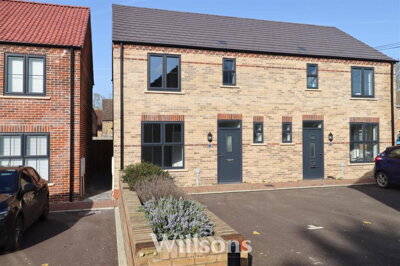
Browse 1 home new builds in Beesby with Saleby from local developer agents.
Beesby with Saleby has the sort of property market you would expect from a traditional Lincolnshire village, with detached homes making up much of the housing stock and prices that still compare well with larger towns across the region. Our research puts the average sold price in Beesby over the past twelve months at approximately £115,000, although individual transactions show a much wider spread. In Saleby, one of the clearest examples was a substantial detached property on Church Lane, which sold for £640,000 in August 2024, showing the premium attached to larger homes and better-positioned plots here.
Rose Lane in Saleby has seen some notable sales, among them a detached bungalow that changed hands for £265,000 in December 2021, a good illustration of the demand for single-storey homes among downsizers and retirees. Across the wider LN13 postcode area, values have held up well, and nearby Grimsby recorded a 3% rise in average property prices over the last twelve months, equal to approximately £3,800. home.co.uk currently lists around 45 properties in Beesby and 41 in Saleby, and recent sales activity includes detached bungalows and family homes completing through 2024 and into 2025.
There is very little new-build development in Beesby with Saleby, and there are no major housing schemes within the parish itself. That lack of fresh construction helps keep the village character intact and tends to support the appeal of older period homes. Buyers wanting modern layouts and specifications may need to look towards nearby towns, or take on improvements to an existing house. In keeping with the rural setting, homes here often come with generous plots, off-street parking and gardens in a traditional Lincolnshire style.

Daily life in Beesby with Saleby follows the pattern of a working agricultural parish, set among rolling farmland and the wider East Lindsey countryside. The parish covers both Beesby and Saleby, and each has its own feel while still sharing the close community spirit that is common in rural Lincolnshire. Village halls, parish councils and local events all help keep people connected. It is a marked change from urban life, and for those moving here that slower pace is often part of the attraction.
Agriculture still shapes much of the local economy in Beesby with Saleby, influencing both the landscape and the kinds of work found nearby. Alongside farming, residents rely on small businesses, farm shops and other rural enterprises for day-to-day services, while many people commute to surrounding towns for jobs in retail, healthcare and education. Coastal resorts such as Mablethorpe and Skegness also bring seasonal work in tourism and hospitality. Put together, that mix gives the village its economic character.
The Lincolnshire coast is close enough to make regular use of, which gives people in Beesby with Saleby straightforward access to beaches, coastal walks and traditional seaside facilities. Closer to home, the surrounding countryside provides public footpaths, cycling routes and bridleways across the East Midlands landscape. Wildlife reserves, nature reserves and Areas of Outstanding Natural Beauty across the wider region draw visitors in every season. For buyers who want green space and outdoor leisure without paying the sort of prices seen in comparable coastal parts of England, this area stands out.
Village life is kept going by active halls and regular events, from craft fairs to quiz nights, so people do not always need to head into a larger town for entertainment. The parish council also meets regularly on practical local matters such as road maintenance and planning applications, which gives residents a say in how the parish changes. People new to Beesby with Saleby often find it easier to settle in than they expected, helped by established households, many of whom have been here for generations.

Families looking at Beesby with Saleby can access primary education in nearby villages and market towns within a reasonable travelling distance. Because the parish is rural, children usually attend schools in neighbouring communities, and transport arrangements and catchment areas can vary by postcode. It is sensible to check school performance data and admissions policies before making a move, particularly as popular schools can receive more applications than they have places. Across East Lindsey, the district supports a network of primary schools serving scattered rural communities.
Older children generally attend secondary schools in larger centres such as Alford, with school bus travel from the surrounding villages being the usual arrangement. Standards vary from school to school, so we recommend visiting likely options, meeting staff and reading the latest Ofsted reports before tying a purchase to one catchment. Lincolnshire County Council manages school transport for pupils who live beyond the walking distance thresholds, and that can make a real difference to day-to-day logistics. Several secondary schools nearby also offer specialist subjects and sixth form study beyond GCSE.
Lincolnshire also gives families access to grammar schools in selective areas, although pupils normally need to pass the eleven-plus and satisfy residency rules to gain entry. Independent schools across the region offer another route for those who want something outside the state sector. For further and higher education, students can look to Lincoln, Boston and Grantham, all reachable by public transport or car for advanced qualifications. That range means Beesby with Saleby can work for families through every stage of their children's education.
Within the wider area, primary provision includes schools in the Alford catchment, and Willoughby School serves younger children from nearby villages. We always advise parents to confirm the latest catchment boundaries with Lincolnshire County Council, as they can change and may affect which school a child is allocated from a new address in the parish.

Getting around from Beesby with Saleby largely depends on the car, which reflects the rural nature of the parish. The village is within easy reach of the A16 trunk road, running through Lincolnshire between the port town of Boston and Grimsby, with onward access to the A1 further south. The A158 gives useful links to Skegness and Mablethorpe, so reaching the coast is straightforward without an especially long journey. For households moving from places with stronger public transport, fuel bills and vehicle maintenance are worth factoring in from the start.
There are bus links from Beesby with Saleby to nearby market towns and coastal resorts, but services are far less frequent than in built-up areas. In practice, routes usually run on weekday mornings and afternoons, with a thinner weekend service, so planning ahead matters and residents often combine errands into a single trip. The nearest railway stations are at Thorpe Culvert and Boston, offering links to intermediate destinations and to larger cities such as Nottingham and Peterborough. By car, commuters heading to Grimsby, Cleethorpes or Lincoln usually face journey times of between 30 and 60 minutes, depending on traffic and the final destination.
Cycling is becoming more practical in rural Lincolnshire as quieter B-roads and traffic-calmed routes improve local options for shorter trips and leisure rides. The flat landscape helps, although anyone riding regularly will need to stay alert to agricultural vehicles and farm machinery on country roads. For longer journeys, East Midlands Airport offers international connections and can be reached in approximately 90 minutes by car. So while the setting is rural, it still gives a workable level of connection to larger towns.
Commuters heading for Grimsby or Cleethorpes usually travel north on the A16 and then join the A180. On the way home, traffic linked to the Port of Grimsby can slow things down, especially around shift changeover periods. Many local residents working in healthcare or education have adjusted their routines around that pattern and simply leave earlier to miss the busiest points.

Before you commit to a purchase, spend time getting to know the villages, amenities and neighbourhoods around Beesby with Saleby. We suggest weighing up access to schools, transport links and everyday services in nearby places such as Alford and Louth.
It is sensible to speak to lenders early, work out your borrowing capacity and secure an agreement in principle before you start viewing homes. That puts you in a stronger position when offers are made and shows sellers that you are serious.
Start by browsing listings on Homemove and speaking with local estate agents handling homes in the LN13 postcode area. Then arrange viewings so you can judge the condition, setting and overall suitability of what is available.
Before exchange, we recommend arranging an independent survey so the property's condition is properly checked. In Beesby with Saleby, where many rural homes are older, a survey can pick up problems with roofs, damp, timber and drainage that are often found in traditional Lincolnshire construction.
It also helps to appoint a solicitor who knows Lincolnshire property transactions well, so the legal work, searches and contracts are handled by someone familiar with the area. From the point your offer is accepted through to completion, the solicitor will deal with the seller's representatives on your behalf.
Once the survey results are acceptable and the legal points have been answered, contracts are signed and a completion date is fixed. On the day itself, the remaining deposit is transferred and the keys to the new home are released.
Many properties in Beesby with Saleby are of traditional construction and may be more than a century old, so careful assessment before purchase is important. In rural Lincolnshire, the usual materials are traditional brick, often in red or orange-red shades from local clay deposits, with slate or clay tile roofs. Older houses may also have solid walls with no cavity insulation, which can contribute to condensation and damp where ventilation is poor. A thorough inspection by one of our qualified RICS surveyors can identify structural concerns, deterioration and maintenance needs before you commit.
Ground conditions matter here. Across East Lindsey district, the geology includes Boulder Clay and glacial deposits over chalk bedrock, and that combination can create shrink-swell risks for foundations during very wet or very dry spells. The issue is especially relevant to older homes with original shallow foundations, where nearby trees or hedgerows may have influenced ground movement over many decades. Our RICS Level 2 Survey looks closely at the structure and highlights signs of subsidence, heave or settlement that may call for further investigation or remedial work.
Flood risk is another point to consider in East Lindsey because of the nearby Lincolnshire coast and the low-lying farmland around it. Beesby with Saleby is inland from the immediate coastline, but surface water flooding and higher water tables in wet periods can still affect certain homes and plots. Before moving ahead, buyers should check Environment Agency flood maps and ask owners or neighbours about any local history of flooding. On older properties, drainage and gutters deserve close attention too, especially where original cast iron systems may have deteriorated over decades.
The parish's rural setting means a number of homes may sit outside Flood Zone categories, but this still needs to be confirmed through the usual conveyancing searches. There can also be planning restrictions near listed buildings or within conservation designations, so we would expect a solicitor to review any relevant planning history carefully. Homes with large gardens or agricultural land may be treated differently for council tax purposes or even draw Business Rate assessments. If any shared amenities are involved, service charges and maintenance contributions should be pinned down before completion.
Across rural Lincolnshire, the defects we see most often include damp coming through solid walls, deterioration to original timber windows and doors, and older electrical installations that may fall short of current regulations. Many period homes still retain features such as exposed beams, open fireplaces and flagstone floors, all attractive but all needing regular upkeep. For that reason, a RICS Level 2 Survey, usually costing between £400 and £900 depending on size and value, is often money well spent when set against the cost of hidden repairs.

Buying in Beesby with Saleby involves more than the headline purchase price, so it is worth setting out the extra costs early. For 2024-25, the Stamp Duty Land Tax rules place the zero-rate threshold at £250,000 for standard purchases, which means many homes in the area sit entirely below it. On prices from £250,001 to £925,000, buyers should allow for a 5% charge on the portion above £250,000. With average values in the village around £115,000, and many detached family houses changing hands below £400,000, stamp duty is likely to be low or nil for most buyers here.
First-time buyers in England or Northern Ireland receive SDLT relief on residential purchases, taking the zero-rate threshold up to £425,000, with 5% due between £425,001 and £625,000. To qualify, the buyer must never have owned property anywhere in the world before, and that can make a first purchase much more affordable. Once the price goes above £625,000, the relief no longer applies, so premium rural homes in Saleby would be charged at the standard rates. As part of the conveyancing process, the solicitor calculates the exact SDLT due and files the return with HMRC.
There are several other costs to budget for as well. A RICS Level 2 survey will usually come in at £400 to £900 depending on the size and value of the property, standard conveyancing fees tend to range from £500 to £1,500, and mortgage arrangement fees depend on the lender. Search fees, land registry fees and teleport fees can add another £200 to £500. On top of that, buyers should allow for removals, any redecoration or renovation works, and the cost of furniture and appliances. We also suggest getting a mortgage agreement in principle before you start searching, as it clarifies the budget and strengthens an offer in a market that can still be competitive.
Take a typical Beesby with Saleby purchase at around £250,000 and, under current rules, a first-time buyer would pay zero SDLT. A buyer who is not purchasing for the first time would also pay no SDLT, because the full £250,000 remains below the standard threshold. At the top end, a property such as the Church Lane sale at £640,000 would generate SDLT of £19,500, based on 5% of the amount between £250,001 and £640,000. Knowing that in advance helps avoid a last-minute funding gap on completion day.

Over the past twelve months, our research indicates an average sold price in Beesby of approximately £115,000, although that headline figure covers a broad spread between different property types and parts of the parish. Saleby has seen stronger values, including the substantial detached Church Lane property that sold for £640,000 in August 2024, while homes on Rose Lane have achieved between £265,000 and £376,500 depending on their size and specification. Looking at the wider regional picture, the broader Grimsby area, with similar market characteristics, recorded a 3% increase over the twelve months to early 2026, which points to steady rather than volatile conditions.
For council tax, properties in Beesby with Saleby fall within East Lindsey District Council and Lincolnshire County Council, with the district council issuing the combined bill. The exact band depends on the dwelling's valuation and features, and many rural homes locally sit somewhere between Band A and Band D, though larger detached houses or properties with substantial land can be higher. A detached family home on Church Lane, for instance, could well fall into Band D or E, while a smaller cottage might sit in Band B or C. Buyers should check the Valuation Office Agency records for the exact band on any individual property, as annual charges are commonly around £1,200 to £2,000 depending on band.
Schooling for younger children is handled through surrounding villages and market towns, and the right catchment school will depend on the exact address within Beesby with Saleby parish. Those in the Alford primary cluster are among the schools serving local families, and Lincolnshire County Council provides transport for pupils living beyond walking distance. We recommend checking directly with the council admissions team or with the schools themselves for the latest catchment details and current Ofsted ratings. For older pupils, secondary options include Alford and other nearby towns, with transport again available beyond the walking distance thresholds. Lincolnshire's grammar schools remain selective, with entry for pupils who pass the eleven-plus, and transport arrangements vary from case to case.
Public transport is limited in Beesby with Saleby, which is typical for a rural area. Bus routes do link the village with nearby market towns and coastal resorts, but services usually follow weekday timetables and are reduced at weekends. Thorpe Culvert is the nearest railway station, with services towards Peterborough for onward journeys to London, and also towards Sleaford and Nottingham. For most people, a car is still essential, especially with journey times of 30-60 minutes to major employment centres such as Grimsby, Lincoln and Boston. The flat Lincolnshire landscape is helpful for cyclists, although local roads need care, particularly in harvest periods when agricultural traffic is heavier on the lanes.
Compared with coastal markets elsewhere in England, property in Beesby with Saleby still represents good value, especially for detached homes that would cost far more in places such as Cornwall, Devon or along the south coast. Supply is usually tight in a rural parish of this size, and that limited choice, together with steady demand from buyers wanting village life, tends to support prices. Our research has found no major new-build development in the parish, so availability remains constrained while interest in rural living continues. Lincolnshire's coastal resorts also keep the wider area on buyers' radar for tourism and retirement. Even so, we would view the likely capital growth as moderate rather than exceptional, with lifestyle being the stronger draw.
Stamp Duty Land Tax in Beesby with Saleby follows the standard 2024-25 structure, with 0 charged on the first £250,000, 5% on the portion from £250,001 to £925,000, 10% from £925,001 to £1,500,000, and 12% on anything above £1,500,000. First-time buyers purchasing up to £625,000 may qualify for relief, paying 0 on the first £425,000 and 5% between £425,001 and £625,000. Given the area's price profile, with average values around £115,000, most purchases are likely to attract little stamp duty or none at all. That is a meaningful saving when compared with higher-value markets elsewhere.
We often recommend a RICS Level 2 Survey in Beesby with Saleby because most homes are likely to be over 50 years old, and many date from the Victorian period or earlier. Traditional rural Lincolnshire construction, including solid brick walls, original timber details and older roof structures, can conceal faults that are easy to miss at a standard viewing. Our surveyors regularly identify local issues such as damp in solid-walled houses, wear to clay tile roofs and foundation movement linked to the area's Boulder Clay geology. At between £400 and £900, the survey cost is modest when weighed against the price of uncovering major structural problems after completion.
From 4.5% APR
Compare mortgage deals from leading lenders
From £499
Expert solicitors for your property transaction
From £400
Professional property survey by RICS qualified surveyor
From £600
Detailed building survey for older or more complex properties
From £85
Energy performance certificate for your new home
Properties New Builds In London

Properties New Builds In Plymouth

Properties New Builds In Liverpool

Properties New Builds In Glasgow

Properties New Builds In Sheffield

Properties New Builds In Edinburgh

Properties New Builds In Coventry

Properties New Builds In Bradford

Properties New Builds In Manchester

Properties New Builds In Birmingham

Properties New Builds In Bristol

Properties New Builds In Oxford

Properties New Builds In Leicester

Properties New Builds In Newcastle

Properties New Builds In Leeds

Properties New Builds In Southampton

Properties New Builds In Cardiff

Properties New Builds In Nottingham

Properties New Builds In Norwich

Properties New Builds In Brighton

Properties New Builds In Derby

Properties New Builds In Portsmouth

Properties New Builds In Northampton

Properties New Builds In Milton Keynes

Properties New Builds In Bournemouth

Properties New Builds In Bolton

Properties New Builds In Swansea

Properties New Builds In Swindon

Properties New Builds In Peterborough

Properties New Builds In Wolverhampton

Enter your details to see if this property is within your budget.
Loans, cards, car finance
Estimated property budget
Borrowing + deposit
You could borrow between
Typical borrowing
Monthly repayment
Est. at 4.5%
Loan-to-value
This is an estimate only. Your actual budget may vary depending on interest rates, credit history, and personal circumstances. For an accurate affordability assessment, speak to one of our free mortgage advisors.
This calculator provides estimates for illustrative purposes only and does not constitute financial advice. Your home may be repossessed if you do not keep up repayments on your mortgage. Estimates based on 4.5% interest rate, repayment mortgage. Actual rates depend on your circumstances.
Homemove is a trading name of HM Haus Group Ltd (Company No. 13873779, registered in England & Wales). Homemove Mortgages Ltd (Company No. 15947693) is an Appointed Representative of TMG Direct Limited, trading as TMG Mortgage Network, which is authorised and regulated by the Financial Conduct Authority (FRN 786245). Homemove Mortgages Ltd is entered on the FCA Register as an Appointed Representative (FRN 1022429). You can check registrations at NewRegister or by calling 0800 111 6768.

We use cookies to show you personalised content and improve your experience of our website. Find out more in our Privacy policy and Cookie policy.