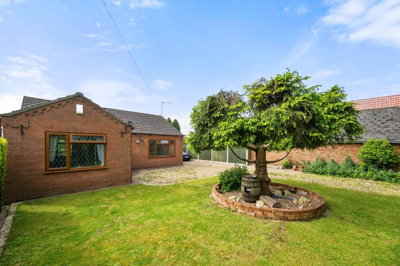
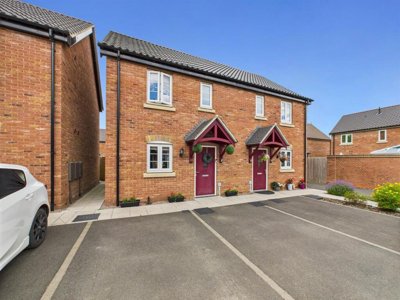
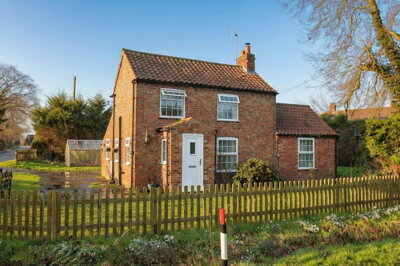
Browse 6 homes for sale in Willoughby with Sloothby from local estate agents.
The 2 bed house market features detached, semi-detached, and terraced properties with two separate bedrooms plus living spaces. Properties in Willoughby With Sloothby range from Victorian and Edwardian period homes to modern new builds, with pricing varying across different neighbourhoods.
Buyers looking at Willoughby with Sloothby are often drawn by the balance it strikes, rural Lincolnshire surroundings without being cut off from day-to-day amenities. The overall average house price is approximately £275,828, with detached homes averaging £333,750 and terraced properties around £225,000. On Sloothby Road, the average achieved price over the past year was approximately £306,650, pointing to the premium this part of the parish can command.
Activity has been steady rather than frantic, with 33 property transactions recorded across the last three years. Prices overall are 2% down on the previous year and 34% below the 2022 peak of £333,750, yet sold values have still risen by 9.6% over the past 12 months. For first-time buyers and families moving out from bigger towns, that can make Willoughby with Sloothby look particularly good value against comparable rural spots in neighbouring counties.
New build supply in the parish is still sparse, and what does appear tends to be small in scale rather than estate development. One example is a former milking parlour in Sloothby that secured planning permission to become a two-bedroom detached bungalow. Because opportunities like that come up only occasionally, buyers are usually best served by registering with local estate agents, as homes in this sought-after parish can attract attention quickly once listed.
Recent sales have been led by detached homes, which fits the usual demand here for rural property with gardens and a bit more space. Traditional farmhouses, many from the 18th and 19th centuries, remain a notable part of the housing stock, and properties such as The Elms, a detached farmhouse in Sloothby built around 1770, show exactly the kind of heritage appeal buyers are paying for. With so little new-build stock to choose from, most purchases involve existing homes, so we strongly recommend a careful survey before anyone commits.

Set in the Lincolnshire Wolds, Willoughby with Sloothby has the kind of setting people picture when they think of an Area of Outstanding Natural Beauty in eastern Lincolnshire. It feels peaceful, but it is not impractically remote from nearby towns. Across the parish you see the familiar mix of traditional stone cottages, farmhouses and later development, and period homes such as The Elms, a detached farmhouse in Sloothby dating back to around 1770, underline how much of the area's appeal rests on its long history.
The place is small, just 556 households, but it has a settled community feel. Village halls, public houses and local events help keep that going through the year. For bigger practical needs, residents usually rely on nearby Alford and Spilsby for supermarkets, independent shops, medical practices and schools, and the Lincolnshire coast, especially Skegness, adds another option for family days out in every season.
Within East Lindsey District, the LN13 postcode area that includes Willoughby with Sloothby sits in countryside that people use as much as they admire. Walking and cycling routes thread through the surrounding lanes, villages and rolling Wolds scenery, and that outdoor lifestyle is part of the draw. Residents who enjoy walking, birdwatching or golf tend to find plenty close at hand, while Lincoln and Boston remain the larger employment centres people look towards.
Part of the attraction here is the protected setting within the Lincolnshire Wolds AONB, with its chalk hills, older woodland and working farmland. In the villages, limestone buildings and agricultural structures still shape the streetscape. Facilities are limited but useful, with the village hall hosting regular events and the local pub acting as an informal meeting point, and for many families and retirees that mix of peace and neighbourliness is the whole point.

Families thinking about a move here will need to look beyond the parish itself for schooling. Younger children are generally served by primary schools in nearby villages and towns, including Alford Primary School. Because of the village setting, travel to school is often part of the routine for primary-age children, so it is sensible to weigh up transport time when viewing homes and planning day-to-day family logistics.
For secondary education, families usually look towards King Edward VI Academy in Alford, alongside schools in larger places such as Spilsby and Louth. There is also access to sixth form provision and further education colleges in nearby towns for study beyond GCSE level. Catchment areas and admissions policies can change, so parents should confirm the current position with Lincolnshire County Council before relying on a particular address.
Childcare and early years provision is available in nearby villages and towns rather than concentrated within Willoughby with Sloothby itself. That means some travel is often unavoidable, although many families feel the trade-off is worthwhile for the quieter surroundings, safer roads and better access to open space. Where school transport is needed, eligible families typically deal with Lincolnshire County Council's school transport services.
Across Lincolnshire there is a well-established mix of academic and vocational routes. Beyond the secondary schools in Alford, Spilsby and Louth, students continuing after 16 can look to sixth form colleges in Boston and Lincoln for A-level courses. Anyone buying with schooling high on the list should check the exact catchment for their preferred school before purchase, because Lincolnshire County Council reviews admission arrangements annually and catchment boundaries can alter placements.

Most journeys from Willoughby with Sloothby are made by road, and the A16 is the key route linking this part of Lincolnshire with surrounding towns and cities. Alford is approximately 6 miles away and tends to be the nearest hub for everyday services, while Lincoln is roughly 15 miles away for broader retail, employment and cultural options. Commuting to nearby market towns is manageable, though longer trips to larger cities naturally take more time.
Public transport is thinner on the ground here than it would be in an urban area, so car ownership is advisable for most households. Bus links do connect the village with nearby towns, but evening and weekend frequencies can be limited. For rail travel, people generally head to stations in places such as Boston and Lincoln, and those travelling on to Nottingham, Derby or Peterborough often find it practical to drive to the nearest mainline station rather than do the whole trip by road.
For remote workers, the appeal is obvious, quiet surroundings and fewer day-to-day distractions. Broadband provision across rural Lincolnshire has improved, but we still advise buyers to check current speeds and service availability with providers before they exchange. Cycling is popular locally too, helped by the relatively flat terrain of the Lincolnshire Wolds, and the nearby coastal road gives residents a scenic option for leisure rides at the weekend.
Residents tend to rely on the A16 corridor first and foremost, with easy links towards Alford, Spilsby and Louth. Lincoln is approximately 40 minutes away by car in normal traffic, while longer westbound trips usually work via the A46 and A1 corridor. That route opens up places such as Nottingham and Newark, and Boston, around 25 miles to the south, adds a rail option through East Midlands Railway services to Peterborough and beyond.

One of the first things we suggest is getting a feel for what is actually available in Willoughby with Sloothby and where prices sit. With only 556 households and relatively little turnover, homes do not appear constantly, so registering with local estate agents can make a real difference. It is also worth setting up alerts with agents covering LN13, so new instructions do not pass you by.
Before making offers, we usually advise buyers to secure a mortgage agreement in principle from their lender. Sellers take that as a sign that finances are in place, which can strengthen a bid in a competitive rural market. With the local average price sitting around £275,828, most purchasers will be borrowing at least part of the cost, and having that arranged early can help when the right property appears.
It helps to see more than one home before deciding. Comparing several properties gives a clearer sense of location, condition and value, especially in an area where older housing stock is common and maintenance standards vary. While viewing, keep an eye on basics such as aspect, garden size and access to amenities, as well as how much modernisation may be needed.
After an offer is accepted, we recommend booking a RICS Level 2 Survey (Homebuyer Report) so the condition is checked properly. That matters even more with older homes, where damp, roof defects or dated electrics can be expensive if missed. Our surveyors are familiar with the construction methods found in Lincolnshire period properties and know what defects to look for in the local housing stock.
Next comes the legal work. A solicitor will deal with searches, contracts and registration of title, and a conveyancer who knows Lincolnshire property can often move matters along more smoothly. That includes checking for planning restrictions and any environmental issues that may affect the home.
From there, it is a case of working through the final stages with your solicitor and mortgage lender until completion day arrives. Once funds have transferred, the home is yours and you can start settling into Willoughby with Sloothby. We always remind buyers to sort utility transfers promptly and to put the local authority council tax account into their own name.
Housing here spans a broad range, from 18th century farmhouses to post-war homes and more recent builds. On viewings, older properties deserve a closer look, especially for damp, roof condition and the state of original details such as fireplaces, exposed beams and stonework. Character is often intact, which is part of the attraction, but buyers should budget realistically for upgrades to insulation, heating and electrics where needed.
Some rural homes do not connect to mains sewerage and instead use private drainage such as septic tanks or cess pits, so this is something buyers should confirm early. The ongoing maintenance and possible replacement costs can be significant, and the survey should comment on condition and capacity where possible. In the same vein, a property may rely on a private water supply rather than mains water, which is another point to investigate carefully during conveyancing.
Because so much of the local stock is older, specialist surveys can be sensible on period homes. No specific conservation areas were identified within Willoughby with Sloothby itself, but across the wider Lincolnshire region there are listed buildings and other historic properties that bring extra considerations around permitted development rights and upkeep. Knowing that before purchase helps buyers plan both works and budget with a clearer head.
Sloothby Road tends to sit at the upper end of the local market, with average prices of approximately £306,650. Buyers are often paying for a combination of accessibility and the rural feel that defines the parish. At that level, a RICS Level 2 Survey is particularly useful, and our surveyors can report in detail on construction quality, maintenance risks and any repairs that look urgent.

Recent figures put the average house price in Willoughby with Sloothby at approximately £275,828. Over the past year, detached homes sold for an average of £333,750 and terraced properties for around £225,000, while Sloothby Road reached approximately £306,650. Sold prices have risen by 9.6% over the past 12 months, which points to ongoing demand in this rural parish.
For local services, properties in Willoughby with Sloothby fall under East Lindsey District Council and Lincolnshire County Council. In Lincolnshire, council tax bands generally run from Band A at the lower end to Band H for the highest-value homes, with many traditional cottages and smaller houses sitting somewhere between Bands A and C. The exact band depends on value and is set by the Valuation Office Agency, so buyers should confirm the specific band for any property during conveyancing.
Schooling for the parish is centred on nearby settlements rather than the village itself. Alford Primary School serves the local area and is well regarded by many families across the surrounding parishes, while secondary choices include King Edward VI Academy in Alford for ages 11 to 16, as well as alternatives in Spilsby and Louth. Catchment areas and admission rules matter here, so families should check the latest position with Lincolnshire County Council before relying on a particular address.
Rural living does come with fewer public transport options, and Willoughby with Sloothby is no exception. Bus services do link the village with Alford, Spilsby and other nearby towns, but they are less frequent than in built-up areas and some run only on certain days of the week. Rail connections are usually picked up from Boston or Lincoln, and for most residents the A16 and a car remain central to everyday travel.
From an investment angle, the area has a few obvious strengths, the Lincolnshire Wolds AONB setting, closeness to the coast and prices that still compare well with similar rural locations in neighbouring counties. The 9.6% rise in sold prices over the past 12 months suggests there is life in the market, even if rental demand is naturally thinner than in a town. Homes with character, decent gardens and practical access to amenities tend to remain appealing, and the limited supply of new-build housing helps support interest in period property.
For standard buyers, Stamp Duty Land Tax (SDLT) starts at 0% on the first £250,000 of a property's value, then rises to 5% on the portion between £250,001 and £925,000. For
Older homes in Willoughby with Sloothby, especially those from the 18th and 19th centuries, need a careful eye. Damp, structural movement and outdated services are all worth checking for, alongside roof wear, the condition of original windows and doors, and the state of any period features. Historic farmhouses and cottages built with Lincolnshire limestone have different maintenance needs from modern brick houses, which is one reason we advise a full RICS Level 2 Survey before purchase, particularly where private drainage, original wiring or older heating systems are involved.
No specific listed buildings were identified within Willoughby with Sloothby itself, but the wider Lincolnshire Wolds has plenty of Grade II listed farmhouses and cottages that reflect the area's agricultural past. Nearby villages such as Welton-Le-Marsh provide good examples of that architectural heritage. Anyone buying a period property in the parish should confirm whether the individual building is listed, because that affects both permitted development rights and maintenance responsibilities, and our survey can help flag related heritage issues.
Getting the costings right from the start makes a purchase much easier to manage. Under the 2024-25 Stamp Duty Land Tax (SDLT) thresholds, the nil rate band for standard buyers is £250,000, so on a property at the local average of £271,589, SDLT is only charged on the £21,589 above that figure. At current rates, that gives an approximate bill of £1,079.
First-time buyers can benefit from a more generous SDLT position, with the nil rate band extending to £425,000 where the eligibility rules are met. At the average local price, that means most first-time buyers would pay no stamp duty at all, leaving more of their funds available for the deposit, survey and moving costs. The relief applies to buyers who have never owned a residential property anywhere in the world, and anyone unsure should confirm eligibility with their solicitor or HMRC.
There are other purchase costs to budget for as well. Conveyancing fees usually average between £500 and £1,500, a RICS Level 2 Survey is approximately £350 to £600 depending on size, and an Energy Performance Certificate is often around £80 to £120. Mortgage arrangement fees can range from £0 to £2,000, and title registration plus local authority searches usually add around £200 to £300. On a £271,589 property, total buying costs excluding mortgage fees will often fall between £1,500 and £3,000, although we always suggest getting detailed quotes from both the solicitor and mortgage broker before going ahead.
Buyers should also leave room in the budget for moving costs, furniture and any immediate repairs or upgrades picked up during the survey. In rural Lincolnshire, there can be added expenses linked to private drainage, septic tank emptying and the upkeep of larger gardens. Our recommended survey helps bring those issues into view early, so you can renegotiate where appropriate or budget properly for the work after completion.

Properties for Sale In London

Properties for Sale In Plymouth

Properties for Sale In Liverpool

Properties for Sale In Glasgow

Properties for Sale In Sheffield

Properties for Sale In Edinburgh

Properties for Sale In Coventry

Properties for Sale In Bradford

Properties for Sale In Manchester

Properties for Sale In Birmingham

Properties for Sale In Bristol

Properties for Sale In Oxford

Properties for Sale In Leicester

Properties for Sale In Newcastle

Properties for Sale In Leeds

Properties for Sale In Southampton

Properties for Sale In Cardiff

Properties for Sale In Nottingham

Properties for Sale In Norwich

Properties for Sale In Brighton

Properties for Sale In Derby

Properties for Sale In Portsmouth

Properties for Sale In Northampton

Properties for Sale In Milton Keynes

Properties for Sale In Bournemouth

Properties for Sale In Bolton

Properties for Sale In Swansea

Properties for Sale In Swindon

Properties for Sale In Peterborough

Properties for Sale In Wolverhampton

Enter your details to see if this property is within your budget.
Loans, cards, car finance
Estimated property budget
Borrowing + deposit
You could borrow between
Typical borrowing
Monthly repayment
Est. at 4.5%
Loan-to-value
This is an estimate only. Your actual budget may vary depending on interest rates, credit history, and personal circumstances. For an accurate affordability assessment, speak to one of our free mortgage advisors.
This calculator provides estimates for illustrative purposes only and does not constitute financial advice. Your home may be repossessed if you do not keep up repayments on your mortgage. Estimates based on 4.5% interest rate, repayment mortgage. Actual rates depend on your circumstances.
Homemove is a trading name of HM Haus Group Ltd (Company No. 13873779, registered in England & Wales). Homemove Mortgages Ltd (Company No. 15947693) is an Appointed Representative of TMG Direct Limited, trading as TMG Mortgage Network, which is authorised and regulated by the Financial Conduct Authority (FRN 786245). Homemove Mortgages Ltd is entered on the FCA Register as an Appointed Representative (FRN 1022429). You can check registrations at NewRegister or by calling 0800 111 6768.

We use cookies to show you personalised content and improve your experience of our website. Find out more in our Privacy policy and Cookie policy.