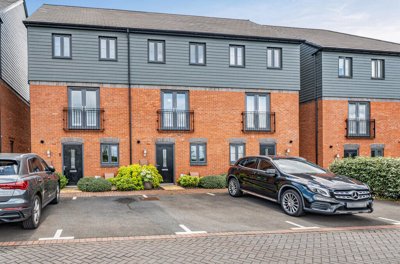
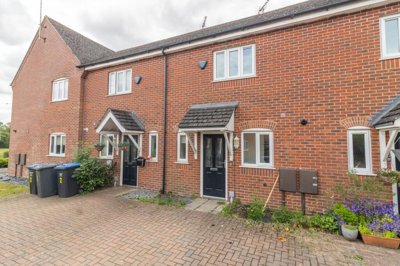
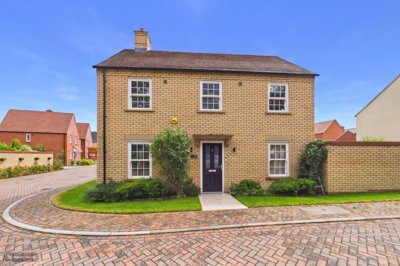
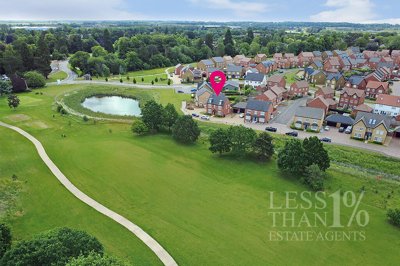
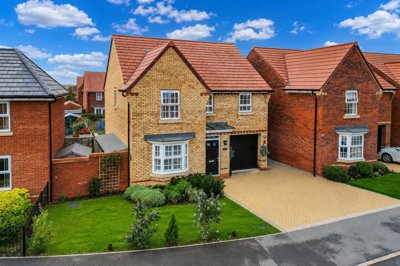
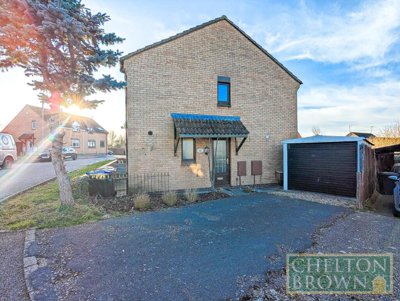
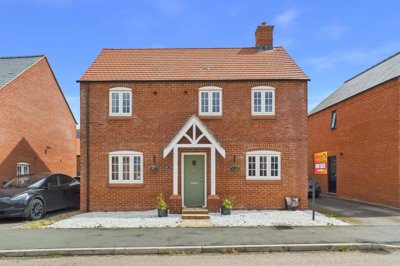
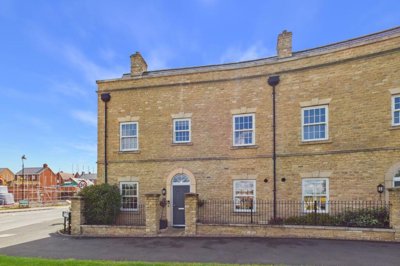
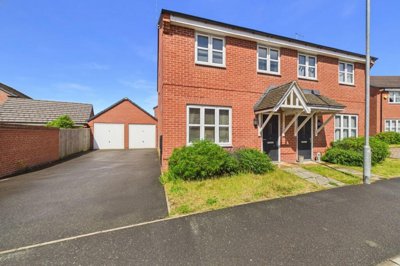
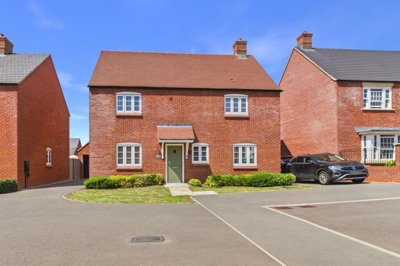
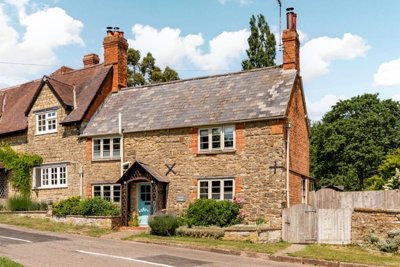
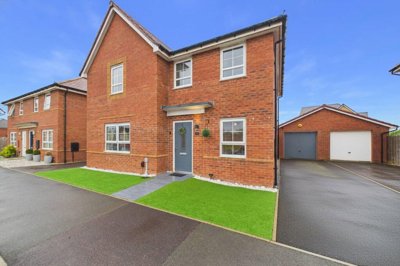
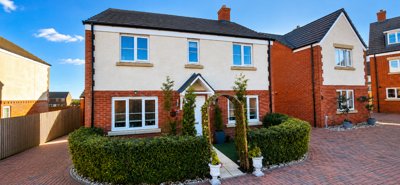
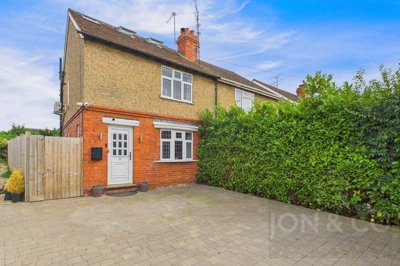
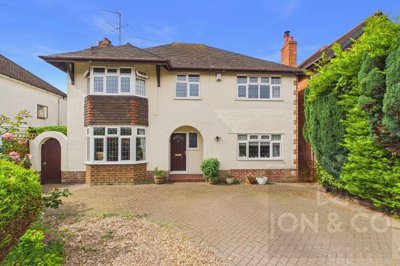
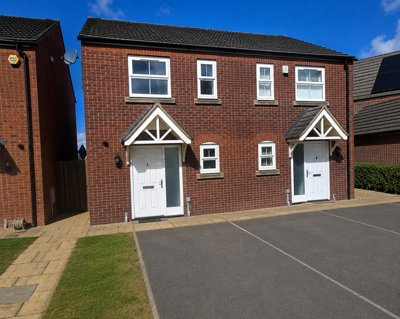
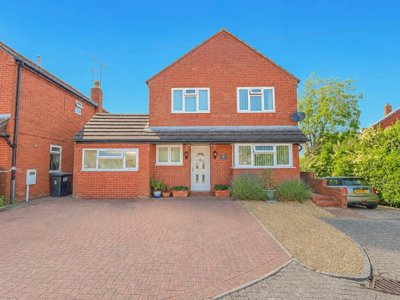
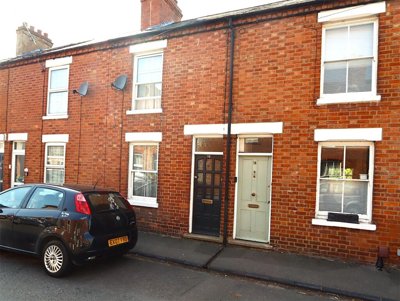
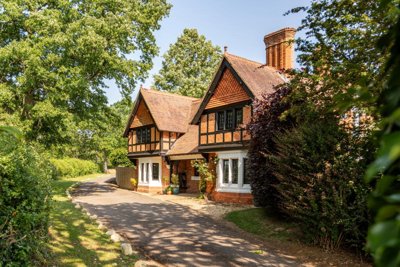
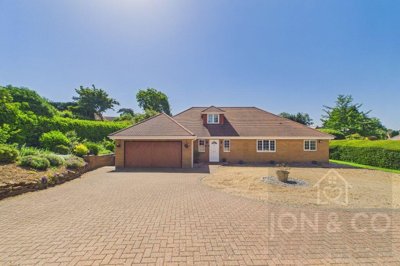
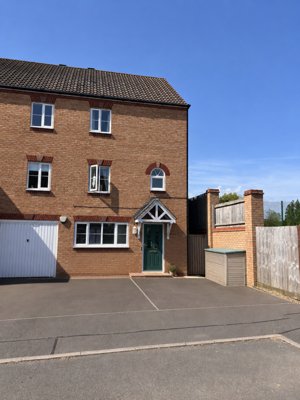
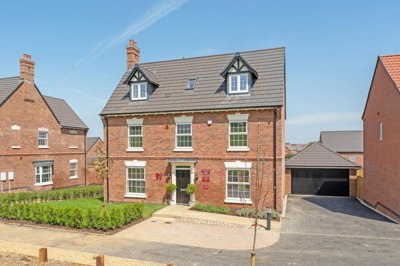
Browse 5,813 homes for sale in West Northamptonshire from local estate agents.
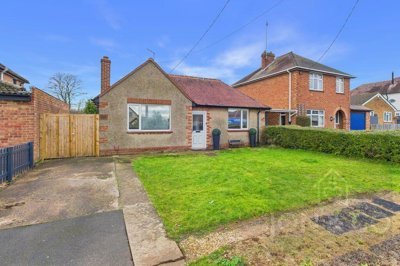
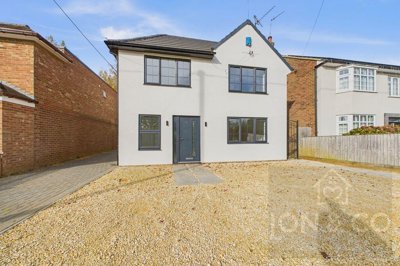
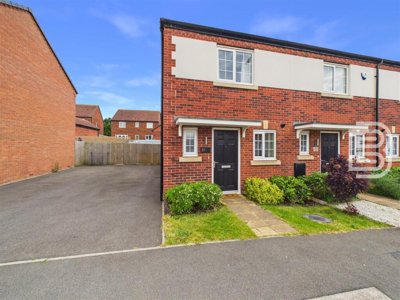
The West Northamptonshire property market offers detached, semi-detached, and terraced houses spanning various price ranges and neighbourhoods. Each listing includes detailed property information, photographs, and direct contact with the marketing agent.
West Northamptonshire's property market has shown real resilience, with 5,223 active listings currently on the market. Detached homes sit at the top of the price ladder, averaging £571,075, which suits families after more room and a decent garden. Semi-detached properties have moved the fastest, up 4.1% over the year to £309,839, so they still offer a useful middle ground for buyers watching their budget. Terraced houses average £246,446, while flats and maisonettes remain the most affordable entry point at around £144,027, with prices holding steady over the past year.
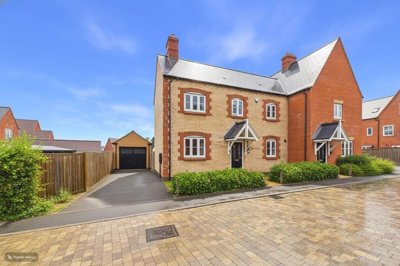
New build schemes are continuing to change the housing picture across West Northamptonshire. On the northern edge of Northampton, Harlestone Grange features homes from Persimmon Homes, David Wilson Homes, Barratt Homes, and Bloor Homes, with prices from £269,950 to £544,995. Tilia Homes is marketing 2, 3, and 4-bedroom houses at Landimore Park in Hardingstone from £287,000, while Marefair Court in central Northampton brings 1 and 2-bedroom apartments from £129,000 for buyers after a city-centre base. In Daventry, Bellway's Staverton Lodge includes 2, 3, and 4-bedroom homes, plus shared ownership through Platform Home Ownership, and Crest Nicholson's nearby Malabar adds further choice with 2 to 5-bedroom properties.
Towcester is still growing too, with Persimmon's The Furlongs starting from £249,950 and Barratt and David Wilson's The Watlings reaching as high as £594,995 for larger family houses. Western Gate at Harpole and Collingtree Park also sit within the mix, adding to the range of homes available.

Across West Northamptonshire, the population sits at approximately 425,700 people in 172,643 households, according to the 2021 Census, and the area grew by 13.5% in the previous decade. Homeownership remains strong here, with 64.8% of households owning outright or with a mortgage, while 19.1% live in the private rented sector and 14.4% are in social housing. That balance helps keep communities settled and supports steady demand across different property types. The local economy is no slouch either, generating £14.7 billion in Gross Value Added and supporting around 214,700 jobs across the region.
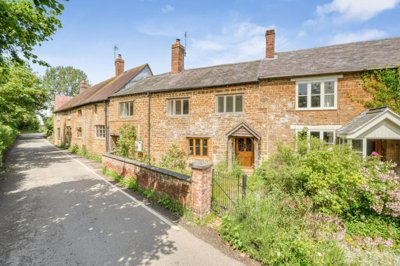
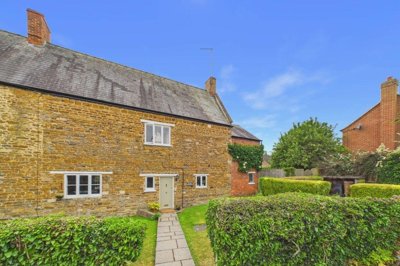
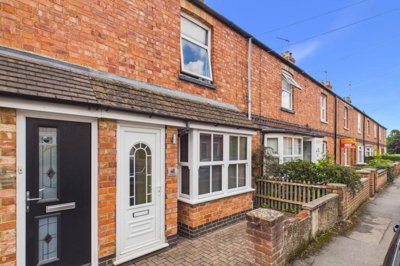
West Northamptonshire's look and feel owes a lot to its geology. Much of the housing stock is built from local ironstone, giving walls those familiar rust, brown, purple, and grey tones. Blisworth Limestone, cut from the Jurassic formations beneath the area, turns up in garden walls, boundaries, and older buildings, while Victorian and Edwardian terraces often show off the red brick that became common from the 19th century onwards. In villages such as Everdon, Flore, and Weedon, some older homes still show rendered cob or exposed timber-frame construction, a reminder of building traditions that came long before modern methods. From the uplands around Daventry, the land drops towards the River Nene valleys through Northampton and out into the flatter ground beyond.
Barclays, Carlsberg, and the logistics firms at Brackmills Business Park give the local economy a broad base, and that pulls workers in from a wide area. The University of Northampton and St Andrew's Hospital add more skilled employment, while the Daventry International Rail Freight Terminal underlines how important the area is for distribution and freight. Professional, scientific, and technical work is particularly strong, as is construction, which helps support housing demand at a range of price levels. For anyone looking at period homes, the job market matters, not just for commute times but for how secure a neighbourhood may feel over the long term.

Families in West Northamptonshire have options at every stage of education, from early years through to higher study. The University of Northampton has campuses in the town and offers undergraduate and postgraduate courses that bring students in from across the UK and beyond. Northampton College Group provides further education, apprenticeships, and vocational training that fit local employer demand in construction, healthcare, and business services. For primary and secondary schools, the authority has a mix of community schools, academies, and faith schools, and several have posted strong Ofsted results in recent inspections.
The grammar school system also plays a part for secondary-aged pupils in some parts of West Northamptonshire, with selective places awarded on the basis of entrance exams. Parents weighing up schools should look closely at performance data and catchment areas, because admission rules can have a noticeable effect on property values in certain streets. Several primary schools across the area have a good local reputation, which is one reason the surrounding villages and neighbourhoods are so popular with younger families. Before buying, a conversation with local school admissions teams can be useful, since catchment boundaries do not always match the map in a neat way.
Older homes in conservation areas sometimes began life as tied cottages for estate workers or as housing built around mills in industrial villages. Those places often sit within the reach of established village schools with strong community ties, although a few rural primaries face smaller rolls and, in some cases, closure pressure. From some villages, secondary schooling can mean a longer bus ride into a larger town, which naturally affects family decisions and the appeal of certain rural homes.

For commuters and businesses alike, West Northamptonshire is well placed. The M1 runs through the area, putting London roughly 90 minutes away and Birmingham around an hour by road. The A45 and A14 add further reach, linking Northampton with East Anglia and the logistics sites that help drive the local economy. Brackmills Business Park, with its Travis Perkins and John Lewis distribution centres, is a good example of how infrastructure investment has brought major employers here.
Rail links are useful too. Northampton reaches London Euston via Milton Keynes in around 50 minutes, so daily travel into the capital is realistic for many workers. Birmingham International station, on the West Coast Main Line, is about 30 minutes away by car and opens up connections to Manchester, Liverpool, and Glasgow. The Daventry International Rail Freight Terminal remains a key part of the national logistics network, handling container traffic that takes pressure off the roads while supporting jobs locally. Buses run across Northampton and into surrounding towns, though many residents still rely on a car for rural villages and family logistics. Cyclists can pick up the National Cycle Network in parts of the area, but the hills around Daventry and Towcester call for a fair level of fitness if you're using it regularly.
For anyone buying in villages such as Kilsby, Flore, or Helmdon, the time it takes to reach Northampton or Banbury stations needs to be part of the commute calculation. Bus services in some rural villages are limited, so a car is often a necessity rather than a convenience. Homes near the A45 corridor benefit from straightforward access to both the M1 and M40, while more isolated spots can mean a longer drive to the same transport links. Getting clear on commuting needs early will narrow the search to the neighbourhoods and villages that actually fit day-to-day life.

We recommend obtaining a mortgage agreement in principle before you start viewing homes. Lenders in West Northamptonshire are offering competitive rates, and having that document in hand shows estate agents that you are serious when the right property comes along. Our team can put you in touch with mortgage brokers who know the local market and can talk through products that suit your circumstances.
Start by exploring the neighbourhoods that matter most to you in West Northamptonshire. That might mean the urban convenience of Northampton, the market town feel of Daventry, or the quieter village setting of places like Overstone or Weedon. Commuting, school catchments, and access to family amenities all deserve a proper look before you narrow the field. Our platform lets you filter by price, property type, and location, so it is easier to focus on areas that match what you need.
Our partner estate agents can arrange viewings for homes that fit your brief. It pays to look beyond the property itself and take in the street, neighbouring homes, noise, and local facilities at different times of day. We usually suggest seeing a property at least twice, with one visit in the evening to check for noise from nearby pubs or licensed premises in town-centre spots.
Once an offer has been accepted, the next step is a RICS Level 2 Survey. Surveyors in West Northamptonshire typically charge £450-700 for a standard property, though older homes or those in places with known ground movement may need a more detailed inspection. Heavy clay soils in areas like Daventry, together with historic ironstone mining near Burton Latimer and Irthlingborough, make a proper survey especially important when it comes to spotting structural issues.
At that point, appointing a solicitor is the sensible move. They will deal with searches through West Northamptonshire Council, check the title deeds, and handle exchange of contracts, which is the stage that legally binds you to the purchase. If the property is listed or sits in a conservation area, your solicitor will also check whether any special conditions or obligations apply.
The solicitor will then set a completion date, and that is when the keys are handed over. Buildings insurance needs to be in place from that date, and utility transfers should be lined up before moving day. We also recommend booking removals and decorator access well ahead of time, particularly in the more popular towns where moving dates can get busy.
There are a few West Northamptonshire issues that deserve close attention before you commit to a purchase. The heavy clay soils found across the area, especially around Daventry and Northampton, carry a significant shrink-swell risk, which can lead to foundation movement and subsidence. Research suggests Northampton's subsidence risk is 1.218 times higher than the UK average, so it is wise to check for diagonal cracks, signs of underpinning, and any historical subsidence claims in the paperwork. A thorough RICS Level 2 Survey should pick up structural concerns and any evidence of earlier movement or remedial work.
Damp is one of the most common defects we see in older West Northamptonshire homes, especially those built in traditional ironstone. Our inspectors regularly come across rising damp where damp-proof courses have failed, penetrating damp from cracked tiles or open mortar joints, and condensation caused by poor ventilation. Properties built from local ironstone with solid walls often do not have modern damp-proofing, and damp-proof courses can also be bridged where garden levels have been raised over time. Tide marks on ground-floor walls, peeling paint, and musty smells are all worth taking seriously.
Roof condition deserves proper scrutiny across West Northamptonshire, not least because so much of the housing stock is older. Our surveyors often find worn tiles, tired felt flat roofs, and ageing flashings, and on older roofs the replacement of original clay tiles with heavier concrete ones can sometimes cause roof spread through the extra load. Look out for slipped or missing tiles, moss build-up, and any sagging along the roofline. On period properties with original roofing materials, lead flashings around chimneys and valleys should be checked carefully for deterioration.
Flood risk affects a number of communities in West Northamptonshire. Along the River Nene floodplain, Far Cotton, St James, and Upton in Northampton are classed as high-probability flood zones, and properties near the River Tove in Kislingbury, Weedon, Towcester, and Cosgrove also face elevated river flood risk. Surface water flooding is another concern in lower-lying parts of Northampton, and climate change projections suggest these pressures will grow as extreme weather events become more frequent. The flooding caused by Storm Bert in November 2024, which led to property damage and evacuations in Lower Harlestone and the St Andrews Road areas, shows that this is still a live issue for buyers.
West Northamptonshire's heritage is reflected in its 117 conservation areas and 3,838 listed buildings, both of which bring planning restrictions for alterations and extensions. In conservation areas, works that would usually be covered by permitted development rights, including larger extensions, roof changes, and exterior cladding, may need planning permission. Listed buildings face tighter controls still, with Listed Building Consent needed for internal and external work that could affect special character. Northampton's Castle ward has 155 listed buildings, Brackley has 76, and Aynho has 69. Those designations can restrict renovation plans, but they also help protect the character that keeps these places desirable.

Knowing the main construction methods used in West Northamptonshire helps buyers judge both the character of a home and its likely maintenance needs. Traditional brick and stone masonry, with blocks laid and bonded with mortar, has been part of local building for centuries and is still easy to spot in village centres. Ironstone from the Jurassic formations under Northamptonshire defines many 17th to 19th-century properties across the area, giving villages such as Everdon, Flore, and Kilsby their warm reddish-brown and purple-grey colouring. The stone is soft enough to shape easily, but it can weather and erode if it is not looked after properly.
Blisworth Limestone is another important local building material, valued for its durability and subtle blue-grey streaking. You see it in garden walls, boundaries, and historic buildings including churches and manor houses across the area. More recent extensions and boundary walls often use reclaimed Blisworth Limestone so the newer work sits comfortably with the older fabric. When our surveyors look at properties built with local stone, they check for spalling, mortar decay, and any repairs done with the wrong materials, since those can speed up weathering.
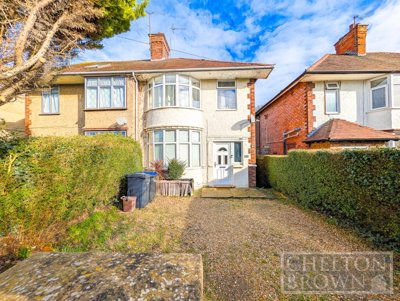
From the Victorian period onwards, red brick became the main building material, especially in post-war housing across Northampton and the surrounding towns. These homes usually have traditional brick-and-block cavity walls, though some post-war properties have narrower cavities or less insulation than you might hope for. Galvanized steel rainwater goods, common on houses built before the 1980s, often need replacing because of corrosion, and original timber windows are frequently swapped out for uPVC during later refurbishments. Timber frame does exist in the area, but it is much less common than conventional masonry.
Homes built using non-standard methods, including timber-framed properties and houses with thatched roofs, need a specialist eye beyond a standard RICS Level 2 Survey. In older timber-frame homes, hidden problems can include woodworm, fungal decay, or previous changes to load-bearing walls. Our team can arrange a RICS Level 3 Building Survey where a fuller structural review is needed, especially for Grade I, II*, or II listed buildings where the building history and current condition really matter.

The average house price in West Northamptonshire was £294,000 as of December 2025, according to homedata.co.uk. That is a 2.9% rise over the previous twelve months, ahead of the East Midlands regional average of 2.4%. Prices vary sharply by type, with detached homes averaging £475,000, semi-detached properties at £287,000, terraced homes at £236,000, and flats starting from £142,000. The market has stayed active, with over 5,000 sales recorded in the year leading to February 2026, which points to healthy demand across the board.
Council tax in West Northamptonshire runs from Band A for the lowest-valued homes up to Band H for the most expensive properties in the authority. The band depends on the property's valuation, and new builds are banded by the Valuation Office Agency once they are completed. You can check a specific property's council tax band on the West Northamptonshire Council website or by contacting the local authority with the address. The charge helps fund essential services such as rubbish collection, highway maintenance, and social care, with the final bill varying by band and any applicable discounts for single occupancy or disability.
Education choices in West Northamptonshire cover every phase, with a number of primary and secondary schools rated good or outstanding by Ofsted. At higher education level, the University of Northampton offers degree study in the area, while Northampton College Group delivers vocational courses and apprenticeships. Grammar schools operate in parts of the authority for secondary-aged pupils, with selective admissions based on entrance examination performance. Parents buying in the area should check which schools serve their address, because catchment boundaries can have a big effect on admission chances. School performance data is publicly available through the government league tables, which makes it easier to compare neighbourhoods against a family's educational priorities.
Public transport in West Northamptonshire is built around bus services across Northampton and between the main towns, with rail links into London Euston and Birmingham as well. Northampton railway station offers journey times of around 50 minutes to London, which makes day commuting workable for many city workers. Even so, car ownership is still important for plenty of residents, particularly in rural villages where buses run infrequently. The M1 provides the main road link to London and Birmingham, while the A45 and A14 support regional travel. Birmingham Airport is about 30-40 minutes away by car for those needing to fly.
There is a lot for property investors to like in West Northamptonshire. The area sits within the Oxford-Cambridge Arc, a government-designated growth zone that is receiving priority infrastructure investment. Barclays, Carlsberg, and the logistics firms at Brackmills Business Park give the local economy a steady employment base, while the University of Northampton supports a reliable student rental market. House prices have also been rising steadily, with the 2.9% annual increase ahead of regional averages. New development is continuing, with sites identified for thousands of new homes over the coming decades, which should keep demand supported. Investors do need to weigh up local issues, though, including flood risk in some areas, conservation restrictions that limit rental flexibility, and the way heavy clay soils can add to maintenance costs on older homes.
Stamp Duty Land Tax, or SDLT, applies to every property purchase in England, including in West Northamptonshire. For standard purchases, the first £250,000 is charged at 0%, then 5% applies to the portion between £250,001 and £925,000. Prices from £925,001 to £1.5 million attract 10% SDLT, and anything above £1.5 million is charged at 12% on the excess. First-time buyers get relief on the first £425,000 of the purchase price, then pay 5% SDLT between £425,001 and £625,000. SDLT thresholds and rates can change with government policy, so current figures should be checked with a solicitor or conveyancer at the time of purchase.
Because of the local geology and housing stock, buyers in West Northamptonshire should keep a close eye out for subsidence linked to clay soil movement, especially around Daventry and Northampton where shrink-swell risk is higher. Diagonal cracks wider than 5mm, uneven floors, and signs of underpinning or structural repair all deserve a proper look. Damp is common in older ironstone homes too, so check for failed damp-proof courses, bridged DPCs caused by raised ground levels, and whether there is enough ventilation. In pre-1960s properties, electrical systems may still use outdated wiring, while old galvanized or lead plumbing can corrode and reduce water pressure. Our surveyors are used to spotting these area-specific problems and can talk through the repairs that may follow.
Several parts of West Northamptonshire sit in higher flood-risk areas, and buyers need to take that seriously before purchasing. Along the River Nene floodplain, Far Cotton, St James, and Upton in Northampton are classified as high-probability flood zones where homes face regular flood risk. The River Tove communities of Kislingbury, Weedon, Towcester, and Cosgrove also carry elevated risk, as do lower-lying neighbourhoods across Northampton where surface water flooding is a persistent concern. Storm Bert in November 2024 caused major flooding in Lower Harlestone and the St Andrews Road area, a reminder that severe weather is becoming more common. West Northamptonshire Council provides interactive flood maps showing historic flood extents and projected future risk, which helps buyers check a property before committing.
It is not just the purchase price that matters in West Northamptonshire, because several additional costs form part of the total outlay. Stamp Duty Land Tax is usually the biggest extra bill, with standard rates at 0% on the first £250,000, 5% from £250,001 to £925,000, 10% between £925,001 and £1.5 million, and 12% above £1.5 million. First-time buyers purchasing homes up to £625,000 benefit from relief that lifts their zero-rate threshold to £425,000, which does make it easier to get started. Your solicitor will work out the exact SDLT liability based on the price and your circumstances.
Survey fees vary across West Northamptonshire depending on the size and complexity of the property, with RICS Level 2 Surveys in Northampton usually costing £450 to £700 for standard homes. Bigger houses, older buildings with more complicated construction, and properties in places where ground stability needs checking can cost more. A detailed survey matters here because heavy clay soils and historic ironstone mining in parts of the area can throw up defects that need repair or a price renegotiation. Conveyancing fees often start from around £499 for standard purchases, although leasehold homes, new builds, and purchases involving a mortgage usually cost more because the legal work is more involved.
Buyers should also factor in mortgage arrangement fees, often 0.5-1% of the loan amount, lender valuation fees, Land Registry fees for title registration, and searches such as drainage and water authority checks, local authority searches with West Northamptonshire Council, and environmental searches that look at ground stability and flood risk. Buildings insurance needs to begin from the completion date, and removal costs, together with any immediate repairs or furnishing needs, should sit in the moving budget too. Having a clear view of the full cost picture before you commit helps you move ahead with confidence once you have found the right West Northamptonshire home.
Properties for Sale In London

Properties for Sale In Plymouth

Properties for Sale In Liverpool

Properties for Sale In Glasgow

Properties for Sale In Sheffield

Properties for Sale In Edinburgh

Properties for Sale In Coventry

Properties for Sale In Bradford

Properties for Sale In Manchester

Properties for Sale In Birmingham

Properties for Sale In Bristol

Properties for Sale In Oxford

Properties for Sale In Leicester

Properties for Sale In Newcastle

Properties for Sale In Leeds

Properties for Sale In Southampton

Properties for Sale In Cardiff

Properties for Sale In Nottingham

Properties for Sale In Norwich

Properties for Sale In Brighton

Properties for Sale In Derby

Properties for Sale In Portsmouth

Properties for Sale In Northampton

Properties for Sale In Milton Keynes

Properties for Sale In Bournemouth

Properties for Sale In Bolton

Properties for Sale In Swansea

Properties for Sale In Swindon

Properties for Sale In Peterborough

Properties for Sale In Wolverhampton

Enter your details to see if this property is within your budget.
Loans, cards, car finance
Estimated property budget
Borrowing + deposit
You could borrow between
Typical borrowing
Monthly repayment
Est. at 4.5%
Loan-to-value
This is an estimate only. Your actual budget may vary depending on interest rates, credit history, and personal circumstances. For an accurate affordability assessment, speak to one of our free mortgage advisors.
This calculator provides estimates for illustrative purposes only and does not constitute financial advice. Your home may be repossessed if you do not keep up repayments on your mortgage. Estimates based on 4.5% interest rate, repayment mortgage. Actual rates depend on your circumstances.
Homemove is a trading name of HM Haus Group Ltd (Company No. 13873779, registered in England & Wales). Homemove Mortgages Ltd (Company No. 15947693) is an Appointed Representative of TMG Direct Limited, trading as TMG Mortgage Network, which is authorised and regulated by the Financial Conduct Authority (FRN 786245). Homemove Mortgages Ltd is entered on the FCA Register as an Appointed Representative (FRN 1022429). You can check registrations at NewRegister or by calling 0800 111 6768.

We use cookies to show you personalised content and improve your experience of our website. Find out more in our Privacy policy and Cookie policy.