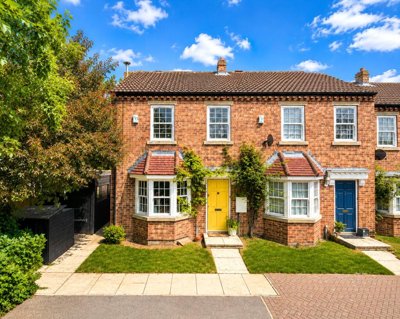
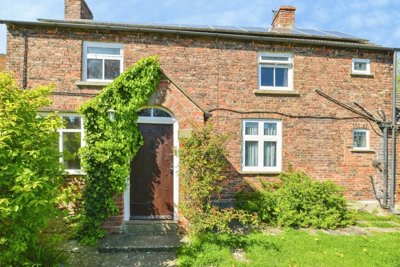
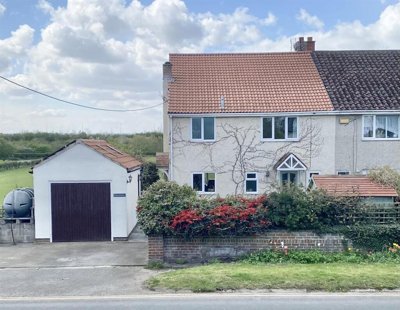
Browse 3 homes for sale in Theakston, North Yorkshire from local estate agents.
Three bedroom properties represent a significant portion of the Theakston housing market, offering space for families with multiple reception rooms and gardens in many cases. Browse detached, semi-detached, and terraced options ranging from period character homes to contemporary developments.
£0k
0
0
0
Source: home.co.uk
Showing 0 results for 3 Bedroom Houses for sale in Theakston, North Yorkshire.
Home buyers comparing Theakston with wider North Yorkshire markets should treat the village as low-volume and character-led. homedata.co.uk records show TS17 prices were 2% down over the last year and 2% down on the 2023 peak of £198,146. Detached homes averaged £283,382, semis £151,456, terraces £125,340, and flats £70,690 in that benchmark market. That spread shows how much value sits in property type and condition, especially when older homes need updating.
A useful activity benchmark comes from TS17 5 in Ingleby Barwick, where 436 transactions were recorded and prices rose 2.6% over the last year. That is not Theakston village itself, but it gives a sense of how busy the nearby broader area can be compared with a small parish market. New-build activity in the research is unverified, so buyers should check local planning portals and developer sites if they want a brand-new home. In a quieter market, homes with the right garden, parking, or outlook can stand out quickly.
For buyers in Theakston, supply is usually the biggest question. The village is far smaller than the TS17 benchmark, so homes tend to appear as individual opportunities rather than a steady stream of stock. A strong mortgage agreement in principle, a ready solicitor, and clear buying criteria can make a real difference when the right property comes up. Our property search is most useful when you are prepared to act quickly, but still careful enough to compare every house against the local benchmark.

Theakston, North Yorkshire is a village purchase first and a market comparison second. Its appeal lies in the calmer pace, countryside outlook, and the sense that you are buying into a place rather than a postcode. Buyers who like a quieter daily rhythm often prefer that to busier suburban estates, especially if they work from home or split their week between home and office. In a small settlement, the exact street, plot size, and outlook often matter more than whether a property is detached or semi-detached.
Village life here is best thought of as practical and local, with everyday trips usually pointing to nearby North Yorkshire towns for bigger shops, services, and leisure. That is helpful if you want more space and less traffic, but it also means planning around the car and thinking carefully about school runs, shopping, and commuting. The research pack does not give verified demographics for the village, so buyers should check the street-level feel for any home they shortlist. If you are moving from a larger town, expect a more rural buying experience and a slower pace of turnover.
Because the available research is tied to Theakston Grange in Stockton-on-Tees rather than Theakston village itself, we use the TS17 figures only as a pricing proxy. The important lesson from that dataset is that more suburban areas can move briskly, while a North Yorkshire village is usually more selective and less frequent in its listings. That makes local knowledge valuable, especially if you are after a home with views, parking, or a garden big enough for family life. For many buyers, the attraction is not just the house, but the everyday calm that comes with a smaller place.
Families looking at Theakston should plan school research around the exact postcode, because village catchments can shift over short distances. There is not a dense cluster of schools in the village itself, so many buyers widen their search to nearby North Yorkshire primary and secondary options. That makes checking admission rules early a smart move, especially if you need a specific year group place before you move. We always recommend speaking to the school and North Yorkshire Council before you commit to an offer.
In practice, families often look for a route that balances school quality with realistic daily travel. If you are comparing homes, check the journey at school-run times, not just on a quiet Saturday, because rural roads can take longer than map apps suggest. Sixth-form and further-education choices are usually part of a wider regional pattern too, so older children may travel further than you would in a city. That is not a drawback for every family, but it does make transport links and household routines more important.
Because we do not have verified Ofsted data in the research pack for Theakston itself, we would avoid over-claiming and instead focus on the practical school search process. Look for the nearest maintained primary school, the most suitable secondary catchment, and any school transport support that may be available. Buyers with children often find that the best home is the one that keeps the morning routine manageable. If that sounds like you, shortlist properties only after checking the school maps and the exact admission boundaries.

Commuters should treat Theakston as a rural base, where the car still does most of the heavy lifting. That works well if you want space and countryside, but it means you should check the route to the nearest town and the main roads you will use most often. In North Yorkshire, the quality of the daily drive matters as much as journey time, especially in winter or around school hours. Parking is usually easier than in a town centre, yet narrow lanes and country-road access can still affect everyday convenience.
For rail travel, most buyers in a village setting like this tend to use stations in Northallerton or Thirsk rather than expecting a station on the doorstep. That is another reason to think about which town you will most often travel to for work, shopping, or family visits. Bus services can be useful for local trips, but rural timetables are rarely as frequent as urban ones, so it helps to check them before you buy. If your job depends on a strict arrival time, test the route in rush hour and again after dark.
Daily driving is often the deciding factor, especially for buyers who split time between home, school, and nearby towns such as Bedale, Northallerton, or Thirsk. Theakston suits people who are comfortable planning around longer rural journeys and who want a calmer home base in return. If you need fast rail access, weigh up whether the extra space is worth the trade-off. Many rural buyers say the answer is yes, but the right transport setup depends on your routine rather than the postcode alone.
Spend time checking the exact street, commute, school catchments, and access to shops, because village purchases are shaped by the whole routine, not just the house.
Secure an agreement in principle before you book viewings, so you can move quickly when a suitable home appears and show sellers you are ready.
View at different times of day, ask about broadband, drainage, parking, and any rights of way, then compare those details with the asking price and the local benchmark.
In a small village market, a RICS Level 2 survey is a sensible starting point for most standard homes, while older cottages or altered properties may need a deeper look.
Choose a conveyancer as soon as your offer is accepted, so searches, title checks, and contract work can begin without delay.
Once the legal work is close to finished, keep funds ready, confirm removals, and line up meter readings and insurance so completion day runs smoothly.
Rural buyers in Theakston should pay close attention to access, drainage, and the details that are easy to miss during a quick viewing. A village home can look perfect on the surface, yet private drainage, shared access, or unregistered boundaries can create issues later if they are not checked properly. If the property is older, look closely at the roof, walls, and any signs of damp, because country homes often need more ongoing maintenance than newer estate properties. A good survey helps you spot those points before they become expensive surprises.
The research pack does not give verified geology or shrink-swell data for Theakston, so it is sensible to ask directly about past movement, extensions, and any cracking. One note in the wider research refers to a property in Theakston Grove, TS18 with Rivers & Seas No Risk and Surface Water Very Low, but that is a different postcode and should not be treated as evidence for Theakston village. For the correct location, request a postcode-level flood check and ask whether any nearby watercourses, field runoff, or drainage issues affect the plot. That extra step is especially useful if you are buying on the edge of the village.
Conservation and listing status also matter in small North Yorkshire settlements, because alterations can be more tightly controlled than on a modern housing estate. If the property has a timber extension, a converted outbuilding, or a roofline that has been altered, make sure the paperwork is complete and that any permissions are in order. Leasehold flats are unlikely to be the norm here, but if one appears, check service charges, ground rent, and building insurance very carefully. In a low-volume market, the best purchase is often the one where the legal and physical checks are as solid as the location.
The closest verified pricing benchmark we have is the wider TS17 market, because the research pack is tagged to Theakston Grange in Stockton-on-Tees rather than Theakston village itself. homedata.co.uk records show an average sold price of £195,031 over the last 12 months. Detached homes averaged £283,382, semis £151,456, terraces £125,340, and flats £70,690. For Theakston village, expect fewer listings and more variation by plot, condition, and access.
Council tax in Theakston is set by North Yorkshire Council, and the exact band depends on the specific property. Smaller cottages and compact terraces can sit in lower bands, while larger detached homes usually sit higher, but you need the individual band from the listing or valuation. If you are comparing two similar homes, the band can be as important as the asking price. Always check the band before making an offer, because it affects the monthly budget for as long as you own the home.
There is no single school in the village research pack that we can verify, so buyers should treat school choice as a postcode-by-postcode exercise. Most families look to nearby North Yorkshire schools and check catchments directly with the admissions team. North Yorkshire Council and the schools themselves can confirm whether a house falls inside the right area. If school access matters, make it part of your viewing shortlist from day one.
Theakston is reasonably connected for a rural village, but it is not the kind of place where you would rely on frequent urban transport. Most buyers use a car for daily life and then connect to rail or bus services in nearby towns when needed. That makes commute testing worthwhile, especially if you travel at set times or in winter. If you do not drive, check timetables carefully before you commit.
Theakston can suit long-term investors who value limited supply and steady village appeal. It is less likely to suit a quick-flip strategy, because small rural markets tend to be slower and more selective. The wider TS17 benchmark in the research shows 436 transactions in TS17 5 and 2.6% annual growth, but that is a busier suburban market, not the village itself. Treat Theakston as a lifestyle-led investment, where holding power matters more than rapid turnover.
On a home priced at the wider-market average of £195,031, standard SDLT is £0 because the price sits below the £250,000 threshold. First-time buyers also pay £0 up to £425,000, so the average benchmark price is under the relief limit as well. If you buy a detached home at £283,382, a standard buyer would pay about £1,669 in SDLT, while a first-time buyer would still pay £0. If you are buying a second home, budget for the higher-rate surcharge as well.
The village market is likely to be more cottage and house led than flat led, because rural North Yorkshire settlements usually have fewer apartments. In the wider benchmark, detached and semi-detached homes dominate the higher price points, while terraces and flats sit lower. That means buyers who want space, parking, or a garden may find Theakston more appealing than someone looking for a large supply of starter flats. As always, the exact mix depends on what comes to market.
The current standard stamp duty thresholds are 0% up to £250,000, 5% from £250,000 to £925,000, 10% from £925,000 to £1.5 million, and 12% above £1.5 million. First-time buyers pay 0% up to £425,000, then 5% from £425,000 to £625,000, with no relief above £625,000. On the wider benchmark average of £195,031, SDLT is £0 for most standard buyers and £0 for first-time buyers too. That makes the lower end of the Theakston market more manageable for people keeping a close eye on upfront costs.
Costs rise quickly if you stretch into a larger detached home or add second-home charges, so it is wise to build a full budget before you offer. A standard buyer at £283,382 would pay about £1,669 in stamp duty, then still need to cover legal fees, survey costs, mortgage fees, and moving expenses. Rural purchases can also bring extra checks for septic tanks, private roads, shared access, or maintenance agreements, which can add time as well as cost. If you keep those items in view from the start, you can judge whether a home is genuinely affordable rather than only looking at the asking price.
Properties for Sale In London

Properties for Sale In Plymouth

Properties for Sale In Liverpool

Properties for Sale In Glasgow

Properties for Sale In Sheffield

Properties for Sale In Edinburgh

Properties for Sale In Coventry

Properties for Sale In Bradford

Properties for Sale In Manchester

Properties for Sale In Birmingham

Properties for Sale In Bristol

Properties for Sale In Oxford

Properties for Sale In Leicester

Properties for Sale In Newcastle

Properties for Sale In Leeds

Properties for Sale In Southampton

Properties for Sale In Cardiff

Properties for Sale In Nottingham

Properties for Sale In Norwich

Properties for Sale In Brighton

Properties for Sale In Derby

Properties for Sale In Portsmouth

Properties for Sale In Northampton

Properties for Sale In Milton Keynes

Properties for Sale In Bournemouth

Properties for Sale In Bolton

Properties for Sale In Swansea

Properties for Sale In Swindon

Properties for Sale In Peterborough

Properties for Sale In Wolverhampton

Enter your details to see if this property is within your budget.
Loans, cards, car finance
Estimated property budget
Borrowing + deposit
You could borrow between
Typical borrowing
Monthly repayment
Est. at 4.5%
Loan-to-value
This is an estimate only. Your actual budget may vary depending on interest rates, credit history, and personal circumstances. For an accurate affordability assessment, speak to one of our free mortgage advisors.
This calculator provides estimates for illustrative purposes only and does not constitute financial advice. Your home may be repossessed if you do not keep up repayments on your mortgage. Estimates based on 4.5% interest rate, repayment mortgage. Actual rates depend on your circumstances.
Homemove is a trading name of HM Haus Group Ltd (Company No. 13873779, registered in England & Wales). Homemove Mortgages Ltd (Company No. 15947693) is an Appointed Representative of TMG Direct Limited, trading as TMG Mortgage Network, which is authorised and regulated by the Financial Conduct Authority (FRN 786245). Homemove Mortgages Ltd is entered on the FCA Register as an Appointed Representative (FRN 1022429). You can check registrations at NewRegister or by calling 0800 111 6768.

We use cookies to show you personalised content and improve your experience of our website. Find out more in our Privacy policy and Cookie policy.