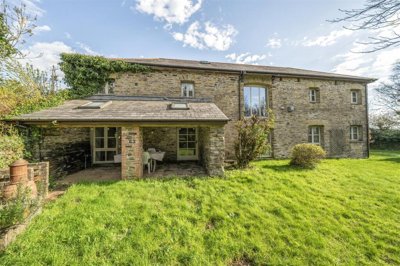
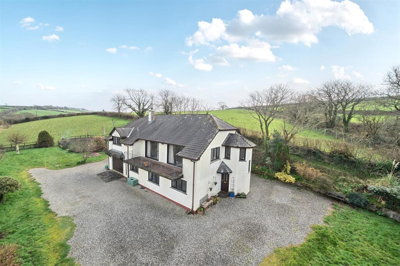
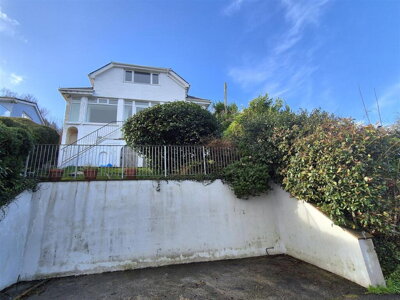
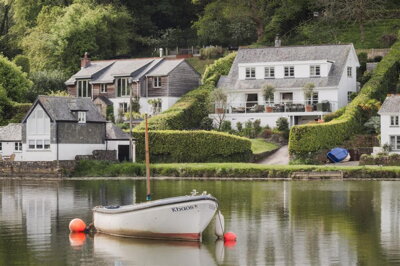
Browse 5 homes for sale in St. Veep from local estate agents.
Veep from local agents. The larger property sector typically features multiple bathrooms, substantial reception space, and private gardens or off-street parking. Four bedroom houses in St. Veep span detached, semi-detached, and occasionally terraced configurations, with styles ranging from period properties to modern executive homes.
St. Veep’s property market mirrors the parish itself, with traditional Cornish homes that tend to appeal to buyers who value character over gloss. Detached properties sit at the top of the pricing ladder here, with recent sales averaging around £437,500 for this type. Expect generous plots, stone or rendered exteriors, and interiors where exposed beams, granite fireplaces and original floorboards still turn up. That premium reflects scarcity as much as anything else, along with gardens that can run down towards the river valley or open out to farmland views.
Terraced homes offer a more reachable way into the St. Veep market, and recorded sales average approximately £195,000 for this type. Many of these workers cottages go back to the Victorian era or earlier, with compact but well-proportioned rooms that have often been carefully maintained or sympathetically updated. Semi-detached homes have reached higher prices in recent years, with one notable transaction recording a median price of £730,000, which points to the size and outdoor space available for families prepared to spend more. Prices have softened too, with St. Veep house values down 12% on the previous year and 5.6% lower than in March 2023, so patient buyers may find a little more room to manoeuvre.

This civil parish captures rural Cornwall neatly, shaped by generations of agricultural use and its closeness to the River Fowey. The ground here sits within an area of Devonian and Carboniferous sedimentary rocks, with granite intrusions that are typical of Cornish geology. Homes often follow suit, built from local stone or slate that gives them a very recognisable look. Life moves at a gentler pace, community ties matter, and the natural landscape is part of daily routine. Walk the lanes and you will see dry-stone walls, hedgerows full of wildflowers in spring, and long views across valleys towards the distant coastline.
Agriculture, tourism and small local businesses shape the economy of St. Veep and the wider area, serving both residents and visitors. The pull of the Cornish lifestyle still brings buyers from across the UK, some looking for permanent homes, others for holiday lets or second homes they can use throughout the year. Lostwithiel and Fowey provide the nearest jobs and day-to-day services, while Bodmin and St. Austell come into play for those who commute further. Demand for the area has historically supported values, although the market has eased in recent months as broader economic conditions have taken some of the heat out of buyer confidence.

Families looking to settle in St. Veep have a choice of education options within sensible travelling distance, which fits the parish’s rural setting. Primary schooling is available in nearby village communities, and St. Veep is served by small primary schools in the surrounding area that offer a nurturing start for younger children. Small class sizes are a real plus, giving teachers the chance to provide more individual attention, something parents in rural areas often value highly. The surrounding countryside also feeds into school life, with outdoor learning forming a noticeable part of the experience in this part of Cornwall.
Secondary pupils usually travel to Lostwithiel, Fowey or Bodmin for their schooling. These schools offer a range of GCSE and A-Level subjects, and some have particular strengths in arts, sciences or vocational courses. For older children, the transport links help make the daily journey manageable, with school bus services running from St. Veep to several nearby secondary schools. Catchment areas and admission policies do vary, so we would always recommend checking those carefully before committing to a property. For families weighing up rural life against town living in Cornwall, access to good schools remains a key part of the picture.

Getting in and out of St. Veep is easier than many people expect for a rural parish, which makes it workable for commuters as well as those who stay local. Bodmin has the nearest mainline railway station, with services to major cities including Plymouth and London Paddington. Lostwithiel station adds more local rail connections and opens up the wider network, including the scenic Cornish coast route. By road, the A38 dual carriageway runs through the nearby area and links St. Veep to Plymouth to the north and Truro to the west.
Bus services also operate nearby, linking St. Veep with surrounding towns and villages for anyone who would rather leave the car at home or cut down on emissions. Those routes take residents to larger centres where supermarkets, medical services and other essentials are easier to reach. Parking is usually straightforward, with most properties offering off-street spaces or plenty of on-road parking on the quieter lanes. Cyclists can stick to the minor roads or head off-road onto countryside routes that show off some of Cornwall’s best scenery. It all adds up to a place that works for day-to-day life without losing its calm, rural feel.

Start your search in St. Veep by getting a feel for current conditions, the average prices by property type, and what is actually on offer in this rural Cornish parish. Look at recent sales, compare the different neighbourhoods within the parish, and think about practical details such as proximity to the River Fowey, flood risk areas, and the condition of local roads and infrastructure.
We would suggest speaking to a mortgage broker early on, so you know how much you can borrow and can secure an Agreement in Principle before making offers. It is also wise to set aside money for stamp duty, solicitor fees, survey costs and moving expenses. First-time buyers in England should remember that the first £425,000 of a purchase is exempt from stamp duty under current thresholds, which can make a meaningful difference.
Arrange viewings for properties that match your brief, and use the time to judge not just the house, but the street, the neighbours and the general feel of the area. In older homes, pay close attention to traditional features, look for signs of damp or structural movement, and check the property’s history, including planning permissions or listed building status.
Before you complete, book a RICS Level 2 Survey for a standard modern home, or a RICS Level 3 Building Survey for older, traditional or listed properties in St. Veep. With so many homes in this rural parish having real age to them, a proper survey is important for spotting problems with the roof, structure, dampness or old electrics and plumbing.
We would always choose a conveyancing solicitor with experience in Cornish property transactions to deal with the legal side of the move. They will carry out searches, handle the contracts and deal with the checks needed before exchange of contracts and completion on your new St. Veep home.
Across St. Veep, the traditional construction methods tell their own story, shaped by local materials and the skills used here for centuries. Most older properties were built with locally sourced granite and slate, often laid in traditional courses with lime mortar rather than modern cement. Lime-based mortars allow the walls to breathe, which matters in solid-wall construction because it helps reduce moisture retention. Rendered homes commonly use mineral-based renders that sit well with the stonework underneath, while exposed stone walls were traditionally finished in painted limewash. In some of the oldest cottages, timber-framed construction brings a degree of flexibility, though it also means that timber elements may have been replaced at different points over time.
Those building methods matter when a property is being assessed, because repairs and renovations usually call for specialist knowledge of traditional materials. St. Veep’s Cornish climate, with its high rainfall and closeness to the sea, makes roof condition especially important. Original slate roofs on older buildings may have been swapped out for concrete tiles or newer materials, so both the covering and the timber structure beneath should be checked carefully. Leadwork around chimneys and valleys is another area where deterioration can develop, letting water in and damaging timbers and plasterwork inside the house.
Buying in St. Veep means thinking about a few Cornwall-specific issues, and geology is a good place to begin. Parts of Cornwall have clay-rich soils that can shrink and swell, which creates a risk of subsidence if the ground beneath a property is not properly understood. That matters most with older homes that have shallow foundations and may have moved over time. Before you buy, it is worth reviewing any surveys already available and commissioning one yourself if ground conditions raise questions. St. Veep’s proximity to the River Fowey also means some properties may sit in flood risk areas, so Environment Agency flood maps and any local flooding history should be checked as well.
St. Veep’s historic character means listed buildings are a real possibility, and buyers need to understand the implications if a property has that status. Grade I, Grade II*, and Grade II listed properties are protected for their historical significance, so alterations, extensions or major repairs will need Listed Building Consent from Cornwall Council. That can add time and cost to future improvement plans, although it also helps preserve the original character of the building. If any part of St. Veep falls within a conservation area, there may be extra planning controls on external changes too. It is sensible to verify the status of any home under consideration and factor those restrictions into the decision.

Over the last year, the average property price in St. Veep was approximately £356,667, with a median price around £344,000. Detached homes sit higher, averaging around £437,500, while terraced properties are more affordable at approximately £195,000. Prices have eased recently, with a 12% decline compared with the previous year. Even so, this remains a desirable Cornish location, so values stay competitive against many urban parts of the UK, and the mix of rural charm and access to the River Fowey continues to draw buyers in.
For council tax, properties in St. Veep sit within Cornwall Council’s jurisdiction. The band depends on the property’s assessed value, with bands ranging from A through to H. Most traditional cottages and older homes in the parish are likely to fall into bands A through D, while larger detached houses or more recently built properties may sit higher. Cornwall Council publishes the annual rates for each band, and buyers can check those on the council website or ask the seller or their solicitor for the specific band during conveyancing.
Primary schooling in St. Veep is usually handled by village schools in the surrounding area, where small class sizes and close community links are common. For secondary education, pupils generally travel to schools in Lostwithiel, Fowey or Bodmin, with community secondary schools and faith schools among the options depending on admission criteria. Catchment areas and travel arrangements are worth checking carefully, because school places can be competitive in popular rural spots. Several schools in wider Cornwall have achieved good or outstanding Ofsted ratings, which gives families another useful point of reference when weighing up the area.
Public transport in St. Veep is reasonable for a rural Cornish parish, with local bus services linking nearby towns and giving residents access to extra shops and facilities. Bodmin and Lostwithiel are the nearest railway stations, both connecting into the broader rail network and offering services to major cities including Plymouth and London Paddington. Drivers have the A38 for quick access to the north and west of Cornwall, while the run to Fowey on the coast is a simple drive through attractive countryside. For everyday commuting, that mix works well, and the village still keeps its peaceful rural atmosphere.
For property investment, St. Veep has a few clear attractions, not least the lasting appeal of the Cornish lifestyle that pulls buyers from across the UK. Supply is limited in this small rural parish, and consistent demand from people looking for a quiet countryside setting has historically held values up over the longer term. Homes here can suit permanent residents as well as buyers chasing holiday lets or second homes, which broadens the pool of potential occupiers. Investors should still take the recent softening in the local market seriously, along with flood risk and any future regulation affecting holiday lets and rental income.
Stamp duty in St. Veep follows the standard England rates unless you qualify for first-time buyer relief. For standard purchases, there is no stamp duty on the first £250,000 of the property price, 5% on the portion from £250,001 to £925,000, 10% on the portion from £925,001 to £1.5 million, and 12% on anything above £1.5 million. First-time buyers have higher thresholds, paying no stamp duty on the first £425,000 and 5% on the portion from £425,001 to £625,000. With the average property price in St. Veep around £356,667, many buyers would only pay stamp duty on the amount above £250,000, while first-time buyers could pay nothing at all if the price is below £425,000.
From 4.5% APR
Compare mortgage rates from leading lenders
From £499
Expert conveyancing solicitors for property transactions
From £350
Professional RICS surveys for properties in St. Veep
From £500
Building surveys for older and listed properties
From £80
Energy Performance Certificate for your property
Budgeting properly for a St. Veep purchase matters, because the full cost of buying can be easy to underestimate. Stamp duty land tax is one of the biggest upfront expenses, and buyers in this price range are in luck, as many properties in St. Veep sit within thresholds where the liability is minimal or zero. On a home priced at the area average of around £356,667, a standard buyer would pay no stamp duty on the first £250,000 and 5% on the remaining £106,667, which comes to approximately £5,333 in total. First-time buyers pay nothing on the first £425,000, so a property at or below that level could be exempt entirely. Those savings can shape which homes end up on the shortlist.
It is also sensible to allow for solicitor conveyancing costs, which typically start from around £500 to £1,500 depending on the complexity of the transaction and whether the property is leasehold or freehold. Survey fees need a place in the budget too, with a RICS Level 2 Survey starting from approximately £350 for a standard property, rising for larger or more complex homes. Given the age of many properties in St. Veep, a fuller RICS Level 3 Building Survey may be the better option, especially for listed buildings or homes where the first survey flags possible concerns. Removal costs, mortgage arrangement fees and the price of any immediate repairs or renovations should also be included. Planning for these figures from the outset helps keep a St. Veep purchase on a steady footing and cuts the risk of unwelcome surprises.

Properties for Sale In London

Properties for Sale In Plymouth

Properties for Sale In Liverpool

Properties for Sale In Glasgow

Properties for Sale In Sheffield

Properties for Sale In Edinburgh

Properties for Sale In Coventry

Properties for Sale In Bradford

Properties for Sale In Manchester

Properties for Sale In Birmingham

Properties for Sale In Bristol

Properties for Sale In Oxford

Properties for Sale In Leicester

Properties for Sale In Newcastle

Properties for Sale In Leeds

Properties for Sale In Southampton

Properties for Sale In Cardiff

Properties for Sale In Nottingham

Properties for Sale In Norwich

Properties for Sale In Brighton

Properties for Sale In Derby

Properties for Sale In Portsmouth

Properties for Sale In Northampton

Properties for Sale In Milton Keynes

Properties for Sale In Bournemouth

Properties for Sale In Bolton

Properties for Sale In Swansea

Properties for Sale In Swindon

Properties for Sale In Peterborough

Properties for Sale In Wolverhampton

Enter your details to see if this property is within your budget.
Loans, cards, car finance
Estimated property budget
Borrowing + deposit
You could borrow between
Typical borrowing
Monthly repayment
Est. at 4.5%
Loan-to-value
This is an estimate only. Your actual budget may vary depending on interest rates, credit history, and personal circumstances. For an accurate affordability assessment, speak to one of our free mortgage advisors.
This calculator provides estimates for illustrative purposes only and does not constitute financial advice. Your home may be repossessed if you do not keep up repayments on your mortgage. Estimates based on 4.5% interest rate, repayment mortgage. Actual rates depend on your circumstances.
Homemove is a trading name of HM Haus Group Ltd (Company No. 13873779, registered in England & Wales). Homemove Mortgages Ltd (Company No. 15947693) is an Appointed Representative of TMG Direct Limited, trading as TMG Mortgage Network, which is authorised and regulated by the Financial Conduct Authority (FRN 786245). Homemove Mortgages Ltd is entered on the FCA Register as an Appointed Representative (FRN 1022429). You can check registrations at NewRegister or by calling 0800 111 6768.

We use cookies to show you personalised content and improve your experience of our website. Find out more in our Privacy policy and Cookie policy.