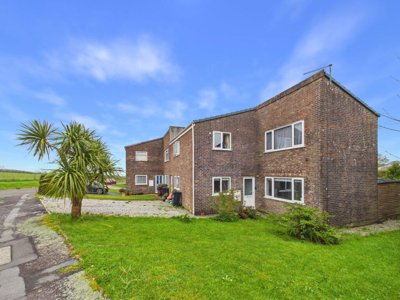
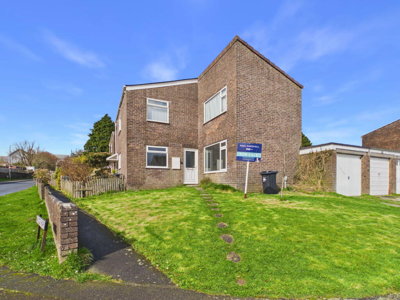
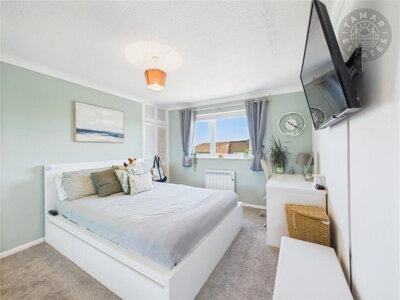
Browse 3 homes for sale in St. Pinnock from local estate agents.
Pinnock from local agents. The 2 bed flat sector typically includes two separate bedrooms, dedicated living areas, and bathroom facilities. Properties in St. Pinnock span purpose-built blocks, converted period houses, and modern apartment complexes on various floors.
St. Pinnock’s property market is shaped by its remarkable run of period homes, and most of the properties in the PL14 4NA postcode area were built between 1800 and 1911. That old housing stock gives the village a feel that is quite different from the newer estates in nearby towns, and it means buyers are looking at homes with real character rather than something that could be copied on a fresh build site. Our listings mirror that history, with sizeable detached and semi-detached houses offering original fireplaces, high ceilings, thick stone walls and period joinery for buyers who value substance over fashion. The PL14 4NA area itself has around 13 properties, made up of 8 houses and 5 other properties, which shows just how small the village is within the wider PL14 postcode.
Pricing here shows the premium attached to traditional Cornish homes, with three-bedroom freehold houses starting from approximately £446,429 and five-bedroom period homes rising to £544,091. Individual sales in St. Pinnock have gone in different directions, with Bodrawl Bungalow selling for £650,000 and Overcoombe Farm reaching £567,500, a reminder that size, condition and land can move the numbers sharply. The market has also proved resilient, with prices in PL14 4NA up by an average of 24.3% since December 2019, which points to steady demand for village property
No active new-build schemes sit in St. Pinnock village itself, but East Taphouse and Dobwalls nearby give buyers modern alternatives if newer construction matters. Those developments include two and four-bedroom homes, and some affordable housing is available at a 20% discount for eligible purchasers through schemes that support first-time buyers and key workers. In East Taphouse, a brand-new two-bedroom semi-detached home and a four-bedroom property at Hillcrest show the sort of stock available across the wider PL14 postcode area. Even so, for buyers after genuine character and established gardens, the period homes within St. Pinnock itself remain the real draw.

St. Pinnock has the quiet, timeless feel of a Cornish village, sitting in a gentle valley that gives it shelter and a pleasing backdrop of countryside. Its name comes from the Cornish language, a clue to roots that go back before the Norman Conquest, and that older heritage still shapes everyday life here. Life moves at a calmer pace, with church bells, local food and neighbourly habits forming part of the day-to-day rhythm. The farmland around the village is still actively worked, so crops and livestock are visible from almost every property.
Village life centres on the historic parish church and the local pub, both of which act as meeting points through the year. Seasonal occasions pull people together, from summer fetes linked to the harvest to winter get-togethers that help soften the shorter days. The village hall also plays its part, hosting clubs and activities for residents of different ages and interests. For families, that close-knit setup is hard to beat, because children grow up knowing their neighbours and picking up the sort of informal support that larger towns rarely offer.
Open countryside wraps around St. Pinnock, and the public footpaths and bridleways that thread through it give plenty of room for walking, riding and general exploring. The nearby Looe Valley adds even more, with river fishing on offer and the coastal path opening up sweeping sea views between fishing villages. Wildlife watchers tend to like the hedgerows and woodland, which support a good mix of birds and small mammals, and the setting suits anyone who values green space. It is that mix of easy countryside access and closeness to the coast that brings buyers in from across the UK, especially those looking to leave busier urban areas behind.

For families thinking about moving to St. Pinnock, most schooling is based in nearby Liskeard, the market town that serves the area with a broad choice of schools within easy reach. Several village and town primaries cover the surrounding communities, so parents can choose between different teaching styles and facilities. The run from St. Pinnock to Liskeard’s primary schools is usually around ten to fifteen minutes by car, and school bus services help families without private transport. Those schools stay closely tied to their communities, which fits the wider Cornish habit of treating schools as village gathering points as well as places of learning.
Secondary provision is led by Liskeard School and Community College, which takes pupils from Year 7 through to Sixth Form and covers a broad curriculum. It also offers extracurricular activities and a supportive setting for students from St. Pinnock and the villages across North and East Cornwall. Families wanting grammar school options can reach Plymouth’s grammar schools via the A38, although the distance means transport planning needs some thought. Sixth Form students can stay local in Liskeard or head further afield to specialist colleges in Plymouth or Truro.
Early years provision is well established in the wider area, with nurseries and preschool groups running from village hall settings in neighbouring communities. They give working parents much-needed childcare while helping children build social skills and school readiness before formal education starts. If a family needs faith-based schooling or a particular educational approach, Plymouth and Truro open up more options once children reach secondary age. That moderate journey to larger education centres is generally seen as a fair trade for the village lifestyle on offer.

St. Pinnock is positioned in a way that keeps the countryside calm while still giving sensible transport links, so it works for people who commute or need services farther away. The village sits just off the A38 dual carriageway, Cornwall’s main arterial route, and that puts Plymouth within approximately forty minutes. The same road also connects to the A30 trunk road towards Exeter and the rest of England, while the M5 motorway can be reached in around ninety minutes for journeys to Bristol or Birmingham. For anyone working in Plymouth’s business districts, dockyards or hospitals, St. Pinnock offers a daily commute that many more remote Cornish spots cannot match.
Liskeard station gives residents access to rail services on the main line between Plymouth and Penzance, with regular trains throughout the day. The trip from Liskeard to Plymouth usually takes around thirty minutes, while faster services reach Exeter St. Davids in approximately one hour and Bristol Temple Meads in around two and a half hours. That makes St. Pinnock workable for people travelling to Plymouth or Exeter on a regular basis, though anyone heading to London will usually prefer Plymouth’s more frequent services to the slower trains that stop at Liskeard. Parking at the station helps those who want to combine driving and rail travel, so multi-modal commuting stays fairly straightforward.
Bus services link St. Pinnock with Liskeard and the neighbouring villages, which matters for people without a car, including students, retirees and commuters. They are especially useful for getting to Liskeard Community Hospital and for shopping trips where carrying heavy bags on foot would be awkward. For flights, Plymouth Airport has limited commercial services, while Exeter Airport offers a wider choice of domestic and European destinations within approximately ninety minutes' drive. Plenty of residents feel the village hits the right balance, with countryside quiet at home and proper transport options when they are needed.

Start with our St. Pinnock listings and the wider PL14 postcode area, and pay close attention to PL14 4NA, where the average sale value stands at £438,480. Knowing the gap between three-bedroom homes from £267,631 and larger five-bedroom period properties reaching £684,162 will help sharpen what you are looking for. Our team watches the village market closely and can flag up new properties that fit your brief.
Before you book viewings, get a mortgage agreement in principle from a lender so you know your borrowing capacity and have a stronger hand when you make an offer. Because many St. Pinnock homes are period properties, make sure your mortgage adviser knows about any unusual financing issues older houses can bring, including possible repair bills and specialist insurance requirements.
Set up viewings for the homes that fit your shortlist, and take time to look beyond the property itself to the village setting, neighbouring houses and nearby amenities. Construction date matters here, because most homes date from 1800-1911 and may need a surveyor who knows what to look for. We like to visit at different times of day, so light, traffic and the general feel of the place can all be judged properly.
Given the age of the housing in St. Pinnock, a RICS Level 2 Homebuyer Report is a sensible next step, as period homes often need checks for damp, roof condition, outdated electrics and wider maintenance issues. A survey of this kind protects the investment and can give us room to negotiate if defects come to light. For the larger period houses, a RICS Level 3 Building Survey may be the better fit for a more detailed look.
Use a conveyancing solicitor who knows Cornish property transactions, because they will handle the legal work, local searches, title checks and contract exchange. Your solicitor will also work with the mortgage lender and keep the various deadlines moving towards completion, including the Cornwall Council procedures that apply to properties in the county.
Once every condition has been met and the searches are back, your solicitor will exchange contracts and settle on a completion date with the seller’s legal team. On completion day, the remaining money changes hands, and you get the keys to your new St. Pinnock home. We suggest arranging building insurance from that point, because liability for the property passes to you on completion.
St. Pinnock homes need a careful eye because the housing stock is largely Victorian and Edwardian, with properties built between 1800 and 1911 making up the core of the village. Thick stone walls and solid construction from that era give good thermal mass and durability, but buyers should still check for penetrating or rising damp, especially where there is no modern damp-proof course. Roofs deserve close attention too, since original slate or clay tiles may be nearing the end of their life after more than a century in Cornwall’s maritime weather. Chimney stacks and flashings should also be inspected for damage that could let water in, particularly after severe weather.
Older St. Pinnock houses often need electrical upgrades to meet current safety standards, because Victorian and Edwardian wiring was never designed for modern household demand. Buyers should ask whether rewire work has already been done and seek paperwork showing that the installation complies with current regulations. Plumbing can be another issue, with some homes still carrying original iron or lead pipes that may need replacing, so the cost needs to be built into the budget. Heating also deserves careful thought, since larger period homes can be expensive to warm if the system is inefficient.
Flood risk checks make sense for any Cornish property, although our research did not identify any specific flood risk data for St. Pinnock itself. Buyers should still look at the Environment Agency flood maps and consider where the property sits in relation to watercourses, low ground or places that collect surface water. Homes with large gardens or land should be valued with that extra outside space in mind, because it carries a real premium in the current market. It is also wise to look into any planning permissions for neighbouring plots that might affect day-to-day enjoyment, and to check that any extensions or alterations to the property have the proper consents and completion certificates.

Recent transaction data shows an average sale value of £438,480 for properties in the PL14 4NA postcode area serving St. Pinnock. Prices vary quite a bit with size and condition, with three-bedroom freehold houses starting from approximately £267,631 and substantial five-bedroom period homes going up to £684,162. Individual sales show the spread clearly, with Bodrawl Bungalow selling for £342,338 and Overcoombe Farm achieving £537,898. The market has also grown strongly, with prices up by 24.3% since December 2019, which reflects steady demand for character homes in this sought-after Cornish village.
Council tax for St. Pinnock falls under Cornwall Council, and most period homes in the village are likely to sit in bands A through D, depending on their assessed value. Cornwall Council sets annual band rates that determine monthly payments, and band A properties currently pay much less than band D or higher ones. Because St. Pinnock includes everything from modest cottages to large period farmhouses, the council tax band will vary from one property to the next. You can check the exact band for any listed home through the Valuation Office Agency website using the address.
Primary education for St. Pinnock residents comes from schools in the surrounding area, with several village primaries serving the local community and additional choices in nearby Liskeard. For secondary education, Liskeard School and Community College is the main provider, taking students through to Sixth Form for pupils from St. Pinnock and the surrounding villages. The school has a strong reputation for community involvement and a broad curriculum. Parents should check current catchment areas and admission policies, because those can affect placement and may change from time to time. For families wanting specialist educational settings, Plymouth’s secondary schools become available as children move through the system.
Local bus services connect St. Pinnock with Liskeard, where rail services run on the main line between Plymouth and Penzance. From Liskeard station, trains reach Plymouth in approximately thirty minutes and Exeter in around one hour, so day commuting remains practical for many workers. Being close to the A38 dual carriageway gives residents with cars another useful option, and that creates strong overall connectivity despite the rural setting. For journeys to London or farther afield, Plymouth’s more frequent rail services are usually better than the local stopping trains from Liskeard.
The St. Pinnock market has kept growing, with prices up by 24.3% since late 2019 and a notable 15.5% jump in January 2022 among the more recent movements. Because the village stock is dominated by period properties from 1800-1911, the supply of character homes is naturally limited, which tends to support values over time. Rental demand is also present for people who want the Cornish lifestyle without buying, although the small size of the village means there is less choice than in larger towns. For a long-term hold, the mix of original character, an accessible location via the A38 and steady buyer demand for rural Cornwall makes St. Pinnock worth serious attention.
Stamp Duty Land Tax applies to a St. Pinnock purchase in line with the usual UK thresholds, with no special Cornwall rates. As a first-time buyer purchasing a residential property under £625,000, you pay 0% on the first £425,000 and 5% on the slice between £425,000 and £625,000. On a property at the area average of £438,480, that would mean SDLT of £674 on the amount above £425,000. For buyers who already own property or are buying above £625,000, the standard rates apply, 0% up to £250,000, 5% from £250,000 to £925,000, 10% from £925,000 to £1.5 million and 12% above £1.5 million. Your solicitor will work out the exact SDLT liability using your circumstances and the property price.
From 3.89%
Expert mortgage advice and competitive rates for St. Pinnock home purchases
From £499
Property solicitors handling Cornwall transactions
From £350
Survey for period properties in St. Pinnock built 1800-1911
From £80
Energy performance certificates for St. Pinnock homes
Budgeting for a St. Pinnock purchase means looking beyond the asking price, because Stamp Duty Land Tax is one of the biggest extra costs for buyers. For a typical first-time buyer purchasing at the area average of £438,480, the SDLT works out at zero on the first £425,000 with 5% applied to the remaining £13,480, which gives a tax bill of £674. That is a meaningful saving compared with higher price points, where the higher bands affect larger parts of the purchase price. First-time buyer relief applies up to £625,000, so most St. Pinnock homes fall within the more favourable treatment.
For buyers who already own property, or for investors, the standard SDLT rates apply without first-time buyer relief. A £438,480 purchase in those circumstances would attract SDLT at 0% on the first £250,000 and 5% on the remaining £188,480, which comes to £9,424. Homes priced above £925,000 trigger the 10% rate on the portion between £925,000 and £1.5 million, so accurate SDLT calculations become more important as prices rise. Your conveyancing solicitor will give you a precise figure based on your own circumstances and any reliefs that apply, including multiple dwellings relief.
Beyond SDLT, you should budget for solicitor conveyancing costs, which usually range from £499 to over £1,500 depending on complexity and value, plus Land Registry fees to register the ownership. Survey costs are important too, especially with St. Pinnock’s older homes, where a RICS Level 2 Homebuyer Report starts from approximately £350 for smaller properties but can rise to £600 or more for larger period houses that need a more detailed assessment. Mortgage arrangement fees, valuation fees, electronic transfer charges and search fees add several hundred pounds more to the upfront bill, so it is sensible to set aside around 3-5% of the purchase price for the extra costs.

Properties for Sale In London

Properties for Sale In Plymouth

Properties for Sale In Liverpool

Properties for Sale In Glasgow

Properties for Sale In Sheffield

Properties for Sale In Edinburgh

Properties for Sale In Coventry

Properties for Sale In Bradford

Properties for Sale In Manchester

Properties for Sale In Birmingham

Properties for Sale In Bristol

Properties for Sale In Oxford

Properties for Sale In Leicester

Properties for Sale In Newcastle

Properties for Sale In Leeds

Properties for Sale In Southampton

Properties for Sale In Cardiff

Properties for Sale In Nottingham

Properties for Sale In Norwich

Properties for Sale In Brighton

Properties for Sale In Derby

Properties for Sale In Portsmouth

Properties for Sale In Northampton

Properties for Sale In Milton Keynes

Properties for Sale In Bournemouth

Properties for Sale In Bolton

Properties for Sale In Swansea

Properties for Sale In Swindon

Properties for Sale In Peterborough

Properties for Sale In Wolverhampton

Enter your details to see if this property is within your budget.
Loans, cards, car finance
Estimated property budget
Borrowing + deposit
You could borrow between
Typical borrowing
Monthly repayment
Est. at 4.5%
Loan-to-value
This is an estimate only. Your actual budget may vary depending on interest rates, credit history, and personal circumstances. For an accurate affordability assessment, speak to one of our free mortgage advisors.
This calculator provides estimates for illustrative purposes only and does not constitute financial advice. Your home may be repossessed if you do not keep up repayments on your mortgage. Estimates based on 4.5% interest rate, repayment mortgage. Actual rates depend on your circumstances.
Homemove is a trading name of HM Haus Group Ltd (Company No. 13873779, registered in England & Wales). Homemove Mortgages Ltd (Company No. 15947693) is an Appointed Representative of TMG Direct Limited, trading as TMG Mortgage Network, which is authorised and regulated by the Financial Conduct Authority (FRN 786245). Homemove Mortgages Ltd is entered on the FCA Register as an Appointed Representative (FRN 1022429). You can check registrations at NewRegister or by calling 0800 111 6768.

We use cookies to show you personalised content and improve your experience of our website. Find out more in our Privacy policy and Cookie policy.