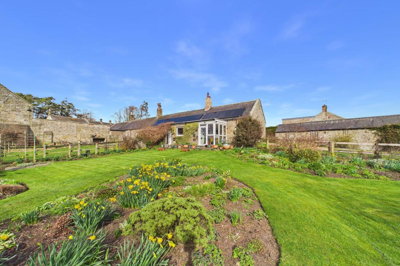
Browse 1 home for sale in Snitter, Northumberland from local estate agents.
The 2 bed house market features detached, semi-detached, and terraced properties with two separate bedrooms plus living spaces. Properties in Snitter range from Victorian and Edwardian period homes to modern new builds, with pricing varying across different neighbourhoods.
£0k
0
0
0
Source: home.co.uk
Showing 0 results for 2 Bedroom Houses for sale in Snitter, Northumberland.
17-33
Properties Sold (12 months)
£292,000 - £500,000
Detached Properties
£275,000 - £320,000
Semi-Detached
From £175,000
Stone Cottages
NE65 7EL | NE65 7EH | NE65 7EJ | NE65 7EQ
Postcodes
Snitter’s property market is shaped by stone-built homes that still feel rooted in the village’s history and rural setting. Recent sales range from cottages to substantial detached family houses, with prices usually landing between £175,000 and £500,000, depending on type, size and condition. Detached homes sit at the top end, with places such as Burnside House on Hepscott Bend reaching around £500,000, while a well-kept cottage can be a more realistic way into village living. Supply is thin in a place this small, so homes rarely linger for long, and keen interest can build quickly when a desirable property comes up for sale.
In Snitter, the mix includes traditional stone cottages, semi-detached village houses and sizeable detached homes set in generous plots. Semi-detached properties have recently sold between £275,000 and £320,000, including 1 Silverdale Cottage on Silverdale, which achieved £275,000 in January 2025 after reaching £235,000 in June 2022. Local stone is the main building material here, as you can see on Post Office Row and around the village green. New build activity in the immediate Snitter area is still limited, so anyone wanting modern specifications may need to look to nearby market towns or other villages.
Sale records in the village point to steady movement over time rather than sharp swings. Lady Bank on Banks Road sold for £200,200 in October 2021, after previously achieving £215,000 in January 2008, which says plenty about the resilience of local values. Goldspink, a detached home in the village, sold for £292,000 in May 2019, while Ivy Cottage on Main Street reached £175,000 in March 2024 after changing hands for just £60,000 in February 1996. Our platform gives access to current listings as well, so the picture stays complete.
We gather the properties currently listed for sale in Snitter and the surrounding Northumberland villages into one place. That means our search pulls together local estate agent listings, giving a clear view of what is available right now. Looking for a stone cottage, a larger family house or land with a property, we can narrow the results by price, type and features so the search feels manageable.

Snitter is a small historic village tucked into the Northumberland countryside, where day-to-day life is quiet and local ties still matter. The stone houses, the old church and the remains of a medieval castle all speak to a long history stretching back centuries. Around the village, including Silverdale, Banks Road and the properties beside Hepscott Burn, the architecture stays true to rural Northumberland, with stone walls and modest, practical details.
Farmland sits right up against the village edge, and the hills around Northumberland give you open countryside almost immediately. With the Cheviot Hills one way and the Northumberland coastline the other, there is room for walking and other outdoor activity all year round. The River Coquet runs through nearby Rothbury, which adds fishing and riverside walks to the mix, while Amble beach is about 30 minutes by car. Nearby villages have small shops, traditional pubs and post offices, and Morpeth is around 12 miles away for supermarkets, healthcare and broader day-to-day services. Snitter itself has a primary school, and the surrounding lanes suit walking, cycling and longer days out in the county.
Village events still matter here. Annual fetes, gatherings and other local dates create real contact between residents, which is part of why the area draws people looking for a slower pace, including retirees and families with children. Crime is low in this rural part of Northumberland when set against towns and cities, and that feeds into the general feeling of safety. Walks, gardening and time outdoors shape a lot of daily routine, while the village pub gives people a place to meet. Rothbury and Morpeth add more to do if needed. Long-term values have also held up well, with the NE65 postcode area continuing to sit comfortably as a rural base near the Northumberland coast and National Park.
Stone houses, farmland and open countryside sit side by side in Snitter, and the village keeps that Northumberland look without much fuss. Our platform shows every available property in the village and the surrounding area, from cottages with period details to larger family homes.

Families looking at Snitter will find primary schools serving the nearby villages and rural settlements. Hepscott and Kirkwhelpington are among the nearest, and their smaller class sizes can mean more direct attention from teachers and a more involved relationship between staff, pupils and parents. Children from Snitter usually travel only a few miles to school, and Northumberland County Council arranges transport for those living in more isolated homes. Many rural primaries across Northumberland have had positive Ofsted ratings, which reflects the effort put in by staff and the atmosphere smaller schools can create.
Secondary pupils usually head into Morpeth, where King Edward VI School has built a solid academic reputation and offers a broad curriculum alongside extracurricular opportunities. The bus journey from Snitter to Morpeth secondary schools is around 25 minutes, though the exact time depends on the home’s position in the village. The local bus service runs to Morpeth through the school day, although families should check routes and timings with Northumberland County Council before committing to a purchase. For further education, Newcastle and the surrounding area have colleges and sixth form centres, and public transport makes those options workable from Snitter.
Catchment boundaries and admission policies need checking before anything else, because they can alter school placement in a big way. Secondary school transport usually comes through Northumberland County Council school buses, so it makes sense to look at routes, timings and costs while weighing up a property. The A68 also helps with car travel to schools, and the trip into Morpeth is short enough for after-school activities without turning the day into a long haul. For families focused on education, school performance data and property listings together give a better guide to where to buy in the Snitter area.
Getting around from Snitter is mostly a matter of using the car. That fits the village’s rural character. The A68 sits nearby and runs through Northumberland towards Morpeth and then on to Newcastle upon Tyne, so the road route is straightforward for day-to-day travel. A drive to Newcastle takes around 45 minutes, which makes city work possible while living in a countryside setting. The drive itself is part of the appeal, with the Northumberland landscape shaping the route all the way.
Morpeth station handles the rail side of things, with regular trains to Newcastle, Edinburgh and places along the East Coast Main Line. Newcastle city centre is about 30 minutes away by train, while Edinburgh is around 90 minutes, which keeps both cities in reach for regular travel. Newcastle International Airport is roughly 40 minutes by car and offers domestic and European flights, including regular services to London, Amsterdam and Dublin. For longer trips, Edinburgh Airport can also be reached in about two hours by car.
Bus services do run through Snitter and the neighbouring villages, although the timetable is much thinner than anything you would find in a town. Weekday services are generally hourly or less, and weekends are reduced further. Arriva links Snitter with Morpeth, Rothbury and other nearby places, so the network does provide a basic link for people without a car. Most households still keep at least one vehicle, and that makes sense here. Parking is usually not a problem, because many properties already have off-street parking or garages. Cycling is used for local trips too, helped by quiet lanes, and the national cycle route network passes through the region for people who prefer two wheels.
Before you arrange viewings in Snitter, it helps to get a mortgage agreement in principle from a lender. That gives a clear budget and shows sellers that the finance side is already moving, which matters in a village market where interest can build quickly. Rural homes often attract more than one buyer, so having lending confirmed early can make a real difference when an offer is going in.
Use Homemove to compare current listings in Snitter and nearby Northumberland villages, then see what your budget can stretch to in this part of the county. The filters let us sort by price range, property type and key features, and email alerts can be turned on so new matches arrive as soon as they appear.
We can put you in touch with estate agents through our platform so viewings can be arranged for properties that fit what you are looking for, from traditional stone cottages to detached houses. It is usually worth seeing several homes, because that gives a better feel for the range on offer and for the features that really matter in a new place to live.
Once an offer has been accepted, book a RICS Level 2 Survey so the property’s condition can be checked properly, including issues that are common in stone-built houses. Our inspectors know traditional Northumberland homes well and will look closely at pointing, damp penetration and the roof structure.
Bring in a conveyancing solicitor to deal with the legal side of the purchase, including local searches with Northumberland County Council. They will look into planning permissions, boundaries and any rights of way affecting the property.
We then work with the solicitor and mortgage lender to bring the transaction to completion, and the keys are released for your Snitter home. On completion day, that is the point where the move can begin in earnest.
Buying in rural Northumberland calls for a slightly different eye from a standard town purchase. Stone-built homes, which are common in Snitter, often use older methods such as solid walls without cavity insulation, traditional lime mortar pointing and roof structures that need proper heritage care. When we inspect them, we look for damp, the condition of the stonework pointing, and the age and state of the heating system and double glazing. We also regularly come across lime mortar that has been replaced with cement, which can trap moisture in the stone and cause damage over time.
Some Snitter properties may depend on private water supplies or septic tanks rather than mains services, so that needs checking in detail before a purchase goes any further. Homes on the outer edge of the village, especially those on Hepscott Bend and the roads leading out towards the A68, are more likely to rely on private water sources. It is also worth checking the property’s history, including any renovation work and planning permissions, with Northumberland County Council planning department. Older homes may fall under conservation controls as well, and Article 4 directions or conservation area requirements can affect what changes are allowed.
Boundaries need attention too, especially stone walls and hedgerows, because maintenance can be a real responsibility in rural settings. Stone boundary walls are a familiar sight around Snitter, but they need periodic re-pointing and structural repair. Flood risk should be checked through the relevant environmental agency databases, particularly for homes near watercourses or in low-lying spots close to Hepscott Burn. Any service charges or maintenance arrangements for shared facilities should also be made clear, especially where access roads or septic systems are shared with neighbours or form part of a larger estate. A thorough RICS Level 2 Survey should pick up these points and help with the decision.
Prices in Snitter move around quite a bit, depending on type, size and condition. Detached houses have recently ranged from £292,000 to £500,000, while semi-detached homes are usually between £275,000 and £320,000. Traditional stone cottages with character details can start from around £175,000 if some renovation is needed, as shown by Ivy Cottage on Main Street, which sold for £175,000 in March 2024. Because the village is small, transactions are limited, with roughly 17 to 33 properties showing sold prices in the last 12 months on major property portals, so individual property features and buyer interest can shape the final figure quite strongly.
Snitter properties sit within Northumberland County Council and are placed in council tax bands from A through to H, based on property value. Most of the traditional stone cottages and older homes fall into Bands A to D, which reflects the more modest values often seen before modern improvements are added. A place like 1 Silverdale Cottage on Silverdale would usually sit in Bands A or B, while a larger home such as Burnside House on Hepscott Bend may fall into one of the higher bands. Buyers should check the exact band with the seller or via the Valuation Office Agency website, because bands can be challenged and altered after improvements or other changes.
Several primary schools serve the Snitter area, including schools in Hepscott and Kirkwhelpington that look after small rural communities and often have close teacher-pupil relationships. Primary schools nearby have generally received positive Ofsted ratings, which points to strong teaching in smaller class settings. Children from Snitter normally attend schools within a few miles of the village, and Northumberland County Council provides transport for pupils who live beyond walking distance. Secondary choices include Morpeth schools such as King Edward VI School, with strong academic results and facilities that include sports amenities and performing arts spaces. It is sensible for families to check current Ofsted ratings and think through transport when looking at school options from Snitter, because daily travel times can shape the family routine.
Public transport in Snitter is limited, which is no surprise in a rural village with a small population. Local buses do operate, but weekday frequencies are reduced and weekend provision is minimal. The Arriva network links Snitter with Morpeth and the surrounding villages, although timetables should be checked because routes can change. Morpeth is the nearest train station, with regular services to Newcastle upon Tyne and Edinburgh on the East Coast Main Line, and Newcastle is about 30 minutes away. Newcastle International Airport is around 40 minutes by car and offers domestic and European flights. For everyday commuting or regular trips to services, most residents still regard a car as essential, even if the bus or train is used now and then for a run into the larger towns.
Snitter and the nearby Northumberland villages suit people looking for long-term rural living more than those chasing rental income. Its setting close to the Northumberland National Park, together with limited supply, can help values hold over time, especially now that remote working gives rural places more appeal. Historical sales data points the same way, with Lady Bank on Banks Road reaching £200,200 in October 2021 after selling for £215,000 in 2008, which shows how values can hold up through market changes. Buy-to-let prospects are more limited here because the village is small and rental demand is modest, so buyers should think carefully about their aims and the costs of managing a property from a distance. The case for Snitter is stronger for owner-occupiers than for speculative investors.
Stamp Duty Land Tax applies to every property purchase in England and is worked out using tiered thresholds for standard buyers and first-time buyers. For standard purchases, there is no SDLT on the first £250,000, 5% on the portion from £250,001 to £925,000, and higher rates above that. First-time buyers have higher thresholds, with no SDLT on the first £425,000 and 5% charged between £425,001 and £625,000. With Snitter prices usually sitting between £175,000 and £500,000, most buyers will pay SDLT on at least part of the price, depending on the threshold that applies. A first-time buyer taking a typical cottage at £275,000 would pay no stamp duty, while a standard buyer buying a detached house at £320,000 would pay around £3,500 in SDLT.
Stone-built houses need a closer look at the stonework and pointing, which may use traditional lime mortar instead of modern cement and may need re-pointing from time to time. We often find that poor cement pointing on older stone properties traps moisture and speeds up deterioration, so it is sensible to look for evidence of proper heritage maintenance when viewing. Solid walls should be checked for damp penetration, because it is more common in older stone construction without modern damp proof courses. Roofs, windows and heating systems also need careful assessment, as they can turn into significant maintenance jobs in traditional homes. In Snitter, where many homes sit on the edges of the village near Hepscott Bend or the roads leading to the A68, it is also worth checking whether the property has a private water supply or shared septic tank arrangements.
The full cost of buying in Snitter goes well beyond the purchase price, with legal fees, survey costs and government taxes all adding to the budget. Our platform helps set out those costs clearly, so the numbers can be planned from the start rather than dealt with later.

From £455
Essential survey for stone-built properties in Snitter
From £600
Comprehensive survey for older or complex properties
From £75
Required Energy Performance Certificate
From £499
Legal services for your property purchase
From 3.5% APR
Finance for your Snitter home
Properties for Sale In London

Properties for Sale In Plymouth

Properties for Sale In Liverpool

Properties for Sale In Glasgow

Properties for Sale In Sheffield

Properties for Sale In Edinburgh

Properties for Sale In Coventry

Properties for Sale In Bradford

Properties for Sale In Manchester

Properties for Sale In Birmingham

Properties for Sale In Bristol

Properties for Sale In Oxford

Properties for Sale In Leicester

Properties for Sale In Newcastle

Properties for Sale In Leeds

Properties for Sale In Southampton

Properties for Sale In Cardiff

Properties for Sale In Nottingham

Properties for Sale In Norwich

Properties for Sale In Brighton

Properties for Sale In Derby

Properties for Sale In Portsmouth

Properties for Sale In Northampton

Properties for Sale In Milton Keynes

Properties for Sale In Bournemouth

Properties for Sale In Bolton

Properties for Sale In Swansea

Properties for Sale In Swindon

Properties for Sale In Peterborough

Properties for Sale In Wolverhampton

Enter your details to see if this property is within your budget.
Loans, cards, car finance
Estimated property budget
Borrowing + deposit
You could borrow between
Typical borrowing
Monthly repayment
Est. at 4.5%
Loan-to-value
This is an estimate only. Your actual budget may vary depending on interest rates, credit history, and personal circumstances. For an accurate affordability assessment, speak to one of our free mortgage advisors.
This calculator provides estimates for illustrative purposes only and does not constitute financial advice. Your home may be repossessed if you do not keep up repayments on your mortgage. Estimates based on 4.5% interest rate, repayment mortgage. Actual rates depend on your circumstances.
Homemove is a trading name of HM Haus Group Ltd (Company No. 13873779, registered in England & Wales). Homemove Mortgages Ltd (Company No. 15947693) is an Appointed Representative of TMG Direct Limited, trading as TMG Mortgage Network, which is authorised and regulated by the Financial Conduct Authority (FRN 786245). Homemove Mortgages Ltd is entered on the FCA Register as an Appointed Representative (FRN 1022429). You can check registrations at NewRegister or by calling 0800 111 6768.

We use cookies to show you personalised content and improve your experience of our website. Find out more in our Privacy policy and Cookie policy.